

















Tesla is preparing to make its vehicles more connected than ever, with Elon Musk outlining plans to combine traffic information from Tesla vehicles with real-time updates from Grok, the artificial intelligence assistant integrated into the company’s ecosystem.
The proposal could change how drivers navigate Canadian roads, offering information about traffic disruptions, road conditions and events at their destinations. However, it also raises important questions about vehicle data, personal privacy and how information moves between connected services.
For Canadian Tesla owners, the distinction between improving navigation and sharing potentially sensitive driving information is particularly important. While Musk has described the concept, Tesla has not publicly detailed the system’s data-sharing architecture, privacy safeguards or Canadian rollout schedule.
What Elon Musk Actually Announced About Tesla and Grok
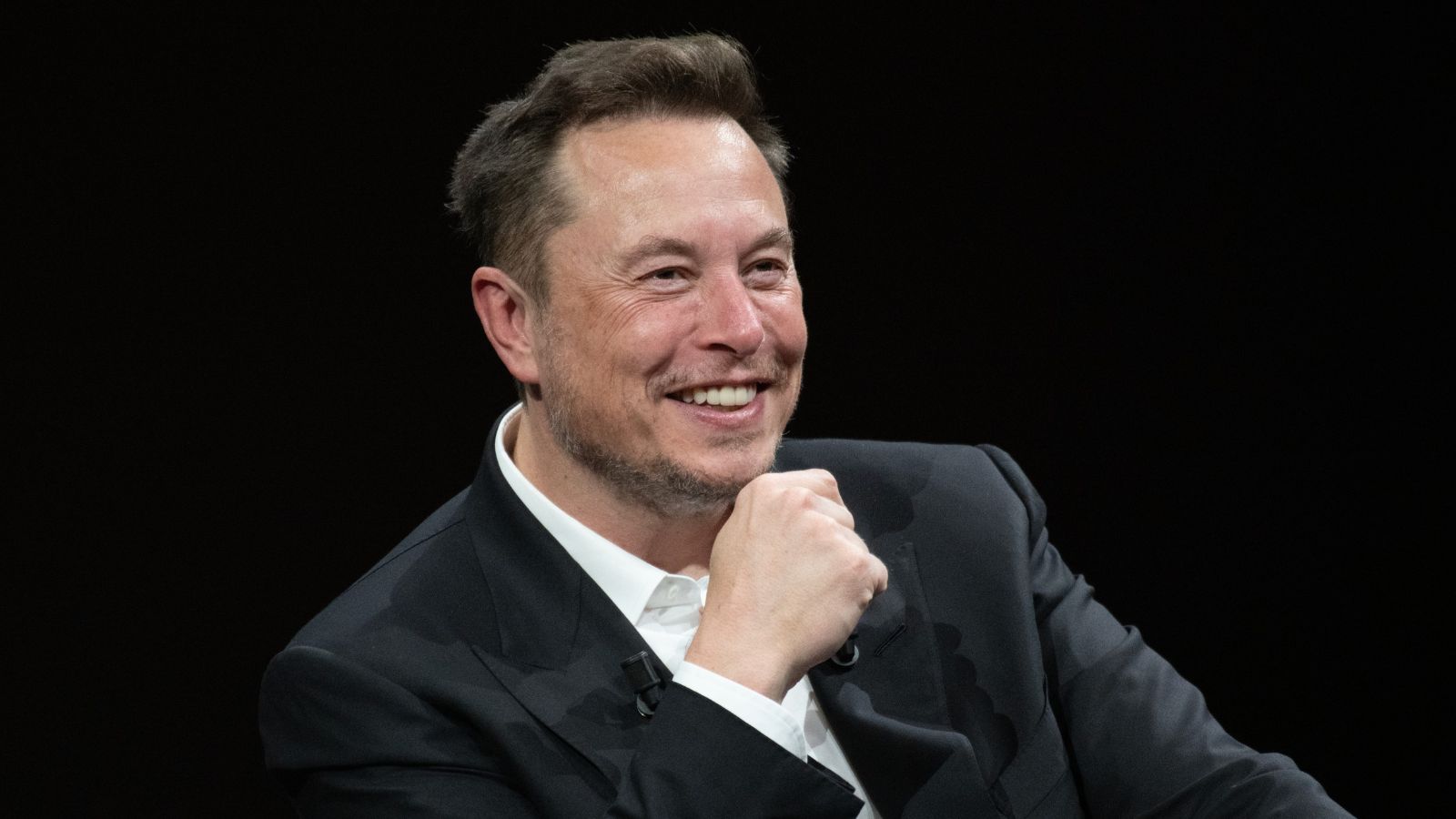
On November 21, 2026, Elon Musk outlined a vision for Tesla vehicles to exchange traffic knowledge and combine that information with Grok’s real-time access to posts on X. The comments came in response to technology commentator Robert Scoble, who was discussing how Tesla’s artificial intelligence and vehicle technology could evolve. Musk described Scoble’s broader vision as largely accurate and suggested the integration would improve the transportation experience, including by informing drivers about conditions at their destinations.
The announcement is significant because it suggests a more ambitious role for Grok than simply answering questions or responding to voice commands. Rather than relying exclusively on conventional navigation information, Tesla could use fleet-generated traffic intelligence alongside updates from its social media ecosystem. However, Musk did not specify whether individual vehicles would transmit raw location information, aggregated traffic observations or other types of data to Grok. He also did not provide a release date, describe consent requirements or confirm which Canadian models would receive the functionality.
How the Technology Could Transform Everyday Navigation
Tesla vehicles already offer online routing that can account for traffic conditions and help drivers avoid congestion. Musk’s proposed integration would potentially build on that foundation by incorporating another source of information: developments discussed in real time on X. For example, a driver travelling along Ontario’s Highway 401 might receive conventional routing advice about congestion while Grok provides additional context about an event near the destination. That kind of combination could make navigation more informative, provided the information is reliable and relevant.
The possibilities extend beyond major highways. A driver approaching downtown Toronto could potentially receive information about a large public gathering, while someone heading to a busy Vancouver destination might learn about a developing disruption before arriving. These are illustrative scenarios rather than features Tesla has confirmed. The difference matters because traffic navigation and social media monitoring operate differently. Traffic systems generally help assess how roads are moving, whereas posts on X can contain unverified observations, opinions and outdated information. Turning those posts into dependable driving guidance would require effective filtering, verification and timing.
Grok Is Already Available in Compatible Tesla Vehicles
Grok is not an entirely new addition to Tesla’s vehicles. The company already offers the AI assistant through its infotainment system, allowing drivers to interact with it through voice commands and the touchscreen. Tesla’s Canadian support documentation describes functions including navigation assistance, phone calls, media searches, climate adjustments and questions about the vehicle. The integration reflects Tesla’s broader strategy of bringing conversational AI directly into everyday driving, reducing the need to interact with separate applications.
However, Grok is not available in every Tesla. According to Tesla Canada, the existing feature requires a compatible AMD infotainment processor, software version 2025.26 or later, and Premium Connectivity or a Wi-Fi connection. More advanced features, including Connectors and Grok Bot, have additional account, software and subscription requirements. These distinctions are important for Canadian owners of older vehicles, who may not have access to the same software capabilities. The new traffic-information concept is separate from Grok’s existing functions, and Tesla has not confirmed whether the proposed integration will follow the same eligibility requirements.
Why Vehicle Location Data Raises Privacy Concerns
Location information can reveal considerably more than whether a vehicle is approaching heavy traffic. When precise movements are recorded over time, they can potentially expose patterns involving a person’s workplace, home, regular appointments and daily routines. A recurring trip may appear unremarkable on its own, but several journeys combined can reveal sensitive personal information. This is why the distinction between anonymous traffic observations and identifiable driving histories matters when evaluating connected-car technology.
Academic research has demonstrated how difficult it can be to protect anonymity in movement records. A 2013 study published in Scientific Reports examined mobility data from approximately 1.5 million people and found that just four location-and-time observations were sufficient to uniquely characterize 95% of individuals in the dataset. The research involved mobile-phone records rather than Tesla vehicles, so its findings cannot be directly applied to the company’s proposed system. Nevertheless, it illustrates why removing names from location information does not automatically eliminate privacy risks. For Tesla’s proposed integration, important safeguards would include limiting unnecessary data collection, controlling its precision and preventing the reconstruction of individual driving patterns.
What Tesla Already Collects From Its Vehicles
Tesla’s existing privacy documentation provides useful context for understanding the proposal. The company says its vehicles generate diagnostic, operational, infotainment and AI-related information. Depending on the information involved, data may be processed directly inside the vehicle, transmitted for fleet analysis or associated with an account under specific circumstances. Tesla states that driving-generated vehicle data is not connected to a customer’s identity or account by default. It also says camera information is generally processed inside the vehicle unless the owner enables certain sharing functions.
The company’s Canadian data-access documentation offers additional details. Speed information may be shared for fleet analysis, while location data and camera recordings are subject to specific sharing conditions. Safety-critical events, such as collisions, can result in additional information being associated with a vehicle. These distinctions demonstrate why the phrase vehicle traffic data requires clarification. Aggregated observations about road congestion are different from an identifiable record showing exactly where one customer travelled. Tesla has not established publicly which categories of information would power the Grok traffic integration, making it premature to conclude that the proposal involves transferring individual travel histories.
Existing Grok Privacy Controls Offer Some Protection, but Questions Remain
Tesla’s Canadian support information states that conversations with Grok are processed by the company operating the AI service and remain anonymous to Tesla. The automaker says it does not associate those conversations with a particular driver or vehicle. For location-related features, Tesla also describes a specific permission called Share precise location. Without that permission, Grok is limited to approximate location information. These existing safeguards help explain how Tesla currently separates certain AI interactions from identifiable vehicle information.
The unanswered question is whether those arrangements would also govern the proposed traffic-information system. Providing Grok with knowledge of a nearby traffic disruption does not necessarily require transferring a customer’s exact GPS history. However, the architecture matters. The system could theoretically process observations inside the vehicle, exchange aggregated road information or send additional context to external servers. Each approach carries different privacy implications. Furthermore, the existing controls for Grok conversations should not automatically be assumed to cover every future integration. Canadian drivers would benefit from a clear explanation of precisely what information is transmitted, which organization processes it and whether new consent options will accompany the feature.
Canadian Privacy Laws Make Consent a Central Issue
Canada’s privacy framework places significant obligations on organizations handling identifiable personal information. The federal Personal Information Protection and Electronic Documents Act, commonly called PIPEDA, establishes requirements for private-sector information practices within its jurisdiction. Provincial legislation also applies in certain circumstances. The Office of the Privacy Commissioner of Canada emphasizes that consent must be meaningful, allowing individuals to understand what information is collected, why it is needed and who will receive it. Simply making a lengthy privacy policy available does not necessarily satisfy those expectations.
For a connected vehicle, these principles become particularly relevant when information could reveal an individual’s movements. Canadian privacy guidance identifies location tracking and unexpected disclosures to third parties as circumstances that may call for express consent. Organizations are also expected to explain significant changes in how personal information is used or shared. Nevertheless, Tesla’s announcement does not establish that the company has violated Canadian privacy law. Whether particular obligations arise will depend on the information involved, its identifiability, the purposes of processing and the applicable jurisdiction. The central issue is whether any new use of personal driving information would be communicated clearly and supported by appropriate safeguards before implementation.
Cross-Border Data Sharing Could Add Another Layer of Scrutiny
Another concern involves where information is processed and which organizations can access it. Tesla’s existing Grok integration relies on a separate AI service operator, while Canadian privacy rules can apply when identifiable customer information is transferred beyond provincial or national borders. The federal privacy commissioner explains that PIPEDA does not generally prohibit international transfers for processing, but organizations remain accountable for protecting personal information under their control. Appropriate safeguards and clear disclosure of relevant practices are therefore essential.
Quebec introduces additional considerations through its strengthened private-sector privacy legislation, commonly associated with Law 25. Organizations covered by those provisions must conduct a privacy impact assessment before communicating personal information outside Quebec, considering the sensitivity of the information, its intended use, available safeguards and the destination’s legal framework. These requirements would become relevant if the planned Tesla-Grok system involved covered personal information and a qualifying transfer. There is currently no public technical description establishing where the proposed traffic data would be processed or whether identifiable Canadian driving information would cross borders. Those details will determine which obligations are relevant.
Real-Time Information Is Only Useful When It Is Accurate
The ability to combine vehicle observations with developments on X could provide useful context during rapidly changing situations. However, social media content is not inherently verified. A post describing a road closure might be accurate when published but outdated minutes later. Another could exaggerate an incident or describe something happening in a different location. If artificial intelligence turns that information into a confident recommendation, the driver might have little indication that the underlying report is uncertain.
The company operating Grok acknowledges in its consumer documentation that the assistant can occasionally produce inaccurate information, including errors associated with misleading source material and AI-generated hallucinations. Separately, the U.S. National Institute of Standards and Technology has identified confidently presented false information as a recognized generative AI risk. These limitations make verification especially important for a system influencing travel decisions. A dependable implementation would ideally distinguish confirmed information from unverified social media reports, recognize outdated posts and provide an indication of uncertainty. Such safeguards could help prevent situations in which drivers unnecessarily change routes or make decisions based on inaccurate destination information.
More Information Could Also Mean More Driver Distraction
The proposed integration raises a safety question beyond data privacy: how much information should a vehicle present while someone is driving? Transport Canada identifies navigation systems and other in-car technology as potential sources of distraction. According to its National Collision Database, distracted driving contributed to an estimated 22.5% of fatal collisions and 25.5% of serious-injury collisions in 2021. Those figures concern distracted driving generally, not Tesla or Grok specifically. Nevertheless, they illustrate why the presentation of additional real-time information deserves careful consideration.
Tesla has also begun rolling out Full Self-Driving version 15 to initial users, introducing changes to driving visualization and navigation that incorporate fleet-learned route preferences. That development is distinct from Musk’s proposed Grok traffic integration. Although Tesla’s Full Self-Driving system can handle numerous driving tasks, the company emphasizes that its currently available supervised features require an attentive driver. An effective Grok integration would therefore need to balance useful updates with minimal distraction. Brief, relevant voice alerts could prove more practical than lengthy descriptions or frequent notifications, but Tesla has not announced the presentation format.
What Canadian Tesla Owners Can Do to Protect Their Information
Canadian Tesla owners already have several ways to review their existing data-sharing preferences. Tesla’s support documentation directs owners to the vehicle’s Software menu, where Data Sharing controls are available. Owners with Grok-enabled vehicles can also examine the assistant’s settings and its precise-location permission. Reviewing these controls is particularly relevant for people who want to understand how much information their vehicles currently share. However, existing settings should not be mistaken for confirmed controls over Musk’s proposed traffic feature, which has not yet been fully explained.
Tesla also provides a process for requesting a copy of eligible information associated with an owner’s account. Through its online privacy request system, customers can request records that may include vehicle usage, service history, charging activity and account details. Tesla cautions that certain information, including historical location records, may not be available through a standard request. Canadians concerned about how their data is handled can raise questions directly with the company, with federal privacy guidance recommending that individuals contact the business before escalating a complaint. Ultimately, the success of Musk’s proposed system may depend as much on transparency and informed choice as on the sophistication of the technology itself.