























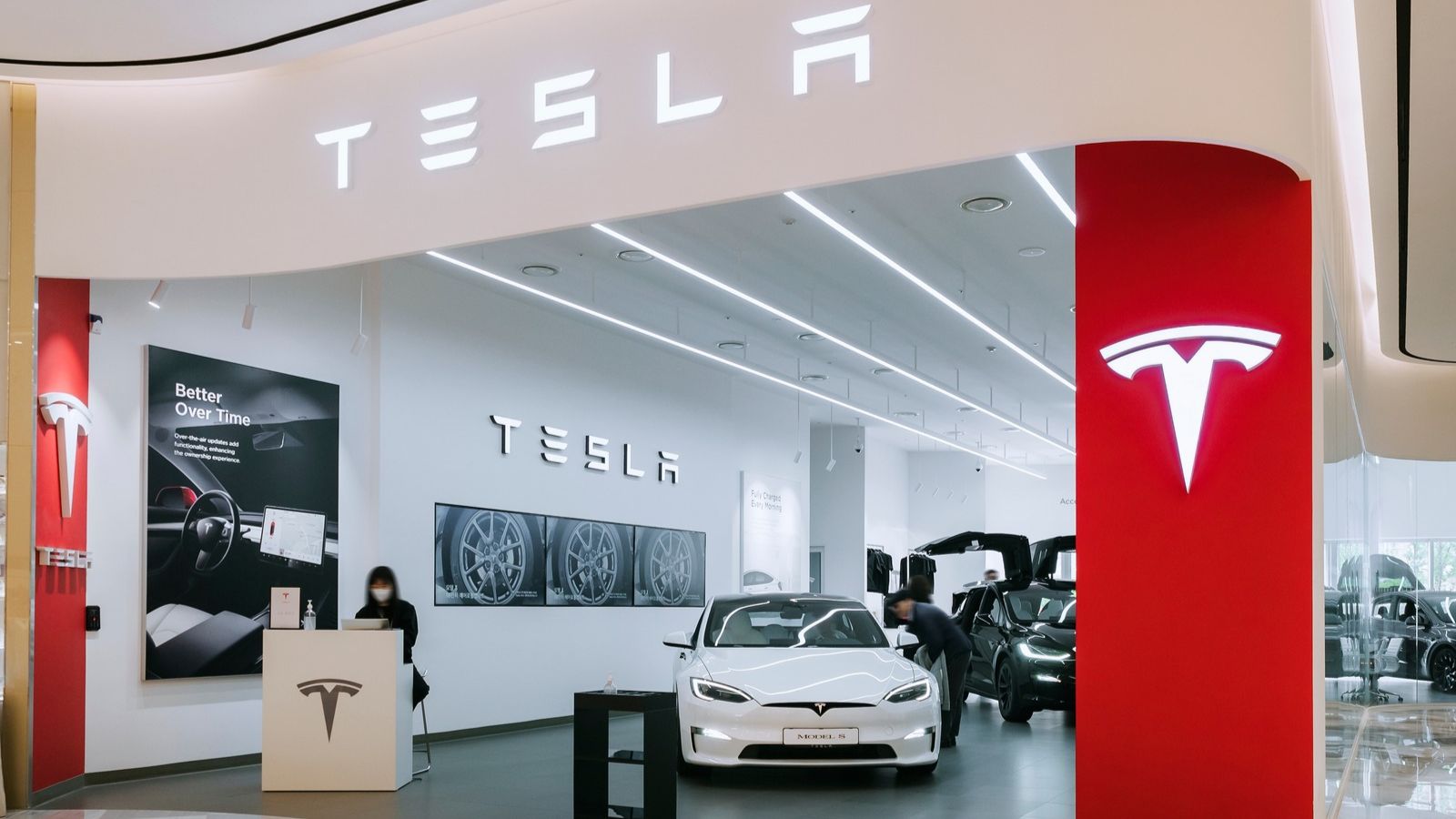
A trade agreement designed to bring more Chinese-built electric vehicles into Canada has produced an unexpected early winner: American automaker Tesla.
New federal figures show that 16,211 vehicles have entered Canada under the country’s revised China EV import arrangements since March 2026. International Trade Minister Maninder Sidhu has acknowledged that most of those vehicles were Teslas, despite the agreement’s broader goal of introducing more affordable electric vehicles and encouraging Chinese automotive investment in Canada.
The development raises questions about who is benefiting most from Ottawa’s decision to replace a 100% surtax with a dramatically lower import tariff. With Chinese manufacturers preparing to expand into Canada, Tesla’s early advantage has also intensified debate over trade policy, consumer affordability, and the future of Canadian automotive manufacturing.
An American Automaker Becomes the Biggest Beneficiary
The arrangement was negotiated with Beijing, yet the advantage has flowed to a company headquartered in the United States. International Trade Minister Maninder Sidhu said most China-made vehicles imported under the policy are Teslas, priced around $40,000. That observation matters because the published quota data identify tariff categories and volumes, not manufacturers. Tesla’s exact share cannot be calculated from those records alone.
Conservative industry critic Adam Chambers challenged the government after saying he had been told Tesla received 90% of the quota allocations. Transport Minister Steven MacKinnon said he did not have the latest brand-level figures and did not confirm that percentage. The controversy is therefore about a documented early lead, not an independently verified 90% market share. Nor do the import totals establish how much profit Tesla has earned. They do, however, reveal how the design of trade policy can benefit a company that was already ready to ship.
How Canada’s New China EV Agreement Works
The policy traces to a January 2026 arrangement between Prime Minister Mark Carney’s government and China. Ottawa removed the 100% surtax it had imposed on Chinese-made EVs in 2024 and opened an annual quota of 49,000 vehicles. Imports admitted within that limit face Canada’s standard 6.1% most-favoured-nation tariff. The change lowered a major trade barrier without giving manufacturers unlimited access to the Canadian market.
The first quota year runs from March 1, 2026, through February 28, 2027. Global Affairs Canada requires shipment-specific import permits and initially distributes access on a first-come, first-served basis, while retaining authority to reserve room for other manufacturers. The agreement also provides for annual quota growth of 6.5%. For buyers, the practical distinction is important: a lower tariff can make importing a car more economical, but it does not automatically reduce its showroom price. Freight, taxes, equipment and company pricing decisions still influence the final bill.
Why Tesla Qualifies Under a Deal With China
Canada’s program is based on where a vehicle was manufactured, not the nationality of its parent company. Global Affairs Canada defines eligible imports using country-of-origin rules that focus on substantial manufacturing in China. This places Shanghai-built Teslas in the same customs category as vehicles produced by Chinese-owned automakers. Tesla’s Shanghai factory is already a major international production and export centre, giving the company an established supply channel when the tariff reduction took effect.
For newer Chinese manufacturers, obtaining regulatory clearance, establishing distribution networks, and building consumer confidence create additional challenges. Tesla already sells vehicles throughout Canada and has established ordering, delivery and service operations. It could therefore benefit from the agreement without launching an entirely new business. That does not mean Ottawa designed the arrangement specifically for Tesla. Instead, the situation demonstrates how an established manufacturer can move faster than newcomers when government policy suddenly creates an opportunity.
The 16,211 Imports Reveal a Dramatic Slowdown
Federal records updated November 13 show that 16,211 vehicles had been imported against the 49,000-unit annual ceiling, representing approximately one-third of the available quota. Most activity occurred during the first six-month period, when 15,603 vehicles entered Canada between March and August. July accounted for 5,982 vehicles, followed by 5,490 in August. Another 3,510 arrived in May, reflecting a concentrated period of imports following the tariff reduction.
Activity subsequently slowed. Government records show 603 vehicles in September, none in October and just five in November through the reporting date. That left 32,789 quota spaces unused. One important technical distinction is that the official figures include 702 vehicles classified as non-plug-in hybrids, meaning the total does not represent exclusively battery-electric cars. The figures also measure imports under the quota rather than vehicles registered or sold to Canadian motorists. Those differences matter when evaluating the agreement’s commercial success.
Tesla’s Model 3 Order Pause Exposes a Quota Paradox
Tesla’s advantage has already encountered a significant obstacle. In October, the automaker stopped accepting Canadian orders for its Shanghai-built Model 3 Premium, explaining that strong demand had exhausted its import allocation. The company indicated that ordering might resume if Ottawa provided additional quota access, potentially in March 2027. The suspension affected both Premium configurations, including the lower-priced rear-wheel-drive model previously listed at $39,490.
The apparent contradiction is that Canada’s overall import quota remained far from exhausted. More than 32,000 spaces were still available in the November reporting figures. Global Affairs Canada’s regulations allow officials to reserve quota space for equitable access by other manufacturers, although the department has not publicly disclosed Tesla’s individual allocation. The situation highlights the difference between a national import ceiling and the number of vehicles a particular automaker can bring into Canada. For consumers, substantial unused quota capacity does not necessarily translate into immediate vehicle availability.
The $35,000 Affordability Target Needs Context
Federal officials say roughly half the vehicles imported under the arrangement had declared import values below $35,000. Government data provide a more precise picture: 7,813 of the 16,211 vehicles were classified at or below that threshold. However, the figure represents a vehicle’s import value, not its Canadian retail price. A car entering the country at less than $35,000 can carry a higher showroom price once transportation, applicable taxes, distribution expenses and manufacturer pricing are considered.
This distinction becomes increasingly important under the agreement’s future affordability requirements. The first quota year has no mandatory low-price reserve. Beginning in 2027, 10% of the quota will be reserved for vehicles with a Free On Board value of $35,000 or less, increasing to 50% by 2030. The provisions are intended to encourage more affordable imports and broaden consumer choice. They do not, however, guarantee that Canadian drivers will be able to purchase those vehicles for $35,000.
Chinese Automakers Are Preparing to Challenge Tesla
Tesla’s early advantage partly reflects the time required for competing manufacturers to establish Canadian operations. In its November 16 update, Global Affairs Canada reported that a second automaker based in China had completed Transport Canada requirements and begun importing vehicles. Officials did not identify the manufacturer or its models, but said the vehicles were expected to have import prices below $35,000. That represents progress, although it does not establish when they will become available to Canadian customers.
Other companies are preparing potential market entries. BYD has explored Canadian dealership opportunities, while manufacturers such as Chery, Geely and Dongfeng have also expressed interest in the country. Reuters has reported on the companies’ efforts to obtain approvals and establish retail networks. International Trade Minister Sidhu has indicated that more Chinese brands could arrive in early 2027. For buyers, however, competition will depend on more than initial prices. Reliable servicing, available replacement parts, warranties and accessible dealerships will help determine whether unfamiliar brands gain a lasting foothold.
Ottawa’s Bigger Promise Is Canadian Manufacturing Jobs
Canada’s agreement with China was designed to accomplish more than increasing vehicle imports. Federal officials have repeatedly emphasized the possibility of attracting Chinese investment into joint ventures involving Canadian companies. The government’s stated ambitions include protecting automotive employment, expanding domestic production, developing supply chains and creating opportunities for Canadian workers. Those goals carry particular significance for manufacturing communities facing uncertainty over North American trade and future vehicle production.
However, importing completed vehicles does not automatically create domestic manufacturing jobs. Cars arriving through Canadian ports may support transportation, distribution and retail employment without generating new assembly-line positions. As of the November discussions, no major Chinese automotive manufacturing joint venture under the agreement had been publicly announced. Ottawa’s consultation process also examined whether import access should be linked to local investment, research, production and job creation. The policy’s ultimate economic value will depend partly on whether promised investments become operating facilities, sustained employment and meaningful opportunities for Canadian suppliers.
The Agreement Is Also Part of Canada’s Wider Trade Strategy
The agreement reaches beyond automobiles and reflects Canada’s efforts to diversify international trade. Ottawa negotiated tariff concessions for agricultural exports, including Canadian canola, as part of the broader arrangement. According to the federal government’s November update, canola-seed exports to China reached $1.74 billion between March and August 2026, representing a 43% increase over the same period in 2025. That provides a measurable benefit to an industry that had faced substantial trade barriers.
Meanwhile, President Donald Trump’s tariffs have complicated Canada’s longstanding automotive relationship with the United States. Carney has maintained that preserving an integrated North American vehicle industry remains his preferred outcome, but has also discussed potential partnerships with Asian and European manufacturers if American trade restrictions continue. The resulting situation contains a striking irony: while Canada seeks alternatives to its dependence on the U.S. automotive market, a major early beneficiary of its new trade opening is an American electric vehicle manufacturer.
Security Concerns Add Another Complication
Vehicle prices are only part of Ottawa’s calculation. Modern connected cars can collect location, driving and diagnostic information, raising questions about data handling and cybersecurity regardless of where a vehicle is built. Former national security adviser Jody Thomas has publicly warned about risks she associates with Chinese EVs, while Transport Minister Steven MacKinnon has indicated the government will examine possible restrictions at sensitive facilities. These are concerns and proposed reviews, not proof that every Chinese-built vehicle is transmitting data improperly.
The issue is especially sensitive around government buildings and military installations, where officials may apply stricter security standards than those needed for ordinary road use. At the same time, Tesla’s presence shows why manufacturing origin alone cannot explain a vehicle’s ownership, software or data practices. Policymakers must balance consumer choice and trade benefits against evidence-based security assessments. For drivers, transparent privacy policies and clear regulatory safeguards could become important purchasing considerations.
What Happens When Canada’s EV Quota Resets in 2027?
The next revealing test may arrive on March 1, 2027, when Canada begins the second year of its China-origin import arrangement. Under the agreement’s 6.5% annual growth rule, the allowance would increase from 49,000 to approximately 52,185 vehicles. A new requirement to reserve 10% of places for lower-import-priced vehicles could also alter which manufacturers secure access. Those rules do not guarantee any individual brand a particular allocation.
If more Chinese automakers complete regulatory requirements and establish dealership networks, Tesla could face stronger competition than it encountered during the first months. Conversely, slow launches could leave much of the allowance unused again. The most useful measures of success will be official import totals, actual Canadian retail prices, deliveries to customers and verifiable commitments to Canadian manufacturing. For now, Tesla’s early lead is supported by ministerial statements, but the longer-term winners—and the benefits for Canadian drivers and workers—remain unsettled as the market evolves.