
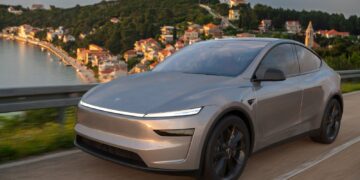





















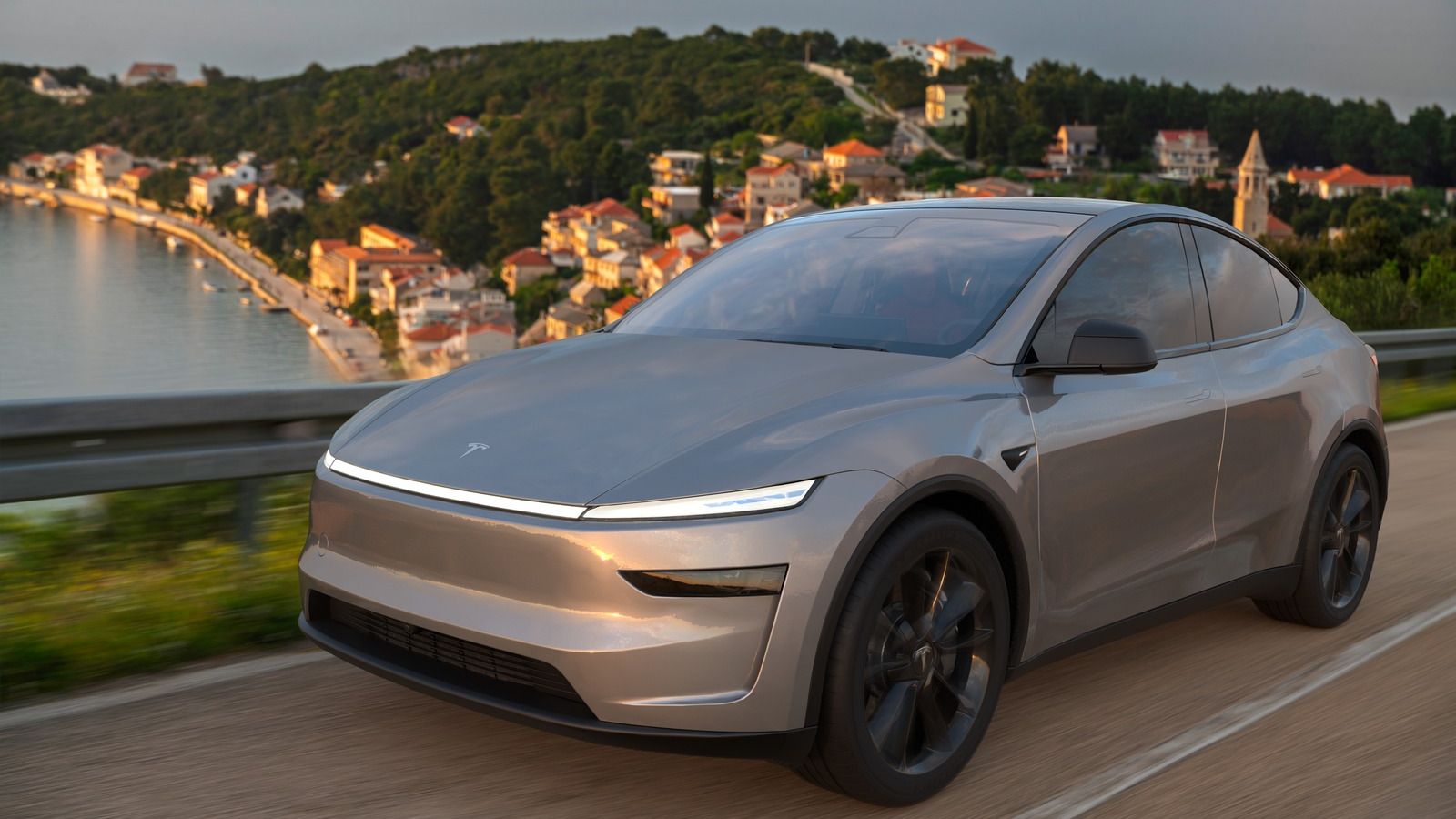
Tesla has quietly increased the driving range of its cheapest Model Y in the United States, giving American buyers a significant improvement without raising the vehicle’s starting price. The rear-wheel-drive electric SUV now advertises 348 miles (approximately 560 kilometres) of estimated range, up from 321 miles (516 kilometres), representing an increase of roughly 43 kilometres.
Canadian buyers, however, aren’t receiving the same upgrade. Tesla’s Canadian website continues to advertise just 463 kilometres for its entry-level Model Y, leaving a nearly 100-kilometre difference between the two markets.
The discrepancy highlights more than a simple difference in specifications. With different battery configurations, manufacturing sources, and market strategies influencing Tesla’s North American lineup, the latest change raises important questions about what Canadian consumers are getting for their money.
A Range Increase Without a Price Increase
The biggest development for American customers is that Tesla has made its most affordable Model Y substantially more attractive without increasing its advertised starting price. The rear-wheel-drive model now offers an estimated 348 miles of range, compared with its previous 321-mile rating. That represents an improvement of approximately 8.4%, a meaningful increase for an electric SUV designed to appeal to cost-conscious buyers.
The vehicle’s starting price remains US$39,990 before destination charges and other applicable fees. For someone planning a weekend road trip or regularly travelling between cities, the additional estimated range could provide more flexibility when choosing charging stops. Importantly, however, the increase concerns Tesla’s advertised range rather than a demonstrated improvement in every driving condition. The company has not publicly explained whether the revised estimate comes from changes in battery capacity, vehicle efficiency, testing, or another factor. Until additional technical information emerges, the higher number is best understood as an updated manufacturer estimate rather than proof of a newly upgraded battery.
Canadian Buyers Still Have 463 KM of Estimated Range
While the American Model Y has received a noticeable range increase, Tesla’s Canadian website continues to list the entry-level rear-wheel-drive version at 463 kilometres. The Canadian vehicle comes with 18-inch wheels, seating for five, and a manufacturer-quoted acceleration time of 7.2 seconds from zero to 100 km/h. Its advertised driving range has not changed alongside the latest U.S. update.
The difference between the two countries is larger than the headline increase might initially suggest. America’s 43-kilometre improvement refers to the additional range compared with the previous U.S. specification. When the newly advertised American figure of approximately 560 kilometres is compared directly with Canada’s 463 kilometres, the difference is approximately 97 kilometres. That puts the Canadian model at roughly 17% less advertised range than its U.S. counterpart. For Canadian drivers who regularly travel long distances, particularly through regions with widely spaced charging facilities, that difference could influence purchasing decisions. The figures are useful comparisons, although actual driving distances will depend on conditions and vehicle configuration.
Different Factories Help Explain the Range Gap
One of the most important differences between the American and Canadian Model Y is where the vehicles are manufactured. Tesla supplies its U.S. market through American production facilities, including Fremont, California, and Gigafactory Texas. The entry-level Canadian Model Y, meanwhile, is imported from Tesla’s Gigafactory Berlin-Brandenburg in Germany. Although the vehicles carry the same Model Y name, their battery configurations are not identical.
Industry reporting identifies the Canadian rear-wheel-drive model as using a lithium iron phosphate (LFP) battery pack of approximately 63 kWh, while the American version uses a larger nickel-based pack of roughly 69 to 69.5 kWh. Tesla describes LFP technology as an option emphasizing durability and cost, while nickel-rich batteries offer higher energy density. Those distinctions help explain why vehicles sold under the same name can have different driving ranges. However, they do not establish what caused the newest 43-kilometre American increase. The range gap existed before the latest adjustment, and Tesla has not confirmed any corresponding change to Canadian production.
Tesla Hasn’t Explained Where the Extra Range Came From
Despite the updated U.S. specification, Tesla has not provided a detailed public explanation of how it achieved the higher range estimate. There has been no confirmed announcement of a larger battery, redesigned electric motor, or other major hardware modification specifically responsible for the increase. The company’s American website simply presents the longer estimated range as part of the vehicle’s existing specifications.
That uncertainty matters because an improvement in an advertised range figure does not necessarily mean that every vehicle has received a physical upgrade. Manufacturers can revise estimates as vehicle configurations, engineering specifications, and testing information change. It would therefore be premature to suggest that Tesla has found a way to unlock an additional 43 kilometres through software alone. Equally, there is no confirmation that existing American Model Y owners will receive a comparable range increase. For prospective buyers, the latest specification is encouraging, but the absence of technical details leaves an unanswered question: whether the newly advertised figure reflects a meaningful change in the vehicle itself or a revised assessment of its capabilities.
The EPA’s Official Database Still Shows the Older Rating
There is another important detail behind Tesla’s latest announcement: the higher American range estimate has not yet appeared in the U.S. government’s publicly accessible fuel-economy database. As of November 16, 2026, FuelEconomy.gov continues to list the 2026 Model Y Standard Rear-Wheel Drive with 18-inch wheels at 321 miles. Its recorded combined efficiency is 138 MPGe, equivalent to approximately 24 kWh of electricity consumed per 100 miles. Tesla’s own website, meanwhile, advertises 348 miles.
The difference does not automatically mean Tesla’s revised estimate is incorrect. Rather, it means the updated manufacturer claim and the publicly available federal record have not yet aligned. Official range information matters because standardized testing gives consumers a more consistent basis for comparing vehicles. Wheel configuration is important as well: the federal database separately lists the 19-inch-wheel version of the previously rated Model Y Standard at 303 miles. Buyers should therefore examine the exact model and wheel combination being compared, rather than assuming every Model Y receives the same advertised range.
Tesla Is Also Removing a Cheaper All-Wheel-Drive Option
The range adjustment arrives alongside another notable change to Tesla’s American lineup. In November, Tesla removed its US$41,990 entry-level Model Y All-Wheel Drive from the online ordering system, only about nine months after the variant was introduced. That model offered approximately 294 miles of estimated range and gave consumers a relatively affordable option for purchasing a dual-motor electric SUV.
Without that configuration available for new custom orders, American buyers seeking all-wheel drive must now move to the Model Y Premium All-Wheel Drive, starting at US$49,990. That raises the lowest advertised price for a configurable all-wheel-drive Model Y by US$8,000, although some vehicles from the previous version may remain available in existing inventory. The Premium AWD advertises 327 miles of range, actually less than the newly updated 348-mile rear-wheel-drive model. This creates an interesting choice: buyers prioritizing distance and affordability may prefer the entry-level vehicle, while those seeking additional traction and stronger acceleration must spend considerably more. Tesla has not confirmed whether the removed AWD configuration will eventually return.
Charging Capabilities Also Differ Between the Two Countries
Driving range is not the only specification separating the American and Canadian entry-level Model Y. Tesla’s U.S. website lists a maximum Supercharging capability of 225 kW for the rear-wheel-drive vehicle, compared with 175 kW for the Canadian version. Under Tesla’s specified conditions, the American model can add up to 166 miles, or approximately 267 kilometres, of estimated driving range in 15 minutes. The Canadian model advertises up to 243 kilometres over the same period.
These figures suggest an additional practical difference between the two market configurations. However, peak charging power should not be confused with a guaranteed charging speed throughout an entire session. Tesla explains that charging performance depends on battery temperature, the battery’s current charge level, and the available charging equipment. Charging generally slows as the battery fills. For someone making frequent highway journeys, a vehicle’s charging curve and access to reliable stations can matter almost as much as its total range. The different specifications also reinforce why Canadian buyers should not assume U.S. Model Y improvements automatically apply to their vehicles.
Canadian Shoppers Can Get More Range, but They Must Spend More
Tesla does offer Canadian customers alternatives with longer estimated driving ranges, although they require moving beyond the entry-level model. The Canadian Model Y Premium All-Wheel Drive advertises 542 kilometres of range, while the Model Y Performance offers 494 kilometres. Both improve upon the base model’s 463-kilometre figure, but neither matches the newly advertised American rear-wheel-drive range of approximately 560 kilometres.
The price differences are substantial. Tesla lists the Canadian entry-level Model Y at C$49,990, while the Premium All-Wheel Drive starts at C$64,990 and the Performance at C$74,990, before applicable delivery charges and taxes. That means a Canadian buyer seeking the Premium AWD’s additional 79 kilometres of estimated range faces a C$15,000 increase in the vehicle’s starting price. The upgrade also brings all-wheel drive and stronger acceleration, making it more than a simple battery purchase. Still, the comparison highlights an unusual situation: American customers can now access an estimated driving range exceeding that of Canada’s more expensive Premium AWD, without stepping beyond the base U.S. Model Y.
Canada’s Winter Conditions Make the Difference More Important
For Canadian drivers, electric vehicle range is particularly important during the winter months. Cold temperatures can reduce battery efficiency, while cabin heating, battery conditioning, winter tires, and snow-covered roads can increase energy consumption. Natural Resources Canada explains that electric vehicles can lose approximately 25% to 30% of their driving range in extreme cold, although the actual reduction varies considerably depending on the vehicle and conditions.
For perspective, a hypothetical 25% reduction applied to the Canadian Model Y’s advertised 463-kilometre range would leave approximately 347 kilometres of usable driving distance. That calculation is illustrative rather than a specific prediction for the Model Y, but it demonstrates why extra rated range can provide reassurance. Consider a family leaving Ottawa for a winter weekend trip, carrying luggage and relying on highway charging. The available battery reserve could matter more than it would during a mild summer commute. Tesla recommends preconditioning the battery while plugged in, using its Energy app to monitor consumption, and allowing Trip Planner to identify suitable charging stops. These tools can help drivers manage seasonal range losses.
Canadian Buyers May Have to Wait Longer for Any Changes
Canadian Tesla customers are also facing another complication: longer estimated delivery times. On November 13, Canadian Tesla publication Drive Tesla reported that new Model Y orders were showing estimated delivery windows between March and May 2027, compared with January to March earlier in the same week. The reported change affected all three Canadian Model Y configurations, adding uncertainty for customers planning a new vehicle purchase.
Those delivery estimates do not mean Canadian vehicles will automatically receive the upgraded American range specification before arriving. Tesla has made no confirmed announcement about introducing the same change in Canada, and the existing differences in battery chemistry and manufacturing locations make an identical update far from certain. Customers considering an order should verify the advertised range, wheel configuration, charging capability, and delivery estimate for their specific vehicle rather than relying on American specifications. For now, the situation remains clear: U.S. buyers can order an entry-level Model Y advertising approximately 560 kilometres of range, while the Canadian counterpart remains at 463 kilometres. Whether that nearly 100-kilometre gap eventually narrows is an unanswered question.