






















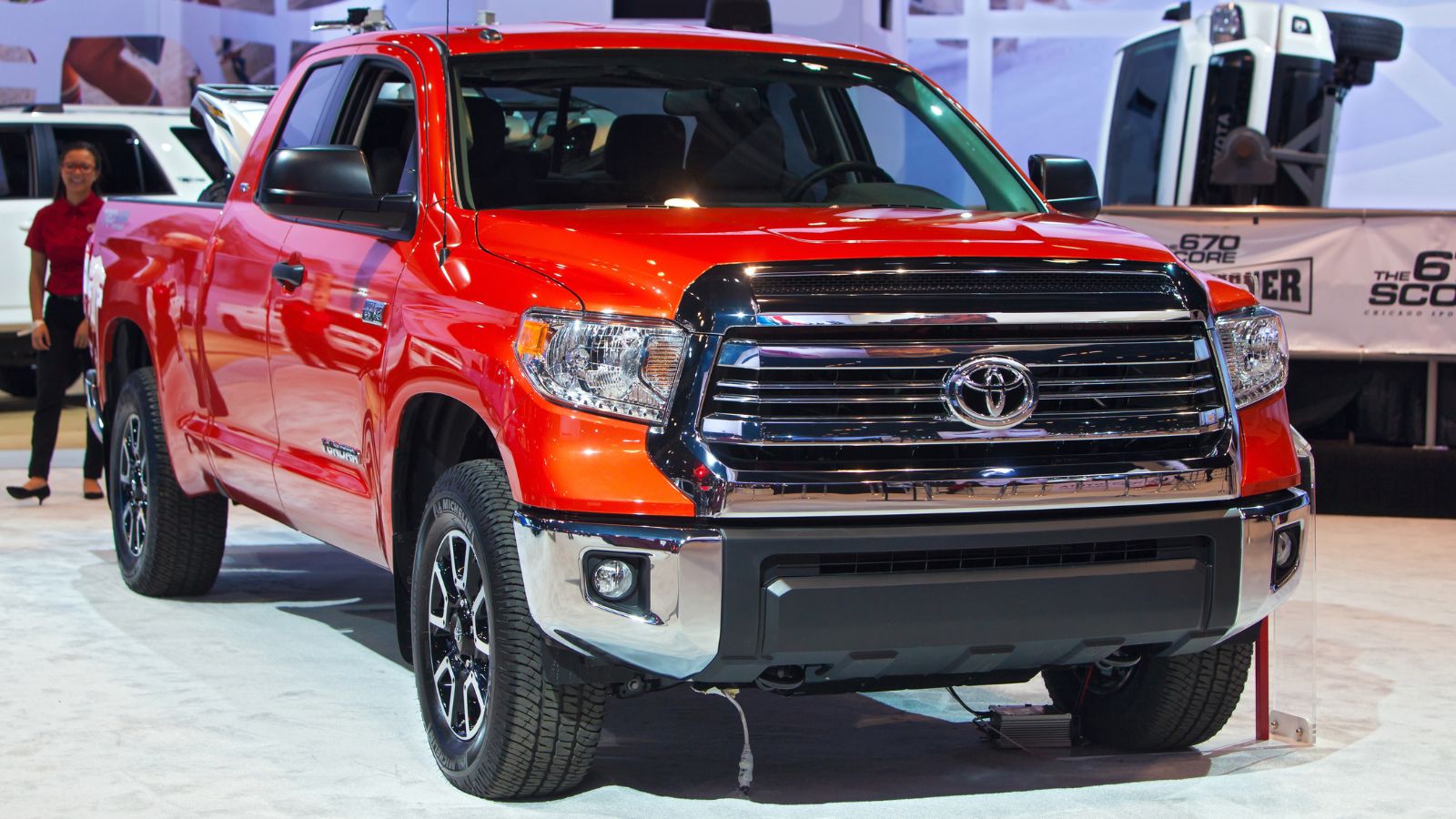
A sudden loss of engine power can turn an ordinary highway drive into a dangerous situation, particularly when it happens without enough time to react. Toyota has announced a safety recall affecting approximately 6,835 Tundra pickup trucks in Canada after identifying a manufacturing defect that could cause an internal engine component to break while driving.
Announced November 13, 2026, the recall covers certain 2022–2023 and 2025–2026 Tundra models. Toyota says a potentially defective camshaft could fracture, causing the truck to lose driving power and increasing the risk of a collision.
Although the company believes relatively few camshafts may be defective, thousands of vehicles require inspection. Owners will be contacted about dealership inspections and free replacements where necessary, adding another engine-related safety concern to Toyota’s full-size pickup lineup.
Toyota Confirms 6,835 Tundra Trucks Are Included in the Canadian Recall
Toyota Canada’s November 13 announcement identifies approximately 6,835 Tundra pickups that may contain an incorrectly manufactured engine camshaft. The affected vehicles fall within four model years: 2022, 2023, 2025 and 2026. The recall does not automatically apply to every truck produced during those years, however. Toyota is targeting vehicles that could have received components from a particular manufacturing batch. Owners will need to confirm their individual vehicle’s status through the manufacturer’s recall system rather than relying on model year alone. For Canadian drivers who depend on their pickups for commuting, hauling equipment or travelling long distances, the announcement creates an important maintenance concern.
The issue also extends beyond Canada. Toyota’s American division announced a corresponding recall involving approximately 62,000 non-hybrid Tundra pickups in the United States. Both announcements identify the same potential camshaft manufacturing defect and the possibility of losing driving power at higher speeds. The numbers represent vehicles requiring attention, not confirmed engine failures. Toyota has not published a breakdown establishing exactly how many of the 6,835 Canadian trucks contain defective components. That distinction matters because a broad inspection campaign can involve many more vehicles than the number ultimately requiring replacement parts.
A Manufacturing Defect Could Cause a Critical Engine Component to Snap
At the centre of the recall is the camshaft, a rotating engine component responsible for controlling the opening and closing of the intake and exhaust valves. These valves must operate at precisely timed intervals to allow an engine to produce power efficiently. While drivers rarely think about camshafts during routine maintenance, their operation is essential to keeping an internal combustion engine running correctly. A damaged or broken camshaft can disrupt the engine’s valve operation and prevent it from functioning as intended. Unlike a worn accessory or a minor electronic inconvenience, a serious camshaft failure involves machinery that is fundamental to engine operation.
Toyota says the affected components were manufactured incorrectly and could snap while the vehicle is moving. The company has traced the potentially faulty camshafts to one production lot supplied by a specific manufacturer. Its public Canadian announcement does not identify the supplier or provide a detailed explanation of the manufacturing error. It also does not describe a particular mileage threshold at which failure becomes likely. The concern is therefore not simply that an engine might eventually require maintenance, but that a critical internal part could fail during normal driving, creating an immediate safety risk.
Sudden Power Loss at Highway Speeds Creates a Serious Safety Concern
The most significant danger identified by Toyota is the possibility of losing motive power while travelling at higher speeds. Motive power is the force the engine and drivetrain provide to keep the vehicle moving. If a camshaft breaks and the engine can no longer produce the required power, a driver could experience an unexpected loss of acceleration. Toyota specifically warns that this situation could increase the likelihood of a crash. The manufacturer has not characterized the recall as a routine performance issue, making it important for affected owners to understand that the potential consequences extend beyond inconvenience or repair costs.
Consider a pickup travelling along a busy stretch of Highway 401 or merging onto a major road. An unexpected loss of acceleration could make it difficult to maintain speed, complete a manoeuvre or move away from surrounding traffic. The situation could become especially challenging if nearby vehicles are travelling quickly or the driver has limited room to reach a safe location. These are illustrative scenarios rather than reported incidents tied to the recall. Toyota’s November 13 announcement does not provide a count of crashes, injuries or confirmed roadside failures associated with the defect. Nevertheless, the potential consequences of an engine losing power are serious enough to warrant a formal safety campaign.
Toyota Believes Approximately 300 Camshafts May Be Defective
One of the most important details in Toyota’s announcement is the difference between the number of vehicles recalled and the number of components believed to be defective. Although approximately 6,835 trucks are included in the Canadian campaign, Toyota estimates that roughly 300 camshafts could be affected by the manufacturing problem. The company links those components to a single production lot from a particular supplier. The figure should not be interpreted as 300 confirmed defective camshafts in Canada. Toyota has not provided a country-specific allocation, nor has it established that every potentially affected component has failed or will eventually fail.
This distinction explains why the recall population is considerably larger than the estimated number of questionable parts. A manufacturer may need to inspect numerous vehicles because production records or component-tracking information cannot conclusively establish which ones received an affected component. For owners, the comparatively small estimate may provide some perspective, but it does not eliminate the need for inspection. A truck that operates normally today could still contain a component requiring replacement. The inspection process is intended to separate vehicles that need corrective work from those that do not, rather than assuming that every recalled pickup will require a major engine repair.
Certain 2022, 2023, 2025 and 2026 Models Are Affected, but 2024 Is Missing
The model-year pattern makes this recall unusual. Toyota identifies certain 2022 and 2023 Tundras alongside newer 2025 and 2026 trucks, while the 2024 model year is not included in the newly announced camshaft campaign. The manufacturer’s American announcement specifically identifies non-hybrid Tundras, and automotive reporting confirms that hybrid versions and Sequoia SUVs are not included in the U.S. campaign. Toyota Canada’s shorter announcement does not separately spell out the Canadian powertrain exclusions. As a result, owners should confirm eligibility using their Canadian vehicle identification number rather than relying exclusively on information published for American vehicles.
The exclusion of 2024 Tundras from this particular campaign does not mean those trucks have been free of engine concerns. In May 2026, Toyota announced a separate Canadian recall involving approximately 3,734 non-hybrid Tundras from the 2024 model year because of possible machining debris left inside their engines. That problem concerned potential bearing damage rather than a defective camshaft. The distinction is important for anyone researching a used Tundra or trying to determine whether a previous dealership visit addressed the newest issue. Different recalls can involve different production periods, components and repairs, even when they concern similar symptoms such as an engine losing power.
Toyota Dealers Will Inspect the Camshaft and Replace It if Necessary
Toyota has outlined a targeted repair procedure for the newest recall. Owners whose vehicles are included will be instructed to visit an authorized Toyota dealership, where technicians will inspect the camshaft to determine whether it may have come from the affected production lot. If the component is identified as potentially defective, the dealership will replace it without charging the customer. This approach differs from automatically replacing an entire engine in every vehicle covered by a campaign. Toyota’s published remedy focuses on identifying the questionable camshaft and replacing that particular part when necessary.
The company has not provided a public estimate of how long the inspection or replacement will take. It has also not specified whether every affected truck will require the same amount of disassembly or whether replacement parts will be immediately available at every Canadian dealership. Owners should therefore avoid assuming that the work can always be completed during a short service appointment. A dealership can provide more specific scheduling information once the recall procedures are available for the vehicle. For owners who rely on their Tundras for work, arranging an appointment and understanding the potential time without their truck will be important. The inspection and required camshaft replacement will be free of charge.
Affected Owners Should Receive Recall Notifications by Mid-January 2027
Toyota expects to notify owners of affected vehicles by mid-January 2027. The notification process is intended to direct drivers to an authorized dealership for inspection and any necessary replacement. That gives the manufacturer a period between its November announcement and the anticipated owner-notification deadline to coordinate the campaign. Toyota has not published a specific Canadian appointment-opening date in its initial announcement. The January timeline also does not establish that every vehicle will already have been inspected or repaired by then. It describes when owners are expected to receive notice, not when the entire recall will be completed.
Canadian owners do not necessarily need to wait for a letter before investigating whether their truck is involved. Toyota maintains an online recall lookup system that accepts a vehicle identification number, commonly called a VIN. The company also provides a Canadian customer assistance number for questions about safety campaigns. Transport Canada recommends that drivers check recall information regularly and keep their contact details current with manufacturers. This is particularly important when vehicles change ownership or drivers move. An outdated mailing address could delay an important notice, while a VIN-based inquiry can help an owner establish whether further action is required.
The Latest Camshaft Problem Is Separate From Toyota’s Previous Engine Recalls
Toyota’s newest Tundra recall arrives after several earlier campaigns involving its twin-turbocharged V6 engines. In May 2024, the automaker recalled certain 2022 and 2023 Tundras because machining debris may not have been removed properly during engine manufacturing. The debris could damage crankshaft bearings, potentially causing rough running, knocking, failure to start or loss of power. Toyota’s original Canadian announcement identified approximately 9,665 affected Tundras and 314 Lexus vehicles. The remedy for that campaign involved replacing affected engines at no cost. The issue drew attention because it concerned internal engine reliability in relatively recent vehicles.
The problem prompted additional action. Toyota announced another Canadian engine-related recall in November 2025, followed by a May 2026 campaign covering certain 2024 Tundras. Transport Canada’s 2026 recall documentation describes inspections of the number-one main bearing and engine replacement when necessary. The November 2026 camshaft issue is different: it concerns a component that may fracture because of incorrect manufacturing, not metal debris damaging bearings. Owners should not assume that completing an earlier engine recall automatically resolves the latest campaign. Each safety recall has its own affected vehicle population and corrective procedure, making an updated VIN check essential even when a truck has already undergone extensive dealership repairs.
Canadian Tundra Owners Should Check Their VIN and Keep Recall Records Updated
The most practical step for owners is to determine whether their individual vehicle is part of the latest campaign. Toyota Canada’s recall lookup is available at Toyota.ca/recall, while its Customer Interaction Centre can be reached at 1-888-869-6828. The VIN identifies the specific truck and allows the manufacturer or dealership to check applicable recall records. For drivers purchasing a used Tundra, this check is particularly valuable because a previous owner may have missed a notification or postponed an earlier repair. Transport Canada also encourages used-vehicle owners to register their information with manufacturers so future safety notices can reach them.
Owners who discover that their truck is affected should contact an authorized dealership for instructions and follow any interim guidance Toyota provides. A vehicle experiencing unusual engine behaviour or unexpected power loss warrants prompt professional attention, even if the driver has not yet received a recall letter. Transport Canada recommends completing safety recall repairs as soon as they are available and advises owners to keep their mailing information updated. For the thousands of Canadians included in this campaign, the important distinction is between being recalled and having a confirmed defective camshaft. Toyota expects inspections to establish which trucks need replacement components, while the ultimate priority remains preventing an unexpected engine failure on the road.