






















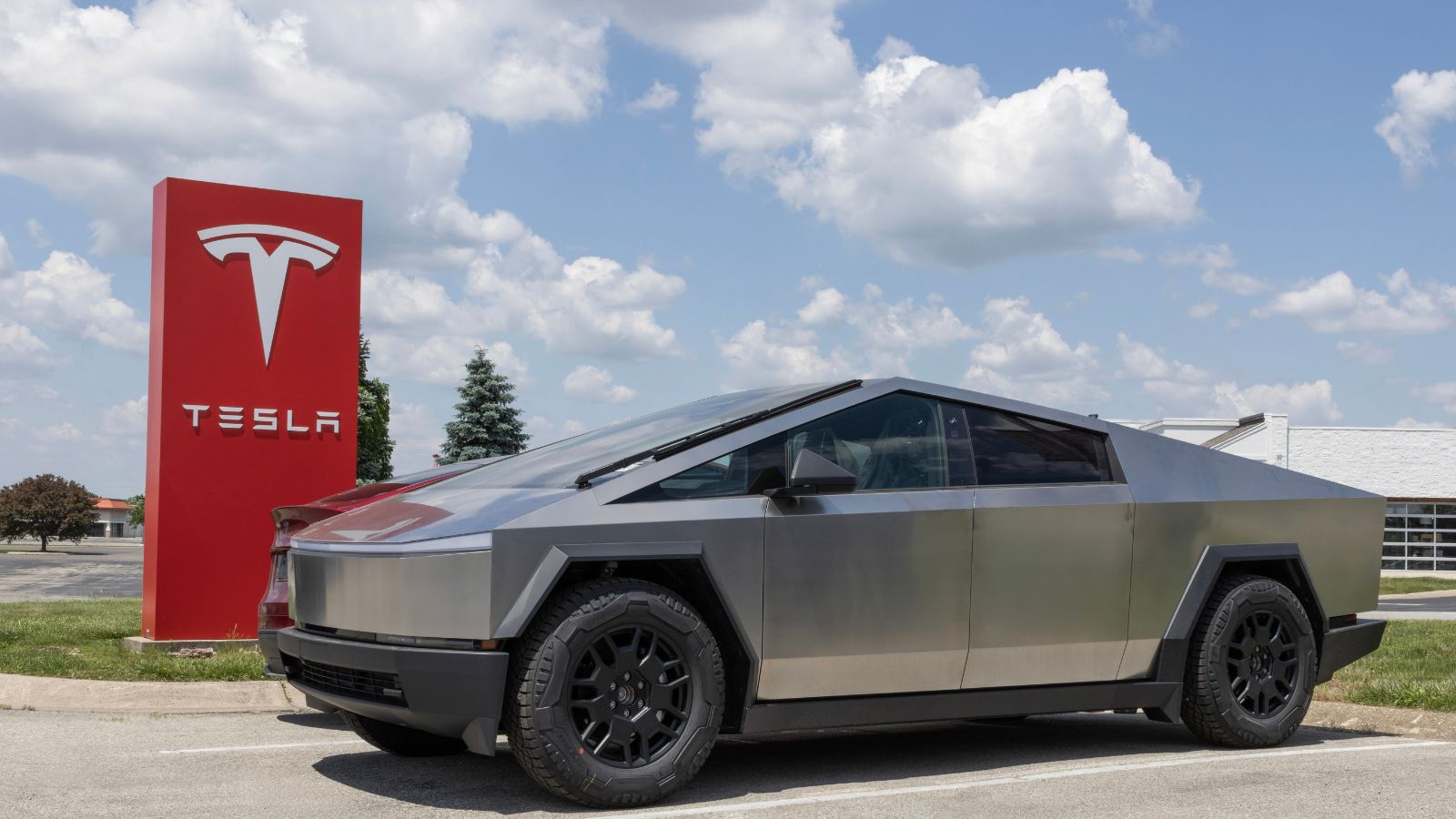
Tesla’s Cybertruck was supposed to transform America’s pickup truck market. Instead, the futuristic electric vehicle is approaching a major turning point after disappointing sales, repeated recalls, and growing questions about its commercial future. On November 6, 2026, Tesla CEO Elon Musk announced plans to wind down Cybertruck production at the company’s Texas factory around mid-2027, shifting manufacturing capacity toward its Cybercab robotaxi.
The announcement follows a dramatic decline in demand. U.S. Cybertruck sales dropped 48% in 2025, falling from 38,965 vehicles in 2024 to just 20,237. Sales weakened further during 2026, leaving Tesla’s ambitious production targets increasingly disconnected from market realities. The decision represents more than a setback for one controversial pickup. It highlights the challenges facing electric trucks and Tesla’s broader transition toward autonomous transportation.
Tesla Confirms Plans to Wind Down Cybertruck Production in 2027
Tesla’s decision became public on November 6, 2026, when Elon Musk announced that Cybertruck manufacturing at Gigafactory Texas would wind down around the middle of 2027. The company plans to redirect production capacity toward the Cybercab, its purpose-built autonomous taxi. The announcement marks a significant reversal for a vehicle that once represented one of Tesla’s most ambitious expansion projects. The Cybertruck was intended to bring the company’s electric vehicle technology into the enormous American pickup market, competing for attention with established manufacturers such as Ford and General Motors.
However, an important uncertainty remains. Musk specifically referred to winding down production at Tesla’s Texas factory, rather than explicitly confirming that the Cybertruck would disappear permanently. He did not announce another manufacturing location or provide a detailed transition schedule. Gigafactory Texas is currently the only known Tesla facility equipped to build the specialized stainless-steel pickup. That makes a complete production exit a realistic possibility, although it has not been formally established. For existing owners and potential customers, the distinction matters because the company’s long-term commitment to the vehicle remains uncertain.
A 48% Sales Collapse Exposes the Cybertruck’s Demand Problem
The clearest indication of the Cybertruck’s commercial difficulties comes from its U.S. sales figures. According to Kelley Blue Book, an automotive research and valuation platform owned by Cox Automotive, Tesla sold approximately 38,965 Cybertrucks in 2024. By the end of 2025, annual sales had fallen to 20,237 vehicles, representing a decline of approximately 48%. That translates into 18,728 fewer trucks sold in a single year, a particularly concerning development for a relatively new model that was expected to establish a substantial presence in the competitive pickup market.
The decline also suggests that the initial excitement surrounding the Cybertruck did not translate into sustained mainstream demand. Early buyers included technology enthusiasts, Tesla supporters, and customers attracted by its unconventional appearance. Reaching a broader audience required convincing consumers who traditionally purchased conventional pickups to make a significant financial commitment to an electric alternative. The numbers indicate that Tesla struggled to make that transition. Although the Cybertruck remained highly recognizable, visibility alone could not generate the sales volume necessary to support the company’s original ambitions.
Sales Continued to Weaken Throughout 2026
The disappointing results did not end with the 2025 sales decline. Data from Cox Automotive indicates that Tesla sold approximately 11,586 Cybertrucks in the United States during the first nine months of 2026, a further 28% reduction compared with the same period a year earlier. The figures reinforce concerns that demand has remained too limited to support a substantial production expansion. While the truck continues to attract attention, the available sales data suggests that its customer base is considerably smaller than Tesla originally anticipated.
Tesla’s own delivery reports provide additional evidence of weakness, although the company does not report Cybertruck deliveries separately. Instead, the pickup is included in its broader “Other Models” category. During the third quarter of 2026, that category recorded 8,295 global deliveries, down 48% from 15,933 in the corresponding quarter of 2025. Because the category also includes other Tesla vehicles, the decline cannot be attributed entirely to the Cybertruck. Nevertheless, the combined figures point to persistent difficulties beyond Tesla’s high-volume Model 3 and Model Y lineup.
Tesla’s Original Production Ambitions Were Far Greater
When Tesla introduced the Cybertruck in November 2019, the vehicle was presented as a major opportunity to expand beyond electric sedans and SUVs. Musk’s ambitions became particularly clear during Tesla’s 2023 annual shareholder meeting, when he discussed potential annual Cybertruck sales of between 250,000 and 500,000 vehicles once production reached maturity. Those projections suggested that the pickup could eventually become one of Tesla’s most important products, supported by a manufacturing operation capable of serving a large national market.
The reality has been significantly different. Tesla’s third-quarter 2026 manufacturing report listed installed annual Cybertruck capacity exceeding 125,000 vehicles at its Texas facility. Yet estimated U.S. sales remained far below that figure. Manufacturing capacity is not equivalent to actual production, and American sales figures cannot be directly compared with worldwide factory output to calculate utilization. Even with that distinction, the enormous difference between Tesla’s ambitions and observed demand is difficult to ignore. Automakers must balance expensive equipment, specialized tooling, and production resources against realistic sales opportunities. Redirecting factory capacity toward another vehicle can therefore become more attractive than maintaining an underperforming model indefinitely.
Cybertruck Prices Moved Far Beyond Their Original Promise
Affordability has been another persistent obstacle. During the Cybertruck’s 2019 unveiling, Tesla advertised projected prices beginning at $39,900 for a single-motor version, $49,900 for a dual-motor model, and $69,900 for a three-motor configuration. Those figures attracted customers interested in an electric pickup that could compete with conventional trucks on both technology and price. However, when the production vehicle finally arrived in 2023, the pricing structure had changed substantially. Subsequent adjustments made it increasingly difficult for buyers to determine where the Cybertruck belonged in the broader pickup market.
The changes continued throughout 2026. Tesla briefly introduced a lower-priced dual-motor configuration at $59,990 in February, before increasing prices again. In August, the company raised two variants by $5,000 each. Another round of increases followed the November production announcement, with the least expensive configuration available for new orders reportedly starting at $92,490 before additional fees and taxes. The lower-priced Dual Motor AWD version was temporarily unavailable to order. For families and small-business owners comparing pickup trucks, such increases can significantly affect financing decisions. The Cybertruck’s transition from an anticipated affordable electric alternative to a premium-priced vehicle narrowed its potential audience.
Its Futuristic Design Was Both Its Strength and Its Weakness
Few modern vehicles have generated the same immediate reaction as the Cybertruck. Its angular stainless-steel body, flat surfaces, and unconventional proportions were deliberately different from the familiar shapes of traditional pickups. The design generated enormous publicity, particularly after its 2019 unveiling included an unsuccessful demonstration of supposedly resistant windows. Despite that awkward moment, the Cybertruck became one of the industry’s most recognizable vehicles. Tesla also incorporated advanced technology, including steer-by-wire steering, a 48-volt electrical architecture, and a distinctive stainless-steel exterior.
However, technological innovation and widespread customer acceptance are not necessarily the same thing. Traditional pickup buyers often prioritize familiar ergonomics, practical utility, repairability, and predictable long-term ownership costs. The Cybertruck’s unusual construction also complicated its international prospects. In September 2025, a U.S. Army customs advisory reported that Germany would not permit Cybertrucks to be imported or registered because of significant concerns involving European vehicle safety requirements, particularly protections for pedestrians and other vulnerable road users. The vehicle’s sharp edges and rigid construction contributed to those concerns. Its defining appearance therefore helped distinguish the Cybertruck while simultaneously limiting opportunities to expand into certain overseas markets.
Repeated Safety Recalls Added to Tesla’s Challenges
The Cybertruck’s commercial struggles were accompanied by recurring safety and quality-control concerns. According to the National Highway Traffic Safety Administration, the model accumulated 11 recalls after deliveries began in late 2023. These covered problems ranging from malfunctioning components to software-related defects. In April 2024, Tesla recalled approximately 3,878 Cybertrucks because an accelerator pedal pad could become dislodged and trapped by interior trim. Another recall addressed windshield wiper motors that could stop working, potentially reducing visibility during poor weather conditions.
One particularly significant recall came in March 2025, when Tesla identified approximately 46,096 Cybertrucks potentially affected by a stainless-steel exterior trim problem. The affected panels could detach while driving, creating a hazard for other motorists. Tesla arranged physical repairs for that issue, while certain other recalls were addressed through software updates. Although recalls are common across the automotive industry and do not automatically establish that an entire model is unsafe, repeated problems can undermine buyer confidence. For customers considering a costly vehicle with an unconventional design, questions about reliability, maintenance, and repair accessibility can become important considerations alongside performance and technology.
America’s Electric Pickup Market Has Struggled Beyond Tesla
The Cybertruck’s difficulties are part of a wider challenge affecting manufacturers of large electric pickups. Ford, General Motors, Rivian, and other automakers invested heavily in vehicles intended to bring battery-electric technology into one of America’s most profitable automotive categories. However, demand has generally been weaker than early expectations. Industry data reported in November 2026 indicated that six electric pickup models tracked by Cox Automotive generated approximately 32,500 U.S. sales during the first nine months of the year, a decline of about 53% from the comparable period in 2025.
The changing market has already forced other manufacturers to reconsider their strategies. Ford ended production of the original all-electric F-150 Lightning in December 2025 and announced plans for an extended-range electric replacement incorporating a gasoline-powered generator. Stellantis also abandoned development of its fully electric Ram 1500 pickup, citing weakening demand. Large electric trucks require substantial battery capacity, which adds cost and weight, while heavy towing can significantly reduce driving range. These factors create practical concerns for truck owners who regularly haul equipment or travel long distances. Tesla’s sales troubles therefore reflect both Cybertruck-specific weaknesses and broader challenges confronting the full-size electric pickup category.
SpaceX Purchases Raise Questions About Consumer Demand
Another unusual aspect of Cybertruck sales emerged through transactions involving Elon Musk’s other companies. Regulatory filings disclosed that SpaceX purchased approximately $131 million worth of Cybertrucks from Tesla during 2025 at manufacturer’s suggested retail prices. The purchases represented a substantial commitment from a company operating within Musk’s wider business network. SpaceX had practical reasons to use pickup trucks at its facilities, but the scale of the transactions attracted attention because Tesla was simultaneously struggling to expand demand among ordinary retail customers.
Registration data supplied by S&P Global Mobility and reported by Bloomberg provides additional context. During the fourth quarter of 2025, SpaceX registered 1,279 Cybertrucks, accounting for more than 18% of the 7,071 Cybertrucks registered in the United States during that period. Other Musk-affiliated companies accounted for another 60 registrations. These were actual vehicle purchases, not evidence that the vehicles were fictitious or that the transactions were necessarily improper. However, they demonstrate how significant purchases from related businesses became within the Cybertruck’s relatively small market. For investors assessing the model’s commercial appeal, demand from independent retail buyers remains an important measure of long-term success.
Tesla Shifts Its Attention Toward Cybercab Production
Tesla’s decision to wind down Cybertruck manufacturing reflects a significant change in the company’s priorities. Rather than concentrating exclusively on selling electric vehicles to individual customers, Musk increasingly wants Tesla to become a major provider of autonomous transportation and robotics. The Cybercab represents an important part of that ambition. Designed as a two-passenger robotaxi without traditional steering controls or pedals, the vehicle is intended to operate within Tesla’s autonomous transportation network. Tesla reported that Cybercab rides began in Austin on September 3, 2026, and its third-quarter manufacturing update listed installed annual Cybercab capacity exceeding 125,000 vehicles.
However, expanding Cybercab production presents challenges of its own. The National Highway Traffic Safety Administration opened an investigation in September 2026 into Tesla’s self-certification of the vehicle’s compliance with federal safety standards. The inquiry is particularly relevant because the Cybercab lacks conventional driver controls. Commercial success will also depend on Tesla’s ability to operate its autonomous fleet safely, expand services, and demonstrate sustainable economics. Redirecting manufacturing resources away from the Cybertruck may create additional capacity, but it does not guarantee that Cybercab demand or deployment will grow quickly enough to justify the transition.
What the Production Wind-Down Means for Cybertruck Owners
For existing Cybertruck owners, the manufacturing announcement raises practical questions about long-term ownership. Although Tesla plans to reduce production at its Texas factory, that does not automatically mean existing vehicles will lose warranty protection or service support. Cybertruck lead engineer Wes Morrill responded to concerns on November 6 by confirming that Tesla intends to maintain spare parts and continue servicing the pickup. Tesla’s published general warranty terms provide four years or 50,000 miles of basic vehicle coverage and eight years or 150,000 miles for the Cybertruck’s battery and drive unit, subject to applicable terms and conditions.
Nevertheless, owners still face uncertainties surrounding future parts availability, repair costs, and resale values. The Cybertruck’s distinctive stainless-steel panels and specialized components make continued manufacturer support particularly important. Tesla has not provided a detailed public schedule explaining how long replacement parts will remain available or how remaining vehicle inventory will be handled. For someone who recently spent a substantial amount on a Cybertruck, those questions are more immediate than Tesla’s long-term autonomous vehicle strategy. The manufacturer’s commitment to service is reassuring, but the full implications for long-term ownership will depend on how that support is delivered over the coming years.
Cybertruck’s Retreat Marks a Turning Point for Tesla
The Cybertruck’s approaching production wind-down represents a remarkable change in circumstances for one of the industry’s most heavily promoted vehicles. First delivered to customers in November 2023, the pickup will have been in customers’ hands for approximately three and a half years by the middle of 2027. Yet its commercial contribution never approached Tesla’s original expectations. During the third quarter of 2026, Tesla delivered 486,532 vehicles worldwide, with 478,237 coming from the Model 3 and Model Y. The remaining 8,295 deliveries covered all other models combined, highlighting how heavily Tesla continues to depend on its established, higher-volume vehicles.
The broader lesson extends beyond the Cybertruck itself. Automotive innovation can generate tremendous attention, but sustainable success requires products that satisfy customers’ expectations for affordability, practicality, reliability, and long-term ownership. Tesla demonstrated that an electric pickup could look radically different from anything else on the road. It did not demonstrate that enough consumers were willing to purchase that vision at the prices required. With the Cybercab becoming a central manufacturing priority, Tesla is now placing another ambitious technology at the centre of its future. Whether that strategy succeeds remains uncertain. What is confirmed is that Cybertruck production at Gigafactory Texas is scheduled to wind down around mid-2027, marking a significant retreat from one of Tesla’s boldest automotive projects.