





















• About
  • Contact
AutoIgloo
  • News & Trends
    Canada-U.S. Auto Tariff Talks Go Down to the Wire With 50% Duties Three Days Away

    U.S. and Canada Negotiate Auto Tariff Relief as Trump’s 50% Deadline Approaches

    Tesla Falls Outside Top 10 in EV Innovation Ranking as Geely, Volkswagen and BYD Lead

    Tesla Quietly Raises Canadian Model 3 Range to 584 km—But Buyers Still Can’t Order It

    Jeep Taps China’s Momenta for New Driver-Assist Tech on Mass-Produced Models — Canada Rollout Unconfirmed

    Jeep Gives Gladiator Buyers Factory 35-Inch Tires for the First Time, Ending a Popular Aftermarket Upgrade

    Tesla Stops Taking Orders for Its $39,490 Model 3 in Canada While 33,069 Chinese EV Import Permits Remain Unused

    Tesla Confirms Cybercab Electronics Are Coming to Model 3 Production This Year

    Brampton Trucking Company Signs Preliminary Deal for 500 Driverless Trucks as Automation Expands

    Brampton Trucking Company Signs Preliminary Deal for 500 Driverless Trucks as Automation Expands

    China’s Car Sales Forecast to Plunge 22% as Chinese Automakers Expand Toward Canada

    China’s Car Sales Forecast to Plunge 22% as Chinese Automakers Expand Toward Canada

  • Car Reviews
    Mitsubishi Outlander Review: Is It Still the Underrated Family SUV?

    Mitsubishi Outlander Review: Is It Still the Underrated Family SUV?

    19 Cars With Windshields That Crack Constantly on Canadian Highways

    Subaru Forester vs Toyota RAV4: Which SUV Is Better for Canadian Winters?

    20 Cars Canadians Should Avoid If They Hate Expensive Windshield Replacements

    Hyundai Tucson vs Kia Sportage: Which Compact SUV Is the Better Everyday Buy?

    BYD, CATL and Xiaomi Are in the Mix for Xi’s Washington Trip as Canada and U.S. Split on Chinese EV Access

    Toyota RAV4 Plug-In Hybrid vs Regular Hybrid: Which One Should Canadians Buy?

    17 Vehicles That Are Quietly Getting Crushed by Insurance Costs in Canada

    Honda CR-V Hybrid Review: The Family SUV That Plays It Safe

    2026 Toyota RAV4 vs Honda CR-V: Which SUV Makes More Sense for Canadians?

    2026 Toyota RAV4 vs Honda CR-V: Which SUV Makes More Sense for Canadians?

  • Buying Guides
    Mitsubishi Outlander Review: Is It Still the Underrated Family SUV?

    Mitsubishi Outlander Review: Is It Still the Underrated Family SUV?

    16 Used SUVs That Suddenly Don’t Look Like Smart Buys in Canada

    Nissan Rogue vs Honda CR-V: Which SUV Feels Better After the Test Drive?

    19 Cars With Windshields That Crack Constantly on Canadian Highways

    Subaru Forester vs Toyota RAV4: Which SUV Is Better for Canadian Winters?

    Mazda CX-5 vs Mazda CX-50: Which One Feels More Premium for the Money?

    Mazda CX-5 vs Mazda CX-50: Which One Feels More Premium for the Money?

    17 Vehicles That Are Quietly Getting Crushed by Insurance Costs in Canada

    Honda CR-V Hybrid Review: The Family SUV That Plays It Safe

    18 Cars With Parts Prices So Wild They’re Becoming Hard to Own in Canada

    Is the New Toyota RAV4 Still the Safest Bet in Canada?

  • Comparisons
    19 Cars With Windshields That Crack Constantly on Canadian Highways

    Subaru Forester vs Toyota RAV4: Which SUV Is Better for Canadian Winters?

    21 Vehicles With the Best Real-World Fuel Economy in Canada (Not Just the Sticker)

    Toyota Corolla Cross vs Honda HR-V: Which Small SUV Is Less Compromised?

    20 Cars Canadians Should Avoid If They Hate Expensive Windshield Replacements

    Hyundai Tucson vs Kia Sportage: Which Compact SUV Is the Better Everyday Buy?

    BYD, CATL and Xiaomi Are in the Mix for Xi’s Washington Trip as Canada and U.S. Split on Chinese EV Access

    Toyota RAV4 Plug-In Hybrid vs Regular Hybrid: Which One Should Canadians Buy?

    Honda Asked Suppliers for 30% Parts Cost Cuts as $9.4-Billion Savings Drive Hits Global Supply Chain

    Why Some Buyers Are Choosing Older Hondas Over Newer SUVs

    25 EV Charging Mistakes Canadians Make in March (That Wreck Range)

    Why Some Canadians Are Choosing Hybrids Over Full EVs Again

  • EVs & Hybrids
    BYD, CATL and Xiaomi Are in the Mix for Xi’s Washington Trip as Canada and U.S. Split on Chinese EV Access

    Toyota RAV4 Plug-In Hybrid vs Regular Hybrid: Which One Should Canadians Buy?

    Geely Auto’s Core Profit Jumps 46% as Chinese EV Expansion Accelerates — With Canada Now Opening to Geely-Owned Lotus

    Geely Confirms Canadian Vehicle Sales for 2027 as Chinese Automakers Challenge Established Brands

    18 Cars That Will Feel Dated Fast as New Chinese EVs Arrive

    12 EVs Now Price Below $41,000 in Canada—Fiat 500e Falls Under $30,000 With Rebate

    The Used EV Question Canadians Should Ask Before Buying One

    The Used EV Question Canadians Should Ask Before Buying One

    Why Some EV Owners Are Getting Sticker Shock From Home Charging Setups

    Why Some EV Owners Are Getting Sticker Shock From Home Charging Setups

    20 Signs Your Car Battery Is About to Leave You Stranded

    Canadian Auto Jobs Become a Central Fault Line as Ottawa Reveals Why It Rejected U.S. Vehicle Terms

  • More
    • Pricing & Deals
    • Winter Driving
    • Ownership & Maintenance
No Result
View All Result
AutoIgloo
No Result
View All Result

Home » News & Trends

Brampton Trucking Company Signs Preliminary Deal for 500 Driverless Trucks as Automation Expands

Nate Brewer by Nate Brewer
October 27, 2026
Reading Time: 6 mins read
A A
Photo Credit: Shutterstock

Photo Credit: Shutterstock

465
SHARES
1.5k
VIEWS
Share on FacebookShare on Twitter

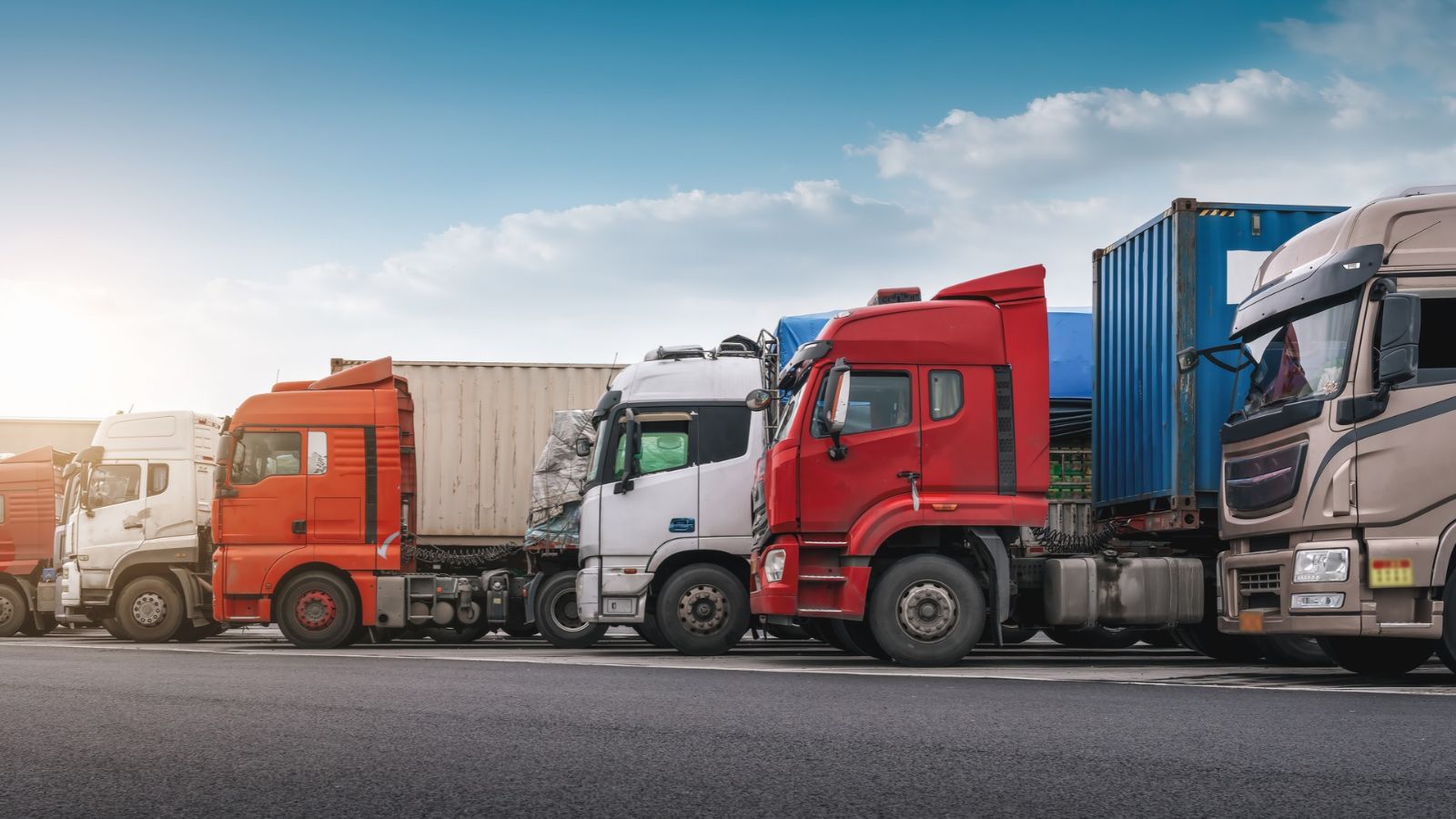
A Canadian trucking company is making one of the largest autonomous-freight commitments yet announced by a carrier with roots north of the border. Brampton-headquartered Charger Logistics has signed a preliminary agreement with Aurora Innovation that could see it purchase up to 500 trucks equipped with the Aurora Driver autonomous system.

The scale is significant, but so are the qualifications. The memorandum of understanding is non-binding, deliveries are planned for 2027 and 2028, and the trucks are expected to operate primarily on high-volume U.S. freight corridors rather than Canadian highways. Still, the agreement shows how quickly autonomous trucking is moving beyond small demonstrations. For a carrier built around cross-border freight, refrigerated loads and time-sensitive supply chains, driverless technology is increasingly being treated as a potential operating tool rather than a futuristic experiment.

Charger’s 500-Truck Plan Is Big, but It Is Not a Final Purchase Order

Charger Logistics and Aurora announced on October 26 that Charger intends to purchase up to 500 Aurora Driver-powered trucks. Under the proposed arrangement, Charger would own the physical trucks while subscribing to Aurora’s autonomous-driving technology through a Driver as a Service model. Deliveries would take place during 2027 and 2028, assuming the companies reach a definitive agreement. Charger says the equipment would be deployed on existing and new high-volume routes, including freight corridors near the U.S.-Mexico border.

That distinction matters because a memorandum of understanding is not the same as an irrevocable order for 500 trucks. Aurora itself identifies the agreement as non-binding and warns that anticipated orders could be delayed, reduced or fail to become final contracts. Even so, the announcement represents a major escalation from the companies’ earlier relationship. Charger signed an initial agreement with Aurora in July 2026 to begin driverless hauling, starting between Dallas and Laredo. Only a few months later, the conversation has moved from individual lanes toward potentially hundreds of carrier-owned autonomous tractors.

Dallas-to-Laredo Helps Explain Why Charger Wants to Scale

Charger did not choose the Dallas-Laredo corridor by accident. Laredo sits at the centre of one of North America’s most important freight arteries, connecting U.S. distribution networks with factories and suppliers across Mexico. Federal transportation data show that Laredo handled approximately 2.95 million inbound commercial trucks from Mexico in 2025, representing 38.8% of inbound truck traffic across the entire U.S.-Mexico land border. By value, trucks moving through Laredo carried roughly US$296 billion in U.S.-Mexico freight during the year.

For autonomous-truck developers, corridors like this offer something experimental routes cannot always provide: enormous and relatively predictable freight volume. Long stretches of interstate driving also fit the defined operating environments in which Level 4 systems are currently being commercialized. Charger already identified Dallas-Laredo as one of its busiest U.S. freight lanes when its Aurora relationship was announced in July. The carrier moves products including food and beverages, pharmaceuticals, automotive goods and retail freight, meaning better truck utilization can matter when customers are measuring delivery windows in hours rather than days.

Aurora Has Moved From Demonstrations to Commercial Driverless Freight

Aurora’s technology is no longer confined to trucks carrying test drivers. The company launched commercial driverless freight operations between Dallas and Houston in May 2025, operating heavy-duty trucks on public roads without anyone behind the wheel. By September 2026, Aurora reported that its autonomous system had accumulated more than 500,000 driverless miles since commercial launch. The company is now attempting to turn those early operations into a much larger transportation network.

Production capacity is becoming just as important as software performance. Aurora’s second-generation autonomous hardware is being installed on International LT trucks, while its technology is also integrated into the Volvo VNL Autonomous. Manufacturing partner Roush was targeting an upfitting rate of 20 trucks per week during October 2026. Aurora says it expects to finish 2026 with about 200 driverless trucks operating commercially, surpass 1,000 by the end of 2027 and eventually exceed 30,000 in 2030. Those remain company targets rather than guaranteed outcomes, but deals such as Charger’s are central to making that scale possible.

The Economics Become More Attractive When Trucks Keep Moving

The economic argument behind autonomous trucking is not simply about eliminating a driver’s wage. Long-haul trucks spend significant portions of their lives stopped because human operators need rest, change shifts or reach hours-of-service limits. An automated tractor capable of running much longer daily schedules could potentially spread its purchase and technology costs across considerably more revenue-producing miles. Aurora says some trucks operating for its customers have already been running at annualized utilization rates above 225,000 miles, more than double what it describes as conventional-truck utilization.

Independent research suggests the economics can work, but only under the right conditions. A 2026 North Dakota State University study estimated marginal per-mile savings of roughly 25% to 36% for autonomous trucks compared with conventional equipment. Its modelling also found that route length, operating scale, drayage requirements and technical-support costs can radically change the outcome. High-volume, long-distance hub-to-hub routes produced the strongest potential savings, while short routes without economies of scale could actually become more expensive. That helps explain why companies such as Charger are initially concentrating autonomy on dense interstate freight corridors.

Driverless Trucks Are Forcing Regulators to Rewrite Rules Built Around Humans

Removing the driver creates regulatory problems that have little to do with steering or braking. Traditional U.S. trucking rules, for example, assume that a person is available to exit a disabled tractor and place reflective warning triangles behind it. A truck with an empty cab obviously cannot perform that task. In October 2026, the Federal Motor Carrier Safety Administration granted Aurora and qualifying Level 4 autonomous carriers a five-year exemption allowing cab-mounted warning beacons to replace certain conventional roadside warning devices.

The exemption illustrates how regulation is beginning to catch up with technology rather than simply disappearing. FMCSA concluded that the approved alternative could provide safety equivalent to or greater than the existing rule, but autonomous commercial vehicles remain subject to extensive federal and state requirements. Aurora also uses what it calls a Safety Case before removing an operator from newly validated routes or capabilities. Meanwhile, U.S. regulators continue collecting crash information involving automated driving systems. The result is an industry in which commercial deployment and regulatory scrutiny are advancing at the same time rather than one waiting for the other to finish.

The Brampton Connection Does Not Mean 500 Driverless Trucks Are Coming to Ontario

Charger describes its Brampton location as its Canadian headquarters, but the 500-truck announcement should not be interpreted as a plan to put hundreds of empty-cab tractors on Highway 401. The announced deployment focuses on American routes, especially high-volume corridors near the U.S.-Mexico border. Canada has a separate regulatory environment for higher-level automation, and Ontario currently treats automated heavy-truck operations as part of a controlled pilot framework rather than unrestricted commercial deployment.

Ontario’s Automated Commercial Motor Vehicle Pilot Program began in August 2025 and runs until August 2035. It covers qualifying commercial vehicles weighing more than 4,500 kilograms equipped with Level 3, 4 or 5 automated-driving systems. A driverless stream is available, but companies require provincial approval, approved testing plans and at least $10 million in liability insurance. An assistant must also be available to oversee a driverless vehicle, either from inside the vehicle or from another location in Ontario. Commercial freight may be carried during approved testing, making the framework more than a laboratory exercise, but it remains considerably different from open-ended deployment.

Automation Arrives While Canada Still Needs Thousands of Truck Drivers

The timing creates a complicated workforce story. Statistics Canada reported 13,310 vacant transport-truck-driver positions during the first quarter of 2026, up from 11,780 a year earlier. Trucking HR Canada’s more recent labour tracker put vacancies at 13,780 in the second quarter and estimated that approximately 329,600 people were employed as transport truck drivers nationwide. The broader Canadian trucking and logistics workforce exceeded 800,000 people. Automation is therefore arriving in an industry that simultaneously worries about labour availability and about what technology could mean for existing jobs.

Research suggests the transition will be more complicated than replacing one driver with one computer. A 2026 University of California Institute of Transportation Studies review concluded that human workers are likely to remain important across autonomous trucking, including testing, maintenance, supervision and remote-support roles. It also found that partial automation could expand more quickly than completely driverless operations. For carriers, that creates the possibility of hybrid networks in which automated equipment handles specific long-haul corridors while human drivers concentrate on local, specialized and first- or last-mile work. How many jobs ultimately change remains uncertain.

Charger Is Part of a Much Bigger Shift Toward Carrier-Owned Autonomous Fleets

Charger is not the only major fleet preparing to own autonomous equipment. Earlier in 2026, refrigerated carrier Hirschbach Motor Lines signed its own non-binding memorandum with Aurora outlining plans for 500 Aurora Driver-powered trucks beginning in 2027. Volvo Autonomous Solutions and logistics giant DSV also began commercial autonomous freight operations between Dallas and Houston in May using Volvo VNL Autonomous trucks equipped with Aurora technology. Taken together, those programs show an industry moving from isolated pilots toward integration with large commercial fleets.

The important change is ownership. Early autonomous trucking programs often relied on technology companies owning vehicles and selling transportation capacity. Aurora’s Driver as a Service strategy instead envisions established carriers buying the tractors while paying for the automated-driving system. That could make autonomy look more like another fleet technology rather than an entirely separate trucking business. Charger’s proposed 500-truck purchase is still conditional, and production, regulation, economics and safety performance could all alter the timetable. But a Brampton-based carrier preparing to own hundreds of driverless trucks in the United States is a clear sign that automation has entered a new commercial phase.


Recommended.

Canada’s Auto Industry Says Tariff Fight Has Already Cost the Sector More Than $100 Billion

Trump Trade Chief Says There’s ‘No Urgency’ for Canada Deal as Auto Tariffs Stay in Place

September 26, 2026
Chinese EV and Plug-In Hybrid Exports Surge 155% as Canada Opens a 49,000-Vehicle Low-Tariff Door

Chinese EV and Plug-In Hybrid Exports Surge 155% as Canada Opens a 49,000-Vehicle Low-Tariff Door

September 8, 2026

Trending.

Canada’s Ballard Puts a 250,000-Mile Performance Guarantee Behind Hydrogen Buses

Canada’s Ballard Puts a 250,000-Mile Performance Guarantee Behind Hydrogen Buses

October 2, 2026
Canada’s Auto Industry Says Tariff Fight Has Already Cost the Sector More Than $100 Billion

Trump’s 50% Canada Auto-Tariff Threat Is Now Forcing Automakers to Plan Around a January 1 Deadline

September 27, 2026
10 Reasons the Canadian Car Market Feels Different Heading Into Summer

Canadian Auto Sales Rise 3.4% for a Fourth Straight Month—but 2026 Still Trails Last Year

October 3, 2026
PBO Warns U.S. Tariff War Threatens Up to 185,000 Canadian Jobs, With Auto Manufacturing Among Hardest Hit

PBO Warns U.S. Tariff War Threatens Up to 185,000 Canadian Jobs, With Auto Manufacturing Among Hardest Hit

October 21, 2026
16 Cars That Could Be Hit Hardest by Canada’s New Price Pressures

Ford Says F-150 Production Is Back—but Parts Shortage Will Still Hit Third-Quarter Shipments

October 1, 2026
  • About
  • Contact
  • Privacy Policy
  • Disclaimer
  • Editorial Policies
  • Terms and Conditions
A Revir Media Group Website

2026 Autoigloo - © All rights reserved

No Result
View All Result
  • News & Trends
  • Car Reviews
  • Buying Guides
  • Comparisons
  • EVs & Hybrids
  • More
    • Pricing & Deals
    • Winter Driving
    • Ownership & Maintenance

2026 Autoigloo - © All rights reserved

This website uses cookies. By continuing to use this website you are giving consent to cookies being used. Visit our Privacy and Cookie Policy.