




















• About
  • Contact
AutoIgloo
  • News & Trends
    China Moves to Block Under-Tested Cars as Its EV Makers Push Deeper Into Export Markets

    China’s Car Market Faces 22% Sales Drop as Automakers Battle for Buyers Overseas

    Canadian Dealer Giant Go Auto Buys Toyota’s First North American Dealership in U.S. Expansion

    Toyota Warns Canadian Families Not to Use Second-Row Seats in 24,454 Recalled Siennas

    Tesla Opens New Quebec Supercharger After Nearly a Year on the Construction List

    Tesla Opens Supercharger Sales to Canadian Businesses, Requiring at Least Four Charging Posts

    Canadian Gas Prices Are Nearly 40¢ a Litre Higher Than a Year Ago as National Average Hits 178.2¢

    Quebec Drivers Face a 43-Cent Gas-Price Divide Between Regions, New Sunday Data Shows

    Canada-U.S. Auto Tariff Talks Go Down to the Wire With 50% Duties Three Days Away

    Trump Heads to Canada Border as Auto Tariffs Become a Political Liability in Michigan

    ⁠Toyota Confirms 10 Million-Car Software Plan as Ontario-Built RAV4 Leads New Technology Shift

    Toyota Warns Canadian Families Not to Use Second-Row Seats in 24,454 Recalled Sienna Minivans

  • Car Reviews
    Honda Asked Suppliers for 30% Parts Cost Cuts as $9.4-Billion Savings Drive Hits Global Supply Chain

    Why Some Buyers Are Choosing Older Hondas Over Newer SUVs

    18 Things That Can Make a Car Unsafe for Winter Road Trips

    Why Some Drivers Are Avoiding Vehicles With Complex Infotainment Systems

    21 Cars Canadians Are Starting to Regret Buying

    Why Some Drivers Regret Buying Big Wheels and Low-Profile Tires

    17 Vehicles That Are Quietly Getting Crushed by Insurance Costs in Canada

    Why So Many Drivers Are Nervous About Chinese-Made EV Batteries

    20 Used SUVs Canadians Should Think Twice About Buying

    20 Used SUVs Canadians Should Think Twice About Buying

    15 Vehicles That Are Starting to Feel Like a Bad Deal Around May Long Weekend

    15 Vehicles That Are Starting to Feel Like a Bad Deal Around May Long Weekend

  • Buying Guides
    18 Things That Can Make a Car Harder to Park Than Expected

    Why Some Buyers Regret Choosing the Sport Package

    The Traffic Stop Mistake That Can Turn a Warning Into a Ticket

    20 Things Canadians Should Check Before Buying a Vehicle With a Loan Still Owing

    The Dealership Fee That Buyers Should Always Ask About

    The Dealership Fee That Buyers Should Always Ask About

    23 Features That Are Making New Cars Harder (and Pricier) to Repair in Canada

    Why Some Canadians Are Avoiding Cars With Expensive Windshields

    18 Red Flags a Used Vehicle May Be a Money Pit

    The Car Buying Mistake That Makes Negotiating Almost Impossible

    Why Some Canadians Are Regretting Buying Vehicles With No Spare Tire

    Why Some Canadians Are Regretting Buying Vehicles With No Spare Tire

  • Comparisons
    Honda Asked Suppliers for 30% Parts Cost Cuts as $9.4-Billion Savings Drive Hits Global Supply Chain

    Why Some Buyers Are Choosing Older Hondas Over Newer SUVs

    25 EV Charging Mistakes Canadians Make in March (That Wreck Range)

    Why Some Canadians Are Choosing Hybrids Over Full EVs Again

    21 Used Car Features That Can Become Expensive Problems Later

    Why Some Canadians Are Choosing Front-Wheel Drive Over All-Wheel Drive

    Canada’s Auto Fight Gets Uglier as BYD Threatens to Sue Trump Administration

    Tesla Vs. BYD: Are Chinese EV’s Actually Better for Canadians?

    17 Vehicles That Are Quietly Getting Crushed by Insurance Costs in Canada

    Why So Many Drivers Are Nervous About Chinese-Made EV Batteries

    20 Used SUVs Canadians Should Think Twice About Buying

    20 Used SUVs Canadians Should Think Twice About Buying

  • EVs & Hybrids
    Geely Auto’s Core Profit Jumps 46% as Chinese EV Expansion Accelerates — With Canada Now Opening to Geely-Owned Lotus

    Geely Confirms Canadian Vehicle Sales for 2027 as Chinese Automakers Challenge Established Brands

    18 Cars That Will Feel Dated Fast as New Chinese EVs Arrive

    12 EVs Now Price Below $41,000 in Canada—Fiat 500e Falls Under $30,000 With Rebate

    The Used EV Question Canadians Should Ask Before Buying One

    The Used EV Question Canadians Should Ask Before Buying One

    Why Some EV Owners Are Getting Sticker Shock From Home Charging Setups

    Why Some EV Owners Are Getting Sticker Shock From Home Charging Setups

    20 Signs Your Car Battery Is About to Leave You Stranded

    Canadian Auto Jobs Become a Central Fault Line as Ottawa Reveals Why It Rejected U.S. Vehicle Terms

    25 EV Charging Mistakes Canadians Make in March (That Wreck Range)

    Why Some Canadians Are Choosing Hybrids Over Full EVs Again

  • More
    • Pricing & Deals
    • Winter Driving
    • Ownership & Maintenance
No Result
View All Result
AutoIgloo
No Result
View All Result

Home » News & Trends

Tesla Opens Supercharger Sales to Canadian Businesses, Requiring at Least Four Charging Posts

Nate Brewer by Nate Brewer
October 26, 2026
Reading Time: 6 mins read
A A
Photo Credit: Shutterstock

Photo Credit: Shutterstock

465
SHARES
1.5k
VIEWS
Share on FacebookShare on Twitter

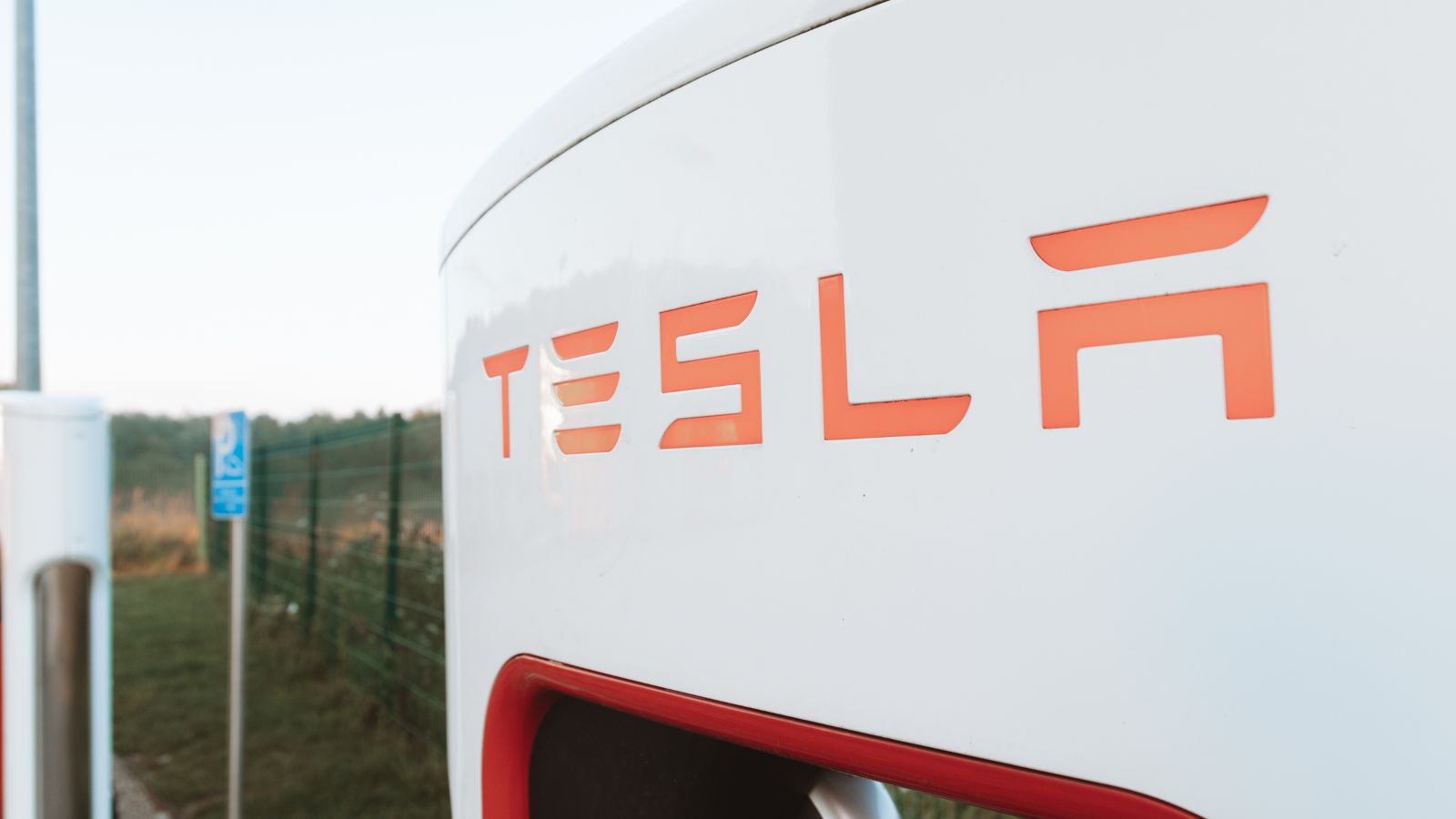
Tesla is opening a new door in Canada’s electric-vehicle charging business: companies can now purchase Supercharger equipment for their own properties rather than simply waiting for Tesla to build a station nearby. The expansion of Supercharger for Business gives retailers, parking operators, hotels, workplaces, municipalities and other property owners another route into the fast-charging market.

There is a catch that makes this considerably more substantial than installing a single charger beside a storefront. Tesla requires a minimum purchase of four charging posts. In return, businesses gain access to the company’s V4 charging technology, management software and service infrastructure, effectively turning Tesla’s charging platform into a product that other companies can own and operate at their sites.

Canadian Businesses Can Now Buy Into Tesla’s Charging Ecosystem

The Canadian expansion changes the relationship Tesla can have with a commercial property owner. Traditionally, a business interested in hosting Superchargers could offer property for consideration while Tesla determined where it wanted to expand its network. Supercharger for Business creates another path: the business can purchase charging equipment itself and make fast charging part of its own property investment. Canadian rollout reports surfaced on October 23, 2026, while Tesla now operates a Canadian Supercharger for Business page for prospective customers.

The offer also reaches well beyond traditional gas stations. Tesla’s Canadian inquiry form lists property categories including convenience stores, lodging and resorts, workplaces, parking garages, retail locations, restaurants, residential properties, municipalities and recreational facilities. That makes the program potentially relevant to a hotel along a highway, a shopping centre trying to attract longer customer visits or a municipality adding charging capacity to public parking. The chargers can be white-labelled, allowing a host to own the infrastructure without making the property look like a conventional Tesla-operated charging site.

The Four-Post Minimum Makes This a Serious Infrastructure Project

Tesla is not positioning Supercharger for Business as a one-charger experiment. The company requires customers to purchase at least four charging posts, immediately putting the program into a different category from the Level 2 chargers commonly installed at workplaces, restaurants and hotels. Four fast-charging stalls can serve several vehicles simultaneously and provide useful redundancy when a site gets busy, but they also require businesses to think carefully about parking layout, construction and electrical capacity.

There is an infrastructure logic behind installing several chargers together. Natural Resources Canada has found that charging projects can benefit from economies of scale when multiple ports are developed at the same location because some engineering and construction costs can be shared. The trade-off is that larger, higher-powered installations may exceed a property’s existing electrical capacity and trigger more expensive upgrades. That makes Tesla’s four-post requirement significant. A business is not simply buying four pieces of equipment; it may be planning electrical service, permitting, trenching, traffic movement and long-term utilization around an entirely new high-power use for the property.

V4 Hardware Raises the Ceiling to 500 kW

The headline technical number is substantial. Tesla lists the V4 Supercharger post at a maximum output of 500 kW for passenger vehicles. The equipment operates across a voltage range reaching 1,000 volts when paired with the V4 cabinet, while Tesla lists continuous current of 615 amps and a three-metre charging cable. The V4 cabinet can provide as much as 1,200 kW of DC output shared among as many as eight charging posts.

Those specifications do not mean every vehicle arriving at a Canadian business will charge at 500 kW. Charging speed depends on what the vehicle itself can accept, along with battery temperature, state of charge and other conditions. Tesla’s own support documentation illustrates the distinction: current Tesla passenger vehicles have different peak charging capabilities even when using V4 equipment. The advantage for a property owner is therefore less about guaranteeing a specific speed to every customer and more about installing hardware designed for increasingly powerful EV architectures. Tesla says its V4 cabinet supports vehicle architectures from 400 to 1,000 volts, giving the system room to serve newer generations of EVs as charging capabilities increase.

Tesla Keeps the Software and Service Layer in the Equation

Buying the equipment does not mean the business is left alone to build its own charging network from scratch. Tesla describes Supercharger for Business as a combination of its hardware, software and service platform. Businesses can use a preferred installer while receiving support from a Tesla project engineer, including design reviews and commissioning assistance. Once a location is operational, the owner can monitor utilization, adjust charging prices and review financial information through Tesla’s management portal.

Tesla remains involved after the installation as well. The company says its service package includes network operations, preventative maintenance and driver support, with a 97% uptime guarantee for the business program. Tesla also says its network operations systems can remotely monitor charging sites and diagnose problems, while over-the-air updates can introduce software improvements without replacing the physical posts. That division of responsibilities may be one of the program’s more attractive features for retailers and property owners. They can own the charging asset and control pricing while relying on an established charging operator for much of the technical work that happens behind the scenes.

Compatibility Is Broader Than the Tesla Badge Suggests

A white-labelled Supercharger installed at a Canadian business is not being marketed solely as a perk for Tesla owners. Tesla describes its business chargers as compatible with EVs more broadly, while its V4 system supports charging standards that include NACS and CCS1. The practical experience still depends on the vehicle, connector and approved adapter involved, so drivers should not assume every combination will work identically simply because a charger is physically available.

That distinction is becoming less important as North America standardizes around Tesla’s former proprietary connector. NACS has become SAE J3400, placing the connector within a formal industry standard rather than leaving it as a Tesla-only specification. Tesla’s Canadian support information now lists a wide range of manufacturers with access to compatible NACS Superchargers, including Ford, General Motors, BMW, Hyundai, Kia, Honda, Toyota, Volkswagen, Rivian and Mercedes-Benz, among others. Some vehicles have native NACS ports while others require manufacturer-approved adapters. For a Canadian business investing in charging, that expanding vehicle pool makes the equipment considerably more useful than it would have been when Supercharging was overwhelmingly a Tesla-owner experience.

Canada’s Growing EV Market Gives the Expansion More Weight

Tesla is entering the commercial charging-equipment market in Canada while the number of EVs needing places to charge continues to grow. Statistics Canada recorded 58,811 new zero-emission vehicle registrations in the second quarter of 2026, up 26.7% from the same quarter of 2025. ZEVs represented 10.7% of all new motor-vehicle registrations during the quarter. Battery-electric registrations alone rose 37.4% year over year.

Public fast-charging infrastructure is growing alongside the vehicle population. Charging-data firm Paren counted 9,615 public DC fast-charging ports at 2,740 Canadian stations at the end of the third quarter of 2026 after 391 ports were added during the quarter. Tesla remained the largest individual network, with 3,091 ports, although its share had fallen to 32.1% as competing operators expanded. That changing market helps explain why selling Supercharger infrastructure could matter strategically. Tesla can participate in charging growth not only by financing every new site itself but also by supplying technology to property owners willing to fund additional locations.

Canadian Winters Put More Emphasis on the Entire Charging Experience

Peak power is only one part of fast charging, particularly in Canada. Lithium-ion batteries become more difficult to charge efficiently at low temperatures, which is why battery thermal management plays such a prominent role in modern EVs. Research has consistently shown that cold battery temperatures can significantly reduce charging performance and that preheating can shorten charging times by bringing the battery into a more favourable operating range before high charging power is requested.

Tesla incorporates that problem into the charging system rather than treating the charger as an isolated piece of hardware. Its Supercharger platform can work with vehicle navigation and battery preconditioning so compatible vehicles prepare for fast charging before arrival. Tesla also says its newer charging technology can use AC ripple current to help heat batteries under cold conditions. For a Canadian site host, the practical benefit is straightforward: the value of a high-powered charger in January depends partly on whether the vehicle can actually use that power. Software, route planning and battery preparation therefore become particularly relevant in a country where sub-zero charging is a routine operating condition rather than an edge case.

The Business Case Will Still Depend Heavily on the Site

Tesla has not posted a simple Canadian retail price that applies to every four-post installation. Instead, prospective customers provide installation details and request a quote, reflecting how much charging projects can vary from one property to another. Natural Resources Canada has found that DC fast-charging costs are heavily influenced by charger power, the number of ports, location, construction requirements and electrical upgrades. Its broader infrastructure modelling used an estimated 2025 cost of about $160,000 per DC fast-charging port in 2022 dollars at an average power of 125 kW, but that figure is an industry planning benchmark rather than a price for Tesla’s 500-kW V4 equipment.

That distinction matters when evaluating whether Superchargers can make financial sense for a hotel, shopping centre or highway retailer. Revenue from charging is only part of the equation. Natural Resources Canada notes that businesses can use charging to attract customers and give them a reason to remain on-site while their vehicles charge. Tesla, meanwhile, gives hosts control over pricing and access to utilization data. The result is a different proposition from simply buying electricity and reselling it. For the right property, fast charging can become infrastructure, customer acquisition and an amenity at the same time. Tesla’s Canadian expansion gives businesses another way to make that calculation—and requires them to think big enough to start with at least four posts.


Recommended.

15 Cars That Are Becoming Harder to Resell in Canada

17 Vehicles That Are Looking More Vulnerable Than Ever in Canada

May 28, 2026
GM Cuts Chevrolet Bolt Output About 75% as Canada’s $39,999 EV Becomes a Limited Run

GM Cuts Chevrolet Bolt Output About 75% as Canada’s $39,999 EV Becomes a Limited Run

September 29, 2026

Trending.

Canada’s Auto Industry Says Tariff Fight Has Already Cost the Sector More Than $100 Billion

Trump’s 50% Canada Auto-Tariff Threat Is Now Forcing Automakers to Plan Around a January 1 Deadline

September 27, 2026
Canada’s Ballard Puts a 250,000-Mile Performance Guarantee Behind Hydrogen Buses

Canada’s Ballard Puts a 250,000-Mile Performance Guarantee Behind Hydrogen Buses

October 2, 2026
15 Vehicles Canadians May Want to Avoid Before May Long Weekend

Tesla Buyers in Canada Are Reporting Fresh Model Y Delivery Delays as Some Orders Slip Into October and November 2.

September 27, 2026
10 Reasons the Canadian Car Market Feels Different Heading Into Summer

Canadian Auto Sales Rise 3.4% for a Fourth Straight Month—but 2026 Still Trails Last Year

October 3, 2026
PBO Warns U.S. Tariff War Threatens Up to 185,000 Canadian Jobs, With Auto Manufacturing Among Hardest Hit

PBO Warns U.S. Tariff War Threatens Up to 185,000 Canadian Jobs, With Auto Manufacturing Among Hardest Hit

October 21, 2026
  • About
  • Contact
  • Privacy Policy
  • Disclaimer
  • Editorial Policies
  • Terms and Conditions
A Revir Media Group Website

2026 Autoigloo - © All rights reserved

No Result
View All Result
  • News & Trends
  • Car Reviews
  • Buying Guides
  • Comparisons
  • EVs & Hybrids
  • More
    • Pricing & Deals
    • Winter Driving
    • Ownership & Maintenance

2026 Autoigloo - © All rights reserved

This website uses cookies. By continuing to use this website you are giving consent to cookies being used. Visit our Privacy and Cookie Policy.




