





















• About
  • Contact
AutoIgloo
  • News & Trends
    BYD, CATL and Xiaomi Are in the Mix for Xi’s Washington Trip as Canada and U.S. Split on Chinese EV Access

    Ottawa’s Chinese ‘EV’ Quota Now Includes 443 Non-Plug-In Hybrids in September—Up 275 From Last Week

    Canada’s Gas-Price Divide Widens: Vancouver Hits $2.04/L as Toronto Sits Near $1.83

    Two-Thirds of Canada’s Clean-Fuel Credits Come From Imported Fuel, Predominantly the U.S., Ottawa Reveals

    Chevrolet Traverse and GMC Acadia Recalled in Canada Over Seatbacks That Can Detach in a Crash

    Chevrolet Traverse and GMC Acadia Recalled in Canada Over Seatbacks That Can Detach in a Crash

    Lincoln Hybrid SUVs Can Unexpectedly Shift Into Neutral While Driving, Ford Recall Warns

    Lincoln Hybrid SUVs Can Unexpectedly Shift Into Neutral While Driving, Ford Recall Warns

    BMW Warns Owners Not to Use Remote Start After Earlier Recall Repairs Fail to Resolve Fire Risk

    BMW Warns Owners Not to Use Remote Start After Earlier Recall Repairs Fail to Resolve Fire Risk

    Tesla Replaces U.S. Car Referral Rewards With Self-Driving Perks, Leaving Canadians on a Different Program

    Tesla Replaces U.S. Car Referral Rewards With Self-Driving Perks, Leaving Canadians on a Different Program

  • Car Reviews
    Mitsubishi Outlander Review: Is It Still the Underrated Family SUV?

    Mitsubishi Outlander Review: Is It Still the Underrated Family SUV?

    19 Cars With Windshields That Crack Constantly on Canadian Highways

    Subaru Forester vs Toyota RAV4: Which SUV Is Better for Canadian Winters?

    20 Cars Canadians Should Avoid If They Hate Expensive Windshield Replacements

    Hyundai Tucson vs Kia Sportage: Which Compact SUV Is the Better Everyday Buy?

    BYD, CATL and Xiaomi Are in the Mix for Xi’s Washington Trip as Canada and U.S. Split on Chinese EV Access

    Toyota RAV4 Plug-In Hybrid vs Regular Hybrid: Which One Should Canadians Buy?

    17 Vehicles That Are Quietly Getting Crushed by Insurance Costs in Canada

    Honda CR-V Hybrid Review: The Family SUV That Plays It Safe

    2026 Toyota RAV4 vs Honda CR-V: Which SUV Makes More Sense for Canadians?

    2026 Toyota RAV4 vs Honda CR-V: Which SUV Makes More Sense for Canadians?

  • Buying Guides
    Mitsubishi Outlander Review: Is It Still the Underrated Family SUV?

    Mitsubishi Outlander Review: Is It Still the Underrated Family SUV?

    16 Used SUVs That Suddenly Don’t Look Like Smart Buys in Canada

    Nissan Rogue vs Honda CR-V: Which SUV Feels Better After the Test Drive?

    19 Cars With Windshields That Crack Constantly on Canadian Highways

    Subaru Forester vs Toyota RAV4: Which SUV Is Better for Canadian Winters?

    Mazda CX-5 vs Mazda CX-50: Which One Feels More Premium for the Money?

    Mazda CX-5 vs Mazda CX-50: Which One Feels More Premium for the Money?

    17 Vehicles That Are Quietly Getting Crushed by Insurance Costs in Canada

    Honda CR-V Hybrid Review: The Family SUV That Plays It Safe

    18 Cars With Parts Prices So Wild They’re Becoming Hard to Own in Canada

    Is the New Toyota RAV4 Still the Safest Bet in Canada?

  • Comparisons
    19 Cars With Windshields That Crack Constantly on Canadian Highways

    Subaru Forester vs Toyota RAV4: Which SUV Is Better for Canadian Winters?

    21 Vehicles With the Best Real-World Fuel Economy in Canada (Not Just the Sticker)

    Toyota Corolla Cross vs Honda HR-V: Which Small SUV Is Less Compromised?

    20 Cars Canadians Should Avoid If They Hate Expensive Windshield Replacements

    Hyundai Tucson vs Kia Sportage: Which Compact SUV Is the Better Everyday Buy?

    BYD, CATL and Xiaomi Are in the Mix for Xi’s Washington Trip as Canada and U.S. Split on Chinese EV Access

    Toyota RAV4 Plug-In Hybrid vs Regular Hybrid: Which One Should Canadians Buy?

    Honda Asked Suppliers for 30% Parts Cost Cuts as $9.4-Billion Savings Drive Hits Global Supply Chain

    Why Some Buyers Are Choosing Older Hondas Over Newer SUVs

    25 EV Charging Mistakes Canadians Make in March (That Wreck Range)

    Why Some Canadians Are Choosing Hybrids Over Full EVs Again

  • EVs & Hybrids
    BYD, CATL and Xiaomi Are in the Mix for Xi’s Washington Trip as Canada and U.S. Split on Chinese EV Access

    Toyota RAV4 Plug-In Hybrid vs Regular Hybrid: Which One Should Canadians Buy?

    Geely Auto’s Core Profit Jumps 46% as Chinese EV Expansion Accelerates — With Canada Now Opening to Geely-Owned Lotus

    Geely Confirms Canadian Vehicle Sales for 2027 as Chinese Automakers Challenge Established Brands

    18 Cars That Will Feel Dated Fast as New Chinese EVs Arrive

    12 EVs Now Price Below $41,000 in Canada—Fiat 500e Falls Under $30,000 With Rebate

    The Used EV Question Canadians Should Ask Before Buying One

    The Used EV Question Canadians Should Ask Before Buying One

    Why Some EV Owners Are Getting Sticker Shock From Home Charging Setups

    Why Some EV Owners Are Getting Sticker Shock From Home Charging Setups

    20 Signs Your Car Battery Is About to Leave You Stranded

    Canadian Auto Jobs Become a Central Fault Line as Ottawa Reveals Why It Rejected U.S. Vehicle Terms

  • More
    • Pricing & Deals
    • Winter Driving
    • Ownership & Maintenance
No Result
View All Result
AutoIgloo
No Result
View All Result

Home » News & Trends

Canada Has 33,069 Chinese EV Import Slots Unused — Yet Tesla Has Stopped Taking Some Model 3 Orders

Nate Brewer by Nate Brewer
October 24, 2026
Reading Time: 7 mins read
A A
Photo Credit: Shutterstock

Photo Credit: Shutterstock

466
SHARES
1.5k
VIEWS
Share on FacebookShare on Twitter

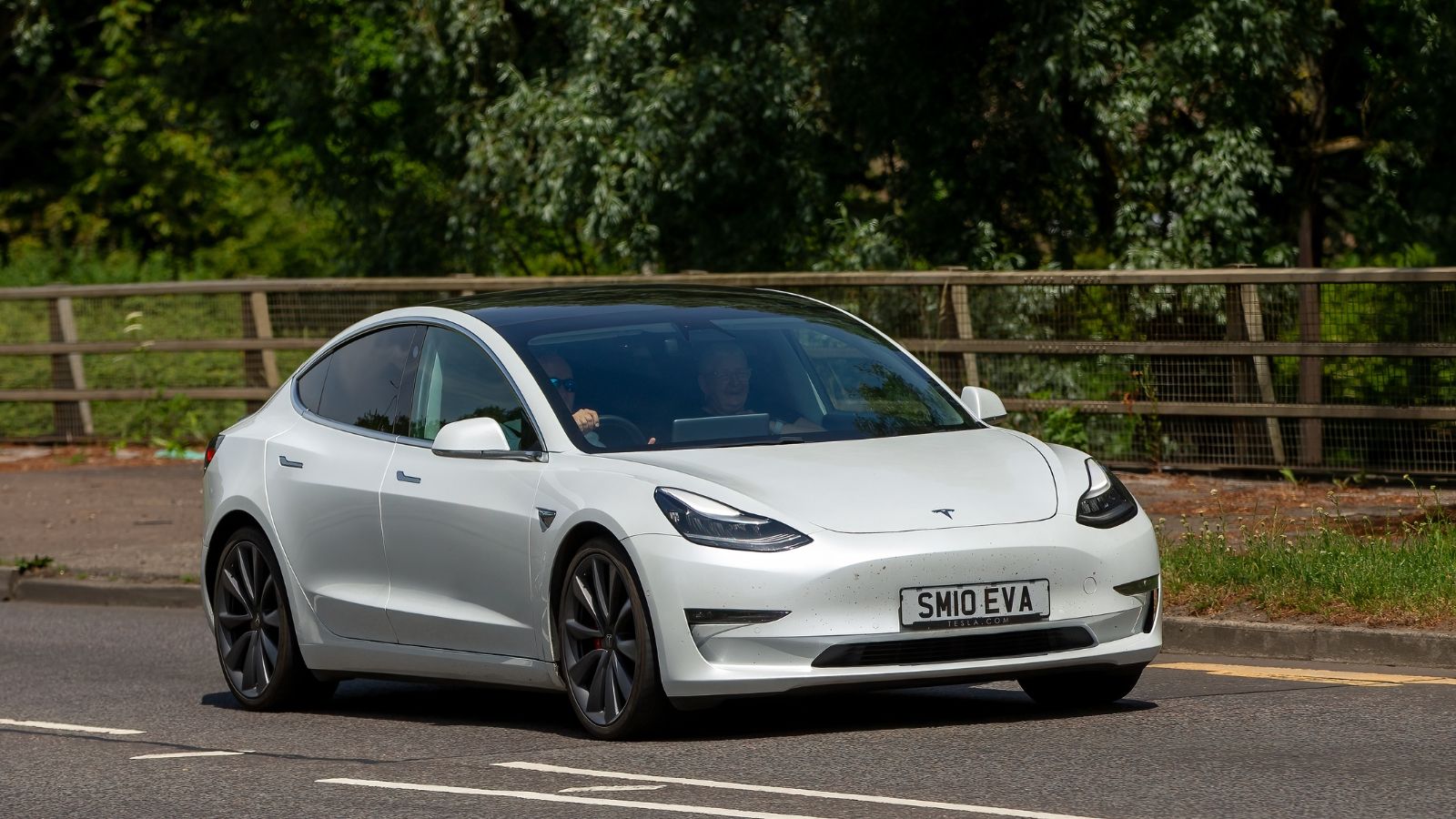
Canada’s experiment with lower-tariff Chinese electric vehicles has produced an unusual contradiction. Ottawa’s latest official tally shows 33,069 places remain unused in a 49,000-vehicle annual quota, yet Tesla has stopped taking new Canadian orders for two of its more affordable Shanghai-built Model 3 versions.

The numbers appear difficult to reconcile until the way the quota is administered comes into view. The national allowance is not necessarily the same thing as the volume available to a particular manufacturer. Tesla says it has exhausted the number of vehicles it expects to be permitted to import, while Global Affairs Canada retains authority to manage access among manufacturers. For Canadian buyers, that bureaucratic distinction has become very practical: tens of thousands of spaces remain on Ottawa’s books, but the Model 3 they may want cannot currently be ordered.

The 33,069 Figure Is Real — but It Does Not Tell the Whole Story

Global Affairs Canada’s utilization report, updated October 23, shows an annual maximum of 49,000 vehicles from China for the quota year running from March 1, 2026, through February 28, 2027. Of those, 15,931 had been used, leaving exactly 33,069 remaining. That means roughly two-thirds of the headline annual allowance was still unused more than seven months into the program.

What the tracker does not show is equally important. Ottawa does not identify individual manufacturers, disclose how much quota each company expects to receive or reveal anticipated shipments. The national balance therefore cannot automatically be interpreted as 33,069 vehicles that Tesla is free to import tomorrow. Canadian Press reporting found Global Affairs Canada citing commercial confidentiality when asked about company-level information. The apparent contradiction is therefore between two different measurements: Ottawa’s remaining nationwide capacity and Tesla’s claimed company-level access. Both can theoretically be true at the same time, even though the lack of manufacturer-specific disclosure makes that impossible for consumers to independently confirm.

Canada’s Quota Is a Managed Gate, Not Simply a 49,000-Car Free-for-All

Canada introduced the current system on March 1 after replacing the previous 100 per cent surtax on qualifying China-origin vehicles with a 6.1 per cent most-favoured-nation tariff inside the quota. The first year was divided into two six-month periods. The March-to-August window contained 24,500 vehicles, while the September-to-February period received another 24,500 plus whatever remained unused from the first half.

Importers also cannot simply put vehicles on a ship and count them against the quota later. Global Affairs Canada requires shipment-specific permits, and applications can generally be made up to 30 days before the expected entry date. The current rules describe administration as first-come, first-served, but there is an important qualification: Ottawa says it will monitor applications to provide “equitable access” and can set aside part of the available quota for original equipment manufacturers, including new entrants. That provision gives the government considerably more discretion than the phrase first-come, first-served initially suggests.

Tesla Paused the Two Model 3 Versions That Changed the Canadian Price Equation

Tesla stopped accepting new Canadian orders for its Model 3 Premium Rear-Wheel Drive and Premium All-Wheel Drive versions on October 12. Those vehicles are sourced from Shanghai and therefore depend on access to Canada’s China quota. Tesla attributed the suspension to strong demand exhausting its import allocation and indicated that additional ordering could depend on Ottawa providing more quota, with March 2027 identified as the expected next opportunity.

The price difference makes the pause significant. Tesla lists the Premium RWD at an MSRP of C$39,490 and the Premium AWD at C$49,990. The Model 3 Performance, with an MSRP of C$74,990, has remained available because reporting indicates that version is sourced from Tesla’s Fremont, California, factory rather than Shanghai. For a household that had been considering the least-expensive Model 3, that leaves a substantial gap. Existing inventory can occasionally create another route to a vehicle, but the interruption of factory ordering removes the predictable option of configuring a new Premium model and waiting for a scheduled delivery.

Tesla Says Its Own Import Access Has Been Used Up

Tesla’s explanation became more detailed after questions arose over the unused national quota. Iain Myrans, Tesla Canada’s public-policy executive, wrote that Global Affairs Canada provides manufacturers in advance with the maximum number of cars they can expect to bring in during a period. He argued that although the system outwardly resembles a first-come, first-served program, there is more happening behind the scenes.

That account fits with Ottawa’s published authority to manage permits for equitable access, but it still leaves a major piece of information missing. Neither Tesla nor Global Affairs Canada has publicly disclosed Tesla’s actual maximum. Ottawa has also declined to confirm whether Tesla is subject to a formal company-specific cap. As a result, the central question has shifted. It is no longer whether Canada as a whole has exhausted its China quota—the government data clearly shows it has not—but rather how much access Tesla was offered, why that amount was chosen and whether additional capacity could be released before the quota year ends.

The Import Data Shows How Abruptly Activity Slowed

The monthly figures make the current stalemate particularly striking. Canada used 15,603 of its first 24,500 places between March and August. Activity accelerated sharply during the summer: 5,982 vehicles were recorded in July and another 5,490 in August. Because 8,897 places went unused during that first period, they rolled forward, giving the second six-month window a total starting capacity of 33,397 vehicles.

Then imports almost stopped. Only 328 vehicles were recorded in September, and Global Affairs Canada’s October 23 update still showed zero utilization for October. Of September’s total, the government recorded only seven battery-electric passenger cars in the customs category valued at C$35,000 or less, along with 153 higher-valued electric passenger cars and 168 non-plug-in hybrid SUVs covered by the quota framework. The result is unusual: Canada went from thousands of qualifying vehicles arriving each month during the summer to virtually no activity while more than 33,000 spaces remained on the table.

Shanghai Production Transformed What Tesla Could Charge in Canada

The importance of quota access becomes clearer when looking at Tesla’s pricing history. Canada imposed a 100 per cent surtax on Chinese-made EVs in October 2024, effectively shutting down the economics of supplying mainstream Teslas from Shanghai. Tesla subsequently relied more heavily on vehicles made elsewhere, including the United States, at a time when Canada-U.S. automotive trade was itself being disrupted by retaliatory tariffs.

The 2026 Canada-China arrangement changed that calculation. Vehicles admitted inside the quota face the normal 6.1 per cent tariff rather than the former 100 per cent surtax. Tesla consequently returned to Shanghai sourcing for lower-priced Canadian Model 3s. When the Premium RWD appeared in May, its C$39,490 MSRP stood dramatically below the C$79,990 starting point associated with the U.S.-built Model 3 configuration available earlier in the year. That does not mean the cars are identical trims, but it illustrates how powerfully manufacturing location and trade policy have affected Tesla’s Canadian pricing.

The C$39,490 Model 3 Still Misses Ottawa’s Federal EV Rebate

A sub-C$40,000 electric sedan would appear at first glance to be an obvious candidate for Canada’s Electric Vehicle Affordability Program. The federal program offers eligible battery-electric vehicles incentives of up to C$5,000 in 2026, with a transaction-value ceiling of C$50,000 for most imported vehicles. Price, however, is only one of the requirements.

Transport Canada says an eligible vehicle must also be built in Canada or in a country that has a free-trade agreement with Canada. China does not meet that condition, and Tesla’s Canadian incentive information says Model 3 vehicles are not currently eligible for the federal program. That creates an unusual consumer equation. The Shanghai-built Model 3 can be competitively priced partly because Ottawa lowered its import tariff inside the China quota, while a different federal policy prevents the same vehicle from receiving the purchase incentive available to qualifying EVs built in Canada or free-trade partner countries. Trade policy is lowering the sticker price while industrial policy limits the subsidy.

Ottawa Is Trying to Balance Cheaper Cars With Canadian Auto Investment

The quota was never presented simply as a way to maximize the number of Chinese cars sold in Canada. When Prime Minister Mark Carney announced the arrangement in Beijing in January, the government described it as part of a broader Canada-China economic reset. Ottawa said the initial 49,000-vehicle allowance represented less than three per cent of Canada’s new-vehicle market and argued that managed competition could help lower prices while encouraging Chinese automotive investment in Canada.

The longer-term rules reinforce that objective. Global Affairs Canada says the overall quota is scheduled to increase by 6.5 per cent annually. Beginning in the second year, 10 per cent is to be reserved for qualifying vehicles with a free-on-board value of C$35,000 or less, with the affordable-vehicle share eventually reaching 50 per cent in year five. Ottawa has also said it hopes the arrangement will encourage joint ventures, Canadian supply-chain investment and domestic employment. Seen through that lens, preserving access for several manufacturers rather than allowing one established importer to consume most available capacity becomes easier to understand.

New Chinese Brands Make the Unused Capacity More Strategically Important

Tesla arrived at the quota with something most Chinese automakers still lacked: Canadian stores, service infrastructure, an established customer base and vehicles already engineered for the market. Other manufacturers have been building those pieces throughout 2026. Geely’s official Canadian website now says the company is coming to Canada and is developing a dealer network, while Reuters reported that Chery is preparing to bring its Omoda and Jaecoo brands to Canada in early 2027.

BYD has also created a Canadian operation and website, but its own terms currently state that the site does not accept purchases, reservations, pre-orders or deposits. That helps explain why a theoretically large pool of import capacity can remain unused: obtaining low-tariff access is only one step in launching a car brand. Certification, dealers, service operations, parts inventories, pricing and marketing all have to be in place. Ottawa’s ability to preserve access for newcomers therefore has value, but unused capacity also carries a cost if ready buyers and an established manufacturer are prevented from using slots that ultimately expire.

March 2027 Is the Next Major Checkpoint, but Not Necessarily the Only Solution

The current quota year ends February 28, 2027, which explains why March keeps appearing in Tesla’s messaging. A new quota year begins March 1, and the Canada-China arrangement calls for the overall annual volume to increase by 6.5 per cent. The second year also introduces the first specific reservation for lower-priced vehicles. Those changes could create fresh capacity for Tesla, although the government has not publicly promised Tesla any particular number of permits.

There could also be movement before then. Global Affairs Canada has said it is consulting interested companies to optimize the remaining quota and evaluate how the system should operate longer term. That leaves Ottawa room to adjust access if it concludes that too much capacity is sitting unused. Until something changes, however, Canadian consumers are left with a peculiar market signal: the government’s October 23 ledger shows 33,069 places still available nationally, Tesla says the supply it can count on has been exhausted, and the public has no company-level allocation data capable of fully reconciling the two. The next meaningful development may therefore be a policy decision rather than another boatload of cars.


Recommended.

16 Cars That Could Lose Their Cool Factor Fast in Canada This Summer

Tesla Raises Canadian Prices by as Much as $30,000 as U.S. Auto Tariffs Hit Buyers

September 4, 2026
16 Vehicles That Are Going to Plummet in Resale Value If Chinese EVs Flood the Market

Tesla Model 3 and Model Y Join Honda Civic Among Canada’s Top-Rated 2027 Vehicles

October 18, 2026

Trending.

Canada’s Ballard Puts a 250,000-Mile Performance Guarantee Behind Hydrogen Buses

Canada’s Ballard Puts a 250,000-Mile Performance Guarantee Behind Hydrogen Buses

October 2, 2026
10 Reasons the Canadian Car Market Feels Different Heading Into Summer

Canadian Auto Sales Rise 3.4% for a Fourth Straight Month—but 2026 Still Trails Last Year

October 3, 2026
PBO Warns U.S. Tariff War Threatens Up to 185,000 Canadian Jobs, With Auto Manufacturing Among Hardest Hit

PBO Warns U.S. Tariff War Threatens Up to 185,000 Canadian Jobs, With Auto Manufacturing Among Hardest Hit

October 21, 2026
22 Ways Canadians Accidentally Void Their Vehicle Warranty

B.C. Drivers Vote Today on the Future of ICBC Insurance as Parties Clash Over Private Competition and No-Fault Coverage

October 24, 2026
15 Vehicles Canadians May Want to Avoid Before May Long Weekend

Tesla Buyers in Canada Are Reporting Fresh Model Y Delivery Delays as Some Orders Slip Into October and November 2.

September 27, 2026
  • About
  • Contact
  • Privacy Policy
  • Disclaimer
  • Editorial Policies
  • Terms and Conditions
A Revir Media Group Website

2026 Autoigloo - © All rights reserved

No Result
View All Result
  • News & Trends
  • Car Reviews
  • Buying Guides
  • Comparisons
  • EVs & Hybrids
  • More
    • Pricing & Deals
    • Winter Driving
    • Ownership & Maintenance

2026 Autoigloo - © All rights reserved

This website uses cookies. By continuing to use this website you are giving consent to cookies being used. Visit our Privacy and Cookie Policy.




