





















• About
  • Contact
AutoIgloo
  • News & Trends
    Debit Tap Processing Fees Rise 75% for Some Canadian Auto-Parts and Home-Supply Merchants

    Debit Tap Processing Fees Rise 75% for Some Canadian Auto-Parts and Home-Supply Merchants

    Top U.S. Senate Democrat Targets Trump’s Canada Tariffs, but Election Gains Offer No Guaranteed Relief for Auto Makers

    Top U.S. Senate Democrat Targets Trump’s Canada Tariffs, but Election Gains Offer No Guaranteed Relief for Auto Makers

    Ontario EV Owners Face a 10-to-1 Electricity Price Gap Under New November Rates

    Ontario EV Owners Face a 10-to-1 Electricity Price Gap Under New November Rates

    Nova Scotia CAA Auto Insurance Renewals Bring Credit-Score Discounts and a 30% Coverage Increase

    Nova Scotia CAA Auto Insurance Renewals Bring Credit-Score Discounts and a 30% Coverage Increase

    GM’s Chinese Joint-Venture Sales Collapse 51% as SAIC’s Own Brand Jumps 33%

    GM’s Chinese Joint-Venture Sales Collapse 51% as SAIC’s Own Brand Jumps 33%

    Toronto Battery Maker Lands $26-Million Deal to Convert Diesel Trucks to Electric Across Canada and U.S.

    Teamsters Say Some Canadian Trucking Firms Cut Driver Costs 20–30% by Misclassifying Workers

  • Car Reviews
    Mitsubishi Outlander Review: Is It Still the Underrated Family SUV?

    Mitsubishi Outlander Review: Is It Still the Underrated Family SUV?

    19 Cars With Windshields That Crack Constantly on Canadian Highways

    Subaru Forester vs Toyota RAV4: Which SUV Is Better for Canadian Winters?

    20 Cars Canadians Should Avoid If They Hate Expensive Windshield Replacements

    Hyundai Tucson vs Kia Sportage: Which Compact SUV Is the Better Everyday Buy?

    BYD, CATL and Xiaomi Are in the Mix for Xi’s Washington Trip as Canada and U.S. Split on Chinese EV Access

    Toyota RAV4 Plug-In Hybrid vs Regular Hybrid: Which One Should Canadians Buy?

    17 Vehicles That Are Quietly Getting Crushed by Insurance Costs in Canada

    Honda CR-V Hybrid Review: The Family SUV That Plays It Safe

    2026 Toyota RAV4 vs Honda CR-V: Which SUV Makes More Sense for Canadians?

    2026 Toyota RAV4 vs Honda CR-V: Which SUV Makes More Sense for Canadians?

  • Buying Guides
    Mitsubishi Outlander Review: Is It Still the Underrated Family SUV?

    Mitsubishi Outlander Review: Is It Still the Underrated Family SUV?

    16 Used SUVs That Suddenly Don’t Look Like Smart Buys in Canada

    Nissan Rogue vs Honda CR-V: Which SUV Feels Better After the Test Drive?

    19 Cars With Windshields That Crack Constantly on Canadian Highways

    Subaru Forester vs Toyota RAV4: Which SUV Is Better for Canadian Winters?

    Mazda CX-5 vs Mazda CX-50: Which One Feels More Premium for the Money?

    Mazda CX-5 vs Mazda CX-50: Which One Feels More Premium for the Money?

    17 Vehicles That Are Quietly Getting Crushed by Insurance Costs in Canada

    Honda CR-V Hybrid Review: The Family SUV That Plays It Safe

    18 Cars With Parts Prices So Wild They’re Becoming Hard to Own in Canada

    Is the New Toyota RAV4 Still the Safest Bet in Canada?

  • Comparisons
    19 Cars With Windshields That Crack Constantly on Canadian Highways

    Subaru Forester vs Toyota RAV4: Which SUV Is Better for Canadian Winters?

    21 Vehicles With the Best Real-World Fuel Economy in Canada (Not Just the Sticker)

    Toyota Corolla Cross vs Honda HR-V: Which Small SUV Is Less Compromised?

    20 Cars Canadians Should Avoid If They Hate Expensive Windshield Replacements

    Hyundai Tucson vs Kia Sportage: Which Compact SUV Is the Better Everyday Buy?

    BYD, CATL and Xiaomi Are in the Mix for Xi’s Washington Trip as Canada and U.S. Split on Chinese EV Access

    Toyota RAV4 Plug-In Hybrid vs Regular Hybrid: Which One Should Canadians Buy?

    Honda Asked Suppliers for 30% Parts Cost Cuts as $9.4-Billion Savings Drive Hits Global Supply Chain

    Why Some Buyers Are Choosing Older Hondas Over Newer SUVs

    25 EV Charging Mistakes Canadians Make in March (That Wreck Range)

    Why Some Canadians Are Choosing Hybrids Over Full EVs Again

  • EVs & Hybrids
    BYD, CATL and Xiaomi Are in the Mix for Xi’s Washington Trip as Canada and U.S. Split on Chinese EV Access

    Toyota RAV4 Plug-In Hybrid vs Regular Hybrid: Which One Should Canadians Buy?

    Geely Auto’s Core Profit Jumps 46% as Chinese EV Expansion Accelerates — With Canada Now Opening to Geely-Owned Lotus

    Geely Confirms Canadian Vehicle Sales for 2027 as Chinese Automakers Challenge Established Brands

    18 Cars That Will Feel Dated Fast as New Chinese EVs Arrive

    12 EVs Now Price Below $41,000 in Canada—Fiat 500e Falls Under $30,000 With Rebate

    The Used EV Question Canadians Should Ask Before Buying One

    The Used EV Question Canadians Should Ask Before Buying One

    Why Some EV Owners Are Getting Sticker Shock From Home Charging Setups

    Why Some EV Owners Are Getting Sticker Shock From Home Charging Setups

    20 Signs Your Car Battery Is About to Leave You Stranded

    Canadian Auto Jobs Become a Central Fault Line as Ottawa Reveals Why It Rejected U.S. Vehicle Terms

  • More
    • Pricing & Deals
    • Winter Driving
    • Ownership & Maintenance
No Result
View All Result
AutoIgloo
No Result
View All Result

Home » News & Trends

Ram Says Returning Hemi V8 Now Accounts for 35% of 1500 Pickup Sales in Canada

Nate Brewer by Nate Brewer
October 23, 2026
Reading Time: 5 mins read
A A
Photo Credit: Shutterstock

Photo Credit: Shutterstock

466
SHARES
1.5k
VIEWS
Share on FacebookShare on Twitter

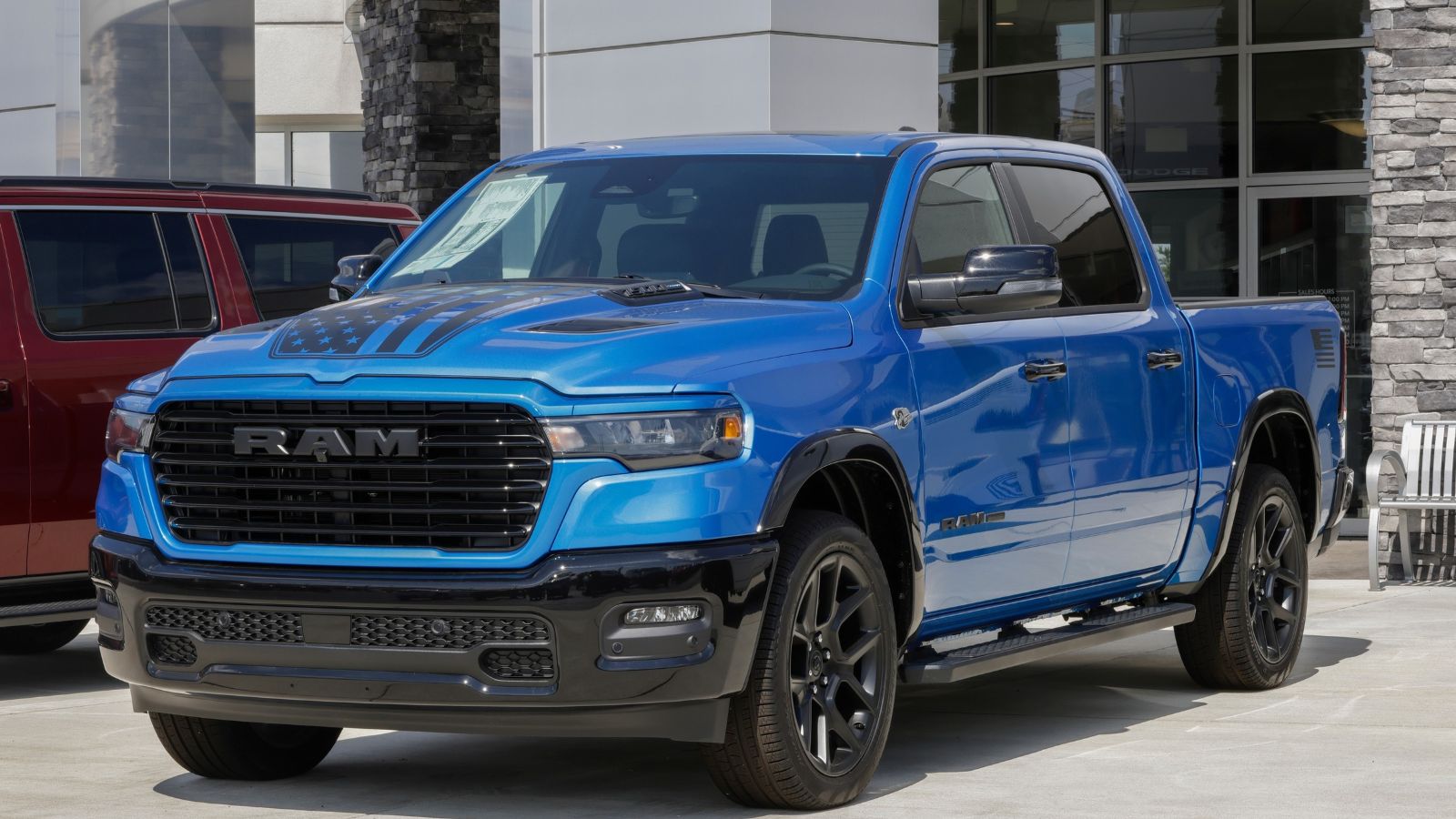
Ram’s decision to put a HEMI V8 back under the hood of the 1500 is no longer just an enthusiast-pleasing reversal. It is showing up in Canadian purchasing decisions. Stellantis Canada says the returning 5.7-litre HEMI now accounts for 35% of Ram 1500 sales since its comeback, putting the traditional V8 surprisingly close to the newer Hurricane engine family, which holds a 45% share.

That is a significant result for an engine Ram had eliminated from the 1500 for the 2025 model year. The numbers do not mean Canadians have rejected the more powerful Hurricane six-cylinder. Instead, they suggest Ram may have discovered something more complicated: a large portion of pickup buyers still wanted the choice that had been taken away.

The 35% Share Is More Than a Niche Comeback

More than one out of every three Canadian Ram 1500s sold since the HEMI returned has been equipped with the 5.7-litre V8, according to Mike Szymkiewicz, head of product strategy and volume planning at Stellantis Canada. He told Auto123 that the HEMI currently represents 35% of the mix, compared with 45% for the Hurricane engines. That makes the V8 considerably more than an enthusiast-oriented side option.

The comparison is especially notable because Ram offers two versions of the 3.0-litre twin-turbo Hurricane: a 420-horsepower standard-output engine and a 540-horsepower high-output version. The HEMI, by contrast, is essentially one familiar 5.7-litre proposition producing 395 horsepower. Yet it is still capturing a substantial portion of buyers. For dealerships, that means the V8 is not simply attracting a handful of traditionalists willing to pay for nostalgia. It has become a meaningful part of the regular 1500 business only months after returning to Canadian order books.

Ram Had to Reverse Its 2025 Powertrain Strategy

The result is striking because Ram deliberately moved away from the HEMI only one model year earlier. For 2025, the refreshed Ram 1500 dropped the 5.7-litre V8 and placed much greater emphasis on six-cylinder power, particularly the new Hurricane engines. On paper, the transition was logical: the turbocharged sixes could deliver more power and torque while moving Ram toward a newer powertrain architecture.

Customer reaction complicated that strategy. When Ram announced the HEMI’s return for the 2026 model year in June 2025, the company openly acknowledged that consumer feedback had influenced the decision. Ram CEO Tim Kuniskis went further than the carefully worded language normally used for a product change, publicly admitting the brand had made a mistake by dropping the engine. Canada followed with its own HEMI order opening on January 7, 2026. What initially looked like a rapid corporate reversal now has a measurable sales result behind it: 35% of Canadian Ram 1500 buyers are choosing the engine Ram had decided they no longer needed.

The Hurricane Still Wins the Specification Sheet

The Canadian sales split becomes more interesting when the engines are compared purely by numbers. Ram’s 5.7-litre HEMI V8 produces 395 horsepower and 410 pound-feet of torque. The standard-output 3.0-litre Hurricane already exceeds both figures with 420 horsepower and 469 pound-feet, while the high-output Hurricane pushes output to 540 horsepower and 521 pound-feet.

That means the HEMI is not winning buyers by being the most powerful engine available. Its 35% share exists despite the newer six-cylinder offering stronger headline specifications. That helps illustrate why full-size pickup purchases are not always decided on a spreadsheet. Engine response, exhaust character, familiarity and long-term owner preferences can matter alongside peak output. A driver replacing an older HEMI-powered truck may value the familiar naturally aspirated feel differently from someone interested in the Hurricane’s turbocharged torque. Ram now effectively lets both groups make that decision themselves, rather than trying to push the entire customer base toward one technical solution.

The V8 Still Brings Serious Working Capability

Although the HEMI trails the Hurricane in outright power, it remains a legitimate working-truck engine. Ram Canada rates properly equipped 2026 HEMI-powered 1500s to tow as much as 10,170 pounds, or 4,613 kilograms. Current Canadian specifications also list maximum payload of up to 1,680 pounds for the V8 configuration. Those numbers keep the engine firmly within the territory expected of a modern half-ton pickup.

The standard-output Hurricane can go farther, with Ram listing maximum towing of up to 11,220 pounds and payload of up to 1,840 pounds when properly configured. For buyers regularly operating near a truck’s maximum ratings, those differences can matter. But not every pickup spends its life towing five tonnes. A family pulling a recreational trailer, an owner hauling renovation supplies or a contractor carrying moderate loads may never approach either engine’s ceiling. In those cases, the HEMI can offer enough capability while delivering the engine character that helped establish Ram’s modern pickup identity in the first place.

Fuel Consumption Shows the HEMI’s Clearest Trade-Off

The HEMI’s popularity does not erase the efficiency argument that helped push manufacturers toward smaller turbocharged engines. Natural Resources Canada’s 2026 Fuel Consumption Guide rates the four-wheel-drive 5.7-litre Ram 1500 eTorque at 14.7 L/100 km in city driving, 11.6 on the highway and 13.3 combined. The regular-fuel, standard-output Hurricane 4×4 is rated at 13.2 city, 9.9 highway and 11.7 combined.

The comparison becomes less straightforward with the high-output Hurricane. That version is rated at 15.7 L/100 km city, 11.5 highway and 13.8 combined, and the federal guide lists premium gasoline rather than regular. NRCan’s standardized annual fuel-cost estimates put the regular Hurricane 4×4 at $3,510, the HEMI at $3,990 and the high-output Hurricane at $4,830. Those figures are designed for comparison rather than predicting an individual owner’s actual bill, but they reveal an important point: the HEMI carries a consumption penalty against the standard Hurricane, yet it is not automatically the costliest gasoline choice in the lineup.

Ram Made the HEMI Available Across the Lineup

The Canadian launch strategy also helps explain how the HEMI reached a 35% take rate so quickly. When ordering opened in January, Ram did not lock the returning V8 inside one expensive specialty truck. It announced availability across nine Crew Cab 4×4 trims with the 5-foot-7-inch bed, stretching from work-oriented Tradesman models through Express, Warlock and Big Horn versions to Sport, Rebel, Laramie, Limited and Longhorn trucks.

At launch, a HEMI-equipped Tradesman started at $68,185 including the stated freight and air-conditioning tax, while premium configurations pushed close to $100,000. That wide price spread gave the engine access to several very different types of customers rather than restricting it to collectors or high-end buyers. Ram also paired the V8 with eTorque mild-hybrid technology, cylinder deactivation and a performance-tuned exhaust. In Canada, the HEMI was introduced with four-wheel drive as standard. The result was an old-school engine choice packaged inside a very modern truck rather than an attempt to recreate a pickup from a decade earlier.

Ram Pickup Sales Are Rising, but the HEMI Cannot Take All the Credit

The HEMI’s return has coincided with improving Canadian Ram pickup sales. During the third quarter of 2026, Ram recorded 11,724 pickup sales in Canada, an 11% increase from 10,555 during the same quarter in 2025. Through the first nine months of the year, pickup volume reached 37,091 units, up approximately 14% from 32,448 a year earlier.

Those numbers make the timing of the HEMI comeback encouraging for Ram, but they should not be treated as proof that the V8 caused the increase. Stellantis Canada’s quarterly sales table reports “Ram Pickup” as a broader model family rather than separating Ram 1500s by engine, and heavy-duty trucks are part of Ram’s Canadian pickup business as well. Pricing, incentives, inventory, refreshed models and other powertrains can all affect sales. The safer conclusion is that Ram pickup demand has strengthened while the company has simultaneously expanded powertrain choice. The new 35% figure finally provides something the quarterly totals cannot: direct evidence that the HEMI itself is attracting a substantial share of 1500 customers.

Ram’s Earlier 35% Prediction Now Looks Remarkably Accurate

Perhaps the most interesting part of the Canadian result is how closely it matches Ram leadership’s expectations. Earlier in 2026, Kuniskis predicted that once production began reflecting actual customer demand, the HEMI’s take rate could land at roughly 35%. He made that prediction while defending the Hurricane as a strong engine and arguing that buyers should be allowed to decide between the newer turbo sixes and the traditional V8.

Canada has now produced almost exactly that result. The HEMI is at 35%, but Hurricane engines remain ahead at 45%. That makes the outcome more meaningful than a simple V8-versus-six-cylinder victory. Stellantis had also reported more than 60,000 North American orders for 2026-model HEMI Ram 1500s earlier in the year, reinforcing the scale of demand. The lesson for Ram may ultimately be less about which engine is objectively better and more about what happens when a loyal customer base is offered genuine choice. The Hurricane has not been displaced. The HEMI simply proved it still deserved a place beside it.


Recommended.

These Are the 17 Vehicles Canadians Are Ditching Faster in 2026

These Are the 17 Vehicles Canadians Are Ditching Faster in 2026

April 23, 2026
Hybrid Registrations Surge 39.5% as Pickup Trucks Become the Only Vehicle Segment to Fall in Canada

Hybrid Registrations Surge 39.5% as Pickup Trucks Become the Only Vehicle Segment to Fall in Canada

September 9, 2026

Trending.

Canada’s Ballard Puts a 250,000-Mile Performance Guarantee Behind Hydrogen Buses

Canada’s Ballard Puts a 250,000-Mile Performance Guarantee Behind Hydrogen Buses

October 2, 2026
10 Reasons the Canadian Car Market Feels Different Heading Into Summer

Canadian Auto Sales Rise 3.4% for a Fourth Straight Month—but 2026 Still Trails Last Year

October 3, 2026
PBO Warns U.S. Tariff War Threatens Up to 185,000 Canadian Jobs, With Auto Manufacturing Among Hardest Hit

PBO Warns U.S. Tariff War Threatens Up to 185,000 Canadian Jobs, With Auto Manufacturing Among Hardest Hit

October 21, 2026
22 Ways Canadians Accidentally Void Their Vehicle Warranty

B.C. Drivers Vote Today on the Future of ICBC Insurance as Parties Clash Over Private Competition and No-Fault Coverage

October 24, 2026
15 Vehicles Canadians May Want to Avoid Before May Long Weekend

Tesla Buyers in Canada Are Reporting Fresh Model Y Delivery Delays as Some Orders Slip Into October and November 2.

September 27, 2026
  • About
  • Contact
  • Privacy Policy
  • Disclaimer
  • Editorial Policies
  • Terms and Conditions
A Revir Media Group Website

2026 Autoigloo - © All rights reserved

No Result
View All Result
  • News & Trends
  • Car Reviews
  • Buying Guides
  • Comparisons
  • EVs & Hybrids
  • More
    • Pricing & Deals
    • Winter Driving
    • Ownership & Maintenance

2026 Autoigloo - © All rights reserved

This website uses cookies. By continuing to use this website you are giving consent to cookies being used. Visit our Privacy and Cookie Policy.




