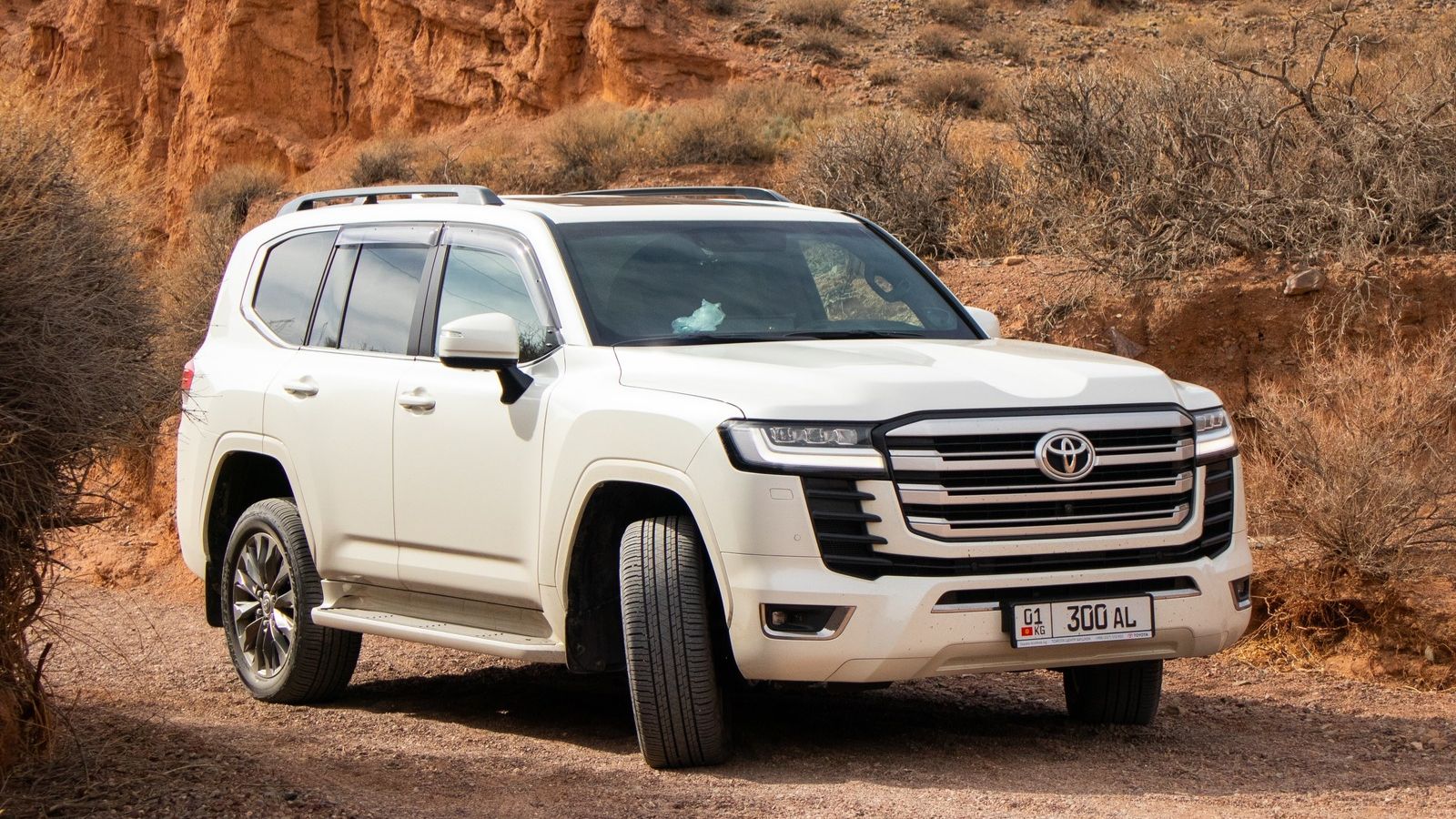
A vehicle built to handle some of the toughest driving conditions is facing a potentially serious safety problem. Toyota has announced a recall affecting approximately 6,721 Land Cruiser SUVs in Canada after identifying a fuel-system connection that could separate and allow gasoline to leak.
The recall, announced October 14, 2026, covers certain Land Cruisers from the 2024 through 2027 model years. Toyota warns that leaking fuel could ignite if it encounters an ignition source, increasing the risk of a vehicle fire.
The company is preparing a free dealership repair involving additional fuel-line securing hardware or replacement of the affected tube when necessary.
With thousands of Canadian owners potentially affected and formal notification letters scheduled for December, the announcement raises immediate questions about vehicle safety, repair availability, and what motorists should do before their Land Cruiser is inspected.
Toyota’s Latest Recall Affects Four Land Cruiser Model Years in Canada
Toyota Canada confirmed on October 14, 2026, that approximately 6,721 Land Cruiser vehicles are included in a newly announced safety recall. The affected population consists of certain 2024, 2025, 2026, and 2027 models, covering the current generation of the SUV since its return to the Canadian market. The manufacturer identified a potential problem with a fuel tube connection near the gasoline tank. Under certain circumstances, this connection could become disconnected, allowing fuel to escape. Because leaking gasoline can ignite when exposed to a suitable source of heat or sparks, Toyota determined that the condition warranted a formal safety recall. The announcement applies specifically to Land Cruiser vehicles identified by the company, rather than every Toyota SUV equipped with a hybrid powertrain.
The number of affected vehicles is substantial for a relatively specialized off-road model. However, Toyota’s announcement does not establish that all 6,721 vehicles have experienced fuel leaks or that every vehicle will necessarily develop the problem. A recall identifies vehicles potentially exposed to a safety-related defect, including those that may currently operate without obvious symptoms. Toyota has also emphasized that recall information can change as vehicle records are updated. Consequently, production year alone is insufficient to determine whether an individual Land Cruiser requires attention. Owners should verify their vehicle identification number through Toyota’s official Canadian recall system rather than assume that a particular trim level or model year is automatically included or excluded.
A Fuel Tube Connection Near the Gas Tank Could Separate Unexpectedly
At the centre of the recall is a connection in the Land Cruiser’s fuel-delivery system, positioned near the fuel tank. Toyota explains that the connection may become detached, creating a path for gasoline to escape from the fuel tube. In normal operation, a vehicle’s fuel system is designed to keep gasoline contained as it travels from the tank toward the engine. A secure connection is therefore essential, even when the affected part is relatively small. If that connection separates, fuel can leak while the gasoline engine remains operational. Toyota has described the component involved in the repair as a resin fuel tube, indicating that the corrective procedure concerns part of the vehicle’s fuel plumbing rather than a replacement of the entire fuel tank.
The distinction is important because the manufacturer has not described the problem as a ruptured tank, damaged hybrid battery, or widespread failure of the engine itself. The identified issue involves the integrity of a particular fuel connection. Toyota’s initial Canadian announcement also does not explain the complete engineering cause of the potential separation, such as whether manufacturing variation, assembly conditions, or another factor contributed. Without that information, attributing the defect to rough roads, off-road driving, or particular owner behaviour would be speculative. The risk exists because the connection could separate, regardless of whether a driver has previously noticed anything unusual. The repair is intended to prevent that separation through additional securing hardware.
A Hybrid Engine Shutdown Does Not Completely Eliminate the Fire Danger
Toyota’s description contains an important detail: gasoline could continue leaking until the gasoline engine in the hybrid system shuts off. That means the duration of the leak may depend on how the malfunction unfolds while the vehicle is operating. Although stopping the engine may interrupt further fuel delivery, it does not automatically remove gasoline that has already escaped. Liquid fuel and its vapours can remain hazardous around the vehicle. The Canadian Centre for Occupational Health and Safety identifies gasoline as a highly flammable liquid that can generate ignitable vapours, especially around sparks, flames, or sufficiently hot surfaces. This is why a relatively straightforward connection failure can justify a serious safety response.
The recall should not be confused with a high-voltage battery fire problem. The identified hazard originates in the gasoline fuel system of a hybrid vehicle. Nor does Toyota’s announcement establish exactly how quickly the hybrid system would shut down following a disconnection. A driver should not assume the vehicle will automatically protect occupants from every possible consequence. Toyota has not published a confirmed number of related fires or injuries in its October 14 Canadian announcement, so conclusions about actual incidents cannot be drawn from that release alone. What is established is the potential for fuel leakage and the resulting fire risk. That possibility makes inspection and the prescribed repair important even when a Land Cruiser appears to be driving normally.
The Recalled Land Cruiser Uses Toyota’s Powerful i-FORCE MAX Hybrid System
The current Land Cruiser returned to Canadian showrooms for the 2024 model year after a 35-year absence. Toyota designed the modern SUV around its TNGA-F truck platform, combining traditional off-road capability with contemporary technology. Every Canadian-market Land Cruiser in this generation uses the i-FORCE MAX hybrid powertrain, built around a turbocharged 2.4-litre four-cylinder gasoline engine and an electric motor integrated with an eight-speed automatic transmission. The system produces a combined 326 horsepower and 465 lb-ft of torque. Toyota also equips the vehicle with full-time four-wheel drive and a two-speed transfer case, supporting its positioning as a genuine off-road SUV rather than simply a road-focused crossover.
That mechanical arrangement helps explain why a gasoline-system problem remains relevant despite the Land Cruiser’s electrified branding. The electric motor assists the gasoline engine, but the vehicle still requires fuel from its tank to operate as designed. The 2027 Land Cruiser is already offered in Canada, with three grades and a starting manufacturer’s suggested retail price of C$71,670. It also carries a factory towing rating of up to 6,000 pounds. These specifications appeal to owners who may depend on the vehicle for daily commuting, family travel, recreational towing, and remote-road adventures. A fuel-system defect can interfere with that confidence, particularly for motorists planning lengthy journeys where dealership assistance may be less convenient. The recall therefore concerns both a mechanical safety issue and the practical reliability expected from an expensive adventure-oriented vehicle.
The Same Fuel Connection Problem Affects Approximately 106,000 U.S. Land Cruisers
Canada is not the only market affected by the fuel connection defect. Toyota Motor North America announced a corresponding United States recall on October 14, 2026, covering approximately 106,000 Land Cruisers. The American campaign involves the same 2024 through 2027 model years and describes an identical concern: a fuel tube connection near the tank could detach and permit gasoline to leak until the hybrid system’s gasoline engine shuts down. Toyota’s American repair instructions also match the Canadian approach, calling for inspection, installation of a supplemental clamp, and fuel tube replacement where necessary. The two announcements demonstrate that the company is addressing the issue across both major North American markets.
The difference in recall totals reflects the substantially larger American vehicle population covered by the campaign, but it should not be interpreted as evidence that individual American vehicles are more likely to experience the failure. The announcements report estimated affected populations, not comparative failure rates. Likewise, the North American figures do not establish how many vehicles have actually suffered a disconnection. Both countries are using the same mid-December owner notification timetable, suggesting coordination in the communication process. For Canadian motorists, the larger U.S. recall may provide reassurance that Toyota is treating the matter as a significant regional safety campaign rather than an isolated dealership complaint. Nevertheless, Canadian owners should rely on Toyota Canada for vehicle eligibility, service arrangements, and updates affecting vehicles registered in Canada.
Toyota Dealers Will Inspect the Connection and Install Additional Securing Hardware
Toyota has outlined a specific repair procedure intended to address the problem without charging vehicle owners. Authorized dealers will inspect the affected fuel tube connection and install a supplemental clamp to help prevent it from separating. If the inspection determines that the resin fuel tube needs replacement, technicians will replace the tube and install the additional clamp. This approach allows the dealership to respond to the actual condition of the connection while applying the preventive measure Toyota has identified. Importantly, the announcement does not indicate that every recalled vehicle automatically requires a complete fuel tube replacement. Some vehicles may need only the specified inspection and additional securing hardware.
For owners, the repair arrangement removes the direct cost of the prescribed recall work. Toyota explicitly states that the inspection, clamp installation, and necessary fuel tube replacement will be performed free of charge. However, the company has not provided a universal appointment duration or a guaranteed date when every dealership will have all required parts available. Repair scheduling may therefore need to be confirmed locally. This work should also be distinguished from routine maintenance or a simple do-it-yourself adjustment. Fuel-system components require appropriate procedures and handling because gasoline and its vapours present a fire hazard. An owner should not attempt to reconnect or secure the fuel line independently. The safer approach is to have Toyota’s authorized service personnel perform the inspection and complete the prescribed repair.
Canadian Owners Are Scheduled to Receive Recall Notices by Mid-December
Toyota plans to notify all known Canadian owners of affected Land Cruisers by mid-December 2026, approximately two months after the initial recall announcement. Those communications are expected to direct owners toward Toyota dealerships for the necessary corrective work. The notification schedule is important because an announcement appearing in October does not mean every owner will immediately receive a letter or secure a repair appointment. There may be a period during which drivers know about the potential defect but have not yet received personalized instructions. Toyota’s initial public statement provides the intended repair procedure, although it does not specify precisely when parts and appointments will be available at every Canadian dealership.
The October announcement also does not issue a blanket instruction requiring all affected owners to stop driving their vehicles immediately. That absence should not be interpreted as a guarantee that continued use is safe in every situation. Owners concerned about their specific vehicle should contact Toyota or their dealership for the latest guidance and any interim precautions. Transport Canada generally advises motorists to follow manufacturer instructions and have safety recall repairs completed promptly once arrangements are available. Waiting passively for a mailed notice may be unnecessary for owners who already know their vehicles could be included. A direct inquiry can help establish whether a vehicle is covered, whether repair arrangements are available, and what steps the dealership recommends before service.
Checking the Vehicle Identification Number Is the Most Reliable First Step
Toyota is directing Canadian owners to its official online recall lookup system, where vehicle-specific safety campaign information can be accessed using a vehicle identification number. The VIN is a unique 17-character identifier assigned to an individual vehicle and can generally be found on its registration documents or near the lower portion of the windshield. Entering that number is more useful than relying on a model-year list because only certain Land Cruisers are included in the campaign. A 2025 or 2026 model is not automatically affected simply because Toyota has named those years. Similarly, the absence of an immediately visible warning light does not establish that a particular vehicle falls outside the recall.
Owners can also contact Toyota Canada’s Customer Interaction Centre at 1-888-869-6828 to ask about the recall. A dealership should be able to help confirm the status of a specific vehicle and explain the next steps. Toyota notes that recall information is current as of the company’s filing date and may change, making periodic verification worthwhile. Contact records also matter. Transport Canada advises owners to inform manufacturers about address changes and register vehicles purchased second-hand so future safety notifications reach the correct person. These precautions are especially relevant for Land Cruisers that have already changed ownership. The recall follows the vehicle itself, rather than depending on whether the current driver originally purchased it new from a Toyota dealership.
A Strong Gasoline Smell or Visible Leak Should Be Treated as a Warning
Although Toyota’s recall announcement does not provide a complete list of driver-observable symptoms, a strong gasoline smell, visible liquid fuel, or an unexpected operating problem should never be ignored. Gasoline odours can originate from several causes, so detecting one does not prove that the Land Cruiser’s recalled connection has separated. However, fuel-system problems can become dangerous when gasoline encounters heat or an ignition source. Consumer automotive guidance recommends shutting off a running engine when a potentially serious gasoline leak is suspected and obtaining professional assistance. The Canadian Centre for Occupational Health and Safety likewise emphasizes keeping gasoline away from sparks, flames, and other ignition sources because its vapours are highly flammable.
If a Land Cruiser develops a strong fuel smell or shows signs of leaking gasoline while travelling, the priority should be reaching a safe stopping location, switching off the vehicle, and moving occupants away from the potential hazard. Drivers should avoid smoking, creating sparks, or attempting roadside repairs involving fuel-system connections. Where a leak is suspected, arranging a tow is preferable to restarting the vehicle and continuing the journey. Smoke, flames, or an immediate threat to people warrant emergency assistance. These are general fuel-leak precautions rather than additional Land Cruiser-specific instructions announced by Toyota. They nevertheless provide practical guidance for owners confronting a possible fuel-system failure before a dealership can inspect their vehicle.
This Is Different From an Earlier Land Cruiser Dashboard Recall in 2026
The October fuel connection campaign is not the first Canadian recall involving the current-generation Land Cruiser in 2026. On May 27, Toyota announced a separate recall covering certain 2024 and 2025 Land Cruisers, along with Toyota Mirai and selected Lexus UX and GX vehicles. That campaign involved approximately 6,956 vehicles across the affected models in Canada. Its underlying concern was a software problem that could cause portions of the 12.3-inch instrument cluster display to remain blank when the vehicle started. In some situations, drivers might not see important warnings, gauges, or malfunction indicators. Transport Canada identified the possibility of increased crash risk because missing information could delay appropriate driver responses.
The earlier dashboard issue required a software correction rather than a mechanical fuel-system repair. Transport Canada’s records describe an update that could be delivered wirelessly to eligible vehicles or completed at an authorized dealership. The October recall, by contrast, concerns a physical fuel tube connection and requires inspection and additional securing hardware. Although certain Land Cruisers could potentially fall under both campaigns, the two defects should not be combined or confused. The May figure of 6,956 also represents several Toyota and Lexus models, not 6,956 Land Cruisers alone. For owners, the practical implication is straightforward: completing one recall does not automatically resolve another. A current VIN-based service record is the best way to determine whether multiple campaigns apply and whether each required correction has been completed.
Used Land Cruiser Buyers Should Check Recall Status Before Taking Delivery
The recall also matters to Canadians considering a pre-owned Land Cruiser. Since the redesigned model entered Canadian showrooms in 2024, examples from its first three model years are now part of the used-vehicle market. Buyers evaluating one of these SUVs often concentrate on mileage, accident history, maintenance records, and overall condition. Outstanding safety recalls deserve similar attention, especially when the identified defect involves potential fuel leakage. Transport Canada recommends checking the national vehicle recall database and using manufacturer VIN lookup systems before purchasing a used vehicle. An authorized dealership can also determine whether relevant recall work has already been performed.
Where an outstanding recall applies, prospective buyers can ask the seller to arrange the corrective work before the vehicle changes hands. Existing owners should maintain records showing that Toyota inspected the connection and completed the appropriate repair. These documents can help clarify service history for future owners and reduce uncertainty during a later sale. Ultimately, the Land Cruiser’s longstanding reputation for durability does not eliminate the need to address a newly identified mechanical risk. Toyota has acknowledged the problem, identified the affected Canadian population, and announced a free corrective procedure. The remaining priority is ensuring that eligible vehicles receive that repair and that owners know how to obtain reliable information in the meantime. A secure fuel connection is a basic requirement, whether the SUV is crossing a city intersection or heading toward a remote trail.