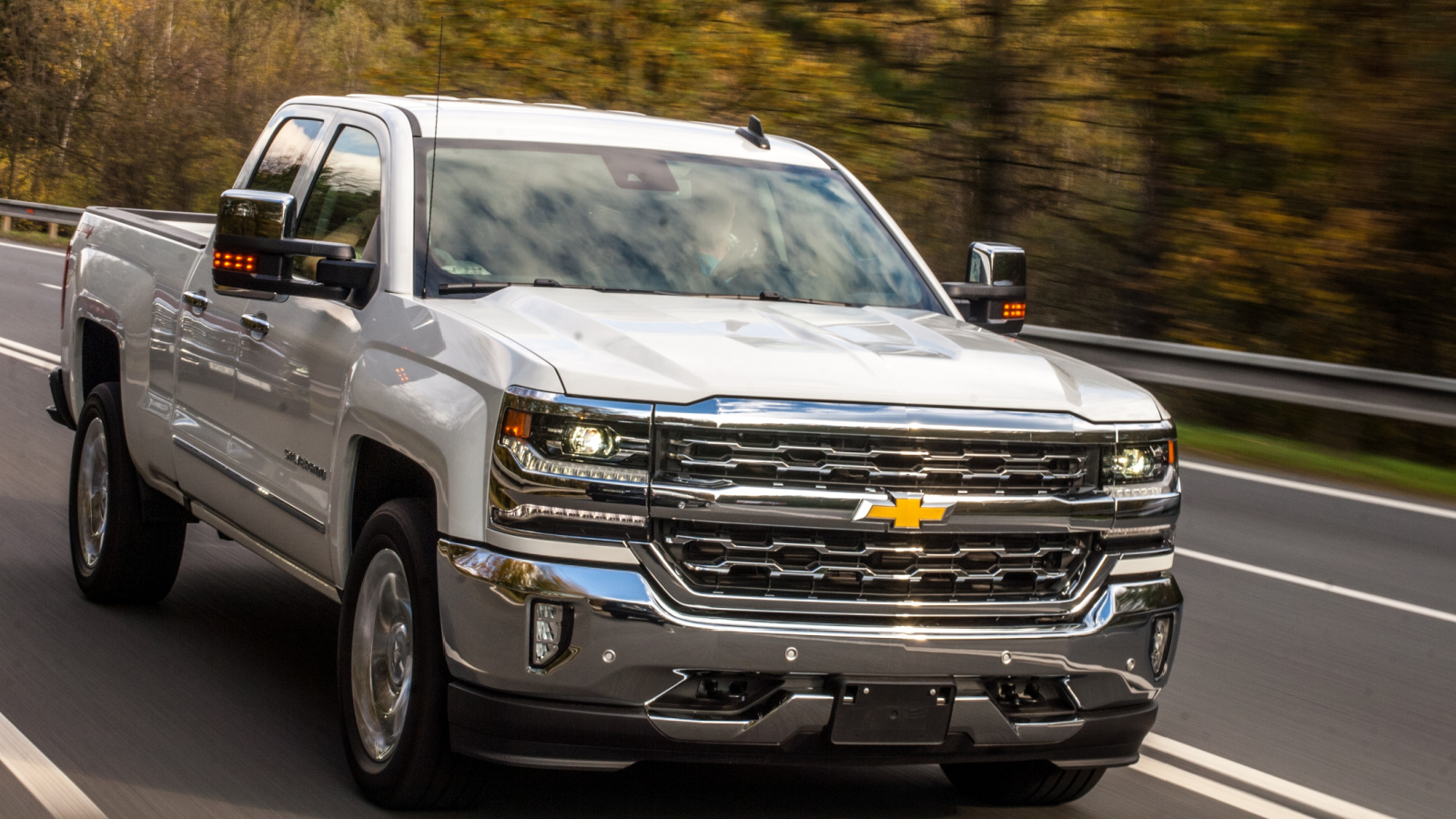
One of the pickup trucks that helped bring General Motors’ Oshawa assembly plant back to life is about to disappear from its production line. GM has confirmed that Chevrolet Silverado 1500 assembly in Oshawa, Ontario, will end in November 2026 as the automaker transitions to its next generation of full-size trucks. The development carries unusual weight in a city that watched vehicle production disappear in 2019 and return less than two years later. Yet this is not another closure. GM says employment levels are expected to remain unchanged as Oshawa increases Chevrolet Silverado HD production and prepares to build the GMC Sierra HD. Meanwhile, more light-duty truck capacity has been moving toward Fort Wayne, Indiana. The next Silverado 1500 will not be U.S.-only, however: production is also expected to continue in Silao, Mexico, making the change a reshuffling of GM’s North American truck network rather than a complete move south of the Canadian border.
November Is Now the Confirmed End for Oshawa’s Silverado 1500
GM spokesperson Jennifer Wright has confirmed that production of the light-duty Chevrolet Silverado 1500 at Oshawa Assembly will end in November. The confirmation settles a question that had surrounded the Ontario factory for months. Industry forecasters had expected the next-generation Silverado 1500 to bypass Oshawa, but GM previously stopped short of confirming that outcome. The plant currently produces both light-duty and heavy-duty Chevrolet Silverado pickups, a combination GM has described as unique within its North American manufacturing system.
The distinction between those trucks is crucial. The Silverado 1500 is Chevrolet’s mainstream light-duty full-size pickup, while Silverado HD models such as the 2500HD and 3500HD are designed for more demanding towing, payload and commercial applications. November therefore marks the end of one product line, not the end of truck assembly in Oshawa. GM says it plans to offset the lost 1500 work by increasing Silverado HD output, while another heavy-duty pickup program is already waiting in the wings. The factory is changing specialties rather than shutting its doors.
The 1500 Was Central to Oshawa’s Remarkable Comeback
Few auto plants have experienced a turnaround quite like Oshawa’s. GM ended vehicle assembly there in December 2019, shifting the sprawling facility toward stamping, parts operations and advanced vehicle testing. At the time, the transformation agreement was designed to preserve hundreds of positions, but automobile assembly itself appeared finished. Then the full-size truck market helped change the equation. A C$1.3-billion investment was negotiated in 2020 to bring truck production back, and the first Silverado rolled off the reopened assembly line in November 2021.
The revival happened rapidly. GM initially created approximately 1,800 jobs supporting two shifts, then announced light-duty pickup production and a third shift in 2022. The number of newly created jobs associated with the reopening eventually exceeded 2,600. By June 2026, GM said Oshawa had produced more than 500,000 Silverado pickups since restarting operations, as well as more than one million aftermarket parts. Those milestones explain why losing the 1500 carries symbolic importance. Light-duty pickups were not merely another model on the schedule; they became part of the factory’s second life.
Fort Wayne Has Already Been Receiving More Light-Duty Work
The movement toward U.S. production did not begin with the November announcement. In April 2025, GM increased output of Chevrolet Silverado and GMC Sierra light-duty pickups at its Fort Wayne Assembly plant near Roanoke, Indiana. Reuters reported that the plant planned a line-speed increase and additional overtime, while a United Auto Workers official said roughly 225 to 250 jobs would be added. GM described the changes as operational adjustments designed to support its manufacturing and business requirements.
Fort Wayne remains one of GM’s most important light-duty pickup factories and currently builds both Silverado 1500 and Sierra 1500 models. However, describing the transition as every Silverado moving from Canada to the United States would go too far. Silao, Mexico, is also part of GM’s light-duty truck network, and industry reporting places the next-generation Silverado 1500 at both Fort Wayne and Silao. What is disappearing is the Canadian assembly point. Fort Wayne has clearly gained capacity, but the future Silverado 1500 remains a North American product manufactured on both sides of the U.S.-Mexico border.
Tariffs Form Part of the Story, but They Are Not the Whole Explanation
The timing inevitably puts the change inside the wider Canada-U.S. trade fight. When GM announced in May 2025 that Oshawa would eventually return from three shifts to two, the company explicitly cited “forecasted demand and the evolving trade environment.” Reuters reported the decision shortly after GM increased light-duty truck production in Indiana as new U.S. vehicle tariffs took effect. Unifor has repeatedly argued that the movement of production toward the United States is directly connected to American trade policy.
GM has been more cautious about assigning a single cause. The company has not publicly said that tariffs alone forced the November 2026 Silverado 1500 cutoff, and production allocations normally reflect several factors, including model changes, plant capacity, logistics, costs and expected demand. That distinction is particularly important because North American auto manufacturing remains deeply integrated. Engines, components and completed vehicles routinely cross borders during production. Trade policy has clearly altered the business calculation, but presenting every manufacturing decision as the result of one tariff would oversimplify a far more complicated supply chain.
Workers Have Already Lived Through One Major Reduction This Year
GM’s assurance that employment levels are expected to remain unchanged after Silverado 1500 production ends is especially significant because Oshawa workers have already experienced a painful reduction. The factory returned to a two-shift schedule on February 2, 2026, and GM said approximately 500 employees would be placed on layoff. The company provided eligible hourly workers with supplemental unemployment benefits that, when combined with Employment Insurance, could equal 70% of regular weekly earnings for varying periods depending on seniority.
Unifor put the wider impact higher, saying the elimination of the third shift resulted in more than 700 direct jobs disappearing and additional losses among suppliers. By August, the union said it represented approximately 2,750 members associated with Oshawa Assembly, including workers in different employment statuses. That recent history means November will be watched closely even if GM expects no new reduction. For an assembly worker, production allocation is not an abstract corporate strategy. A truck assigned to a plant can translate directly into overtime, another shift—or uncertainty about whether a job will still exist a year later.
Heavy-Duty Trucks Are Becoming Oshawa’s New Anchor
The factory’s future is increasingly being built around trucks that sit above the Silverado 1500 in Chevrolet’s lineup. GM has confirmed that Silverado HD production will continue at Oshawa as the next generation of its heavy-duty pickups arrives. The company’s September announcement for the updated trucks identified Oshawa and Flint Assembly in Michigan as continuing Silverado HD production locations. Oshawa is therefore staying inside one of GM’s most lucrative and capability-focused vehicle categories even after losing the half-ton pickup.
The product mix is also widening. A new Unifor-GM collective agreement ratified in August secured C$144 million to add next-generation GMC Sierra HD production at Oshawa. That means the plant is expected eventually to build heavy-duty pickups for both Chevrolet and GMC instead of relying on a single badge. Unifor Local 222 President Jeff Gray has indicated Sierra HD production could arrive by late 2028, although GM had not formally confirmed that exact launch timing when the Silverado 1500 cutoff became public. What is certain is the direction: Oshawa is being repositioned as a heavy-duty truck centre.
GM Is Still Spending Hundreds of Millions in Oshawa
Ending 1500 production might appear inconsistent with GM’s recent investments, but those expenditures make more sense when viewed alongside the changing product strategy. In June, GM said investments supporting next-generation gas-powered full-size trucks at Oshawa had reached C$343 million. That included an earlier C$280-million commitment and another C$63 million announced in February for stamping upgrades and related manufacturing capabilities. The company said total investment in Oshawa since 2020 had reached approximately C$1.5 billion.
The August collective agreement then added the C$144-million commitment associated with bringing the next-generation GMC Sierra HD to the plant. Those investments do not guarantee that every past production program stays in Canada; instead, they indicate which products GM expects Oshawa to build in the future. The strategy is becoming increasingly specialized. Light-duty Silverado assembly leaves, while heavy-duty Chevrolet and GMC trucks gain importance. For workers and governments that have supported the plant, the critical measure will be whether those investments generate enough sustained production volume to keep two shifts healthy once the much higher-volume Silverado 1500 is gone.
The Next Silverado Arrives Just as Canadian Production Ends
Oshawa’s November cutoff coincides almost perfectly with a generational change for Chevrolet’s best-known pickup. GM unveiled the redesigned 2027 Silverado 1500 in June and says the truck will begin reaching dealerships toward the end of 2026. The new lineup includes next-generation 5.7-litre and 6.6-litre V8 engines, an enhanced 2.7-litre TurboMax four-cylinder and the continuing 3.0-litre Duramax diesel. Every powertrain is paired with a 10-speed automatic transmission, while Chevrolet has also expanded its technology and driver-assistance offerings.
The timing helps explain why November matters. Oshawa is not simply dropping an existing trim midway through an ordinary production cycle; the factory is effectively exiting the light-duty program as GM moves into a redesigned generation. Industry reporting places new Silverado 1500 production at Fort Wayne and Silao. The outgoing 2026 truck is being phased out during the same period, with several remaining trims scheduled to finish production in November. Once that transition is complete, a newly built Silverado 1500 carrying a Canadian Oshawa assembly origin will become a thing of the past.
Silverado 1500 Demand Is Still Strong
The change should not be interpreted as evidence that Americans have suddenly stopped buying light-duty Silverados. GM’s own third-quarter 2026 delivery figures show the opposite. Chevrolet delivered 100,221 Silverado light-duty pickups in the United States during the quarter, an increase of 13.3% from 88,460 a year earlier. Through the first nine months of the year, Silverado LD deliveries reached 279,614, up 6.5%. Heavy-duty Silverado sales, by contrast, declined 10.1% during the third quarter to 44,278 vehicles.
Those figures create an interesting contrast with Oshawa’s changing product allocation. GM is removing a growing light-duty nameplate from the Canadian assembly plant while making heavy-duty trucks its future focus there. Plant allocation, however, is determined by more than which version had the strongest recent sales quarter. GM operates multiple truck factories and must decide where each generation can be produced most efficiently, particularly while tariffs and manufacturing costs are changing. Fort Wayne already has a dedicated light-duty operation, while Oshawa’s ability to accommodate heavy-duty Chevrolet and GMC trucks gives the Canadian factory a different role.
Oshawa Is Losing the 1500, Not Its Place in GM’s Truck Business
The November transition is significant precisely because Oshawa has seen how quickly an auto plant’s fortunes can change. Vehicle production stopped in 2019, restarted in 2021, expanded to three shifts and then contracted again to two. Now one of the products behind that comeback is departing. Yet the situation is fundamentally different from the closure announcement that shook the city eight years ago. Silverado HD production remains, a Sierra HD program has been secured, substantial retooling money is committed and parts-related operations continue at the site.
Canada also retains other pieces of GM’s future truck supply chain. The company has committed C$691 million for next-generation V8 engine production at St. Catharines, Ontario, alongside the investments in Oshawa. None of that removes the competitive pressure facing Canadian auto manufacturing as companies reconsider where vehicles should be assembled in an increasingly protectionist North American market. For Oshawa, the real test begins after the final locally built Silverado 1500 rolls off the line: whether fewer nameplates, focused on heavier trucks, can provide the stability that workers and the city fought so hard to regain.