A piece of Canadian transportation technology is gaining access to one of Europe’s most demanding traffic-management markets. Toronto-headquartered Quarterhill has announced that its TMB-13X multilane intersection radar has secured registration under the U.K.’s TOPAS 2505B standard, clearing an important procurement hurdle for equipment used around traffic signals.
The technology is designed to do something deceptively simple: detect vehicles and cyclists without cutting sensors into the pavement. One TMB-13X can create as many as nine virtual detection zones, giving road authorities an above-ground alternative to traditional inductive loops. For Quarterhill, the registration opens another route into the U.K. intelligent-transportation market at a time when authorities are modernizing signal infrastructure, improving real-time traffic management and looking for ways to reduce disruption from road works.
The U.K. Door Is Now Open
Quarterhill announced the British registration on September 24, 2026, saying the TMB-13X had achieved TOPAS 2505B status. The official TOPAS register independently confirms that the TMB Microwave Traffic Management Sensor, product reference TMB-13X Issue 1, is registered as a live product under specification 2505B. Interestingly, the TOPAS database lists July 29, 2026, as the formal registration date, meaning the certification itself preceded Quarterhill’s public announcement by nearly two months. The certificate number shown by TOPAS is 2026-0303.
That distinction matters because “approval” can sound more regulatory than the process actually is. TOPAS describes its standards as purchasing specifications rather than statutory requirements and says registration is not universally mandatory under law. In practice, however, purchasing authorities frequently require compliant, TOPAS-registered equipment in procurement contracts. Quarterhill can therefore market the radar to U.K. traffic-signal controller manufacturers, systems integrators and transport authorities with a recognized certification that buyers can verify during procurement.
How the TMB-13X Replaces Physical Loops
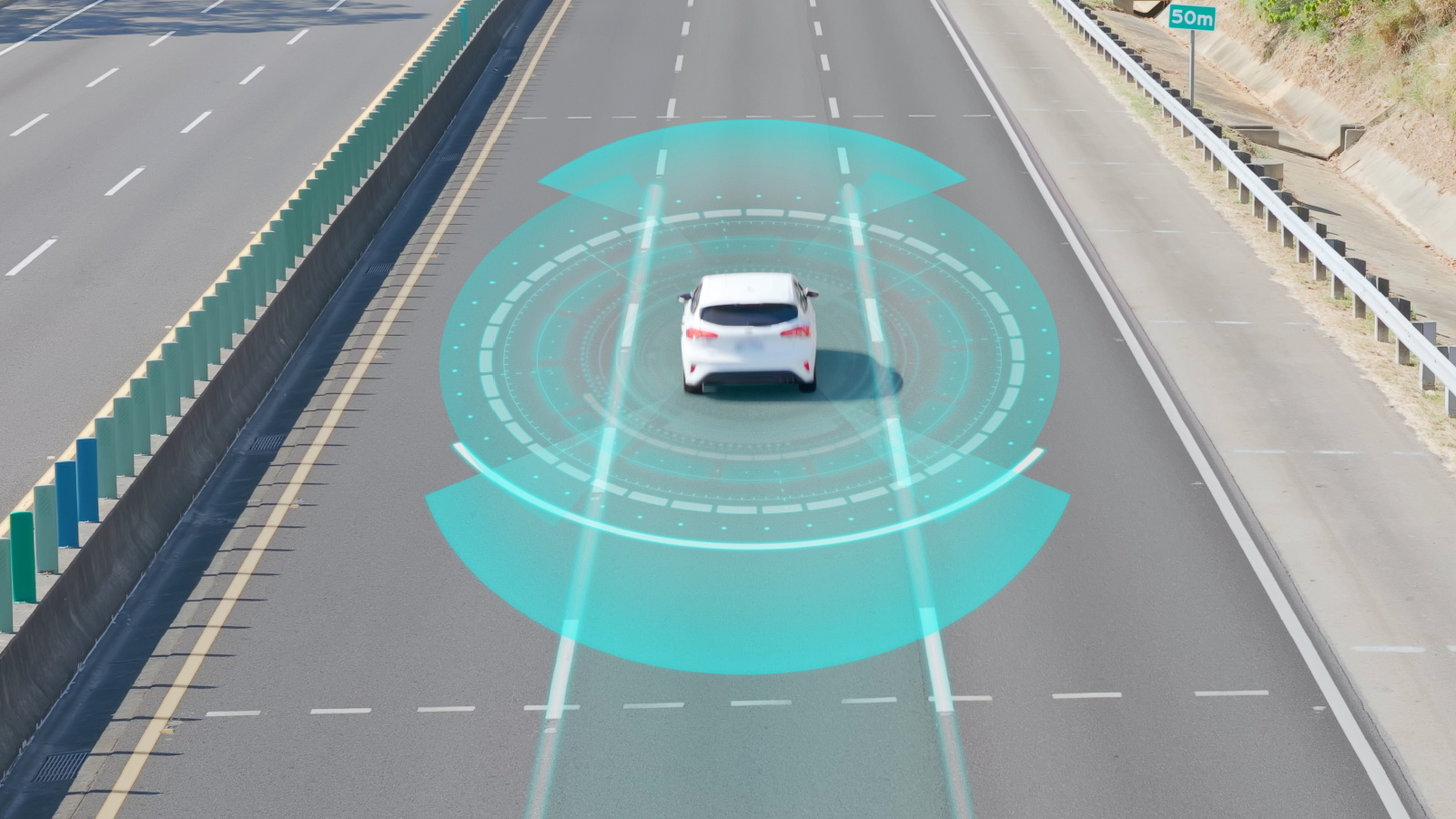
Traditional traffic lights often depend on detectors embedded in the pavement to tell the controller whether a vehicle is approaching or waiting. Quarterhill’s TMB-13X moves that sensing job above ground. According to company specifications, the radar can create as many as nine configurable virtual detection zones across a multilane intersection. Those zones can be positioned around individual approaches, turning lanes or stop lines, allowing one unit to perform work that might otherwise require several separate loops cut into the road.
The radar is also designed to distinguish more than simple vehicle presence. Quarterhill says it can track movement and stationary vehicles while providing information including target position, speed and length. It can detect bicycles as well as motor vehicles, while the company’s current product material also identifies scooters among supported road users. The unit uses a browser-based graphical interface accessible over Wi-Fi, allowing technicians to configure virtual zones without installing specialized setup software. Quarterhill says one unit can replace as many as nine inductive loops, which is the central proposition behind the product.
Why Road Crews Care About Above-Ground Detection
The argument for moving detectors out of the pavement is largely about what happens before and after installation. Inductive loops remain a mature and highly accurate traffic-sensing technology, but installing them typically means cutting slots into pavement, laying wire, sealing the cuts and connecting the detector to roadside electronics. U.S. Federal Highway Administration guidance notes that loop installation and maintenance can require lane closures, while poor installation can shorten pavement life. The wires themselves must also survive traffic loads, temperature changes, cracking pavement and moisture.
Those disadvantages become more important on busy urban roads where closing a lane can create congestion far beyond the immediate work zone. Maintenance is another consideration. FHWA technical guidance has documented pavement deterioration, broken wires, failed sealant and installation problems as common sources of loop-detector trouble. An above-ground detector does not eliminate maintenance altogether, but it removes the sensing element from the road surface. For a traffic authority deciding between another pavement cut and a pole-mounted radar installation, avoiding excavation can reduce both physical disruption and workers’ exposure to live traffic.
London Shows the Scale of the Opportunity
The potential market becomes easier to understand when London’s signal network is considered. Transport for London has reported that it manages roughly 6,400 traffic-signal sites across the capital. During a major traffic-system modernization completed in 2024, TfL migrated almost 4,000 junctions, approximately 1,500 pedestrian crossings and more than 16,000 traffic detectors to its new cloud-based Real Time Optimiser platform. Even a relatively small share of a detector network that size would represent a meaningful deployment for a specialist traffic-technology supplier.
The significance goes beyond London. Traffic signals are distributed across local highway authorities throughout Britain, creating a fragmented procurement market in which certification and compatibility matter. Quarterhill is not entering without competitors; TOPAS already lists several above-ground detector products from other manufacturers under the same 2505B specification. That means registration does not hand Quarterhill the market. It puts the TMB-13X into a pool of equipment that authorities and contractors can realistically consider when signals are installed, refurbished or upgraded.
Britain Is Already Spending to Modernize Traffic Signals
Quarterhill’s timing coincides with a broader push to refresh traffic-control infrastructure in England. In 2024, the Department for Transport allocated £50 million through its Traffic Signal Obsolescence Grant and Green Light Fund. Of that amount, £30 million was directed toward replacing ageing or unreliable signal equipment, while £20 million was aimed at improving signal operation so systems better reflect current traffic conditions. The funding covered authorities across England and attracted bids covering nearly every eligible authority area.
London has been moving in a similar direction technologically. TfL transferred its ageing signal-management platform to the cloud-based Real Time Optimiser system, giving operators greater capacity to react to traffic conditions, incidents and different modes of travel. Traffic detectors are the eyes of systems like these: if the controller cannot accurately determine where demand is building, sophisticated optimization software has less useful information to work with. A new detector such as the TMB-13X therefore enters a market where the sensor itself is increasingly part of a wider digital traffic-management ecosystem rather than an isolated roadside component.
The Specifications Are Strong, but Real-World Performance Still Matters
Quarterhill lists a detection range of up to 120 metres for the TMB-13X, maximum detected speeds of up to 120 km/h and operation in the 76-77 GHz W-band. The unit carries an IP65 environmental-protection rating and is offered in several power configurations. TOPAS 2505B meanwhile establishes performance expectations for above-ground traffic-signal detectors, including requirements intended to minimize false detections, diagnose faults and reliably detect vehicles over specified operating conditions. It is therefore more than a simple paperwork exercise.
Certification, however, should not be confused with proof that radar will outperform every loop detector in every situation. Transportation research has repeatedly shown that sensor performance depends on mounting geometry, traffic conditions, configuration and the specific hardware involved. A peer-reviewed study of microwave detectors at a signalized intersection found weather-related increases in some false and missed detections for the products it tested, while other research has identified occlusion and reflections as possible radar issues. Those studies involved different radar systems, not Quarterhill’s TMB-13X, but they illustrate why field configuration and ongoing performance monitoring remain essential.
Detecting Cyclists Is Becoming More Important
Vehicle detection at a modern intersection increasingly means detecting more than cars. Quarterhill says the TMB-13X can identify bicycles within its virtual zones, including cyclists approaching or waiting at a stop line. That capability can be useful where signal controllers rely on demand detection rather than automatically giving every movement the same amount of green time. A bicycle waiting in a dedicated lane or cycle box needs to be recognized reliably if the signal system is supposed to respond to its presence.
The scale of cycling makes that more than a niche function. Department for Transport figures show that pedal cycles travelled about 3.7 billion miles on Great Britain’s roads and adjacent paths in 2025, up 4.2% from 2024. Final road-safety figures also recorded thousands of cyclist injuries during the year. No detector can solve road-safety problems on its own, but sensing technology helps determine what traffic-signal controllers know about the intersection around them. As cities try to manage cars, commercial vehicles, bicycles, buses and pedestrians within the same limited road space, multimodal detection becomes increasingly valuable.
For Quarterhill, This Fits a Much Bigger Transportation Strategy
The TMB-13X may be a compact roadside device, but Quarterhill has been building a much broader intelligent-transportation business. The company’s head office is at 200 Bay Street in Toronto, and its portfolio spans tolling, enforcement, commercial-vehicle systems, traffic detection and other transportation technologies. In its second quarter of 2026, Quarterhill reported US$42.5 million in revenue and US$4.6 million in adjusted EBITDA, describing the period as its strongest quarter of adjusted profitability in more than three years.
Quarterhill also reported a US$415-million revenue backlog at June 30 and said the quarter marked its fourth consecutive period of positive adjusted EBITDA. Those numbers put the U.K. radar launch in perspective. A single detector registration is unlikely to transform a company of that scale on its own. Its importance is strategic: Quarterhill is trying to sell a wider collection of roadside and transportation systems internationally, so establishing another product in an important European procurement environment gives the company another piece of infrastructure it can offer transportation agencies and integration partners.
Quarterhill’s U.K. Presence Could Become Much Larger
The radar registration also arrives while Quarterhill is pursuing a major expansion of its tolling business. In June, the company agreed to acquire substantially all of Conduent’s tolling-solutions business. The transaction calls for US$70 million in cash plus Quarterhill shares representing 7% of the company’s outstanding shares at closing, subject to the agreement’s terms. Conduent has said its tolling operation has activities in both the United States and United Kingdom and supports more than 14 million tolling transactions per day.
Quarterhill has said the deal could approximately triple its tolling revenue and create a combined backlog of roughly US$2 billion after closing. The companies expected the transaction to close before the end of 2026, subject to customary conditions and required approvals. The Conduent deal and the TMB-13X registration are separate developments, and tolling is different from intersection detection. Still, both point in the same strategic direction: Quarterhill is trying to increase its scale in transportation infrastructure while expanding the number of markets where its technology can be sold.
Registration Is the Starting Line, Not the Finish
The most important next question is whether British agencies and contractors actually buy the TMB-13X. Quarterhill says the TOPAS-registered radar is now available for order and can be offered to controller manufacturers, systems integrators and transport authorities across the country. Registration removes an important procurement obstacle, but the company had not announced a major U.K. TMB-13X deployment or nationwide customer contract alongside the September 24 announcement.
Competition will matter as well. The TOPAS database shows other live 2505B products from manufacturers including smartmicro, Teledyne FLIR, AGD Systems and other traffic-technology suppliers. Local authorities will still weigh price, integration requirements, reliability, maintenance experience and site-specific performance. Quarterhill itself acknowledges in its forward-looking disclosures that U.K. adoption is not guaranteed. Even so, getting onto the approved procurement register changes the commercial conversation. Instead of asking whether the Toronto company’s radar can qualify for British signal projects, Quarterhill can now compete for them—and try to prove that virtual loops above the road can replace more of the physical loops buried beneath it.