
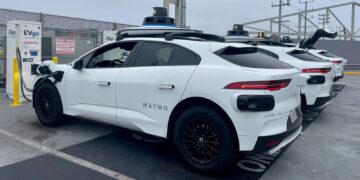







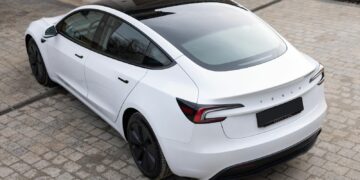

















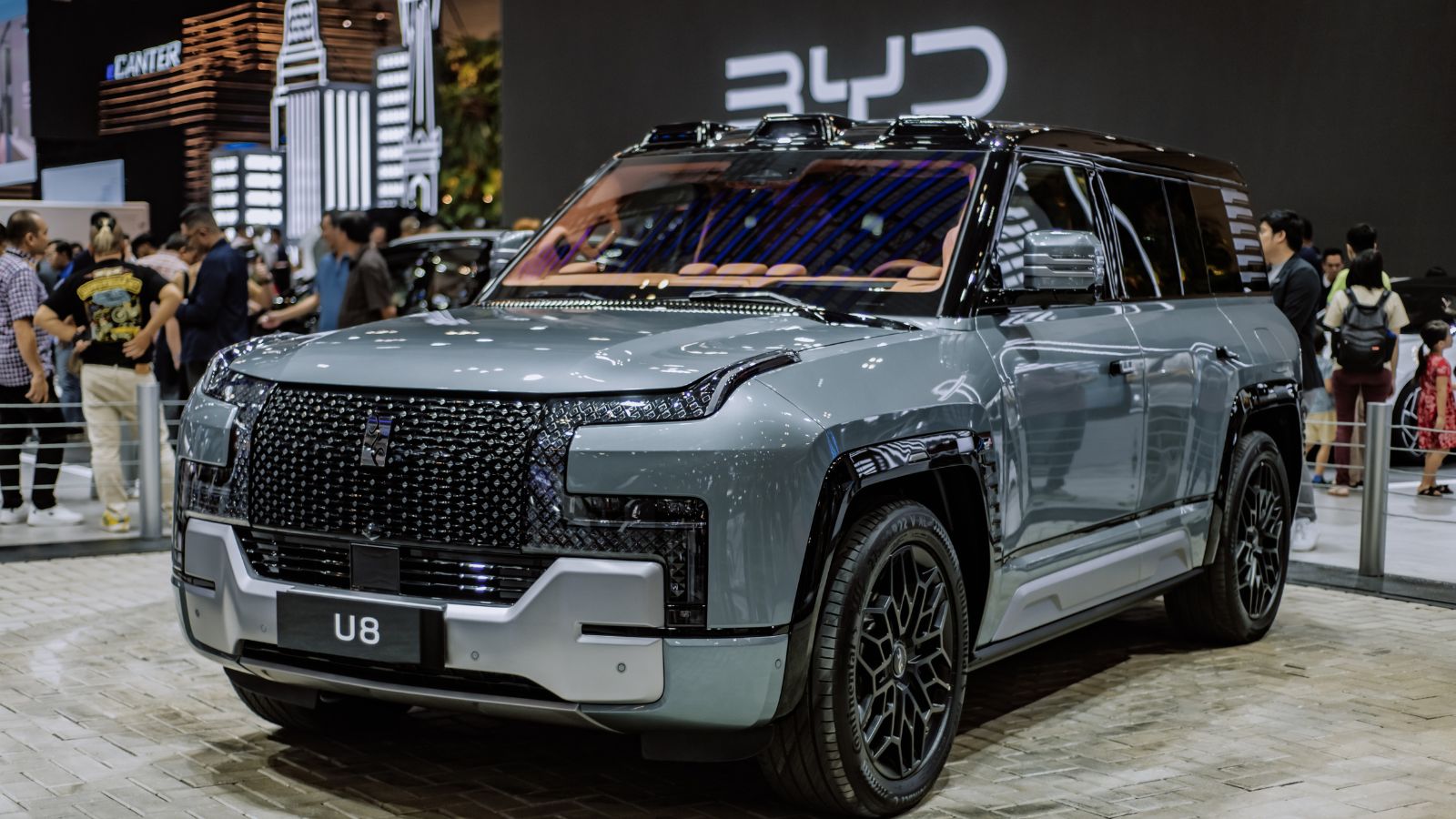
North America is beginning to draw two sharply different lines around Chinese vehicles. In Washington, a bipartisan Senate effort is moving toward a statutory prohibition on connected vehicles and key technology associated with China and other designated foreign adversaries. In Ottawa, meanwhile, Canada has replaced its 100% surtax on Chinese-made electric vehicles with a controlled import quota, creating a viable path for companies such as BYD and other Chinese automakers to enter the Canadian market.
The contrast is bigger than a disagreement over tariffs. It touches vehicle prices, cybersecurity, industrial investment, North American supply chains and whether Chinese automakers will become established competitors on one side of the Canada-U.S. border while remaining effectively excluded from the other.
The Senate Is Trying to Turn Existing Restrictions Into Federal Law
The latest push revolves around the Connected Vehicle Security Act of 2026, S. 4429. Introduced by Republican Senator Bernie Moreno of Ohio with Democratic Senator Elissa Slotkin of Michigan and a large bipartisan group of co-sponsors, the legislation was reported from the Senate Commerce Committee on September 22 and placed on the Senate legislative calendar on September 23. The committee had previously advanced the measure unanimously. It still requires approval by the full Senate and House, followed by presidential action, before becoming law.
That distinction matters when the proposal is described as a “permanent” ban. The legislation does not simply impose another temporary tariff. It would place restrictions directly into federal statute, making them considerably harder for an administration to dismantle through ordinary regulatory changes. Beginning in 2027, the reported bill would prohibit covered connected vehicles tied to China and several other designated countries, while restrictions on specified connectivity hardware would take effect in 2030.
Washington Already Has a Chinese Connected-Car Crackdown
The Senate is not starting from zero. The U.S. Commerce Department finalized connected-vehicle rules in January 2025 after determining that certain Chinese- and Russian-linked vehicle hardware and software could create unacceptable national-security risks. Those regulations prohibit covered software beginning with model-year 2027 vehicles and covered vehicle-connectivity hardware beginning with model year 2030. Chinese- or Russian-controlled connected-vehicle manufacturers are also blocked from selling affected new vehicles in the United States beginning with the 2027 model year.
The proposed legislation would put that policy on a stronger statutory footing and reaches deeply into ownership, software and component relationships. The Senate text identifies China, Russia, Iran and North Korea as covered countries. It also contains foreign-control provisions affecting vehicle companies with more than 15% specified ownership or control and software or hardware suppliers above certain 25% thresholds. These details demonstrate why the debate reaches beyond cars carrying Chinese badges: multinational manufacturers, technology suppliers and joint ventures may also have to examine their ownership structures and supply chains.
The U.S. Debate Is About Data and Industrial Competition at the Same Time
Supporters of the measure make two overlapping arguments. The first is cybersecurity. Modern vehicles can contain cellular connections, Bluetooth, Wi-Fi, telematics, navigation and automated-driving systems capable of processing substantial quantities of location and operational information. The Commerce Department says foreign-adversary access to those technologies could create opportunities for sensitive-data collection or remote interference. Senators supporting S. 4429 have similarly framed connected vehicles as a security issue rather than simply another category of imported consumer product.
The second argument is economic. U.S. automotive trade groups recently urged Washington to retain strict barriers against Chinese automakers, warning about domestic employment, investment and competition from Chinese manufacturers. China has rejected similar U.S. connected-vehicle restrictions as protectionist and has argued that Washington is using national security too broadly. The disagreement therefore remains fundamental: U.S. officials and industry supporters describe the restrictions as economic and security protection, while Beijing argues they interfere with legitimate market competition.
Canada Has Moved in Almost the Opposite Direction
Canada imposed a 100% surtax on Chinese-made EVs in October 2024, broadly aligning itself at the time with Washington’s tougher approach. That policy changed following a new Canada-China arrangement announced in January 2026. Beginning March 1, Canada repealed the 100% surtax for eligible vehicles entering under a country-specific quota and returned them to the normal 6.1% most-favoured-nation tariff. The first-year quota is 49,000 vehicles, split initially into two six-month periods of 24,500 units, with unused first-period capacity carried forward.
This is not an unrestricted opening. Importers require shipment-specific permits, and imports are prohibited once available quota is exhausted. The quota is scheduled to grow 6.5% annually. Beginning in year two, part of it must be reserved for lower-priced EVs, eventually reaching 50% for vehicles with an import value of C$35,000 or less by year five. Ottawa says the initial 49,000-unit allowance represents less than 3% of Canada’s new-vehicle market.
BYD and Other Chinese Automakers Now Have a Real Canadian Opening
The tariff change immediately made Canada considerably more interesting to Chinese automakers. Reuters reported in June that BYD, Chery, Changan and Geely-owned Lotus were among the manufacturers pursuing dealerships, regulatory approvals or other preparations for the Canadian market. Industry participants described Canada as a useful test market because Canadian vehicle preferences and standards share many similarities with those in the United States, even though access to the much larger American market remains heavily restricted.
BYD is particularly important because of its scale. The company sold approximately 4.6 million vehicles globally in 2025, ranking sixth among global automakers, while continuing to expand exports. Separate reporting citing BYD representatives said the manufacturer moved quickly to develop a Canadian sales network after the tariff agreement, with roughly 20 Canadian sales locations targeted through retail partners. BYD has also examined the possibility of Canadian manufacturing, although no Canadian factory commitment had been finalized in the reporting reviewed.
Canadians Could Get More Choice, but the Auto Industry Sees Risks
Ottawa argues that controlled Chinese EV imports could broaden consumer choice and increase the availability of lower-priced electric vehicles without overwhelming Canada’s domestic market. There is evidence that a meaningful group of shoppers could be receptive. J.D. Power’s 2026 Canada EV Consideration Study found that 34% of Canadian new-vehicle shoppers were at least somewhat likely to consider an EV, up from 28% in 2025. Among consumers already considering an EV, 56% said they would consider a Chinese brand, with price identified as an important factor.
Canada’s established automotive industry has been considerably more cautious. The Canadian Automobile Dealers Association said the original quota announcement left significant questions about administration and brand eligibility. The Canadian Vehicle Manufacturers’ Association and the American Automotive Policy Council also warned that Chinese imports could create risks for the integrated North American automotive supply chain. Ottawa’s counterargument is that a capped quota and potential Chinese investment can produce competition and investment without allowing imports to expand uncontrollably.
Selling Chinese EVs in Canada Does Not Automatically Create a U.S. Back Door
A BYD or Chery vehicle legally sold in Toronto cannot simply be redirected through Canada and gain automatic duty-free access to the United States. CUSMA’s automotive rules require passenger vehicles and light trucks seeking preferential treatment to meet a 75% regional-value-content threshold. The agreement also includes requirements covering originating core components and North American steel and aluminum purchases. A Chinese-built vehicle does not become North American simply because it entered the continent through a Canadian port or dealership.
The U.S. connected-vehicle restrictions create another separate barrier. They focus on where vehicles, software and connectivity hardware originate and on who controls their manufacturers and suppliers. The Senate proposal specifically contains anti-circumvention provisions designed to prevent covered technology from avoiding restrictions through rebranding or restructuring. Canada can therefore provide Chinese automakers with a commercially important North American foothold without automatically providing access to American buyers. That distinction is crucial when describing Canada as a potential “practice run” for Chinese automakers.
Canada and the U.S. Are Developing Different Answers to the Same Automotive Question
The policy split is especially striking because Canada and the United States normally operate inside one highly integrated automotive ecosystem. Washington is moving toward country-linked prohibitions that treat connected vehicles as a national-security issue. Canada continues to recognize cybersecurity concerns, but Transport Canada’s existing vehicle-cybersecurity framework emphasizes technology-neutral guidance, risk management and voluntary assessment tools rather than the U.S.-style country-specific prohibition now being considered by Congress.
Neither approach has reached its final form. S. 4429 still has to clear the U.S. legislative process, and Washington continues debating how Chinese investment should be treated. Canada’s quota, meanwhile, has entered its second six-month period and could eventually support a broader Chinese-brand presence if manufacturers complete certification, dealer development and import arrangements. The result could be an unusually visible experiment: Canadian shoppers encountering Chinese EV brands in local showrooms while drivers only a short distance across the border remain effectively shut out of the same vehicles.