























Audi’s latest move in China shows how quickly the global automotive map is changing. The German premium manufacturer and state-owned SAIC Motor have formally established a Shanghai innovation centre dedicated to AUDI, their China-exclusive electric brand. Four additional models are planned on a new digital platform, with the first scheduled for 2028.
The development lands at an unusually sensitive moment for Canada. Ottawa has moved away from the 100-per-cent surtax it once imposed on Chinese-made electric vehicles and now permits a controlled annual quota at the standard 6.1-per-cent tariff. That creates a difficult balancing act: lower-priced EVs and faster innovation could benefit consumers, while Canadian manufacturers and workers remain concerned about what greater Chinese competition could mean for domestic investment and the tightly integrated North American auto industry.
Audi Is Building More Than Another Shanghai Engineering Office
Audi and SAIC formally established the AUDI Innovation & Technology Center in Shanghai on September 3. Unlike a conventional regional engineering office that simply adapts imported products, the new operation is designed to handle extensive vehicle development for the China-exclusive AUDI business. Its work includes vehicle and driving-control technologies, smart-cabin systems powered by artificial intelligence and next-generation driver-assistance technology.
The centre represents a deeper form of localization for Audi. The partners are no longer merely producing vehicles together or sharing a platform; they are building an organization intended to develop products around Chinese expectations from their earliest stages. Industry reporting indicates a workforce of roughly 300 people is planned. That matters because Chinese buyers increasingly judge premium vehicles not only by acceleration, materials and badge prestige but also by software responsiveness, connected services, digital entertainment and sophisticated assistance features.
Four More Models Will Extend Audi’s China-Specific Product Strategy
The centre’s most tangible assignment is the development of four new AUDI vehicles using ADP 2.0, the next generation of the Advanced Digitized Platform created for intelligent connected vehicles. Reuters reported that the first model from this new wave is scheduled to arrive in 2028. Audi has not publicly detailed the body styles, specifications or pricing of all four vehicles, leaving room for the range to evolve with China’s fast-moving market.
They will build on an earlier product wave rather than start from zero. The E5 Sportback became the first production vehicle from the China-only AUDI marque in 2025, while the electric E7X expanded the brand into the SUV market in 2026. Audi has also said another model is planned for 2027. The result is effectively a parallel product ecosystem designed specifically around one national market, something that would have been far less common for a European luxury manufacturer a decade ago.
The Capitalized AUDI Brand Shows How Far Localization Has Gone
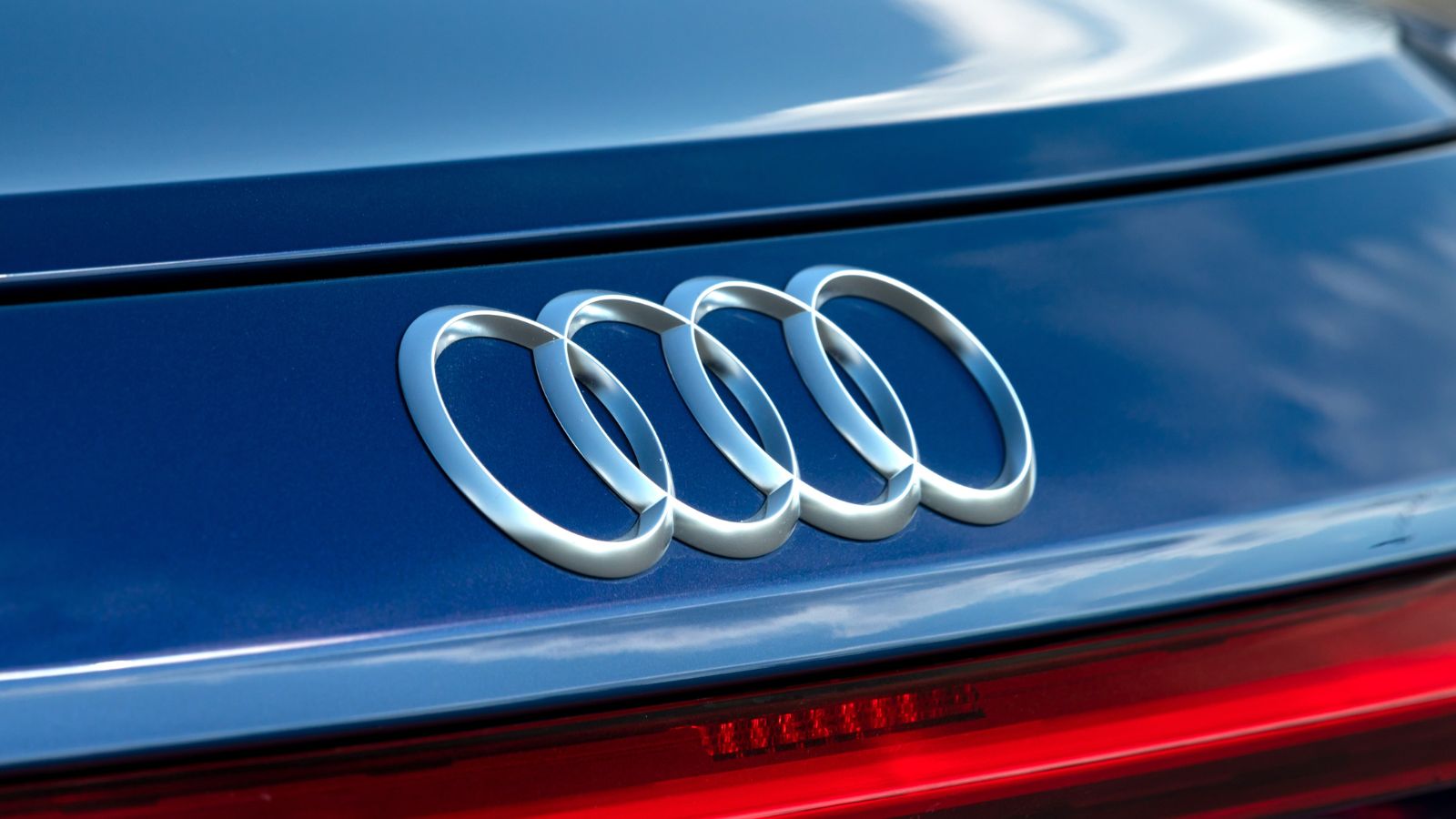
One unusual detail helps explain the strategy. AUDI is not simply the familiar Audi brand written differently in marketing material. The China-exclusive marque uses the four-letter name without Audi’s traditional four-ring emblem and was created with SAIC to appeal to Chinese consumers looking for highly connected premium electric vehicles. The global Audi brand continues to sell its own products in China through the company’s wider partnership structure.
That dual-brand approach allows Audi to experiment without forcing every new idea into a vehicle engineered for dozens of countries. The E7X, for example, was presented with technology and cabin features tailored specifically to Chinese customers, while Audi’s locally produced A6L and A6L e-tron serve other parts of the market. In practical terms, Audi can preserve the identity of its established global brand while allowing the younger AUDI operation to move closer to the development rhythms of domestic Chinese EV companies.
Competitive Pressure Gives Audi Little Reason to Stand Still
Audi’s China push is not happening from a position of effortless dominance. The company delivered 232,227 Audi-brand vehicles in China, including Hong Kong, during the first half of 2026, down from 287,600 a year earlier. That decline of roughly 19 per cent came while Audi faced intense competition from Chinese manufacturers and a market increasingly centred on electric, connected and software-heavy vehicles.
The wider Volkswagen Group faces the same structural challenge. Chinese competitors can develop products quickly, source components from a dense domestic supply network and increasingly sell technologies once associated with premium cars at mainstream prices. Chinese manufacturers are also pushing harder abroad. China exported 8.32 million vehicles in 2025, according to figures cited by Reuters, while companies including BYD, Geely and SAIC are using overseas markets to offset tougher conditions at home. For Audi, deeper localization is becoming less of an optional experiment and more of a competitive response.
Software and AI Are Becoming Part of the Luxury-Car Arms Race
Traditional premium-car engineering still matters, but Audi’s new Shanghai operation highlights a broader shift in what manufacturers consider core automotive technology. The centre will work on AI-powered immersive cockpits, driving dynamics and next-generation advanced driver-assistance systems. Reuters described ADP 2.0 as an architecture specifically intended for the next generation of intelligent connected vehicles.
That emphasis reflects how strongly China has influenced vehicle-development priorities. Touchscreen performance, voice assistants, automated parking, advanced navigation, frequent software improvements and integration with digital ecosystems can now affect purchasing decisions alongside horsepower or leather quality. Chinese manufacturers have helped shorten consumer expectations around product cycles, putting pressure on foreign automakers accustomed to longer global development programs. By putting more engineering authority in Shanghai, Audi can potentially make decisions closer to local suppliers and customers. The deeper question for other markets is how much of that China-developed technology will eventually influence vehicles sold elsewhere.
Canada Has Already Reversed One Major Part of Its China EV Policy
Canada’s position on Chinese-made EVs has changed dramatically in less than two years. Ottawa introduced a 100-per-cent surtax in October 2024, on top of the existing 6.1-per-cent most-favoured-nation tariff. The government said the measure was needed to protect Canadian workers and investments from Chinese industrial policies, subsidies and excess production capacity.
That approach shifted in January 2026 when Canada and China announced a broader trade arrangement. Canada agreed to permit an initial quota of 49,000 Chinese-origin EVs annually at the 6.1-per-cent tariff, effectively replacing the blanket surtax with managed access. The quota is scheduled to grow by 6.5 per cent each year, while an increasing share is intended for vehicles priced at C$35,000 or less on a free-on-board basis. Ottawa said the arrangement could encourage Chinese joint-venture investment in Canada, but major North American automakers warned that it could also create risks for the integrated regional manufacturing system.
New September Rules Keep the Door Open — but Controlled
The next stage of that experiment began September 1. Global Affairs Canada’s updated rules allocate 24,500 vehicles for the second half of the first quota year, covering September 2026 through February 2027, plus any volume left unused during the first six months. Imports continue to be handled on a first-come, first-served basis, and qualifying vehicles receive the 6.1-per-cent tariff rate.
There are important limits. Importers need shipment-specific permits, and eligibility is structured around original equipment manufacturers or their Canadian agents rather than unrestricted private importing. Global Affairs Canada also reserves the ability to manage access in a way that provides opportunities for OEMs, including potential new entrants. That means Canada has not simply thrown its market open to every Chinese EV maker. Ottawa has instead built a gate through which Chinese-produced vehicles can enter in controlled numbers while policymakers watch how competition, investment and consumer demand develop.
Canadian Buyers Still Face an Affordability Puzzle
The case for allowing more competition becomes clearer when affordability enters the discussion. Statistics Canada recorded 43,113 new zero-emission vehicle registrations in the first quarter of 2026, representing 10.8 per cent of all new registrations. June sales data later showed 21,876 new ZEVs sold in one month, equivalent to 11.5 per cent of new-vehicle sales and 56.1 per cent more than a year earlier.
Ottawa has also returned to consumer incentives through the Electric Vehicle Affordability Program. In 2026, qualifying battery-electric vehicles can receive up to C$5,000, generally when the transaction value is C$50,000 or less. Yet Chinese-made vehicles normally cannot qualify because the program requires vehicles to be manufactured in Canada or in a country with which Canada has a free-trade agreement. Canada therefore has two policies pulling in different directions: one permits controlled Chinese imports to increase competition, while another reserves federal purchase incentives for vehicles built within preferred trading relationships.
Canada’s Auto Industry Sees a Different Kind of Risk
Consumer choice is only part of the equation. Canada’s automotive manufacturing industry remains deeply integrated with the United States, with vehicles and components routinely crossing the border as part of continental production networks. The Canadian Vehicle Manufacturers’ Association and its U.S. counterpart warned after the January China agreement that expanded Chinese EV access could undermine Canadian production and complicate the future of that integrated system.
Those concerns have become more pronounced as Washington takes a harder line. On September 3, a U.S. industry alliance representing manufacturers including GM, Ford, Toyota, Volkswagen, Hyundai, Honda and Stellantis urged Congress to adopt legislation blocking Chinese vehicles and related technologies. Canada is therefore experimenting with limited Chinese market access at the same moment the United States is moving toward greater separation. For companies deciding where to build the next battery plant or vehicle assembly line, differences between Canadian and American China policy can become an investment consideration of their own.
Audi’s China Bet Is a Warning Against Treating the EV Debate as Only a Tariff Question
Nothing in Audi and SAIC’s announcement indicates that the China-exclusive AUDI vehicles are headed to Canadian dealerships. Their stated market is China, and the first of the four newly announced models is not scheduled until 2028. The more important lesson for Canada is how quickly the centre of automotive innovation is becoming internationalized. European engineering, Chinese software, local supply chains and globally connected manufacturers increasingly overlap.
Canada therefore faces a more complicated choice than simply deciding whether Chinese EVs should be cheap or expensive at the border. Policymakers must consider consumer affordability, cybersecurity, domestic assembly jobs, battery investments, North American trade relations and access to new technologies simultaneously. Audi’s response has been to move development closer to the competitive pressure rather than retreat from it. Canada’s response is still taking shape: managed access instead of a fully closed market, paired with industrial policies meant to prevent lower-cost imports from hollowing out domestic production.