

























A high-grade graphite deposit in northern Quebec is moving closer to the part of the battery supply chain where considerably more value can be created. Focus Graphite has signed a non-binding agreement with New York-based battery technology company Charge CCCV, known as C4V, to test whether graphite from its Lac Knife project can be transformed into finished battery-grade anode material using C4V’s Green Anode Technology.
The agreement does not guarantee future sales, production or an offtake contract. Instead, it launches an evaluation process that could determine whether Quebec-mined graphite can move through a North American mine-to-anode pathway. That distinction matters as Canada and the United States race to build battery supply chains that depend less heavily on Chinese processing.
The Deal Is About Much More Than Shipping Graphite South
Under the memorandum of understanding, Focus Graphite and C4V plan to evaluate Lac Knife concentrate inside C4V’s proprietary Green Anode Technology platform. The work is intended to examine processing performance, product consistency and electrochemical characteristics rather than simply determine whether the raw material can be sold. The eventual target is coated spherical purified graphite, or cSPG, a processed form of graphite suitable for use as active material in lithium-ion battery anodes. C4V says its technology has already reached pilot-scale demonstration, giving the collaboration a more advanced starting point than a purely laboratory-stage research program.
Still, the agreement remains non-binding. Focus and C4V have not announced a committed purchase volume, sales price or long-term supply obligation. Successful testing could instead open several possible commercial routes, including customer qualification, technology licensing, downstream manufacturing partnerships and eventually an offtake agreement. That makes the announcement significant but preliminary. In battery materials, qualification can be painstaking because manufacturers must be confident that material will perform consistently across thousands or millions of cells. For Focus, the immediate objective is therefore technical validation rather than revenue from a new U.S. customer.
Lac Knife’s High-Purity Concentrate Is the Key Attraction
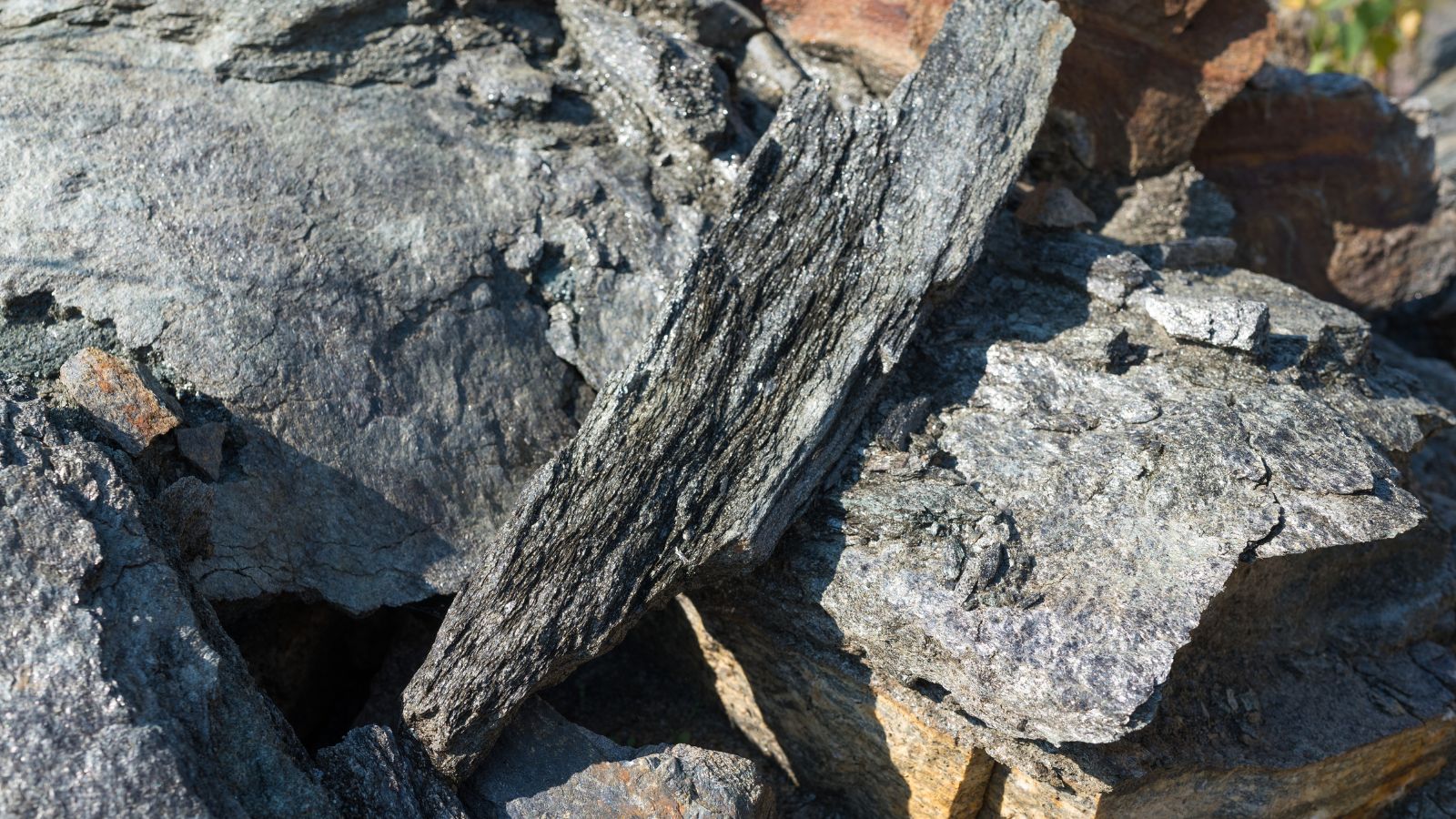
The technical argument behind the partnership begins with the unusually high graphite grades reported at Lac Knife. C4V’s Green Anode Technology calls for natural graphite concentrate containing roughly 98% carbon. Focus says a recent eight-tonne pilot-scale program produced concentrate grading as high as 98.7% carbon through mechanical processing without chemical or thermal purification. That matters because every additional processing stage between mine and battery consumes equipment, energy, reagents and time. Starting with cleaner feedstock could potentially simplify later purification, although the actual commercial benefits still have to be demonstrated through the joint evaluation.
Earlier engineering work also supports the project’s high-grade reputation. Focus’s 2023 feasibility study estimated 12 million tonnes of indicated resources grading 15.34% graphitic carbon, along with approximately 600,000 tonnes of inferred resources at 16.90%. Probable mineral reserves were estimated at 9.31 million tonnes grading 14.97% graphitic carbon. Those figures place Lac Knife well above the grades found at many large graphite projects. High geological grade does not automatically translate into an economic battery material operation, but it gives Focus a potentially useful advantage before expensive downstream processing begins.
Lac Knife Is Advanced, but It Is Not Yet an Operating Mine
Lac Knife sits roughly 27 kilometres south of Fermont in northeastern Quebec and is wholly owned by Focus Graphite. The company’s updated feasibility study envisions a conventional open-pit operation feeding a concentrator designed to produce approximately 47,781 tonnes of graphite concentrate per year. The study uses a 27-year mine life based on the current reserve estimate. Its projected economics included an after-tax net present value of C$285.7 million at an 8% discount rate and an after-tax internal rate of return of 22.4%, although feasibility-study forecasts remain projections rather than guaranteed outcomes.
The development timeline is equally important. Lac Knife has not reached commercial production, meaning the downstream agreement with C4V is being developed while Focus continues advancing environmental, permitting and engineering work. The company resumed work on its environmental and social impact assessment in 2025 and commissioned additional hydrogeological, dust and air-dispersion studies as part of that process. For communities around Fermont and investors watching the project, the story therefore has two tracks: proving that the ore can produce valuable battery material and completing the regulatory and financing steps required to actually mine it at commercial scale.
Turning Concentrate Into Anode Material Is Where the Bigger Supply-Chain Challenge Begins
Mining graphite is only the first stage of building an EV battery anode. Natural graphite normally has to be concentrated, shaped into spherical particles, purified to extremely high levels and coated before it can become active anode material. C4V’s proposed process is designed to take high-purity natural graphite concentrate more directly into coated spherical purified graphite through an automated system that the company says can reduce chemical use, water consumption, energy requirements and processing complexity. Those benefits remain subject to successful testing and eventual commercial-scale validation.
The importance of that processing step becomes clearer when the global market is considered. The International Energy Agency estimates that China accounts for more than 90% of global anode active material production. It has also dominated graphite mining and especially graphite refining, creating a bottleneck that cannot be solved simply by opening mines elsewhere. A Canadian mine that sends concentrate abroad for processing does less to diversify the supply chain than one linked to a North American route for producing finished anode material. That is why Focus’s effort to move downstream may ultimately matter more than the tonnage of graphite alone.
Washington Has Strong Reasons to Look for New Graphite Supply Chains
The United States remains highly exposed to imported natural graphite. The U.S. Geological Survey reported 100% net import reliance for natural graphite in its 2026 Mineral Commodity Summary. China was the world’s dominant producer, accounting for roughly 1.4 million tonnes out of an estimated 1.8 million tonnes of global mine output in 2025. The same USGS assessment noted that spherical purified graphite was being produced by only two companies in the United States, in Illinois and Louisiana, while a number of additional projects were still being developed.
That imbalance has turned graphite into a strategic problem extending beyond electric vehicles. Lithium-ion batteries are also vital for grid storage, military systems, electronics and a rapidly growing range of industrial applications. The International Energy Agency has warned that disruption of battery-grade graphite trade could put hundreds of billions of dollars in downstream manufacturing outside China at risk. From that perspective, a Quebec resource paired with U.S. processing technology fits a much larger industrial-policy objective: building enough mining, processing and qualification capacity inside allied economies that a disruption in one country cannot halt entire manufacturing sectors.
Ottawa Is Already Helping Finance Focus’s Downstream Push
The C4V agreement arrives while Focus Graphite is pursuing a separate, federally supported effort to develop advanced graphite purification in Canada. Natural Resources Canada has committed approximately C$14.06 million through its Global Partnerships Initiative to help pilot and commercially demonstrate a chemical-free electrothermal purification process using natural flake graphite from Lac Knife and the company’s Lac Tétépisca deposit. The project brings together Canadian, Ukrainian and American expertise and is aimed at producing ultra-high-purity material for battery, defence and other advanced applications.
That funding is separate from the new C4V evaluation, but the two initiatives point in the same direction. Canada’s critical-minerals strategy increasingly emphasizes processing and manufacturing rather than simply extracting minerals and exporting concentrates. Graphite is one of 34 minerals and metals on Canada’s current critical-minerals list, and Ottawa has specifically identified domestic processing as a strategic vulnerability. For Focus, that means the company is attempting to develop several possible outlets for the same resource: battery anodes, ultra-high-purity graphite and potentially other specialty markets. Diversification could become valuable if individual battery technologies or customer requirements change over time.
The Next Milestone Is Qualification, Not a Purchase Order
The most important result from the Focus-C4V partnership will be whether Lac Knife material can repeatedly meet the demanding specifications required by battery manufacturers. The planned evaluation will look at processing characteristics, consistency and electrochemical performance. If those results are successful, Focus says the relationship could expand into customer qualification, strategic partnerships, downstream manufacturing arrangements, licensing or long-term offtake. None of those outcomes is guaranteed under the present MOU, and any future commercial relationship would still require definitive agreements and the necessary corporate and regulatory approvals.
That caution is especially relevant in the battery sector, where promising mineral projects can spend years moving between resource definition, metallurgy, permitting, financing and customer testing. Lac Knife has already completed a feasibility study and demonstrated high-purity concentrate at pilot scale, which puts it further along than an early exploration prospect. But Focus still needs a functioning mine, commercially proven downstream processing and customers willing to qualify the final material. The C4V deal does not complete that chain. What it does is attempt to connect two pieces North America urgently wants to bring together: Canadian graphite in the ground and battery-ready anode manufacturing closer to home.