


























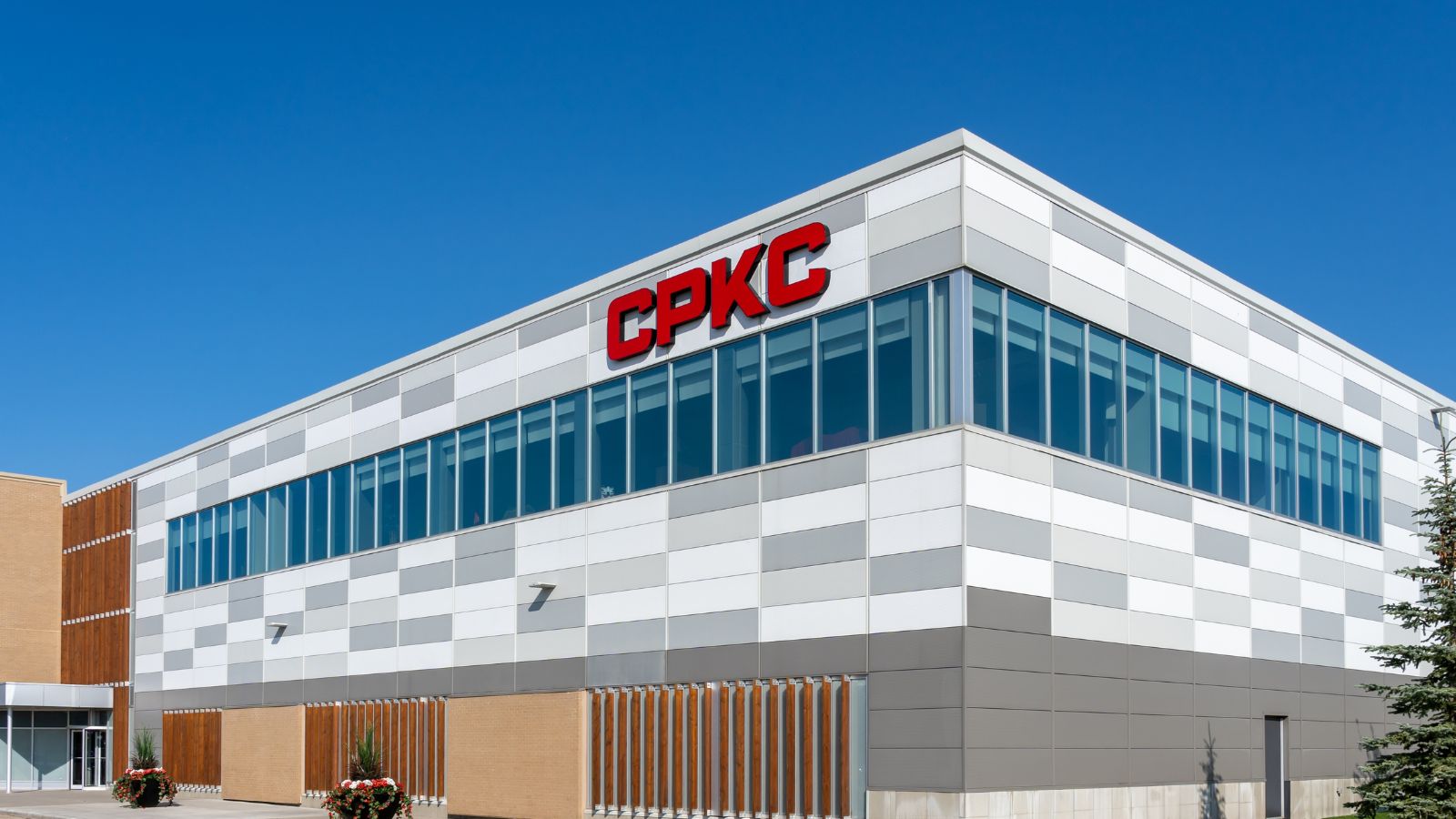
Canadian manufacturers received a measure of logistical relief just as another round of trade uncertainty was hitting North America. Canadian Pacific Kansas City and the union representing roughly 300 signals and communications employees have agreed to end a strike that began May 31 and send the unresolved contract issues to binding arbitration. Workers are scheduled to return August 24. The dispute never produced a system-wide CPKC shutdown—the railway said contingency plans kept freight moving—but its continuation created another vulnerability for industries built around tightly timed transportation. For Canada’s auto sector, where finished vehicles, components and manufacturing inputs routinely cross borders and connect with assembly plants in the United States and Mexico, taking one potential disruption off the board matters even when the trains never stopped running.
The Strike Ends With a Firm Return-to-Work Date
CPKC announced late August 21 that the International Brotherhood of Electrical Workers Canadian Signals and Communications System Council No. 11 had agreed to binding arbitration, ending a labour dispute that had stretched for nearly three months. The approximately 300 affected employees are expected to begin returning Monday morning, August 24. Their contract had expired before the strike, and negotiations had already gone through federally mandated conciliation and mediation without producing a settlement.
The result gives both sides a way to end the work stoppage without pretending the underlying disagreements have disappeared. Instead of continuing picket lines while negotiations remain stalled, unresolved terms will now be decided through arbitration. For freight customers, that distinction is important. There is a scheduled return to normal staffing rather than an open-ended labour confrontation whose duration could change operating conditions with little notice. After months in which the railway relied on contingency measures, the immediate question shifts from whether the dispute will escalate to what employment terms an arbitrator ultimately establishes.
Why 300 Signals Workers Matter to a Continental Railway
The number of striking employees was relatively small compared with CPKC’s total workforce, but their jobs sit close to the railway’s operational nervous system. IBEW says its signals and communications members install, maintain, test and repair railway signalling equipment, communications infrastructure and warning systems at rail-highway crossings. Their territory extends across the Canadian network from Vancouver to Montreal, and the work can require technicians to respond at irregular hours and in remote locations.
That helps explain why a dispute involving about 300 employees could attract attention well beyond the bargaining table. CPKC operates roughly 20,000 route miles across Canada, the United States and Mexico and employs about 20,000 railroaders. Signals are part of the infrastructure that allows trains to move safely through that vast system. The strike therefore did not need to sideline locomotive engineers or conductors to represent a potential operational concern. Automotive shippers watching a rail network that touches factories, distribution compounds and border gateways had reason to follow the dispute even while regular freight service continued.
The Bargaining Fight Was About More Than Pay
IBEW members entered the strike with a 96% mandate, according to the union. Its stated concerns included wages, work-related expenses and work-life balance, particularly the burden created by extensive on-call obligations and demanding schedules. The union also argued that recruitment and retention had become increasingly difficult because experienced signals employees could find higher-paid work elsewhere in the railway sector. In a later account, IBEW said comparable positions at some other railways paid about $4 an hour more.
CPKC presented a different assessment of the negotiations. When the strike began, the company said its proposal contained wage and benefit increases consistent with agreements already reached with its other Canadian unions and characterized its offer as fair and balanced. That disagreement is central to understanding why the dispute lasted. The two sides were not simply haggling over one headline wage number; they were contesting how a specialized, safety-sensitive job should be compensated and scheduled in a railway that runs around the clock.
Binding Arbitration Changes the Endgame
Binding arbitration replaces continued industrial action with a process in which unresolved bargaining questions are ultimately determined by a third party. Under Canada’s federal labour framework, employers and bargaining agents can agree to refer matters involving a new or renewed collective agreement for final and binding determination. Once such an agreement is made, the right to continue a strike or lockout is suspended and the parties undertake to implement the eventual decision.
That does not mean every detail of the CPKC dispute has already been settled. Neither the railway’s announcement nor the initial reports of the agreement disclosed a final wage package, scheduling arrangement or expense structure. Those are precisely the kinds of outstanding issues the arbitration process is meant to resolve. For workers, the trade-off is that the strike ends before a negotiated contract has been achieved. For CPKC and its customers, the benefit is predictability: the dispute has a defined resolution mechanism, making another immediate round of strike escalation substantially less likely while the arbitrator does the remaining work.
CPKC Kept Trains Moving, but the Risk Never Disappeared
This labour dispute differed sharply from a full railway shutdown. When the strike began May 31, CPKC said it had activated contingency plans and that safe and efficient rail service was continuing across Canada. Trucking and logistics publications similarly reported that freight operations remained active despite the withdrawal of the signals employees. That is an important qualification for any assessment of the economic impact: factories were not suddenly left without every CPKC train because of this particular strike.
Still, contingency operation is not the same thing as having the regular workforce in place. A prolonged dispute involving specialists responsible for signalling and communications created uncertainty over how long extraordinary staffing arrangements might remain necessary and whether the conflict could intensify. Supply-chain managers tend to care about such probabilities before a disruption becomes visible on a loading dock. Ending the strike therefore removes a risk that had persisted in the background rather than repairing a network that had already ground to a halt.
Automotive Logistics Make CPKC Strategically Important
CPKC’s geographic footprint makes the railway especially relevant to automobile manufacturing. Company materials say its network has access to 25 automotive production facilities across North America and reaches about 90% of automotive assembly plants in Mexico. CPKC also operates vehicle distribution facilities and promotes a “closed-loop” model connecting automotive production in the greater Toronto area and Mexico with compounds and major markets across Canada and the United States.
The scale of rail involvement is visible in federal statistics as well. Statistics Canada recorded more than 1.2 million tonnes of automobiles and minivans transported by Canadian railways in 2024, along with roughly 2.87 million tonnes of freight motor vehicles and more than 443,000 tonnes of motor-vehicle parts and accessories. Not every tonne travels on CPKC, but the figures show why rail reliability matters to the sector. Vehicles are bulky, production networks are dispersed, and cross-border manufacturing depends on moving both components and finished products efficiently over long distances.
Canada’s Freight Railways Carry Enormous Economic Volumes
The automotive business is only one piece of a much larger rail economy. Statistics Canada reported that Canadian railways moved 376.6 million tonnes of freight during 2025. Intermodal freight—primarily containers—reached a record 37.5 million tonnes, rising 7.4% from the previous year. In May 2026 alone, total railway carloadings amounted to 33.3 million tonnes. Those figures illustrate why even narrowly focused rail labour disputes can attract national attention.
Railways handle commodities and manufactured goods that would be difficult to shift quickly to trucks or other transportation modes in comparable volumes. The average Canadian freight train also represents a large concentration of cargo moving through a single network. Statistics Canada reported an average freight train length of 112.1 railcars in 2023. When businesses build production schedules around that capacity, the possibility of a rail disruption can force them to consider inventories, alternate carriers and emergency trucking arrangements long before anything actually stops.
Cross-Border Auto Flows Were Already Facing Pressure
The strike occurred against a more difficult backdrop for North American manufacturing. Transport Canada’s 2025 transportation report said rail volumes associated with the United States declined, particularly in automotive-related supply chains. Statistics Canada separately found that freight received from U.S. rail connections fell 13.3% in 2025 to 39.3 million tonnes, the lowest annual level since 2020. Those changes coincided with a period of unusually high trade uncertainty between Canada and the United States.
That makes the end of the CPKC dispute more consequential than the raw number of striking employees might suggest. An automotive manufacturer can often absorb one manageable problem. Several overlapping problems—tariffs, uncertain demand, border policy changes, supplier disruptions and transportation labour disputes—are harder to plan around. Removing the CPKC strike does not reverse the broader pressures facing Canadian manufacturing, but it eliminates one source of uncertainty at a time when logistics departments have already been forced to model unusually complicated cross-border scenarios.
One Less Variable for Assembly Plants and Suppliers
Modern auto manufacturing depends on sequencing. A factory does not benefit much from having 99% of its required components if one critical part is missing when a vehicle reaches the relevant station on the assembly line. That is why logistics stability matters even when the potential disruption involves a carrier that is still moving freight. Manufacturers and suppliers must consider not only current service but also whether transportation conditions could deteriorate during the production window they are planning.
The arbitration agreement improves that calculation. Signals and communications employees are scheduled to return, the strike is ending and outstanding contract questions have been moved into a binding process. CPKC’s automotive footprint stretches from Canadian manufacturing centres through the U.S. Midwest and into Mexico, so greater certainty on the Canadian side can ripple through a much wider production system. It will not protect an assembly plant from tariffs or a shortage originating elsewhere, but it makes a labour-driven deterioration in CPKC’s Canadian operations less immediate.
The Labour Risk Fades as Trade Risk Takes Centre Stage
The timing is striking. CPKC’s labour agreement arrived while Canada was confronting a fresh escalation in its trade relationship with the United States, leaving automakers and parts suppliers with plenty of other uncertainties to manage. For transportation planners, however, risks do not need to disappear all at once for conditions to improve. Taking a nearly three-month railway strike off the list allows companies to focus attention and contingency budgets elsewhere.
The longer-term labour outcome will depend on the arbitration award and how both sides respond to it in practice. Questions about compensation, schedules, recruitment and retention still matter because signals employees perform specialized work that CPKC needs throughout its Canadian network. Yet the immediate operational picture is considerably clearer than it was during the strike. Workers have a scheduled return date, trains that continued running can move back toward regular staffing arrangements, and Canadian automotive supply chains have avoided the possibility that this particular dispute would become their next major transportation shock.