


























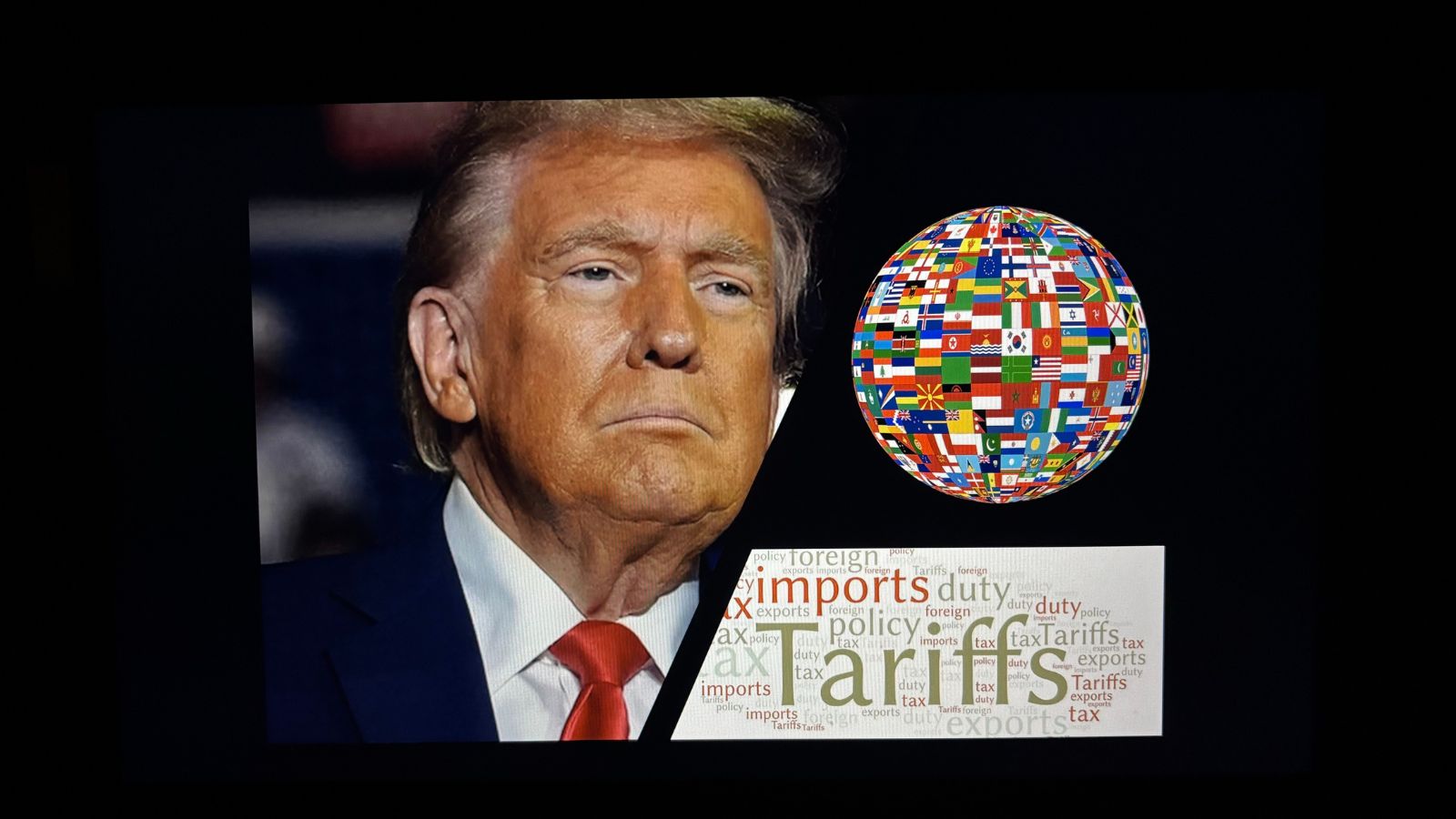
A deal that appeared within reach only hours earlier has given way to another escalation in the Canada-U.S. trade conflict. Prime Minister Mark Carney suspended negotiations late August 21 after accusing Washington of making unacceptable last-minute changes, and the United States moved ahead with new 50% tariffs on roughly C$28 billion worth of Canadian goods. Canada promised matching retaliation.
For the auto sector, the breakdown carries an additional sting. The existing U.S. tariff on Canadian-built vehicles remains 25%, although U.S. content can reduce the effective burden. Negotiators had been discussing a cut to roughly 15%, while Canada sought still deeper relief. With no new talks scheduled, that potential reduction has disappeared for now, leaving automakers, suppliers and thousands of Canadian workers facing another period of uncertainty.
A Deal That Looked Close Unraveled at the Deadline
Less than two days before negotiations collapsed, Canadian officials were publicly describing an agreement as very close. Trade Minister Dominic LeBlanc had been meeting U.S. Trade Representative Jamieson Greer in Washington as both governments tried to beat an August 21 deadline. The prospective package covered several of the most politically sensitive sectors in the dispute, including vehicles, steel, aluminum and lumber. The United States had already delayed its threatened 50% tariff for three days to give negotiators additional room.
By Friday evening, that optimism had vanished. Carney said Canada was suspending negotiations and bringing its negotiating team home because changes to Washington’s proposed terms were unfair, uneconomic and raised doubts about whether a deal could be relied upon. The Trump administration presented a sharply different account, arguing Canada had backed away from previously discussed terms. Whatever happened in the final hours, the practical outcome was unmistakable: the deadline passed without an agreement, new tariffs took effect and no further negotiating round was immediately scheduled.
The Auto Tariff Cut That Disappeared With the Talks
The most consequential lost opportunity for Canada’s auto industry was not the elimination of the 25% U.S. vehicle tariff but a proposed reduction. Negotiators had been discussing lowering Washington’s Section 232 tariff on Canadian-built vehicles from 25% to about 15%. Ottawa had pushed for something closer to 10%, according to reporting on the negotiations. That difference mattered enormously for manufacturers operating on thin margins and competing against vehicles entering the American market under more favourable tariff arrangements.
Even a 15% headline rate would not have told the entire story. Canadian and U.S. negotiators were also divided over which components should be deducted when calculating the tariff. Washington wanted relief tied specifically to U.S.-made content, while Canada sought recognition for broader North American content, including Mexican components. Canadian vehicles already contain substantial amounts of U.S. material, meaning their effective tariff can be considerably lower than the headline rate. With negotiations suspended, however, the existing 25% framework remains the starting point and the proposed improvement is no longer on the table.
Why the Auto Dispute Matters Far Beyond Assembly Plants
Canada’s auto sector is unusually vulnerable to American trade barriers because its factories were built around an integrated continental market. More than 90% of Canadian-made vehicles and roughly 60% of Canadian-made auto parts are exported to the United States. Five major automakers — Ford, General Motors, Honda, Stellantis and Toyota — maintain Canadian assembly operations, supported by a network of nearly 700 parts suppliers. The sector directly employed more than 125,000 people in 2024 and supported hundreds of thousands of additional jobs.
Those statistics become tangible in communities across southern Ontario, where a shift cancellation or delayed vehicle program can ripple into stamping plants, tool-and-die shops, trucking companies and restaurants near factory gates. Canada assembled more than 1.3 million light-duty vehicles in 2024, while the industry contributed C$16.8 billion to national GDP. Vehicles can also contain roughly 50% U.S. components by value, demonstrating why tariffs do not neatly punish one country: they can tax supply chains in which American and Canadian businesses repeatedly sell to one another before a finished vehicle reaches a dealership.
The New 50% Tariffs Open a Separate Front
The failed negotiations also triggered something broader than the existing auto dispute. Washington moved ahead with 50% tariffs on approximately US$20 billion, or about C$28 billion, of Canadian goods under Section 338 of the U.S. Tariff Act of 1930. The affected trade represents roughly 5% of Canada’s annual exports to the United States. Products cited in reporting range from wooden hockey sticks and plywood to other consumer and industrial goods, making the escalation especially visible to smaller manufacturers that lack the scale of multinational automakers.
These duties are distinct from the 25% national-security tariff already confronting Canadian automobiles. That distinction is important because the collapse did not suddenly raise the auto tariff to 50%; it prevented negotiators from securing the reduction they had been discussing while simultaneously allowing another package of punitive duties to begin. Washington has tied its Section 338 action to longstanding complaints involving Canadian dairy policies, provincial treatment of American alcohol and retaliatory trade measures. For Canadian companies, however, the legal distinction does little to reduce the cumulative uncertainty created by multiple overlapping tariff regimes.
Ottawa Is Answering With Dollar-for-Dollar Retaliation
Carney’s response was immediate: Canada would match the new U.S. tariffs dollar for dollar. That keeps Ottawa on the retaliatory path it has used throughout the trade confrontation rather than responding to the failed negotiations with another unilateral concession. The government also said additional assistance for workers and businesses would be announced, building on nearly C$25 billion in support introduced over the preceding 18 months. The goal is to cushion companies facing sudden losses of competitiveness in their largest export market.
Canada had previously removed many of its broad retaliatory tariffs on CUSMA-compliant American goods, but targeted measures affecting strategic sectors such as vehicles, steel and aluminum were retained. That history now matters because the latest breakdown reduces the political room for Ottawa to remove further leverage without obtaining something in return. Retaliation carries costs of its own: Canadian importers can face higher expenses, businesses may need alternative suppliers and consumers can ultimately absorb part of the bill. Still, the government’s position is that matching Washington’s action is necessary to defend domestic workers while longer-term diversification continues.
CUSMA Survives, but It No Longer Guarantees Calm
The collapse does not mean the Canada-U.S.-Mexico Agreement has suddenly disappeared. CUSMA remains legally in force, and the United States’ decision earlier this year not to agree to another 16-year extension instead moved the pact toward annual reviews. Unless the parties later agree to extend it, that process can continue while the agreement remains operative through 2036. In other words, North American free-trade rules still exist even as Washington increasingly applies separate sectoral or statutory tariffs around them.
For manufacturers, that distinction can feel increasingly academic. A company may comply with CUSMA’s rules of origin and still encounter a U.S. tariff imposed under another legal authority. Auto producers have already experienced that reality through Section 232 duties, while the latest Section 338 measures demonstrate how another statute can be used against Canadian goods. The result is a less predictable commercial environment than the one companies expected when CUSMA took effect in 2020. Instead of asking only whether a product qualifies for preferential treatment, exporters increasingly have to consider which additional U.S. trade action could override or diminish that advantage.
Integrated Supply Chains Make Tariffs Hard to Contain
Few industries illustrate North American economic integration better than automobiles. A transmission, seat assembly, electronic module or piece of stamped metal can cross the Canada-U.S. border during production before the completed vehicle crosses again. Canadian-built vehicles contain substantial U.S. parts, while American factories depend on Canadian components, metals, engineering expertise and tooling. That means a tariff nominally aimed at Canadian production can increase costs for American suppliers incorporated into Canadian vehicles and complicate sourcing decisions on both sides of the border.
The longer the uncertainty persists, the greater the risk that companies postpone investments rather than simply absorb tariffs. The Bank of Canada has identified trade restrictions and uncertainty surrounding CUSMA as risks to exports, capital spending, hiring and economic activity. That is particularly important for auto manufacturing because factories require multibillion-dollar commitments that are planned years before production begins. A company choosing where to build its next vehicle platform does not only compare wages and electricity costs; it also asks whether vehicles produced at a Canadian plant will have predictable access to American buyers for the life of the investment.
Steel, Aluminum and Lumber Relief Vanished Too
Autos were not the only strategic sector close to receiving relief. The package under negotiation was expected to reduce U.S. tariffs on Canadian steel and aluminum from 50% to roughly 25%, alongside changes affecting lumber and other disputed products. Greer later said Washington had offered significant tariff reductions for steel, aluminum, autos and lumber. Those concessions never became binding because the governments failed to complete the broader package before the deadline.
That matters to automakers because the trade disputes overlap. Steel and aluminum are major vehicle inputs, while many Canadian suppliers serve several manufacturing industries at once. A lower vehicle tariff provides less relief if the metals feeding factories remain heavily taxed, and cheaper metal access means less if finished vehicles still face a steep penalty at the U.S. border. Canadian negotiators were therefore trying to settle a cluster of related sectoral problems rather than one isolated tariff. Their failure leaves companies confronting the same complicated patchwork: different rates, different legal authorities and different rules determining which portions of a product are subject to duty.
Canada Is Diversifying, but America Still Dominates Its Trade
One consequence of the prolonged dispute is visible in Canada’s trade statistics. The share of Canadian merchandise exports going to the United States fell from 75.9% in 2024 to 71.7% in 2025. Exports to the U.S. declined 5.8% during the year, while shipments to countries outside the United States rose 17.2%. That is meaningful evidence that businesses are finding customers elsewhere, supported by Ottawa’s broader push toward Europe, Asia and other markets.
Yet 71.7% is still an enormous concentration. New buyers cannot instantly replace decades of highways, pipelines, rail links, dealerships and supply chains built around the world’s largest economy sitting directly across the border. The limitation is especially clear for automobiles: Canadian factories were designed largely to supply North America, not to ship hundreds of thousands of vehicles across oceans. Diversification can strengthen Canada’s bargaining position over time, but it does not make U.S. market access unimportant today. For a parts supplier in Windsor or an assembler in Alliston, the American customer remains only hours away.
“Dead for Now” Does Not Necessarily Mean Dead Forever
As of August 22, there is no announced date for Canada-U.S. trade negotiations to resume. The 50% tariffs have taken effect, Canada has promised matching retaliation and the proposed reduction of the 25% auto tariff has therefore been shelved. That makes the relief effectively dead for the moment, even though neither government has permanently ruled out returning to the bargaining table. Trade disputes frequently move through cycles of escalation, political pressure and renewed negotiation.
What has changed is the amount of confidence businesses can place in a near-term solution. Just one day before the collapse, Canadian officials were describing an agreement as close. Companies now have to plan around tariffs that may last months rather than assume a signature is imminent. Some of the most complicated auto questions could also migrate into the continuing CUSMA review process, particularly rules of origin and the treatment of North American content. Until governments announce a new negotiating track, however, Canadian automakers face the existing 25% U.S. tariff system — not the 15% compromise that nearly emerged.