


























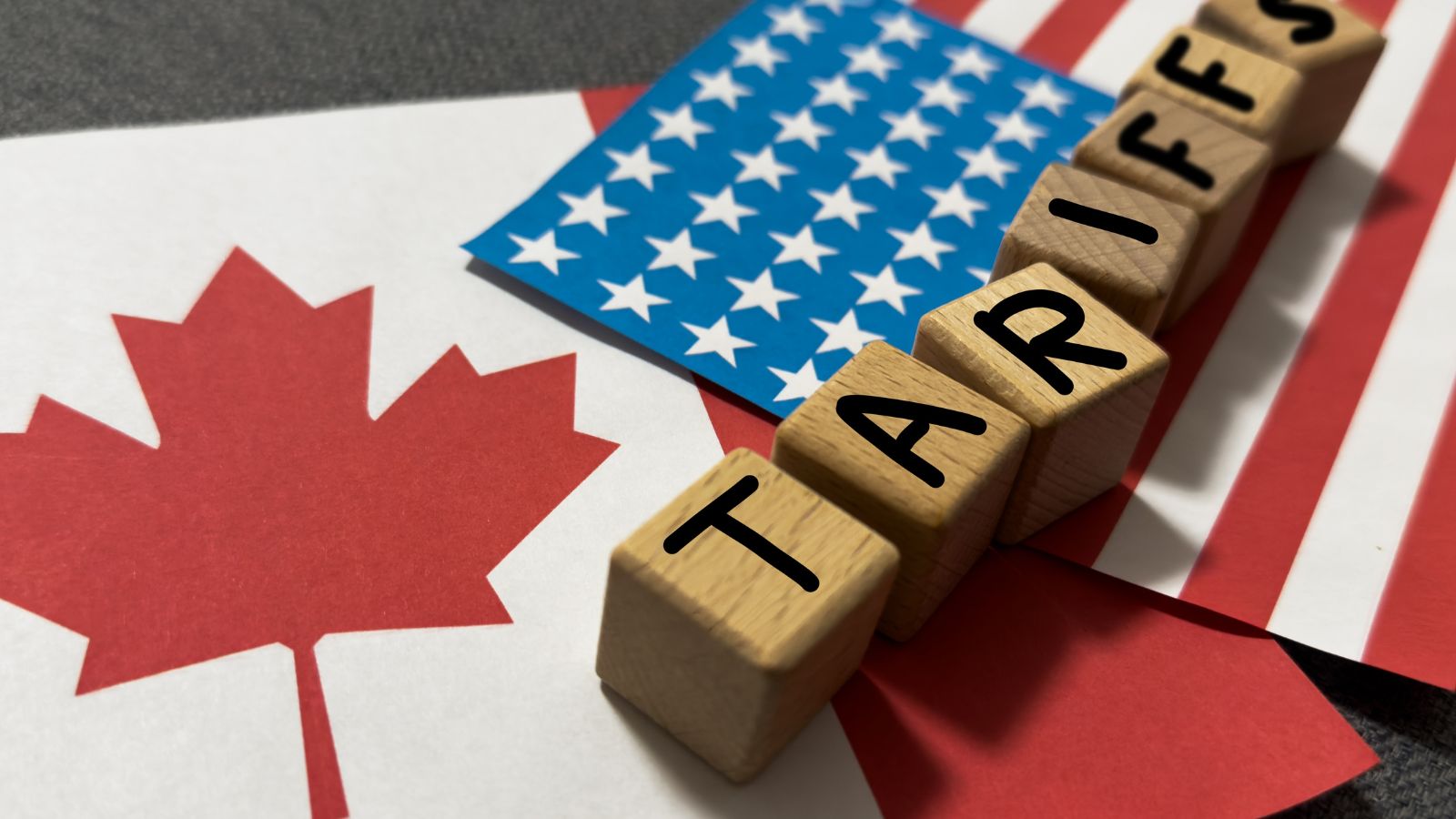
Canada’s battered auto sector may finally be getting some relief from one of the most disruptive trade measures it has faced in years. U.S. and Canadian negotiators are discussing a framework that could lower Washington’s tariff on Canadian-built vehicles from 25% to 15%, although Ottawa is pushing for a 10% rate and more favourable treatment of North American components.
Nothing is final yet. The proposed reduction is part of fast-moving negotiations between the two governments, with major questions still unresolved over how tariffs would be calculated and which vehicle content would qualify for deductions. For Canadian assembly plants and suppliers whose businesses are deeply tied to the American market, however, even a partial reduction could materially change the economics of exporting vehicles south of the border.
The 15% Tariff Is a Negotiating Proposal, Not a Final Deal
The most important distinction is that Washington has not formally replaced the 25% automotive tariff with a 15% levy. Reporting from negotiations indicates that U.S. officials are considering the lower rate as part of a broader Canada-U.S. trade agreement. Canadian negotiators, meanwhile, are seeking a 10% rate. Senior representatives from both countries have continued meeting in Washington as they try to settle several outstanding trade disputes at once.
That means automakers cannot yet price future production around a guaranteed 15% tariff. The numbers being discussed could still change before an agreement is completed, and the eventual impact may depend heavily on rules governing vehicle content. Prime Minister Mark Carney has described substantial progress in the broader negotiations while also stressing that important work remains. For manufacturers making decisions involving thousands of workers and investments measured in billions of dollars, that distinction between progress and certainty matters enormously.
The Existing 25% Tariff Already Has an Important Content Exemption
The headline 25% U.S. automotive tariff does not necessarily apply to the entire value of every Canadian-built vehicle. When the United States introduced the measure in April 2025 under Section 232 of the Trade Expansion Act, it created special treatment for vehicles qualifying under CUSMA, known as USMCA in the United States. Importers can document the value of U.S.-origin content inside an eligible vehicle and apply the additional tariff only to its non-U.S. value.
A simplified example shows why the calculation matters. Consider a Canadian-assembled vehicle valued at US$40,000 that contains US$16,000 worth of qualifying American content. If that content is approved for exclusion, the additional tariff would be assessed against the remaining US$24,000 rather than the full vehicle value. Changing the tariff rate from 25% to 15% would therefore reduce the additional duty on that hypothetical amount from US$6,000 to US$3,600. Content rules can consequently matter almost as much as the headline percentage.
A 15% Rate Would Be Relief, but Canada Wants to Go Further
Moving from 25% to 15% would cut the statutory tariff rate by 10 percentage points, a substantial change for an industry built around high-volume production and tightly controlled costs. Yet Ottawa is reportedly seeking a 10% rate, meaning the two countries remain separated by five percentage points even before negotiators settle the more complicated question of how vehicle content should be treated.
Canada has a strong reason to seek the lowest possible number. Before the latest trade conflict, qualifying vehicles moved across the Canada-U.S. border under a continental free-trade system intended to encourage integrated production rather than impose a new sector-specific tariff. Even 10% would therefore represent a significant departure from the largely tariff-free environment automakers had built their North American manufacturing strategies around. A reduced tariff could stabilize conditions, but Canadian officials are trying to prevent a temporary compromise from becoming a permanently higher cost of doing business across the border.
Canada Is Also Trying to Fix a Competitive Problem With Overseas Automakers
The debate is not happening in isolation. The United States has reached arrangements placing Japanese and South Korean automotive imports at a 15% tariff rate, increasing pressure on Canada to obtain comparable or better treatment. Canadian and U.S. auto production is exceptionally integrated, so industry representatives have argued that Canadian plants should not face a structural disadvantage against vehicles arriving from economies outside North America.
The comparison becomes particularly striking because a Canadian-built vehicle can contain engines, transmissions, electronics, steel and other components originating in the United States. Those parts may cross the border during a production process that has evolved over decades. Canadian assembly operations in Ontario also supply a U.S. market that absorbs the overwhelming majority of the vehicles they produce. A 15% headline rate would narrow the competitive gap. A lower rate, combined with broader content deductions, could make Canadian production considerably more attractive when automakers decide where to allocate future models.
The Stakes Are Large for Canadian Plants and Their Workers
Canada’s automotive dependence on the American market helps explain the intensity of the negotiations. The federal government says more than 90% of Canadian-made vehicles and about 60% of Canadian-made auto parts are exported to the United States. The industry supports roughly 125,000 direct jobs, while the broader automotive sector supports more than 500,000 workers when related employment is included. Canada produced more than 1.2 million passenger vehicles in 2025.
Statistics Canada has provided another measure of that dependence. Its analysis of 2024 economic data found that U.S. demand accounted for 76.4% of payroll jobs in Canada’s automobile and light-duty vehicle manufacturing industry, representing roughly 27,000 jobs in that specific manufacturing category. That exposure means a tariff that changes the economics of shipping vehicles into the United States can quickly become a production issue in Ontario communities. Assembly plants are enormous fixed investments, but companies can still alter shifts, model allocations and future investment when costs become persistently uncompetitive.
The Biggest Fight May Be Over What Counts as North American Content
The tariff percentage attracts the headlines, but the argument over content could ultimately be just as important. Under the existing U.S. system, qualifying automakers can deduct American content before the 25% tariff is applied. Canada has pushed for broader recognition of North American content, which could allow qualifying Canadian and Mexican inputs to receive more favourable treatment as well. U.S. negotiators have resisted broadening the deduction in the same way.
That disagreement cuts directly into the logic of CUSMA. The trade agreement requires passenger vehicles and light trucks to reach a 75% regional-value-content threshold under its automotive rules of origin. Manufacturers designed supply chains around the concept that components produced across Canada, the United States and Mexico collectively contribute to a North American vehicle. Treating only U.S. content favourably for the newer tariff creates a different incentive: it encourages companies to maximize specifically American content rather than continental content. For Canadian suppliers, the distinction could influence future sourcing decisions throughout the industry.
Canada Has Its Own Auto Tariffs on the Table
Ottawa did not leave the original U.S. measure unanswered. Since April 9, 2025, Canada has imposed a 25% tariff on non-CUSMA-compliant vehicles imported from the United States. For CUSMA-compliant U.S. vehicles, Canada applies its tariff to the value of content that is neither Canadian nor Mexican. The federal government has also operated a remission system allowing qualifying automakers to import specified numbers of American vehicles without the counter-tariff when they maintain Canadian production and investment commitments.
Those countermeasures give Ottawa something tangible to negotiate with as Washington seeks improved access for American products. They also show why a Canada-U.S. agreement can involve much more than simply replacing one percentage with another. Removing or modifying Canadian retaliation could become part of the exchange for lower U.S. sectoral tariffs. Any compromise will therefore be judged not only by what Canada receives on automobiles, but also by what concessions Ottawa makes elsewhere and whether those concessions preserve incentives for companies to manufacture vehicles in Canada.
Auto Tariffs Are Only One Piece of a Much Larger Trade Bargain
The automotive negotiations are unfolding inside a wider attempt to cool Canada-U.S. trade tensions. The emerging framework has also included discussions about lowering U.S. steel and aluminum tariffs from 50% to 25%, potentially with quota arrangements. Washington postponed another package of threatened 50% tariffs on roughly US$20 billion in Canadian products until August 22 as negotiators continued working, creating an unusually compressed timetable for reaching an understanding.
Even a breakthrough would not settle every North American trade question. The future of CUSMA remains a major issue after the United States declined in July to extend the agreement through its scheduled joint-review process, leaving additional negotiations ahead. For Canada’s auto sector, however, an immediate reduction in vehicle tariffs would remove some of the pressure hanging over assembly plants and suppliers. The difference between 25%, 15% and Ottawa’s preferred 10% is not merely diplomatic arithmetic. It can translate into thousands of dollars on a vehicle and influence where the next generation of North American cars is built.