

























Nova Scotia drivers are getting an unusually useful opportunity to compare electric vehicles without jumping between dealerships. Next Ride’s Electric Avenue event in Truro on August 16 brings together five very different EVs: the Chevrolet Bolt, Chevrolet Silverado EV, Ford Mustang Mach-E, Toyota bZ and Volkswagen ID. Buzz. Test drives are scheduled at the Rath Eastlink Community Centre from 10 a.m. to 4 p.m., giving prospective buyers a chance to experience everything from a compact commuter to a full-size electric pickup.
The lineup also illustrates how quickly the EV market has broadened. These vehicles are not five variations of the same idea. They represent different approaches to range, performance, passenger space, utility and price—making the event as much a comparison of lifestyles as electric drivetrains.
Chevrolet Silverado EV Brings Full-Size Truck Capability to the Comparison
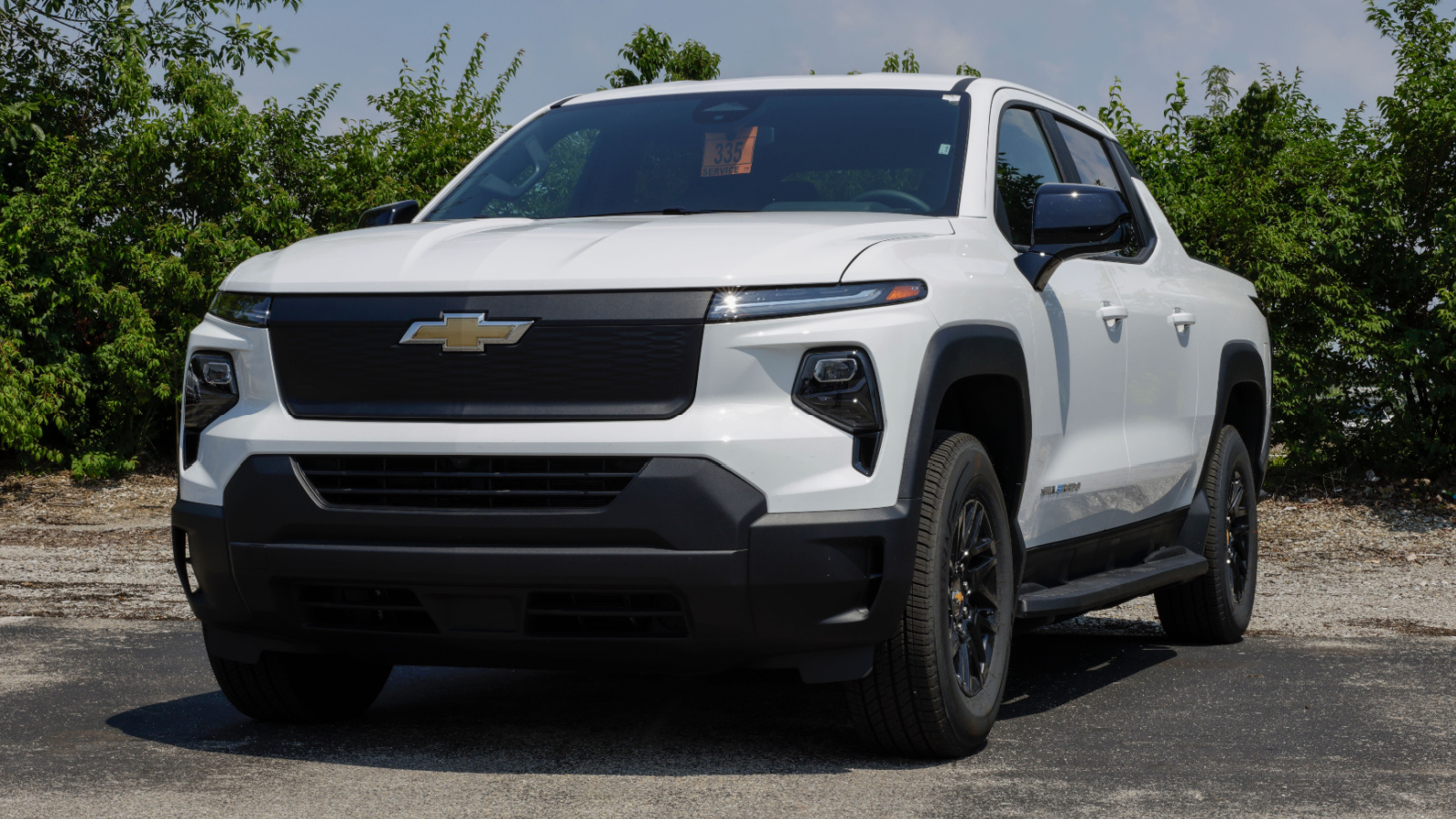
The Silverado EV is the obvious heavyweight in Truro’s five-vehicle lineup. Chevrolet’s current 2026 Canadian range stretches from the Work Truck to LT and Trail Boss versions, with battery configurations capable of delivering up to 793 kilometres of estimated range. Available maximum towing reaches 12,500 pounds, putting the electric Silverado into territory normally associated with conventional full-size pickups rather than early-generation EVs. Chevrolet also offers configurations with up to 10.2 kW of off-board power when properly equipped, effectively turning the truck’s large battery into a potential power source for tools and other equipment. Those capabilities make the Silverado especially relevant in a province where trucks routinely serve both personal and work duties.
That scale should make the Truro test especially revealing. A driver who climbs out of a compact Bolt and immediately enters the Silverado EV is comparing two radically different interpretations of electric transportation. The Silverado demonstrates how manufacturers are trying to remove the assumption that going electric requires accepting a small vehicle or limited utility. Chevrolet’s Trail Boss version adds another dimension, with a two-inch lift, 35-inch all-terrain tires and four-wheel steering. The exact Silverado trim being demonstrated by Next Ride is not identified, so those specifications should be treated as examples from Chevrolet’s current Canadian lineup rather than guaranteed equipment on the event vehicle. Even so, the truck makes one point clear: EV competition has expanded well beyond commuter cars.
Volkswagen ID. Buzz Turns the Electric Test Into a Family-Space Experiment
Few vehicles at the Truro event are likely to be mistaken for anything else in the parking lot. Volkswagen’s ID. Buzz translates the basic idea of the historic VW bus into a modern battery-electric people mover, and its priorities are dramatically different from the performance-oriented Mach-E or work-focused Silverado. Volkswagen Canada lists six- and seven-seat configurations, giving the ID. Buzz a role that relatively few battery-electric vehicles can currently fill. The Canadian model offers as much as 4,120 litres of cargo space in the appropriate seating configuration, while the rear-wheel-drive version carries an NRCan-estimated range of 377 kilometres. Volkswagen says DC fast charging can take the battery from 10 to 80 per cent in as little as 26 minutes under suitable conditions.
Those figures make the ID. Buzz particularly interesting for households asking whether an EV can replace a minivan or larger family crossover. A short test drive will not reproduce a week of school runs, hockey bags and grocery stops, but the cabin layout can answer questions that a specification sheet cannot: how easy the rear seats are to reach, whether visibility feels natural, and whether such a large electric vehicle feels intimidating from behind the wheel. The ID. Buzz also demonstrates why comparing EVs by range alone can be misleading. Its maximum cited range is lower than several vehicles in this group, but it is carrying a different mission—moving as many as seven people with substantial interior flexibility. For some buyers, that utility may matter more than winning a range contest.
Ford Mustang Mach-E Makes Performance Part of the EV Conversation
The Mustang Mach-E gives Nova Scotia drivers a chance to experience the performance-crossover side of electrification. Ford’s 2026 Canadian lineup includes Select, Premium, GT and Rally versions. Select and Premium models can offer estimated range of up to 483 kilometres in certain configurations, while Ford lists up to 451 kilometres for the GT and 410 kilometres for the Rally. At the quicker end of the family, available versions can deliver acceleration that would have been considered sports-car territory not long ago. Ford lists a 0-to-100-km/h time as low as 3.5 seconds for a GT fitted with the available performance upgrade, while the Rally can produce 700 lb-ft of torque with its standard GT Performance Upgrade.
Yet outright acceleration is only part of what makes the Mach-E useful in this particular comparison. It occupies the familiar five-passenger crossover format that many Canadian households already understand, meaning drivers can concentrate on how electric power changes the experience rather than adapting to an unconventional vehicle shape. Ford equips current models with a large 15.5-inch centre display, and available electric all-wheel drive gives the vehicle additional relevance for Canadian weather. Next Ride does not specify which Mach-E trim is attending the Truro event, so the fastest performance and longest-range figures should not automatically be attributed to the demonstration vehicle. The larger takeaway is that the Mach-E lets participants compare an EV designed to make driving itself part of the attraction against models built primarily around value, passenger capacity or truck utility.
Toyota bZ Shows How Mainstream Electric SUVs Are Evolving
Toyota’s bZ may be one of the most informative vehicles in the group because it sits close to the heart of Canada’s mainstream crossover market. The significantly updated 2026 version replaced the bZ4X name with the shorter bZ badge and received major changes to range, performance and charging. Toyota Canada lists an estimated 380 kilometres of range for the XLE front-wheel-drive version and up to 468 kilometres for the XLE AWD model, which uses a larger battery. All-wheel-drive versions can produce up to 338 horsepower. The 2026 update also introduced a North American Charging System port, opening access to compatible NACS fast-charging infrastructure, including supported Tesla Superchargers. Toyota announced a starting Canadian MSRP of $45,990 for the 2026 bZ XLE FWD.
For drivers who have spent years in a RAV4, CR-V, Rogue or similar crossover, the bZ represents perhaps the least dramatic conceptual jump in the Truro group. It offers the raised seating position, two-row packaging and available all-wheel drive that have made compact SUVs dominant family vehicles. That familiarity is useful because it moves the test-drive conversation toward issues that matter after the novelty of instant electric torque wears off: visibility, seat comfort, controls, cargo practicality and charging access. Toyota’s 2026 changes also illustrate how quickly EV specifications are progressing. The company said the updated XLE AWD gained as much as 25 per cent more estimated range than its predecessor while output increased substantially. That rapid evolution is another reason shoppers benefit from driving current models rather than basing impressions of EVs on vehicles released only a few years earlier.
Chevrolet Bolt Puts Everyday Affordability Against Bigger, More Powerful EVs
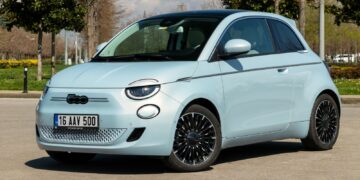
At the opposite end of the spectrum from the Silverado sits the Chevrolet Bolt, a model built around compact dimensions and everyday practicality rather than maximum towing or dramatic passenger capacity. Next Ride does not specify the model year of the Bolt being used in Truro, an important distinction because Chevrolet has revived the name for the 2027 model year. Chevrolet’s current Canadian Bolt offers up to 422 kilometres of estimated range and seats five. The company says the updated model can charge from 10 to 80 per cent in as little as 25 minutes when conditions allow and a suitable 150-kW-or-higher DC fast charger is used. It also uses a standard NACS charge port and provides up to 1,594 litres of maximum cargo volume.
The Bolt may therefore provide one of the event’s most useful reality checks. Large batteries, enormous horsepower figures and three-row cabins attract attention, but many Canadian drivers primarily need an EV for commuting, errands and ordinary family transportation. Chevrolet positions the revived Bolt as one of the country’s lower-priced EV choices with more than 400 kilometres of estimated range, with the 2027 LT carrying a $39,999 starting MSRP before applicable charges. Moving directly between the Bolt and the other four vehicles helps demonstrate how much EV purchasing has become a matter of choosing the right form factor rather than simply deciding whether electricity works. Truro’s five-car lineup stretches from a relatively compact hatchback-style vehicle to a full-size pickup and retro-inspired people mover. That breadth may ultimately be the most meaningful result of the day: there is no longer one standard definition of an electric vehicle.