


























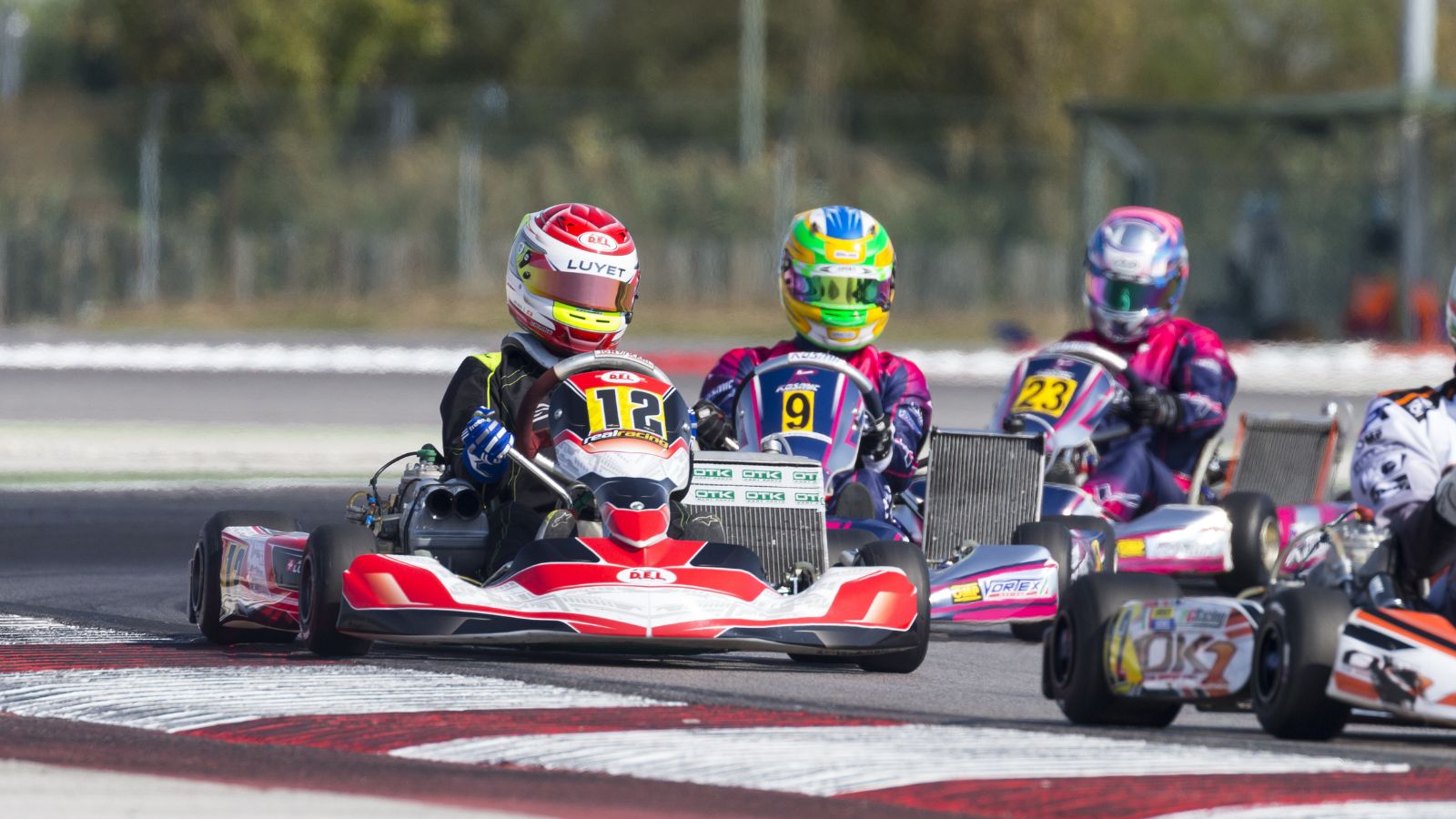
The Canadian Karting Championship has reached the moment that turns an entire race week into a handful of decisive laps. After practice, qualifying, heats and pre-finals at Hamilton Karting Complex, Sunday’s program puts Canadian titles directly on the line across 12 categories. The August 13–16 event has brought national-level karting back to a venue that previously hosted the championship in 2023 and 2024, this time using Layout #1 in the counter-clockwise direction.
Championship Sunday begins at 9:30 a.m. local time and is scheduled to run through a 4:00 p.m. Rotax DD2 final. Between those points, young prospects, established national contenders and experienced senior racers face the same unforgiving equation: years of preparation can ultimately come down to one start, one passing opportunity or one mistake.
Hamilton Gets Its Championship Sunday Back
Hamilton Karting Complex is once again at the centre of Canadian karting after the national championship spent 2025 at Mosport Karting Centre. The return is significant because Hamilton is hardly an unfamiliar stop for many Ontario competitors. The facility hosted the Canadian championships in both 2023 and 2024 and maintains an extensive calendar of regional and national-level Briggs & Stratton, Rotax and ROK competition. For racers who regularly compete there, familiarity with braking points and racing lines offers useful knowledge, but a national final brings an entirely different level of pressure.
This year’s championship runs on Hamilton’s Layout #1 in the counter-clockwise direction. Unlike a regular Hamilton Regional Kart Club points race, the August 13–16 meeting stands on its own, with Canadian titles at stake. That distinction changes the calculation. A driver does not need to think about protecting a season-long points advantage. The objective is much simpler, and much harsher: reach Sunday in contention and execute when the national championship is decided.
Twelve Titles Make for an Unusually Full Final Day
The scale of Championship Sunday becomes clear in the class list. Twelve official categories are competing, covering three of the most recognizable forms of contemporary Canadian sprint karting: Briggs & Stratton four-cycle racing, Vortex ROK competition and Rotax MAX racing. The morning rotation includes ROK Mini, Briggs Senior Lite, ROK VLR Junior, Briggs Cadet, ROK VLR Senior and Briggs Senior Heavy. After lunch, six more categories take over.
That variety means the championship is not built around one age group or one type of machinery. Cadet and Mini racers can compete for national honours on the same day as Junior, Senior and DD2 drivers. The event therefore functions as a broad snapshot of the Canadian karting ladder rather than a narrowly defined series finale. It also produces a demanding timetable. With 12 championships to settle between the opening 9:30 a.m. final and the scheduled 4:00 p.m. DD2 race, crews must remain ready as one title fight quickly gives way to another.
Four Days of Work Collapse Into One Final
The championship format deliberately builds toward Sunday. Thursday was primarily devoted to practice, giving competitors multiple seven-minute sessions to establish setups and learn how their karts responded to Hamilton’s surface. Friday raised the stakes with another practice session, five-minute qualifying runs and the first heat races. Saturday added warm-ups, another round of heats and pre-finals for several categories, creating the starting positions that matter most when the championship races begin.
That progression explains why Sunday cannot be viewed in isolation. A driver who starts the final near the front may have spent several days earning that position through qualifying speed and consistently clean racing. Even relatively short sessions carry consequences. Five minutes of qualifying can determine whether a racer begins the wheel-to-wheel portion of the weekend in open track or surrounded by traffic. By the time the final starts, much of the strategic work is already complete. What remains is the hardest part: converting preparation and track position into a Canadian championship.
ROK and Briggs Racers Open the Title Chase
The first half of Sunday belongs to a mixture of ROK and Briggs categories. ROK Mini opens the national finals at 9:30 a.m. with a scheduled 20-lap race, followed by the 22-lap Briggs Senior Lite contest. ROK VLR Junior then gets 25 laps before Briggs Cadet races over 20. ROK VLR Senior is scheduled for 25 laps, while Briggs Senior Heavy completes the morning with a 22-lap final before the lunch break.
Those differences in race distance matter. Twenty or more racing laps give competitors enough time to recover from a less-than-perfect opening sequence, but they also provide repeated opportunities for challengers to attack. Drivers must balance urgency against the danger of contact or a costly mistake. Among the names that showed early speed, Tom Gagnon topped Briggs Cadet qualifying and Luke Bulpitt was fastest in ROK Mini. Ryker Magro emerged as the ROK VLR Junior fast qualifier. Qualifying, however, only establishes part of the story; Sunday determines whose speed survives championship pressure.
Rotax and Briggs Take Over for the Afternoon
After the scheduled lunch interval, the focus shifts heavily toward Rotax competition. Rotax Junior MAX begins the afternoon at 1:30 p.m. with a 25-lap final. Briggs Senior follows at 2:00 p.m., Rotax Micro-Mini MAX at 2:30, Rotax Senior MAX at 3:00 and Briggs Junior at 3:30. Rotax DD2 is scheduled to bring the championship to a close with another 25-lap race beginning at 4:00 p.m.
The afternoon group contains several drivers who arrived in Hamilton with substantial momentum. Ryan Maxwell was fastest in Rotax Senior qualifying, while Blake Fregeau led Briggs Junior qualifying. Marco Fazari topped Rotax Junior, Maddox Heacock was the Briggs Senior fast qualifier, Alexis Baillargeon led DD2 qualifying and Yousef Adi set the pace in Rotax Micro-Mini. Those results provide recognizable names to watch, but the format does not award national championships for Friday speed. Heat racing and pre-finals reshuffle the order, and a final still demands a clean launch, racecraft in traffic and enough pace to remain competitive deep into the distance.
Qualifying Speed Has Already Raised Expectations
Qualifying at a national championship does more than arrange a starting order. It creates expectations. When a driver produces the quickest lap in a five-minute session, every rival in the paddock receives a clear benchmark. At Hamilton, the fast qualifiers were spread across different teams, age groups and technical packages, reinforcing just how broad the competition is. Names including Gagnon, Bulpitt, Magro, Maxwell, Fregeau, Fazari, Heacock, Baillargeon and Adi all emerged from qualifying with tangible evidence that they had front-running pace.
Yet karting routinely punishes the assumption that the fastest single lap guarantees the best race result. Starts can compress an entire field into the opening corners, while drafting, defensive driving and changing track conditions alter the competitive picture once racing begins. The heat-and-pre-final structure exists partly to reward competitors who can repeatedly perform rather than simply deliver one exceptional lap. By Sunday, therefore, the championship favourites are not merely the drivers who were quickest on Friday. They are the racers who have successfully carried that speed through several increasingly consequential sessions.
Briggs Senior Highlights the Depth of the Competition
Few classes illustrate the challenge of a Canadian championship better than Briggs Senior. The event schedule required the category to be divided into even and odd groups for multiple practice sessions and qualifying, followed by separate Group A and Group B heats. That structure is an important clue to the depth of participation: organizers cannot simply run every competitor together through each stage when a class becomes large enough to require multiple groups.
The competitive environment around Briggs Senior has been particularly intense at Hamilton this summer. Only days before the national championship, the KartFest program at the same facility attracted 63 Briggs Senior racers, with Canadian Karting News describing gaps of only a few tenths per lap as enough to move a driver dramatically through the order. The national championship is a separate event with its own entry and format, but the preceding weekend demonstrated the quality of four-cycle racing currently circulating through the Canadian paddock. For national contenders, simply having speed is only part of the task; surviving dense traffic can be just as important.
Hamilton’s Recent History Adds Another Layer of Pressure
For the venue, 2026 represents a return to familiar national-championship territory. Hamilton hosted the Canadian championships in 2023 and again in 2024 before the event moved to Mosport in 2025. Canadian Karting News reported the return to Hamilton in February, months before race week, giving teams significant time to prepare for a circuit many competitors had already experienced in major events.
The track has also produced memorable championship stories. In 2023, Jackson Morley captured two Canadian titles at Hamilton, describing the achievement as the payoff for extensive work by his family and team. A year later, the venue delivered another dramatic Championship Sunday, including Sebastian Day completing a three-peat in Briggs Junior and Asher Pavan winning Briggs Cadet after returning from a serious accident the previous year. Those results belong to earlier championships, but they illustrate why the national weekend carries unusual emotional weight. A victory does not disappear when the paddock packs up; it becomes part of a driver’s racing record and, sometimes, a defining milestone in a developing career.
The Entire Championship Can Now Be Watched Beyond the Fence
The 2026 event has a wider audience than the spectators standing around Hamilton Karting Complex. Organizers announced before the championship that Saturday and Sunday would be streamed live on YouTube, with all of Championship Sunday included. Hamilton Karting Complex also promoted a Sunday broadcast beginning with the morning finals, while Race Monitor provides timing information and session results for the meeting.
That coverage matters for a sport in which competitors often build reputations long before reaching car racing. Families, sponsors, rival teams and racing supporters elsewhere in Canada can follow a national final without travelling to Ontario. It also gives young drivers something previous generations of club racers did not always enjoy: a permanent, easily shareable record of major performances. A karting national championship remains very much a paddock-driven event, built around competitors, mechanics and families, but streaming allows those stories to travel much farther. When the final chequered flag falls in Hamilton, the new Canadian champions will have earned their titles in front of an audience extending well beyond the circuit.