
























A decade into its current generation, the Chrysler Pacifica is entering a noticeably different phase. The Windsor, Ontario-built minivan has received a fresh face for 2027, but under the sheet metal the story is one of continuity—and a significant retreat from electrification. A recent real-world highway test of an all-wheel-drive Pacifica Limited returned 27 mpg at 75 mph, beating that configuration’s official EPA highway rating even as the once-distinctive plug-in hybrid disappears from production.
That leaves Chrysler relying on its familiar 3.6-litre Pentastar V6 to carry one of Canada’s most important automotive nameplates. For families, the result is a Pacifica that remains unusually practical and surprisingly capable on long trips, but now faces hybrid rivals with a clearer advantage at the fuel pump.
The 27 MPG Result Is Better Than the AWD Rating Suggests
The headline fuel-economy number came from a 2027 Pacifica Limited equipped with all-wheel drive, not from a laboratory rating or a front-wheel-drive model. During Car and Driver’s standardized 75-mph highway test, the minivan returned 27 mpg. That was two miles per gallon better than its EPA highway rating of 25 mpg. Over more than 1,200 miles of family driving, however, the same van averaged 22 mpg overall, illustrating how dramatically speed, traffic, local roads and driving conditions can change the number owners actually see between fill-ups.
The result matters because all-wheel drive normally carries a meaningful efficiency penalty. The tested Pacifica is rated at 17 mpg city, 25 highway and 20 combined, while front-wheel-drive versions are rated at roughly 19 city, 28 highway and 22 combined. Car and Driver also calculated a 510-mile highway range during its test. For a family covering several hundred kilometres in one day, that kind of range remains a practical strength: fewer fuel stops can matter almost as much as the cost of each stop when children, luggage and tight schedules are involved.
Chrysler Is Betting on the Familiar Pentastar V6
There is no new engine hiding behind the Pacifica’s redesigned front end. The 2027 model continues with Chrysler’s 3.6-litre Pentastar V6, producing 287 horsepower and 262 lb-ft of torque through a nine-speed automatic transmission. It is an established combination that gives Chrysler a comparatively simple mechanical proposition at a time when competitors are increasingly turning to electrified drivetrains. Front-wheel drive remains available, while Select, Limited and Pinnacle models can be equipped with all-wheel drive.
Chrysler has attempted to limit the efficiency penalty of AWD by allowing the system to disconnect components of the rear driveline when extra traction is unnecessary. Even so, the difference between the front- and all-wheel-drive EPA ratings is clear. The trade-off is capability. The Pacifica remains unusual in combining available AWD with second- and third-row Stow ’n Go seating, and properly equipped versions can tow as much as 3,600 pounds. For a household carrying hockey bags through an Ontario winter one weekend and towing recreational equipment the next, those capabilities may carry more weight than winning the segment’s fuel-economy contest.
The Plug-In Hybrid Leaves a Large Efficiency Gap Behind
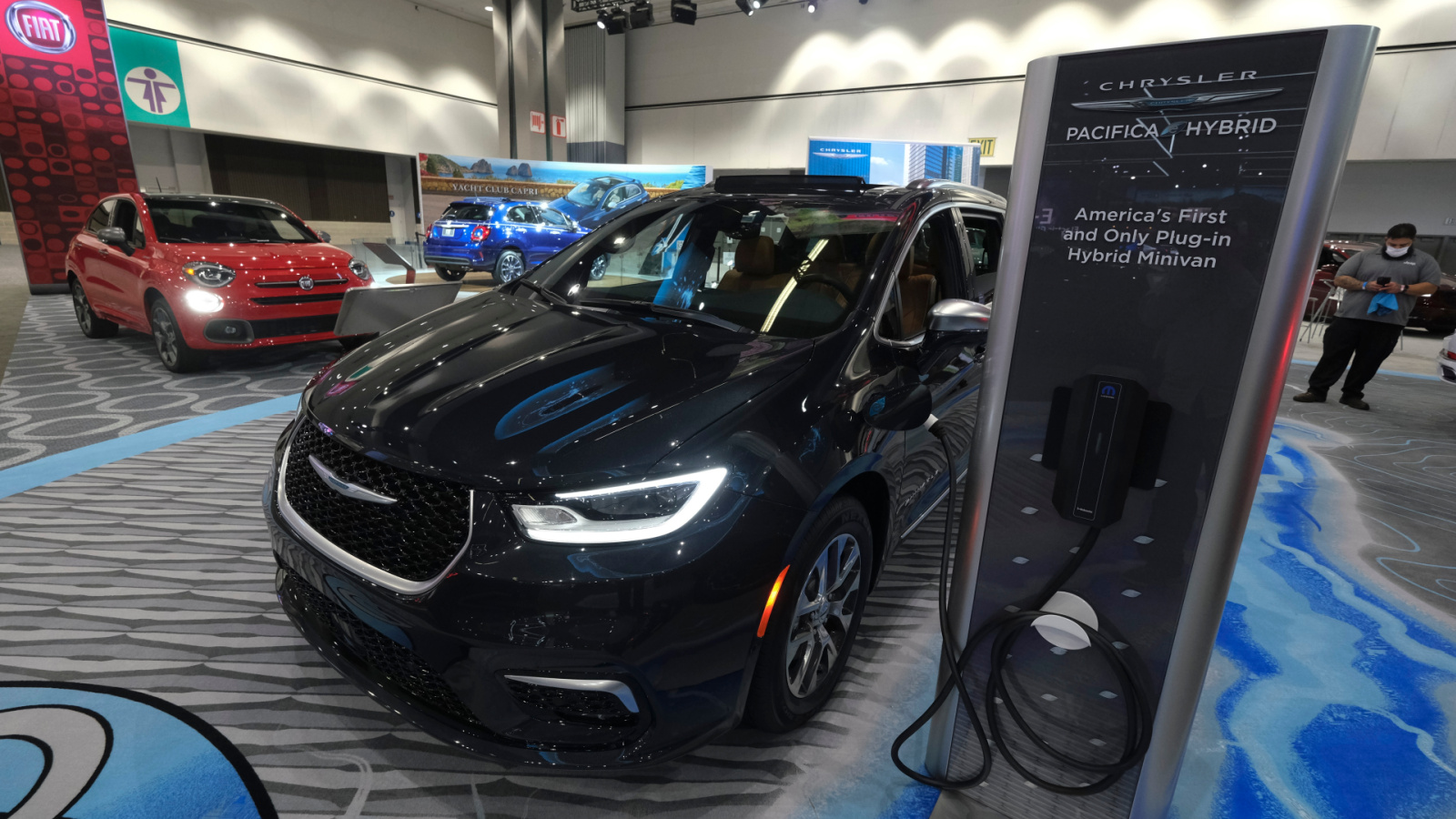
What makes the V6-only strategy more striking is what has disappeared. Stellantis announced in January that it would phase out its North American plug-in hybrid programs beginning with the 2026 model year, including the Chrysler Pacifica Plug-In Hybrid. The company cited shifting customer demand and said its electrification strategy would instead emphasize conventional hybrids and range-extended vehicles. Chrysler’s own website now describes the Pacifica Plug-In Hybrid as a discontinued vehicle and states that it is no longer in production.
The outgoing model offered a combination the new Pacifica cannot match. Chrysler rated it for up to 32 miles of electric-only driving and as much as 520 miles of total range using a charged battery and full gasoline tank. Its EPA estimate reached 82 MPGe when electricity was factored into energy consumption. A household able to recharge every night could therefore complete many school runs, grocery trips and commutes without starting with gasoline as the primary energy source. Level 2 charging could replenish the battery in roughly two hours. Those benefits came with compromises, including front-wheel drive and the absence of the gas Pacifica’s second-row Stow ’n Go arrangement, but the PHEV gave efficiency-focused buyers a genuinely different choice.
The Powertrain Change Carries Extra Weight in Windsor
For Windsor, the Pacifica represents much more than another vehicle in a showroom. Stellantis celebrated production of the refreshed 2027 model at Windsor Assembly on May 28, continuing more than four decades of minivan manufacturing at the Ontario facility. The company says more than 16.6 million Chrysler minivans have been sold since the 1980s, with the majority assembled in Windsor, while more than 1.15 million Pacificas have been produced exclusively at the plant over the past decade.
The factory itself has been undergoing a substantial transformation. Stellantis says Windsor Assembly now has approximately 6,000 employees, including more than 1,700 workers associated with a recently added third production shift supporting minivans and Dodge muscle cars. Since 2022, the automaker has committed about C$1.9 billion to next-generation vehicle production at the plant, alongside 301 new robots and modifications to hundreds of manufacturing stations. That scale explains why changes to Pacifica demand matter nationally. Every decision involving trim levels, propulsion and competitiveness can ripple through suppliers, skilled trades and thousands of families in southwestern Ontario.
Practicality Remains the Pacifica’s Strongest Defence
Fuel economy is only one reason families buy minivans, and Chrysler continues to lean heavily on the features that have kept the Pacifica relevant. Its second- and third-row Stow ’n Go system can create a nearly flat cargo floor without requiring owners to remove and store heavy seats elsewhere. Chrysler lists as much as 140.5 cubic feet of cargo volume with the seats folded. When those seats remain upright, the same floor compartments become storage bins—a small detail that can make an outsized difference when the cabin is filled with backpacks, groceries or sports equipment.
The latest road test reinforced some of those everyday strengths. A family of five used the Pacifica through Vermont and Maine before the van was taken to Michigan for instrumented testing. The test vehicle included heated second-row seats and a built-in vacuum, while cabin noise measured only 66 decibels at a 70-mph cruise. Chrysler has also refreshed the van with redesigned LED lighting, an illuminated wing badge and additional camera-based driver-assistance features. None of those changes transforms the underlying vehicle, but they help explain why a platform entering roughly its tenth year can still work convincingly as a long-distance family machine.
Hybrid Rivals Make the Missing PHEV More Noticeable
The Pacifica’s challenge becomes clearer when its numbers are placed beside newer electrified competitors. Toyota’s 2026 Sienna uses a hybrid powertrain across the lineup and carries a manufacturer-estimated rating of up to 36 mpg combined. That puts substantial distance between the Toyota and the gasoline Pacifica’s 22-mpg combined front-wheel-drive rating or 20 mpg with AWD. Over years of school runs and commuting, the difference can represent hundreds of gallons of gasoline, particularly for high-mileage households.
The comparison with Honda is different. The 2027 Odyssey remains gasoline-powered and is rated at 19 mpg city, 28 highway and 22 combined, essentially placing it in the same broad efficiency territory as the front-drive Pacifica. Chrysler therefore has not suddenly become an outlier among every traditional minivan, but it has surrendered an important advantage: it once offered buyers both a conventional V6 and a plug-in alternative under the same nameplate. Today, shoppers seeking dramatically lower fuel consumption can look toward hybrid competitors, while Chrysler’s argument increasingly centres on AWD availability, towing capability, Stow ’n Go versatility and familiar V6 performance.
The 2027 Refresh Buys Chrysler Time, but the Next Move Matters
Chrysler has also tried to improve the Pacifica’s value proposition. In Canada, the 2027 Select is listed from C$52,995, while the Select AWD starts at C$57,995. Stellantis has said pricing reductions on some Canadian Limited and Pinnacle configurations reach as much as C$7,200 compared with previous positioning. The refreshed lineup adds redesigned lighting, a new Chrysler badge, updated interior finishes and a revised selection of technology packages, allowing families to buy some convenience equipment without automatically bundling it with rear-seat entertainment.
What the refresh does not provide is a replacement for the discontinued plug-in hybrid. For now, the 287-horsepower V6 is carrying the Pacifica into its next chapter alone. That makes the 27-mpg highway test encouraging but also revealing: careful engineering can still extract respectable road-trip efficiency from a large AWD minivan, yet it does not erase the widening efficiency gap created by full hybrids. Windsor is continuing to build one of Canada’s most recognizable automotive exports, backed by major investment and thousands of workers. The question is whether Chrysler’s next Pacifica powertrain will once again make Windsor a centre of minivan electrification—or whether the V6 era will last longer than the industry once expected.