





















The electric-vehicle rivalry that once centred on Tesla and traditional automakers has changed dramatically. BYD, a Chinese company that began as a battery manufacturer, surpassed Tesla in global battery-electric vehicle sales in 2025 while offering everything from inexpensive urban runabouts to premium sedans and family SUVs.
For Canadians, however, the comparison is more complicated than lining up specifications. Tesla already has vehicles, service centres and chargers across Canada. BYD has proven itself in Europe, Asia, Australia and Latin America, but has not finalized a Canadian passenger-vehicle launch. Canada’s decision to reopen the door to Chinese-made EVs could eventually transform the market, particularly at the affordable end. Until actual models, prices and warranties are announced, though, BYD remains a promising challenger rather than a fully established Canadian alternative.
The Canadian Comparison Is Not Equal Yet
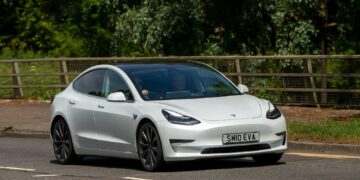
A Canadian can order a Tesla today, schedule a demonstration drive, use the company’s charging network and arrange repairs through an existing service operation. Tesla’s Canadian website currently lists the rear-wheel-drive Model Y at $49,990 before destination, ordering, tax and other charges. Its Model 3 and Model Y also come with published Canadian range, charging and warranty specifications, giving shoppers a reasonably clear picture of what ownership will involve.
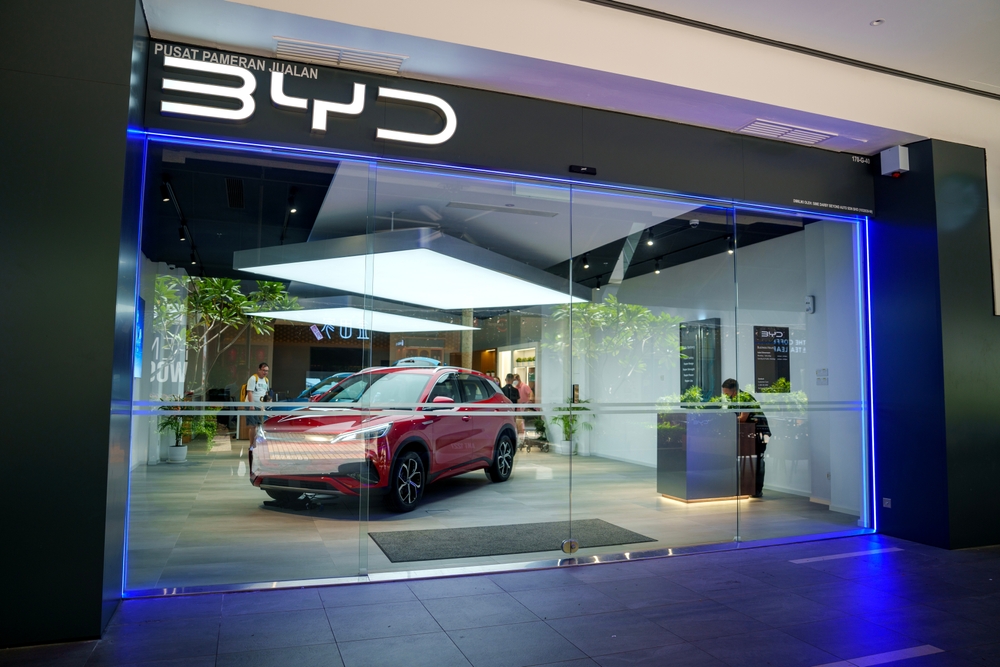
BYD’s position is different. The company has explored Canadian expansion, and automotive retail consultants have reportedly discussed potential dealership locations on its behalf. However, BYD stated in May 2026 that it had not approved or finalized Canadian passenger-car models, dealership numbers, pricing or a launch date. That distinction matters because several widely shared reports presented tentative plans as confirmed announcements. Canada now permits an initial annual quota of 49,000 Chinese-made EVs at the normal 6.1 per cent tariff, replacing the former 100 per cent surtax. The pathway exists, but a tariff decision does not automatically create dealerships, replacement-parts warehouses or certified service technicians.
BYD Could Put the Most Pressure on Price
BYD’s greatest potential advantage is not necessarily that every vehicle is superior to a Tesla. It is the company’s ability to manufacture batteries, power electronics, motors and vehicles at enormous scale. BYD sold approximately 2.26 million battery-electric vehicles in 2025, compared with roughly 1.64 million Tesla deliveries. That volume allows it to spread development and manufacturing costs across a wide range of hatchbacks, sedans, crossovers and premium vehicles.
Canada’s Chinese-EV quota is partly designed around affordability. The federal arrangement calls for a growing portion of permitted imports to be priced at $35,000 or less, eventually reaching half of the quota by 2030. That could create competition in a segment Tesla does not currently occupy. There is an important catch: Canada’s Electric Vehicle Affordability Program offers up to $5,000 for qualifying battery-electric vehicles, but eligible vehicles must be made in Canada or in a country with which Canada has a free-trade agreement. A China-built BYD would therefore not qualify under the current rules. BYD may still compete aggressively without the rebate, but advertised prices should be judged only after freight, dealer charges, taxes, financing and insurance are included.
Canadian Winters Will Expose Weak Models Quickly
Official range figures are useful, but they are not a promise of how far an EV will travel during a February highway trip. In a large Canadian Automobile Association winter test, 13 EVs were driven from Ottawa toward Mont-Tremblant in sub-zero conditions. The vehicles travelled between 14 and 39 per cent less than their official range estimates. The Tesla Model 3 was the fastest-charging vehicle in the test, adding more than 200 kilometres of range during a 15-minute charging session.
Chinese EVs should not automatically be dismissed as poor winter vehicles. Green NCAP tested the BYD Sealion 7 and recorded approximately 400 kilometres of mixed-driving range in warm conditions and 337 kilometres in cold conditions, a decline of about 16 per cent. Its preconditioning and cabin heat retention were praised, although its charging performance did not fully match the manufacturer’s advertised figures. These results cannot be treated as a direct Model Y comparison because the vehicles and testing procedures differed. They do show that modern Chinese EVs can have sophisticated thermal management. Canadian buyers should still demand locally verified winter range, battery-preconditioning details and cold-weather charging curves for every imported model.
BYD’s Battery Expertise Is a Genuine Strength
BYD’s Blade Battery is not simply a marketing name attached to an ordinary battery pack. It uses lithium iron phosphate chemistry and long, narrow cells that become part of the pack’s structure. LFP batteries generally cost less, avoid nickel and cobalt, tolerate more charging cycles and have greater thermal stability than many nickel-rich alternatives. Their traditional disadvantages include lower energy density and reduced performance in severe cold, although pack design and thermal management can narrow those gaps.
BYD says its Blade Battery remained between approximately 30 C and 60 C without smoke or fire during a nail-penetration demonstration intended to simulate an internal short circuit. Manufacturer testing should not be treated as independent proof that a complete vehicle cannot catch fire, but the chemistry has legitimate safety advantages. Vehicle-level crash protection also matters. The BYD Seal received a five-star Euro NCAP rating, including 89 per cent for adult protection and 87 per cent for children. Tesla’s redesigned Model 3 earned an IIHS Top Safety Pick designation for the 2025 model year. Neither brand deserves a blanket safety verdict based solely on its country of origin or battery chemistry.
Tesla Still Has the Easier Charging Experience
For drivers who regularly travel between cities, charging integration may matter more than a longer equipment list. Tesla combines the vehicle, navigation software, battery preconditioning, payment system and Supercharger network. Its route planner considers temperature, elevation, driving behaviour, traffic and charger availability. Tesla says its newest Superchargers can deliver as much as 325 kilowatts and add up to 322 kilometres in 15 minutes under suitable conditions, although actual performance varies by vehicle, battery temperature and state of charge.
Current overseas BYD models are less consistent. The BYD Seal supports up to 150-kilowatt DC charging in some configurations and is advertised as charging from 30 to 80 per cent in about 26 minutes. The Atto 3 is limited to approximately 88 kilowatts and requires about 29 minutes for the same percentage increase. BYD has demonstrated much faster megawatt-level charging technology in China, but that capability would be of limited Canadian value without compatible vehicles and stations. Canada had nearly 30,000 public charging ports entering 2025 and has established a target of 84,500 federally supported chargers, yet reliability, payment systems and rural coverage remain uneven. Tesla’s mature integration is therefore still a major practical advantage.
BYD May Feel More Like a Conventional Car
Tesla’s minimalist interiors divide opinion. Most functions are concentrated in a large central screen, while the mobile app controls charging, climate settings, vehicle access and service requests. Regular over-the-air updates can add features or correct software problems without a dealership visit. Tesla has even completed some safety recalls through remote software updates, demonstrating the convenience of a deeply connected vehicle platform.
BYD offers its own over-the-air updates but generally uses a more familiar mixture of screens, instrument displays and controls. The overseas BYD Seal includes a 15.6-inch rotating touchscreen, a separate driver display, voice control, Apple CarPlay and Android Auto. Some shoppers may find that easier to adapt to than Tesla’s highly centralized interface. However, more equipment does not automatically produce better software. Euro NCAP gave the BYD Atto 3’s assisted-driving system a “not recommended” assessment in 2024 because of weaknesses involving driver monitoring and emergency intervention, despite the vehicle previously earning a five-star overall crash rating. Tesla’s driver-assistance systems have also faced regulatory scrutiny and remain supervised Level 2 technology rather than autonomous driving. In either vehicle, the driver remains responsible.
Service, Warranty and Resale Could Decide the Winner
Tesla’s Canadian basic warranty covers four years or 80,000 kilometres. Battery and drive-unit coverage generally extends for eight years, with distance limits varying by configuration. Tesla also has Canadian stores, service centres, collision facilities and mobile-service options. Owners may still experience appointment delays or parts shortages, but there is at least an established process for handling them.
BYD provides competitive warranty coverage in several overseas markets. Its United Kingdom program includes six years or 150,000 kilometres of basic coverage, while its European Blade Battery warranty has been extended to eight years or 250,000 kilometres. Canadians should not assume those terms will be copied here. Warranty length is only valuable when parts, qualified technicians and nearby service facilities are available. Resale value is another uncertainty. Canadian Black Book reported that four-year-old battery-electric vehicles experienced the sharpest depreciation among major powertrain categories in its 2025 study, with values falling another 14 per cent year over year. Tesla at least has years of Canadian used-vehicle data. A new BYD would initially have no established Canadian residual-value history, making leasing, financing and insurance quotes especially important.
Better Technology Does Not Automatically Mean a Better Buy
Chinese EVs have moved far beyond the outdated stereotype of cheap, disposable cars. BYD possesses serious battery expertise, enormous manufacturing scale, strong crash-test results and increasingly competitive cold-weather performance. In the right model, it may offer more interior equipment, a longer warranty and a lower purchase price than a comparable Tesla. The arrival of credible Chinese competition could also pressure every automaker to reduce prices and improve standard features.
For Canadians buying immediately, Tesla remains the safer all-around choice between the two brands because its vehicles, chargers, warranties and service infrastructure already exist here. BYD could become the better value once Canadian models are certified, independently tested and supported by a real dealer network. Until then, claims of a $25,000 BYD or a confirmed nationwide rollout should be treated cautiously. The most sensible conclusion is not that Chinese EVs are automatically better. It is that they are now good enough to force a serious comparison—and that the final answer will depend on Canadian pricing, winter testing, charging compatibility, insurance costs and after-sales support.