























In Ontario’s auto corridor, good news now tends to arrive with an asterisk. General Motors is putting fresh money into truck-related manufacturing in Oshawa and St. Catharines at the same time that tariffs, counter-tariffs, and new political pressure are making every cross-border production decision feel more fragile than it did a few years ago. That contrast helps explain why GM’s latest Ontario moves matter beyond one company or one plant.
What stands out is not just that GM is still investing in Canada, but where it is investing. The company is leaning into trucks, engines, and core manufacturing capacity, even as the wider North American auto industry wrestles with electrification mandates, uneven EV demand, and a more confrontational trade climate. In that sense, Ontario is becoming both a vote of confidence and a stress test.
Oshawa Is Not a Courtesy Plant
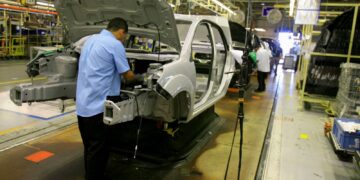
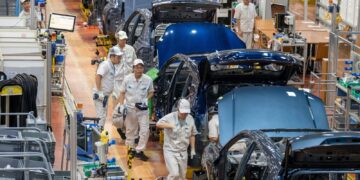
GM’s latest move in Oshawa looks like a real manufacturing commitment, not a ceremonial headline. The company announced another C$63 million for stamping upgrades tied to next-generation gas-powered full-size pickups, building on the C$280 million it had already announced for Oshawa truck production. That matters because capital spending is where automakers show their true priorities. Press releases can be flexible; tooling decisions usually are not. When a company upgrades plant capability in a high-cost, high-scrutiny jurisdiction, it is usually doing so because it still sees a durable business case.
There is also a practical reason Oshawa keeps resurfacing in GM’s plans. The plant occupies a unique role in the company’s truck network, producing both light-duty and heavy-duty Silverado pickups on the same line. For workers, suppliers, and Durham Region businesses, that makes the facility more than a symbolic Canadian foothold. It makes Oshawa a place GM still appears to need, even if that need now comes wrapped in tighter margins, harder politics, and less room for mistakes.
Trucks Still Win the Capital Battle
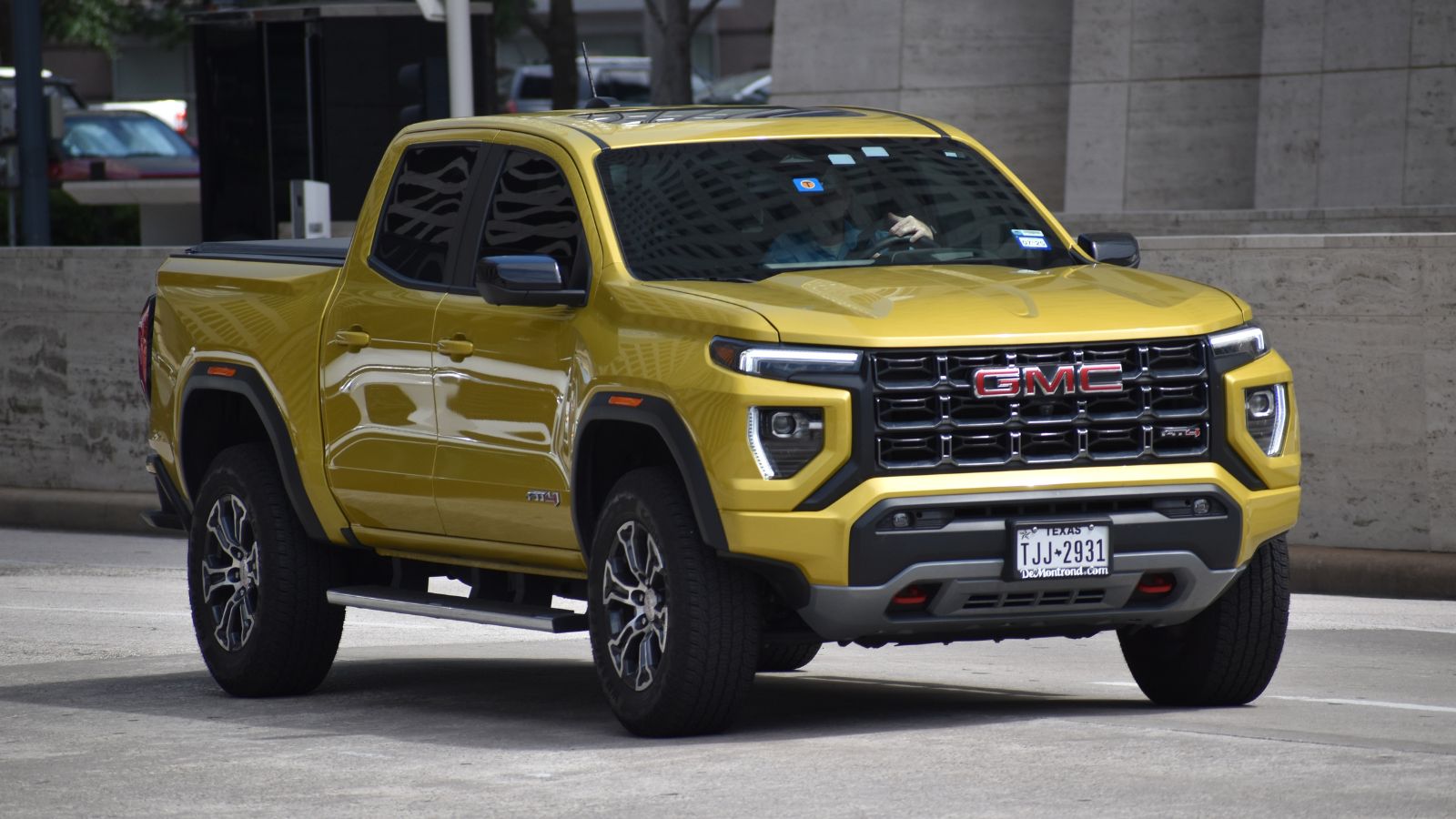
If there were any doubt about why GM keeps backing Ontario trucks, the sales picture helps explain it. GM said it led the Canadian market in the first quarter of 2026 with 64,302 deliveries and a 15.5% market share, while also leading full-size pickup sales. That is not a small detail. It suggests that even in a market flooded with EV messaging and crossover competition, full-size pickups remain one of the company’s clearest commercial strengths. In a tense trade environment, management tends to protect the parts of the portfolio that still throw off dependable volume.
That helps explain the logic behind Ontario’s truck-centered future. GM is not using Oshawa to chase a niche. It is reinforcing production around one of its most proven categories. The same pattern shows up at St. Catharines, where the company is investing heavily in next-generation V-8 engine production for full-size trucks and SUVs. In other words, Ontario is not just building what GM can make there; it is building what GM still believes customers across North America will keep buying.
The Border Is Back in the Business Plan
For years, the North American auto industry liked to describe the Canada-U.S. border as administratively important but operationally manageable. That no longer feels true. Ottawa says more than 90% of Canadian-made vehicles and 60% of Canadian-made auto parts are exported to the United States, which means even a modest trade shock can ripple quickly through Canadian plants. When so much of the business depends on one export market, strategy stops being a pure manufacturing question and becomes a political one as well.
Washington’s tariff posture has sharpened that reality. The White House said in March 2025 that a 25% tariff would apply to imported passenger vehicles, light trucks, and key auto parts, while Canada responded with its own tariffs on certain U.S.-made vehicles. That has turned the cross-border supply chain into a moving target. A plant can be efficient, staffed, and technically strong and still face uncertainty if the political cost of importing or exporting changes faster than product plans can adjust. Ontario is feeling that squeeze in real time.
Tariff Relief Now Comes With Conditions
One of the clearest signs that the old hands-off approach is fading is Canada’s remission framework for automakers. Ottawa allowed companies producing in Canada to import a certain number of U.S.-made vehicles free of counter-tariffs, but only if they maintained production levels and followed through on planned investments. That is a very different policy mood from the era when governments mostly celebrated investment after the fact. Now they are trying to shape corporate behaviour in advance.
The framework also came with consequences. Canadian government material later said Ottawa significantly reduced the import quotas available to GM and Stellantis after the companies scaled back manufacturing commitments in Canada. Whether one views that as enforcement or retaliation, the message was unmistakable: market access is increasingly being tied to industrial loyalty. That matters for GM’s Ontario truck bet because it means future investment decisions will not be judged only by shareholders and customers. They will also be judged by governments trying to defend jobs and bargaining power.
Ontario’s Truck Bet Is Also an Engine Bet
Oshawa is only part of the story. In late April 2026, GM announced a C$691 million investment in the St. Catharines Propulsion Plant to support sixth-generation V-8 engine production for full-size trucks and SUVs. That detail is easy to overlook in an era dominated by EV headlines, but it may be one of the strongest clues about how GM actually sees the medium-term market. The company is not merely keeping legacy powertrain operations alive. It is allocating major capital to them.
Taken together, Oshawa and St. Catharines look less like isolated projects and more like a linked manufacturing thesis. Trucks need engines, plants need parts, and supply chains need enough scale to justify staying local. That does not mean Ontario is being positioned as GM’s entire future. It does mean the company still sees strategic value in a Canadian truck ecosystem that can produce vehicles, support service parts, and anchor skilled manufacturing work. In a period of trade tension, depth may matter almost as much as volume.
The EV Story Is Stronger Than the Headlines Suggest — and Messier on the Ground
Ontario’s truck focus does not mean GM has abandoned electrification. In fact, GM said it was Canada’s EV sales leader in 2025, capturing 21.2% of the market with more than 25,000 EV registrations. Canada’s own regulatory path is also firming up, with the federal ZEV standard requiring at least 20% of new light-duty vehicles offered for sale in 2026 to be zero-emission, rising to 60% by 2030 and 100% by 2035. On paper, that gives the company reason to keep investing in both worlds at once.
But the ground-level picture is more uneven. Reuters reported that GM temporarily halted BrightDrop electric van production at CAMI in Ingersoll because of slow sales, affecting 1,200 workers initially and leaving nearly 500 facing indefinite layoff once the plant returned on a single shift. That tension says a lot about where the industry is right now. Consumer EV momentum exists, regulatory pressure is increasing, and GM’s EV lineup is broad. Yet one Ontario plant can still find itself caught between future policy goals and present-day demand.
Workers Feel the Contradictions First
Corporate strategy is usually described in the language of footprint, capacity, and competitiveness. Workers experience it in the language of shifts, seniority, and paycheques. That is why Oshawa’s move from three shifts back to two in early 2026 landed so hard, even as GM kept talking about the plant’s future. Reuters reported roughly 500 jobs would be cut at the plant, while Unifor said as many as 1,200 supply-chain workers could also be affected. Those two realities can coexist: a plant can have a future and still deliver a painful present.
That is also why government support tools matter more than they once did. Ottawa has extended tariff-related Work-Sharing special measures through March 31, 2027, specifically to help employers and employees manage temporary declines in business activity. Programs like that do not solve structural problems, but they can soften the blow while companies and governments argue over the bigger direction of the sector. In practical terms, they acknowledge what families in auto towns already know: industrial policy is not abstract when the next schedule change decides the household budget.
Governments Are Treating Autos as Strategic Again
The federal and provincial response shows how much the auto file has changed. Ottawa announced a national automotive task force in January 2026 to coordinate with industry and Ontario on manufacturing, investment, workforce protection, electrification, and trade issues ahead of the next CUSMA review. That is the language of strategic sector management, not passive market observation. Canada has also tied its broader auto strategy to job protection, supply-chain resilience, and diversification beyond a single trade-dependent model.
Ontario is doing its part as well. The 2026 Ontario budget says the industry employed nearly 100,000 people in the province in 2025 and committed C$85 million to the Ontario Automotive Modernization Program and the Ontario Vehicle Innovation Network. At the national level, the auto sector contributed C$16.8 billion to GDP in 2024 and directly employed more than 125,000 people, while indirectly supporting roughly 427,000 jobs. Those numbers help explain why governments are no longer content to simply applaud factory announcements. The sector is too big, too exposed, and too politically sensitive.
USMCA Still Matters, but Politics Now Sits on Top of It
The rules-based side of the North American auto relationship has not disappeared. USTR’s 2024 report on USMCA automotive trade says the agreement introduced stricter rules of origin designed to improve how supply-chain benefits are distributed across the United States, Mexico, and Canada. In theory, that should reward regional production and give plants like Oshawa a reason to remain deeply integrated into a continental system. The logic is straightforward: the more North American content that matters, the more valuable North American manufacturing becomes.
The problem is that politics now often arrives on top of those rules rather than inside them. Canada’s own briefing material says the United States receives 96% of Canadian auto exports and supplies 59% of Canada’s auto imports, underscoring how tightly connected the industry still is. That level of integration should create stability, but it can also magnify policy shocks. When the border becomes a negotiating tool, even agreements designed to reinforce regional production can feel fragile. Ontario’s truck bet is therefore not just about manufacturing competence. It is about whether integration can survive political improvisation.
GM’s Ontario Bet Looks Real, but It Is Not Risk-Free
The strongest case for optimism is simple: GM is still investing real money in Ontario assets tied to one of its most important product families. Oshawa has fresh truck-related spending, St. Catharines is being upgraded for next-generation V-8 production, and the company continues to describe Canada as part of a meaningful manufacturing footprint. That is more substantial than a holding pattern. It suggests GM still sees Ontario as relevant to its North American truck business, even while trimming elsewhere.
Still, this is not a clean victory story. Tariffs remain disruptive, quota relief now depends on performance, EV execution in Ontario has been uneven, and workers have already felt the cost of shifting demand and sharper politics. The more honest reading is that GM is making a selective bet, not a blanket one. Ontario remains in the game because trucks remain profitable, the workforce remains capable, and the supply chain still matters. But as long as Canada-U.S. auto tensions continue to simmer, every investment will carry a second question behind it: for how long, and under what terms?