






















• About
  • Contact
AutoIgloo
  • News & Trends
    Debit Tap Processing Fees Rise 75% for Some Canadian Auto-Parts and Home-Supply Merchants

    Debit Tap Processing Fees Rise 75% for Some Canadian Auto-Parts and Home-Supply Merchants

    Top U.S. Senate Democrat Targets Trump’s Canada Tariffs, but Election Gains Offer No Guaranteed Relief for Auto Makers

    Top U.S. Senate Democrat Targets Trump’s Canada Tariffs, but Election Gains Offer No Guaranteed Relief for Auto Makers

    Ontario EV Owners Face a 10-to-1 Electricity Price Gap Under New November Rates

    Ontario EV Owners Face a 10-to-1 Electricity Price Gap Under New November Rates

    Nova Scotia CAA Auto Insurance Renewals Bring Credit-Score Discounts and a 30% Coverage Increase

    Nova Scotia CAA Auto Insurance Renewals Bring Credit-Score Discounts and a 30% Coverage Increase

    GM’s Chinese Joint-Venture Sales Collapse 51% as SAIC’s Own Brand Jumps 33%

    GM’s Chinese Joint-Venture Sales Collapse 51% as SAIC’s Own Brand Jumps 33%

    Toronto Battery Maker Lands $26-Million Deal to Convert Diesel Trucks to Electric Across Canada and U.S.

    Teamsters Say Some Canadian Trucking Firms Cut Driver Costs 20–30% by Misclassifying Workers

  • Car Reviews
    Mitsubishi Outlander Review: Is It Still the Underrated Family SUV?

    Mitsubishi Outlander Review: Is It Still the Underrated Family SUV?

    19 Cars With Windshields That Crack Constantly on Canadian Highways

    Subaru Forester vs Toyota RAV4: Which SUV Is Better for Canadian Winters?

    20 Cars Canadians Should Avoid If They Hate Expensive Windshield Replacements

    Hyundai Tucson vs Kia Sportage: Which Compact SUV Is the Better Everyday Buy?

    BYD, CATL and Xiaomi Are in the Mix for Xi’s Washington Trip as Canada and U.S. Split on Chinese EV Access

    Toyota RAV4 Plug-In Hybrid vs Regular Hybrid: Which One Should Canadians Buy?

    17 Vehicles That Are Quietly Getting Crushed by Insurance Costs in Canada

    Honda CR-V Hybrid Review: The Family SUV That Plays It Safe

    2026 Toyota RAV4 vs Honda CR-V: Which SUV Makes More Sense for Canadians?

    2026 Toyota RAV4 vs Honda CR-V: Which SUV Makes More Sense for Canadians?

  • Buying Guides
    Mitsubishi Outlander Review: Is It Still the Underrated Family SUV?

    Mitsubishi Outlander Review: Is It Still the Underrated Family SUV?

    16 Used SUVs That Suddenly Don’t Look Like Smart Buys in Canada

    Nissan Rogue vs Honda CR-V: Which SUV Feels Better After the Test Drive?

    19 Cars With Windshields That Crack Constantly on Canadian Highways

    Subaru Forester vs Toyota RAV4: Which SUV Is Better for Canadian Winters?

    Mazda CX-5 vs Mazda CX-50: Which One Feels More Premium for the Money?

    Mazda CX-5 vs Mazda CX-50: Which One Feels More Premium for the Money?

    17 Vehicles That Are Quietly Getting Crushed by Insurance Costs in Canada

    Honda CR-V Hybrid Review: The Family SUV That Plays It Safe

    18 Cars With Parts Prices So Wild They’re Becoming Hard to Own in Canada

    Is the New Toyota RAV4 Still the Safest Bet in Canada?

  • Comparisons
    19 Cars With Windshields That Crack Constantly on Canadian Highways

    Subaru Forester vs Toyota RAV4: Which SUV Is Better for Canadian Winters?

    21 Vehicles With the Best Real-World Fuel Economy in Canada (Not Just the Sticker)

    Toyota Corolla Cross vs Honda HR-V: Which Small SUV Is Less Compromised?

    20 Cars Canadians Should Avoid If They Hate Expensive Windshield Replacements

    Hyundai Tucson vs Kia Sportage: Which Compact SUV Is the Better Everyday Buy?

    BYD, CATL and Xiaomi Are in the Mix for Xi’s Washington Trip as Canada and U.S. Split on Chinese EV Access

    Toyota RAV4 Plug-In Hybrid vs Regular Hybrid: Which One Should Canadians Buy?

    Honda Asked Suppliers for 30% Parts Cost Cuts as $9.4-Billion Savings Drive Hits Global Supply Chain

    Why Some Buyers Are Choosing Older Hondas Over Newer SUVs

    25 EV Charging Mistakes Canadians Make in March (That Wreck Range)

    Why Some Canadians Are Choosing Hybrids Over Full EVs Again

  • EVs & Hybrids
    BYD, CATL and Xiaomi Are in the Mix for Xi’s Washington Trip as Canada and U.S. Split on Chinese EV Access

    Toyota RAV4 Plug-In Hybrid vs Regular Hybrid: Which One Should Canadians Buy?

    Geely Auto’s Core Profit Jumps 46% as Chinese EV Expansion Accelerates — With Canada Now Opening to Geely-Owned Lotus

    Geely Confirms Canadian Vehicle Sales for 2027 as Chinese Automakers Challenge Established Brands

    18 Cars That Will Feel Dated Fast as New Chinese EVs Arrive

    12 EVs Now Price Below $41,000 in Canada—Fiat 500e Falls Under $30,000 With Rebate

    The Used EV Question Canadians Should Ask Before Buying One

    The Used EV Question Canadians Should Ask Before Buying One

    Why Some EV Owners Are Getting Sticker Shock From Home Charging Setups

    Why Some EV Owners Are Getting Sticker Shock From Home Charging Setups

    20 Signs Your Car Battery Is About to Leave You Stranded

    Canadian Auto Jobs Become a Central Fault Line as Ottawa Reveals Why It Rejected U.S. Vehicle Terms

  • More
    • Pricing & Deals
    • Winter Driving
    • Ownership & Maintenance
No Result
View All Result
AutoIgloo
No Result
View All Result

Home » News & Trends

44% of Auto Software Developers Flag Testing and Debugging as Top Hurdle, QNX Finds

Nate Brewer by Nate Brewer
October 21, 2026
Reading Time: 6 mins read
A A
Image Credit: Shutterstock

Image Credit: Shutterstock

465
SHARES
1.5k
VIEWS
Share on FacebookShare on Twitter

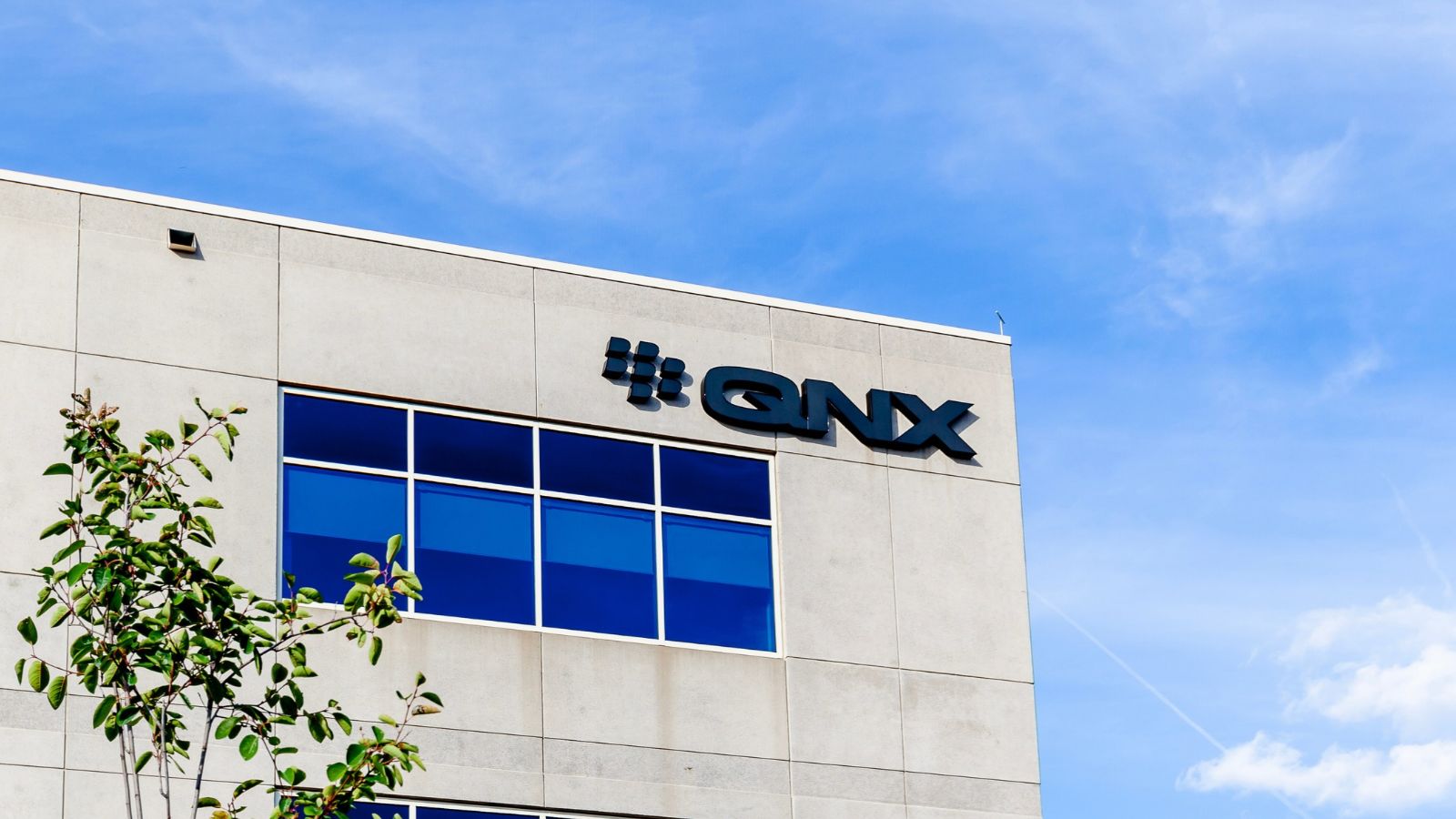
Modern vehicles may gain new capabilities with a software update, but creating dependable code behind those features is becoming harder. QNX’s 2026 Under the Hood research found that 44% of automotive software developers now rank debugging and testing among their biggest development hurdles, making it the most frequently cited challenge.

The finding comes from responses from 1,100 embedded automotive software developers and marks a noticeable change from a year earlier, when debugging and testing stood at 36%. For automakers racing toward software-defined vehicles, the results suggest that adding more code is only part of the challenge. Developing, integrating, validating and securing it efficiently is becoming the bigger competitive test.

Debugging and Testing Has Moved to the Top

Debugging and testing was cited by 44% of developers in QNX’s 2026 research, putting it ahead of integration complexity at 39% and long development cycles at 37%. The year-over-year movement is particularly notable. In QNX’s 2025 findings, debugging and testing stood at 36%, while long development cycles led at 37%. In other words, the testing problem did not merely remain persistent; it moved eight percentage points higher in a year.

Other research points in a similar direction. Perforce’s 2026 State of Automotive Software Development report, based on more than 450 automotive development professionals, found that verification and validation remained the most time-consuming activities for 44% of respondents. The two studies asked different questions, so the percentages should not be treated as directly equivalent. Together, however, they show how much engineering capacity can be absorbed after code is written, when teams must prove that increasingly interconnected vehicle systems actually behave as intended.

More Than a Third of Developer Effort Goes Into the Foundation

QNX found that developers spend an average of 35% of their effort on software integration below the vehicle application layer instead of creating features that distinguish one vehicle from another. More strikingly, 19% said at least half of their time goes into that foundational integration work. QNX characterizes this underlying activity as software “plumbing”—important work, but work that passengers are unlikely to recognize as a selling feature when they enter a dealership.

That distinction matters as automakers increasingly compete through digital experiences. Engineers still need operating systems, communications layers, middleware and other foundational components to work reliably before a new interface or connected feature can function. Every engineering hour devoted to repeatedly solving those lower-level integration problems is an hour unavailable for customer-facing development. For a manufacturer launching several models on related architectures, the cost can multiply when foundational work cannot easily carry from one vehicle program to the next.

Reusable Software Remains a Major Missing Piece

Three-quarters of the developers in QNX’s research said the absence of a common, reusable software foundation is slowing development of software-defined vehicles. That helps explain why testing and integration continue to consume so much attention. A component that has already been integrated and validated on one vehicle architecture has greater potential value when it can be confidently reused instead of rebuilt or heavily modified for every new program.

Developers were also specific about what could free more time for differentiated features. Forty-six percent pointed to better integration between development tools and environments, 38% identified greater software reuse across vehicle programs and 34% wanted a pre-integrated foundational software solution. Those responses suggest that faster automotive development is not simply a matter of hiring more programmers. A team working with fragmented tools and vehicle-specific foundations can spend substantial time recreating capabilities that another program already solved. Standardization therefore becomes a productivity issue as much as a technical one.

Developers Want More Time for Features Drivers Actually Notice

Seventy-six percent of respondents said automakers should concentrate more heavily on application-layer innovation rather than foundational software infrastructure. That share was slightly lower than the 80% recorded in QNX’s previous research, but it still represents a strong majority. Application-level work is where many increasingly visible parts of the ownership experience take shape, from digital interfaces and personalization to connected services and software-enabled vehicle functions.

For an automaker, this changes the economics of software development. Building a technically impressive underlying stack has limited commercial value if engineers have too little time left to improve what customers encounter in daily use. The industry is therefore confronting a version of a familiar manufacturing problem: determining which components genuinely differentiate a product and which should become standardized building blocks. Software-defined vehicles promise more frequent feature improvements and greater flexibility after production, but those advantages depend on having a stable foundation underneath them rather than continuously rebuilding that foundation.

Confidence in Development Environments Is Falling

Only 20% of developers in the 2026 QNX research rated their development environment as excellent, down from 30% a year earlier. That is a 10-percentage-point drop, or roughly a one-third decline relative to the previous share. The change is notable because development environments encompass many of the tools and workflows engineers rely on to write, integrate, test and diagnose software before it reaches a production vehicle.

The human impact can be easy to overlook. An engineer tracking a fault through several software layers may have to reproduce the problem, isolate its origin, determine whether it belongs to the application or underlying platform, create a fix and then make sure the repair has not introduced another failure elsewhere. When tools do not connect smoothly, even routine investigation can become slower. QNX’s data therefore points to developer productivity as an architectural concern. Better processors and additional programmers help only so much when the workflow around them creates friction.

Cybersecurity Is Becoming a Core Development Constraint

Testing pressures are growing alongside security demands. QNX found that 48% of developers now identify security threats as their biggest future concern, five percentage points higher than a year earlier. Forty-seven percent described cyber vulnerabilities as the biggest risk to deploying software-defined vehicles at scale, while 83% expect SDVs to become a major cyberattack target within the next three years. Cybersecurity standards were also the most difficult regulatory requirements to meet for 46% of respondents.

Those concerns exist within an increasingly formal regulatory environment. ISO/SAE 21434 establishes cybersecurity-engineering requirements across the road-vehicle lifecycle, from development through operation and eventual decommissioning. UNECE regulations address both vehicle cybersecurity management and software updates. QNX additionally reported that more than 700 regulations and legislative proposals affecting in-vehicle technology were introduced around the world during 2025, while roughly one-third of respondents said regulatory developments had delayed timelines. Testing now has to establish security and compliance alongside functionality.

Recalls Are Changing How Teams Build Software

Competitive pressure adds another layer. Seventy-nine percent of QNX respondents said they feel pressure from faster-moving competitors. At the same time, 53% said product recalls affecting the industry directly influence their work, while 88% reported that recalls or failures have prompted major or moderate changes in how their teams develop software. Importantly, QNX’s findings do not establish that competitive pressure itself caused those recalls; they show that engineers are dealing with both forces simultaneously.

That tension is central to software-defined vehicle development. A manufacturer that delays a program risks falling behind rivals that can introduce features more quickly. Moving too aggressively, however, can increase the consequences of inadequate validation when software interacts with safety-relevant vehicle functions. A defect discovered before production might cost engineering time. The same defect found after thousands of vehicles are on the road can require a broader remediation effort. For development organizations, speed therefore matters most when it can be achieved without weakening repeatability, traceability or testing discipline.

AI Expectations Are Shifting From Revolution to Routine

Developers still expect artificial intelligence to play a significant role, but the language around it is becoming more measured. In QNX’s latest findings, 25% described AI as likely to be transformational, down from 36% previously. Meanwhile, the share expecting AI to play a significant role integrated into everyday workflows increased from 55% to 62%. Overall, 87% still expect AI to have a major role in automotive software development.

Perforce’s separate 2026 research shows adoption is already moving beyond experimentation. Seventy-one percent of its respondents said they were using AI in product design, while 45% were using AI not only as a development assistant but as part of the finished product. That enthusiasm comes with caution: 54% expressed concern about safety in AI-driven vehicle development. AI may help generate, analyze or repair code more rapidly, but faster code production also increases the importance of validating what that code does under real automotive conditions.

Drivers Experience the Results of Software Quality Directly

The engineering challenge eventually reaches the person behind the wheel. J.D. Power’s 2026 U.S. Initial Quality Study found that overall new-vehicle quality improved substantially, dropping from 192 to 175 reported problems per 100 vehicles. Infotainment was the exception. It was the only major category in which problems increased, recording 44.4 problems per 100 mass-market vehicles and 38.3 among premium vehicles. Connectivity involving Android Auto and Apple CarPlay was a significant contributor.

Longer-term ownership data tells a similar story about software expectations. J.D. Power’s 2026 Vehicle Dependability Study found that 40% of surveyed owners had received a vehicle software update during the previous year. Only 27% of those owners said the update improved the vehicle, while 58% noticed no meaningful difference. These results help explain why developer testing matters beyond engineering schedules: drivers increasingly judge vehicle quality through screens, connectivity, digital features and updates as well as traditional mechanical performance.

Better Foundations Could Become a Competitive Advantage

QNX’s findings point toward a less glamorous side of the software-defined vehicle race. Automakers may gain more from reducing repeated foundational work than from simply producing more code. The fact that 75% of developers see the lack of a reusable software foundation as a drag on progress, while 46% want better tool integration, suggests that architecture and workflow improvements could release engineering capacity that is already present inside development organizations.

Testing earlier is one possible part of that change. Perforce reports that 59% of automotive-development respondents have either implemented or are implementing “shift-left” practices, which move testing and security checks earlier in the software lifecycle. That share was nevertheless 10 percentage points lower than the previous year. The challenge is therefore not a shortage of known techniques. It is applying them consistently across increasingly complex vehicle programs. If debugging remains the industry’s largest development hurdle, the companies that simplify foundations, reuse proven components and discover defects earlier may have more time to build the features consumers actually notice.


Recommended.

Vancouver Hits $2.09/L as Toronto Gas Climbs to $1.84 for Labour Day Weekend

Oil Pushes Above US$107 Again as Saudi Pipeline Crisis Keeps Pressure on Canadian Pump Prices

September 15, 2026
19 Things That Can Make Your Car Insurance Claim Get Denied

The Car Rental Charges Canadians Should Check Before Leaving the Counter

July 6, 2026

Trending.

Canada’s Ballard Puts a 250,000-Mile Performance Guarantee Behind Hydrogen Buses

Canada’s Ballard Puts a 250,000-Mile Performance Guarantee Behind Hydrogen Buses

October 2, 2026
10 Reasons the Canadian Car Market Feels Different Heading Into Summer

Canadian Auto Sales Rise 3.4% for a Fourth Straight Month—but 2026 Still Trails Last Year

October 3, 2026
PBO Warns U.S. Tariff War Threatens Up to 185,000 Canadian Jobs, With Auto Manufacturing Among Hardest Hit

PBO Warns U.S. Tariff War Threatens Up to 185,000 Canadian Jobs, With Auto Manufacturing Among Hardest Hit

October 21, 2026
22 Ways Canadians Accidentally Void Their Vehicle Warranty

B.C. Drivers Vote Today on the Future of ICBC Insurance as Parties Clash Over Private Competition and No-Fault Coverage

October 24, 2026
15 Vehicles Canadians May Want to Avoid Before May Long Weekend

Tesla Buyers in Canada Are Reporting Fresh Model Y Delivery Delays as Some Orders Slip Into October and November 2.

September 27, 2026
  • About
  • Contact
  • Privacy Policy
  • Disclaimer
  • Editorial Policies
  • Terms and Conditions
A Revir Media Group Website

2026 Autoigloo - © All rights reserved

No Result
View All Result
  • News & Trends
  • Car Reviews
  • Buying Guides
  • Comparisons
  • EVs & Hybrids
  • More
    • Pricing & Deals
    • Winter Driving
    • Ownership & Maintenance

2026 Autoigloo - © All rights reserved

This website uses cookies. By continuing to use this website you are giving consent to cookies being used. Visit our Privacy and Cookie Policy.




