
























A minor squeak, drip, vibration, or warning light can be easy to dismiss when a vehicle still starts every morning and seems to drive normally. Yet many of the most punishing repair bills begin with symptoms that initially look inexpensive or merely annoying. A worn seal can lower a critical fluid level, a small tear can expose a joint to contamination, and a few millimetres of neglected brake wear can eventually involve much more than the original part.
These 21 small repairs show how quickly routine vehicle problems can grow when early warning signs are ignored. Not every symptom guarantees a major failure, and repair urgency varies by vehicle, but the underlying lesson is remarkably consistent: catching deterioration while it is still isolated usually gives an owner more options than waiting until another component is damaged.
Worn Brake Pads
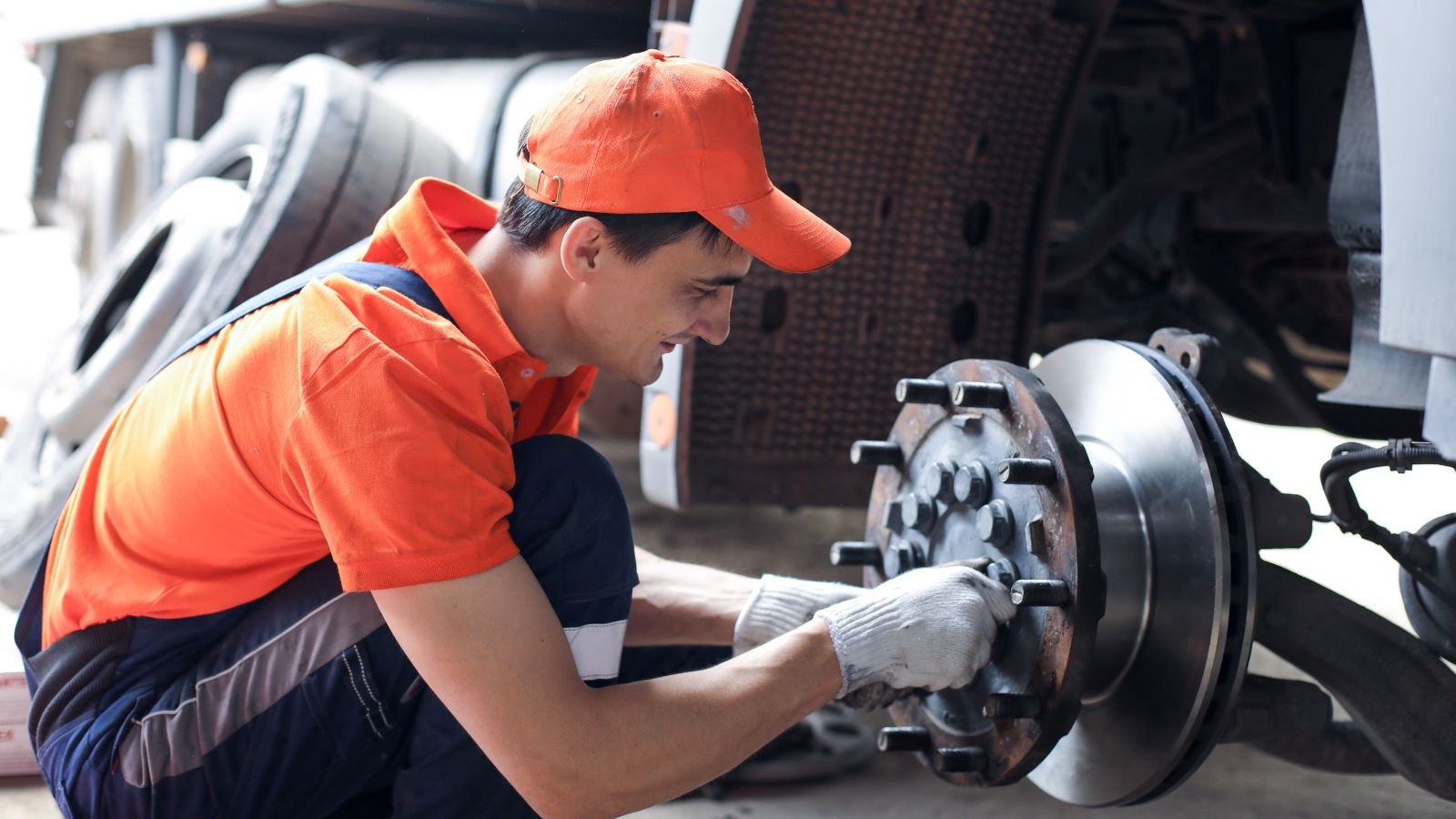
Brake pads are consumable components, so hearing the first squeal from a wear indicator does not automatically mean the entire braking system is in trouble. At that stage, the job may still be largely confined to replacing worn pads and checking the surrounding hardware. Trouble begins when the warning is treated as background noise. Once the friction material is exhausted, the metal backing plate can begin grinding directly against the brake rotor.
That changes the repair considerably. A rotor that might have remained usable can become deeply scored, overheated, or otherwise unsuitable for continued service. Severe neglect can also place additional strain on calipers and other brake components. Grinding is therefore very different from a brief squeak caused by morning moisture. Drivers who hear persistent metallic grinding, notice reduced stopping performance, or feel abnormal vibration under braking are no longer dealing with a harmless annoyance. What started as normal pad wear may now require pads, rotors, additional hardware, and considerably more labour.
A Small Coolant Leak
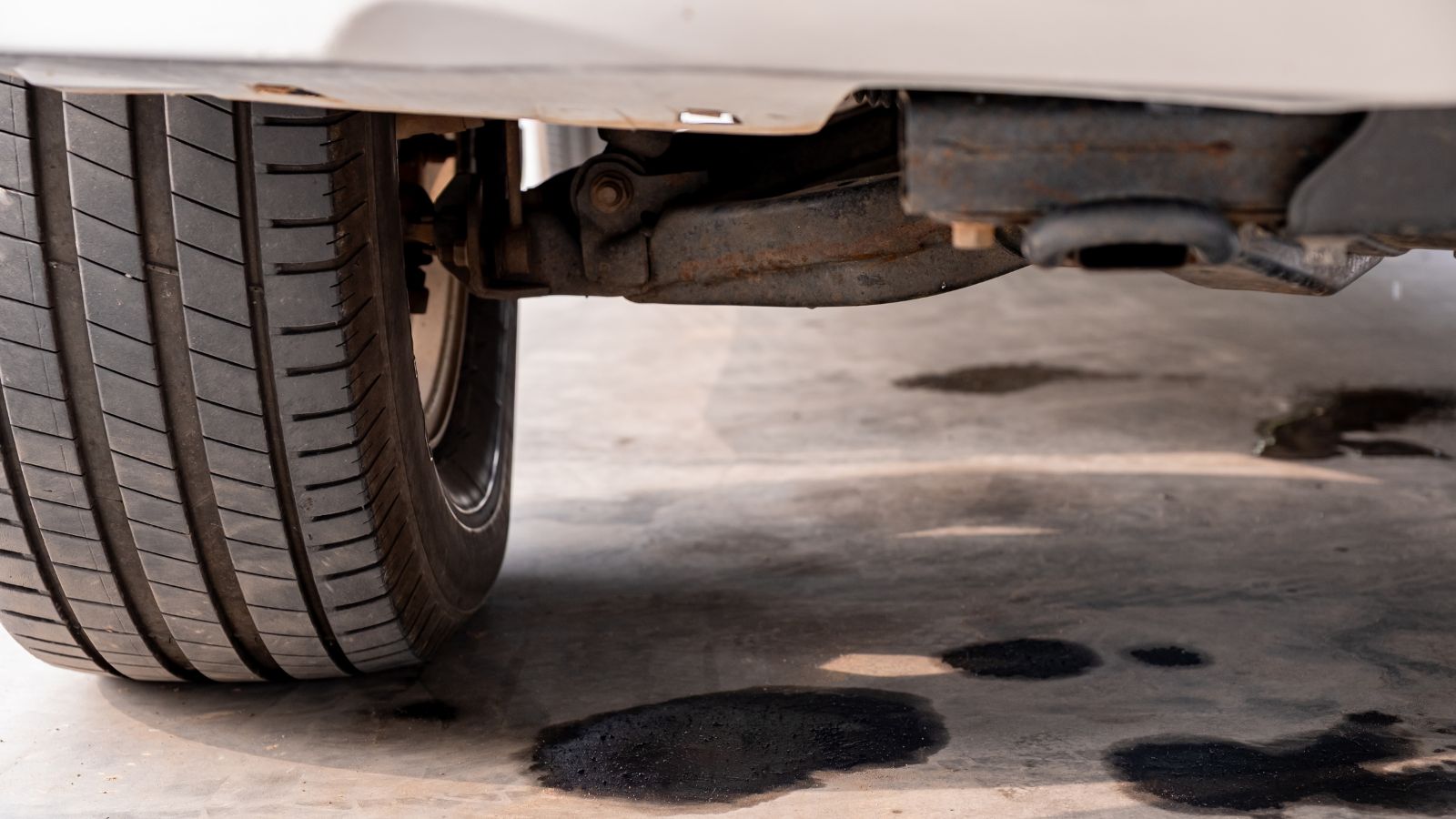
A few drops of brightly coloured coolant under a parked vehicle may not look dramatic, particularly when the temperature gauge still sits in its normal position. Cooling systems, however, are designed to retain their coolant. A falling level can indicate a leaking hose, radiator, water pump, connection, or another fault that deserves diagnosis rather than repeated topping-up.
As the coolant level falls, the engine loses some of its ability to remove the enormous amount of heat created during normal operation. An initially modest leak can eventually produce overheating, and overheating can damage components that are far more expensive than the original leaking part. Head-gasket problems and damage to major engine components are among the potential outcomes of severe overheating. The particularly dangerous part is that the escalation can happen quickly once enough coolant has been lost. A damp fitting or small puddle discovered during routine maintenance is generally a far more manageable problem than steam from under the hood several weeks later.
A Seeping Engine-Oil Leak
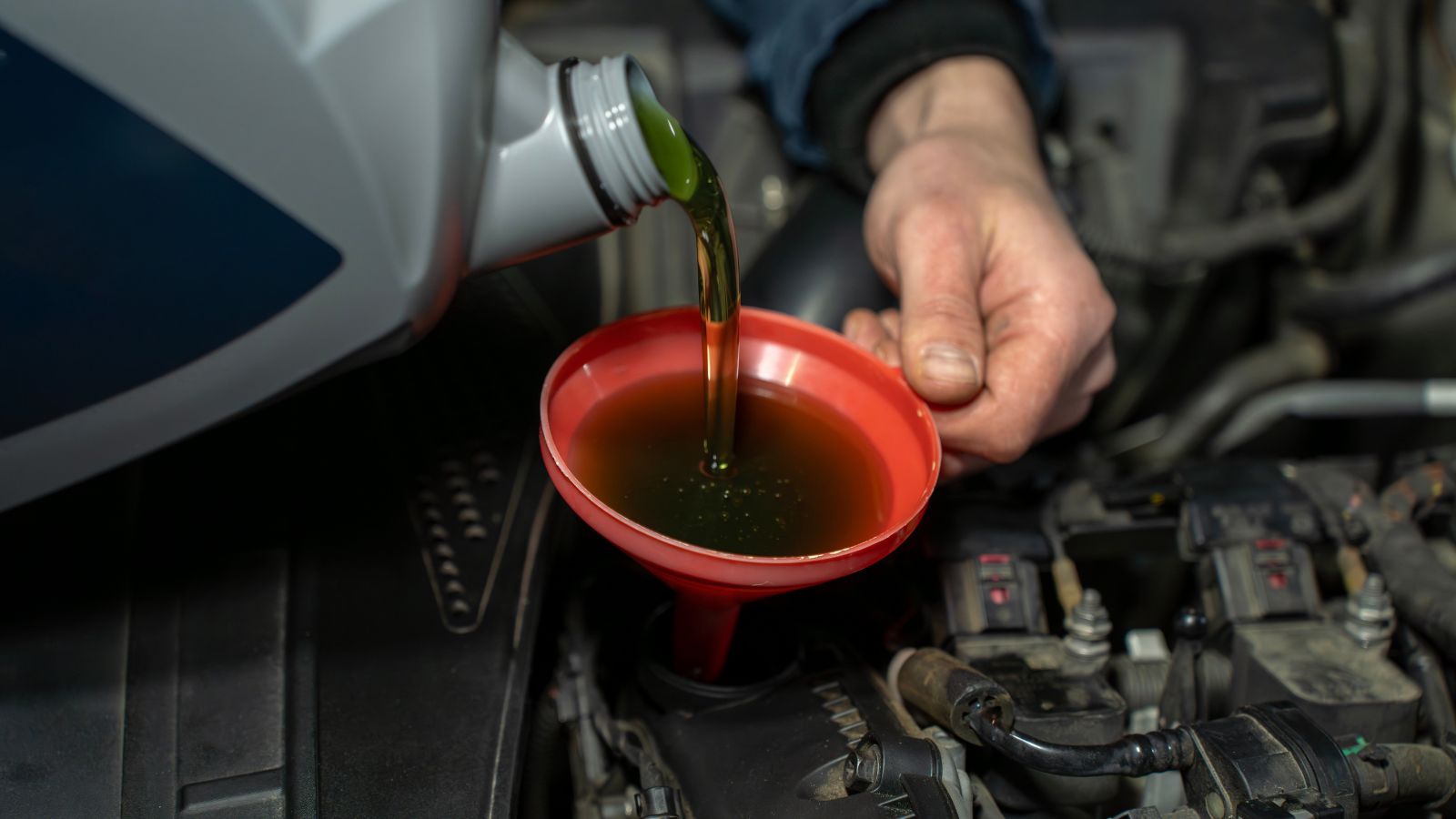
An oil leak does not have to leave a large puddle to matter. Some leaks begin as a damp gasket, a slow drip, or an oily film collecting around the lower part of the engine. Because the engine may continue running perfectly well, owners sometimes focus on cleaning the driveway rather than identifying where the lubricant is going.
Engine oil reduces friction among rapidly moving internal parts and also helps carry heat away from components. If a leak eventually lowers the oil level enough, lubrication can become inadequate and internal wear can accelerate. Low oil pressure is especially serious because an engine cannot safely operate for long without the protective film oil provides. The repair can then move far beyond replacing a seal or gasket. Bearings, camshaft components, cylinder surfaces, or other internal parts may suffer damage. An oil-pressure warning should therefore never be treated simply as a reminder to add a quart and continue driving indefinitely; the reason for the loss still needs to be found.
A Cracking Serpentine Belt
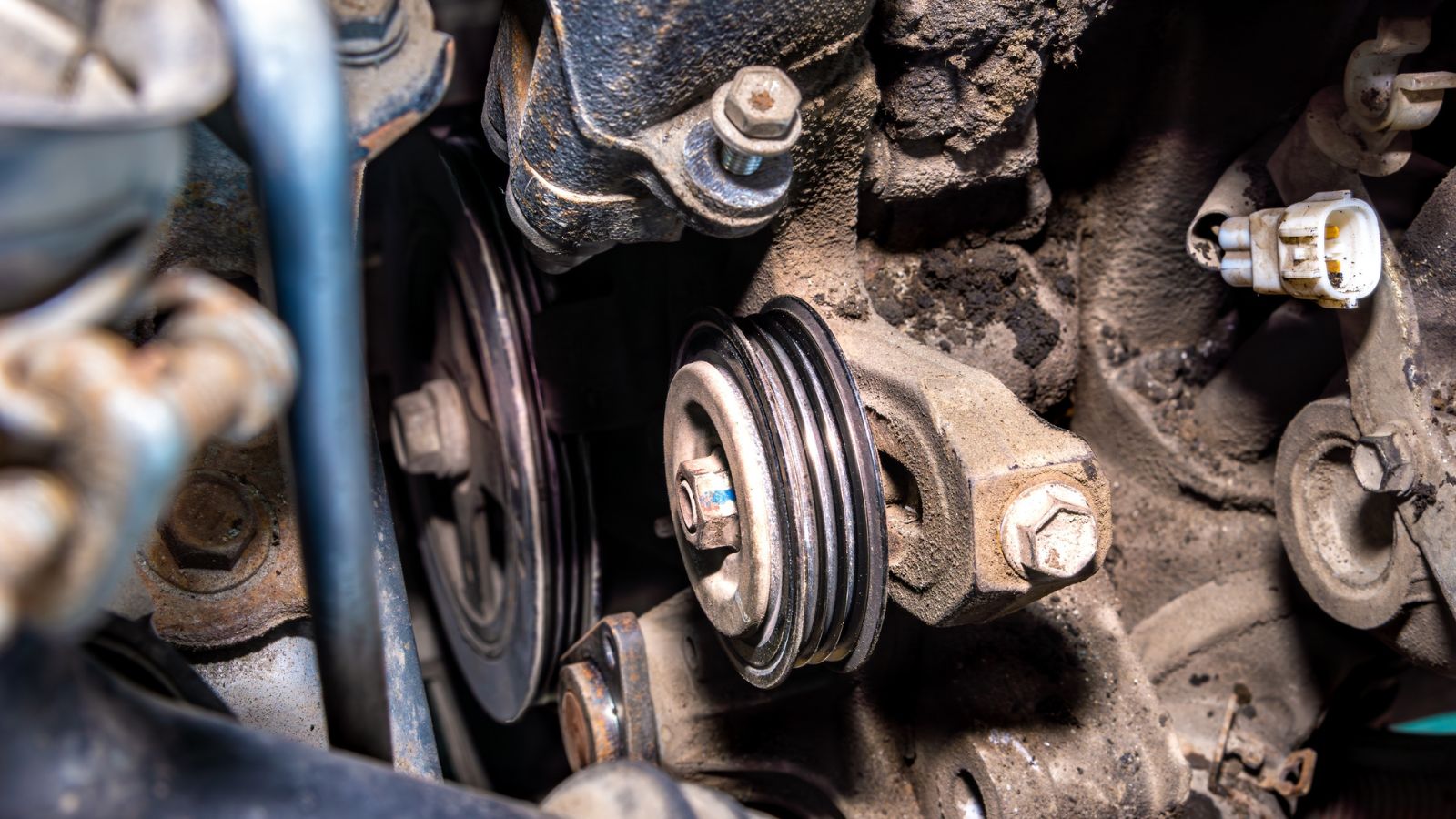
A serpentine belt often looks like an inexpensive strip of reinforced rubber, but on many engines it performs several important jobs at once. Depending on the vehicle, that single belt may help drive the alternator, water pump, air-conditioning compressor, or hydraulic power-steering pump. Cracks, fraying, glazing, unusual squealing, or loss of proper tension can therefore be much more important than the appearance of the belt suggests.
If the belt finally breaks, the repair may stop being about the belt itself. A vehicle can lose charging ability and eventually stall as electrical power disappears. On engines where the belt drives the coolant pump, coolant circulation can also be interrupted and the engine can overheat. Hydraulic steering assistance may disappear on certain designs as well. Modern vehicles vary considerably, including models with electric steering or electrically driven coolant pumps, but the principle remains: a worn accessory belt should be evaluated before it fails completely and disables several systems at once.
Worn Spark Plugs and an Engine Misfire
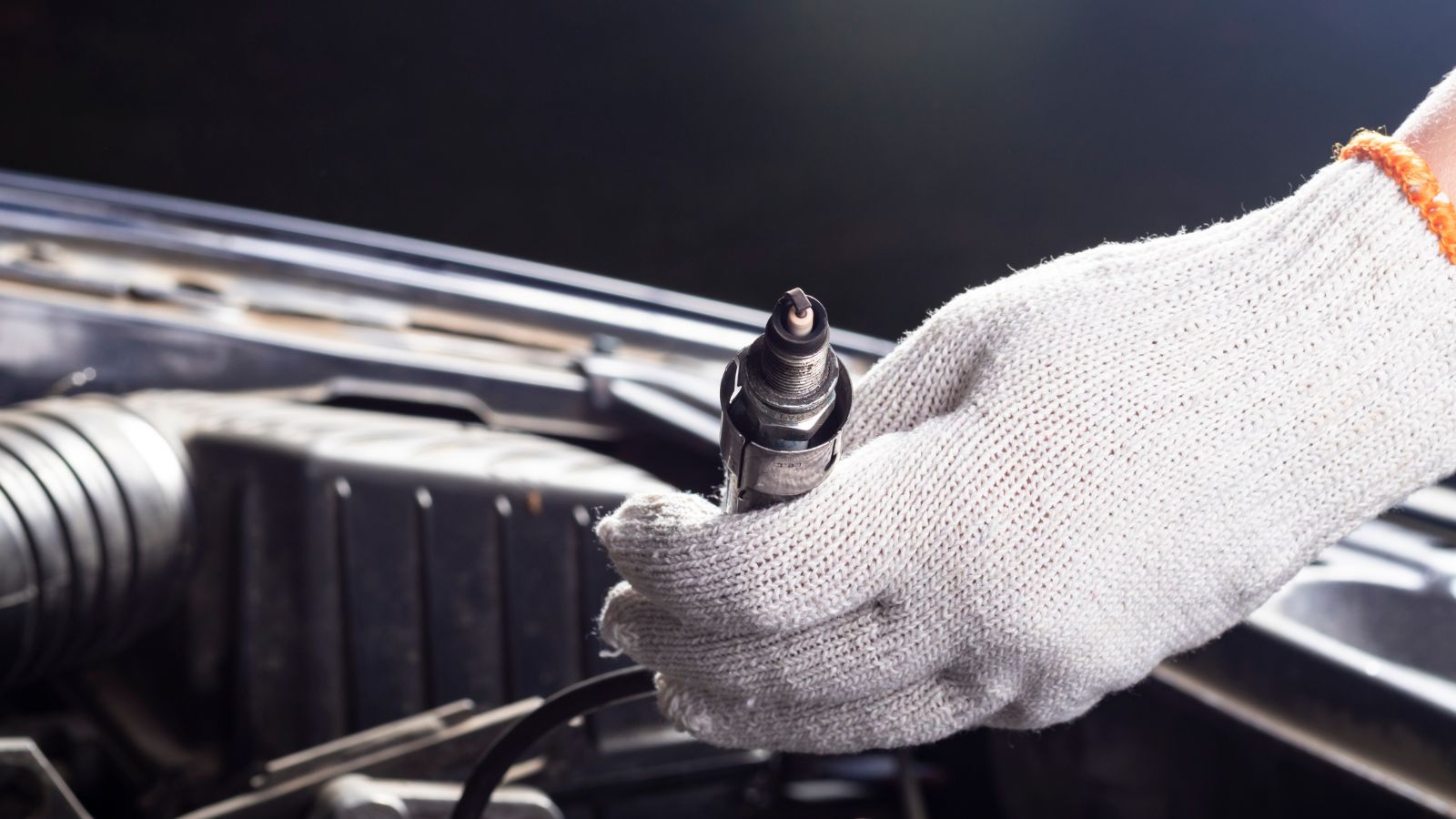
Spark plugs wear gradually, which is one reason their decline can be easy to overlook. An engine may first develop a slightly rough idle, hesitation, harder starting, reduced performance, or a check-engine warning. Those symptoms can have many causes, so plugs should not simply be replaced without diagnosis, but worn ignition components are one possible source of engine misfires.
A persistent misfire matters because fuel may not burn properly inside the affected cylinder. In serious cases, unburned fuel can reach the exhaust and overheat the catalytic converter. That is why a flashing check-engine light deserves much more attention than a steady light on a vehicle that otherwise runs normally. The catalytic converter is a substantially more complex component than a conventional spark plug, making the progression especially frustrating when an ignition problem was the original cause. Modern engines can also reduce power to protect themselves during serious faults. A rough-running engine is therefore better diagnosed early than driven until the warning begins flashing.
Poor Wheel Alignment

A vehicle that drifts slightly on a straight road or carries its steering wheel a few degrees off-centre can still feel completely usable. Those small changes may follow a pothole strike, curb impact, worn suspension component, or gradual movement away from factory alignment specifications. Unfortunately, the tires continue paying for every kilometre driven that way.
Incorrect toe or camber can concentrate wear on particular portions of the tread instead of allowing the tire to wear evenly. By the time the problem becomes visually obvious, a relatively new tire can have one badly worn shoulder despite having plenty of tread elsewhere. The owner then faces an alignment plus premature tire replacement rather than the alignment alone. Alignment problems can also reveal worn ball joints, shocks, or other suspension parts that must be repaired before meaningful adjustments are possible. A crooked steering wheel, persistent pull, or unusual edge wear is therefore useful early evidence rather than something to tolerate until the next set of tires.
A Slow Tire Leak
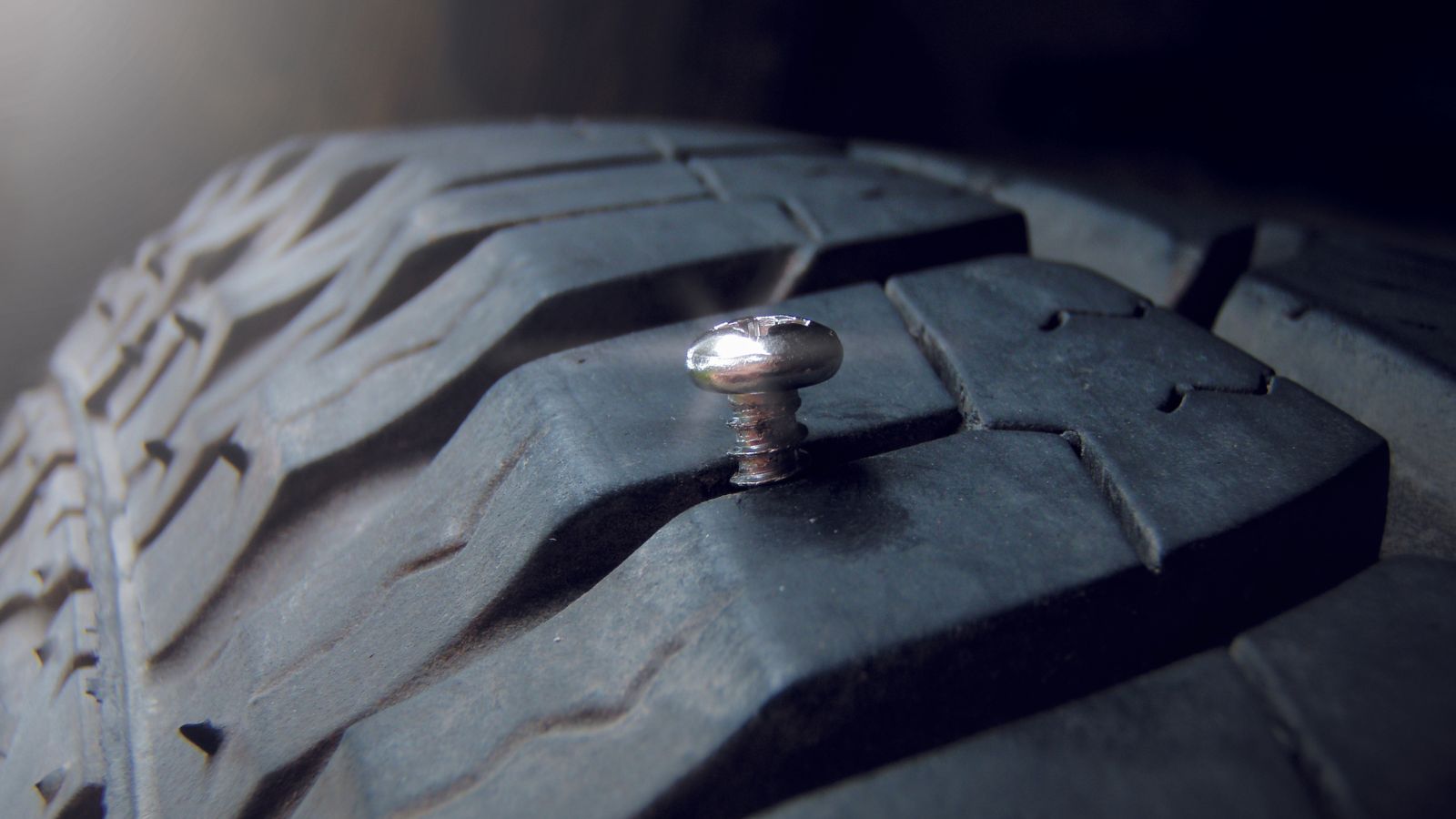
A nail or tiny puncture may release air so slowly that the tire looks normal for days. Repeatedly adding air can seem easier than visiting a tire shop, particularly when the leak is only a few pounds of pressure at a time. That strategy risks turning a potentially repairable tire problem into a tire that must be discarded.
Underinflation causes greater flexing and heat generation in the tire and can produce abnormal tread wear. Continued driving at seriously low pressure can also damage the sidewall and internal structure. Once that happens, restoring the correct pressure does not reverse the damage. Modern tire-pressure monitoring systems help warn drivers; U.S.-market passenger vehicles from model year 2008 onward are required to have TPMS, although the warning generally appears only after meaningful pressure loss has occurred. A puncture located in an approved repairable part of the tread may initially be straightforward. Driving until the tire is nearly flat can eliminate that inexpensive option and create a replacement bill instead.
A Windshield Chip

A tiny stone chip can look almost cosmetic when it first appears. In many cases, however, that is precisely when the damage is easiest to address. Auto-glass technicians can repair many small chips by injecting resin into the damaged area, preserving the windshield rather than removing it. Repairability depends on the size, depth, position, and type of damage.
Waiting introduces an obvious risk: the chip may become a crack. Temperature swings, vibration, road impacts, and stress around the glass can all contribute to propagation. Damage that reaches an edge is particularly troublesome because edge cracks have a greater tendency to spread and may no longer be suitable for a simple repair. Once replacement becomes necessary, the job can be substantially more involved on modern cars. Windshields may carry cameras or sensors used by lane-keeping, collision-warning, or automatic-braking systems, and some vehicles require calibration after glass replacement. The inexpensive resin repair that was possible earlier can consequently become a much larger service operation.
A Torn CV-Joint Boot
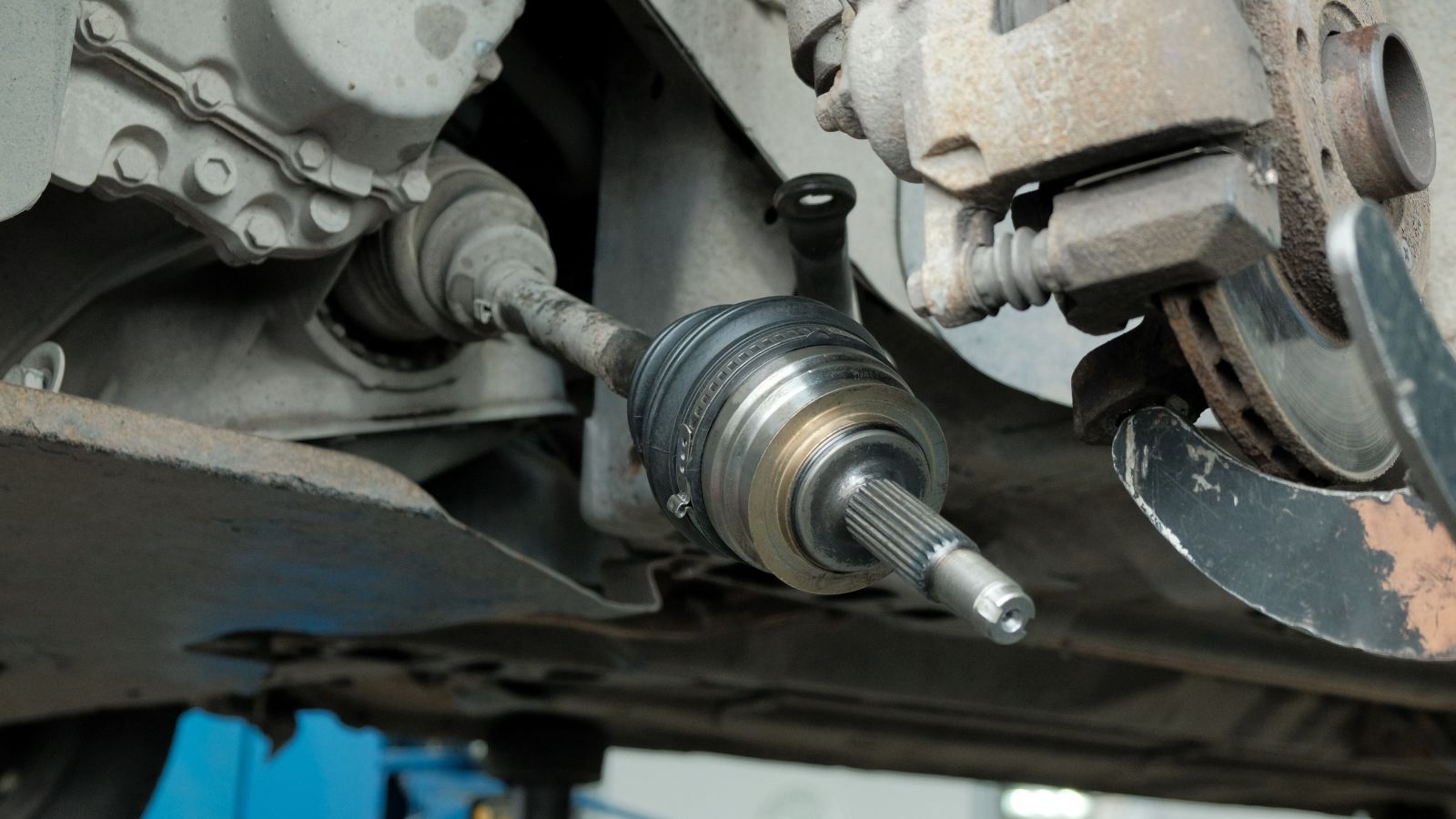
The rubber boot around a constant-velocity joint performs an unglamorous but critical job: it keeps lubricating grease inside while keeping water, grit, and road contamination outside. Boots live close to the road, flex constantly, and can eventually split. A newly torn boot may therefore look like a minor rubber-component problem rather than a drivetrain repair.
Ignoring the tear changes the situation. Grease can escape as the axle rotates, while dirt and moisture can enter the joint and begin accelerating wear. Eventually a driver may notice clicking during turns, vibration, or other symptoms associated with CV-joint deterioration. At that point, replacing only the boot may no longer make sense because the joint itself can already be damaged. Many repairs then involve replacing the complete CV axle assembly. Discovering grease sprayed around the inside of a wheel or a visible boot split during routine service is consequently valuable. Sealing and lubricating a healthy joint is one problem; replacing a worn axle because contamination was allowed inside is another.
A Power-Steering Fluid Leak
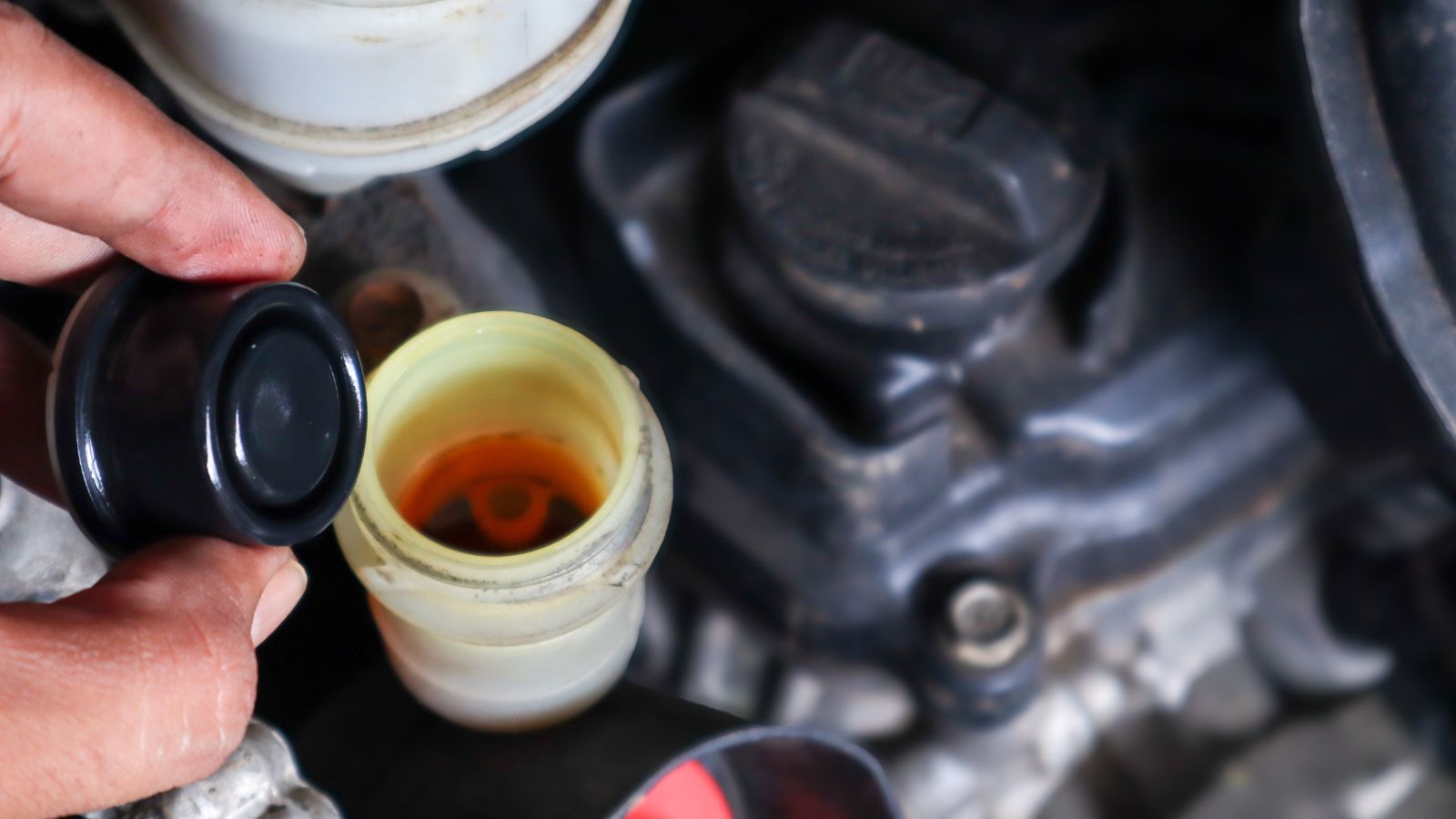
Many newer vehicles use electric power steering and have no hydraulic steering fluid at all, but millions of vehicles on the road still rely on hydraulic systems. In those vehicles, power-steering fluid transmits hydraulic force while also lubricating and cooling components inside the system. A small leak from a hose, fitting, seal, or pump therefore deserves more attention than its puddle size might suggest.
As the fluid level falls, steering can become heavy or inconsistent, particularly during parking manoeuvres. Whining or groaning while turning can also accompany a low-fluid condition. Continued operation without adequate fluid can overheat and damage the steering pump, converting what may have started as a hose or connection repair into replacement of a much more expensive component. Simply topping up the reservoir repeatedly does not repair the leak. It may temporarily restore assistance while allowing the underlying problem to worsen. Any unexplained drop in hydraulic steering fluid should prompt an inspection, especially when steering effort or sound has begun to change.
A Transmission-Fluid Leak
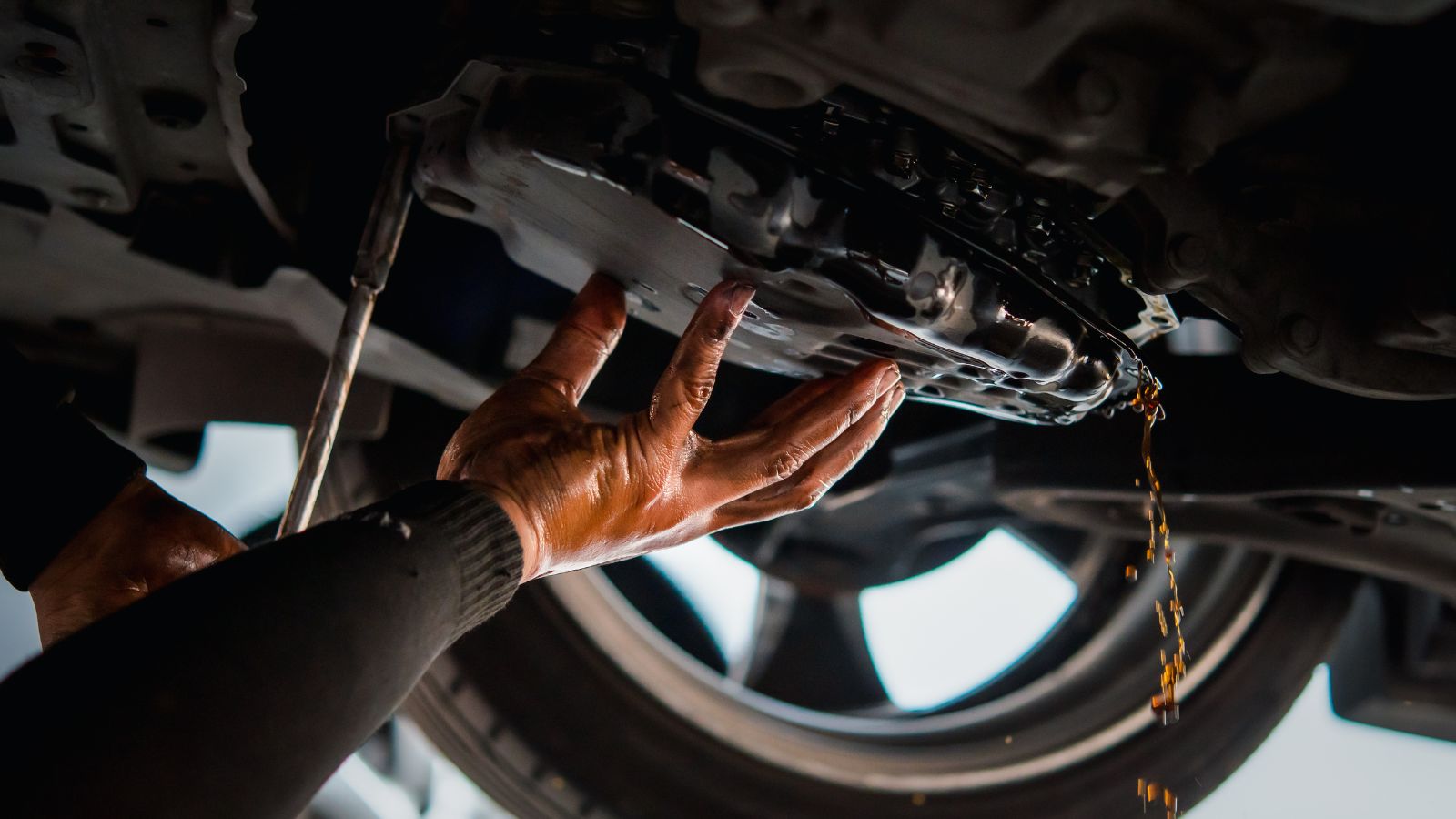
Automatic-transmission fluid performs several jobs simultaneously. It lubricates moving components, transfers hydraulic pressure, carries heat, and helps the transmission operate smoothly. That makes a small red or reddish-brown leak far more consequential than an ordinary stain beneath a vehicle.
Loss of fluid can eventually interfere with lubrication and hydraulic operation. Drivers may notice delayed engagement, rough or hesitant shifting, slipping, unusual noises, or other changes as the problem progresses. Low or degraded fluid can also contribute to excessive transmission heat, and continued operation in that condition can damage internal components. Modern sealed transmissions make matters less obvious because many no longer provide a traditional owner-accessible dipstick. A relatively minor leaking seal or pan gasket can therefore go unnoticed until drivability changes appear. Because an automatic transmission is among the most complex mechanical assemblies in a conventional vehicle, finding the source of a leak early is particularly valuable. Continually topping up a leak without fixing it leaves the expensive part of the problem unresolved.
A Sticking Thermostat
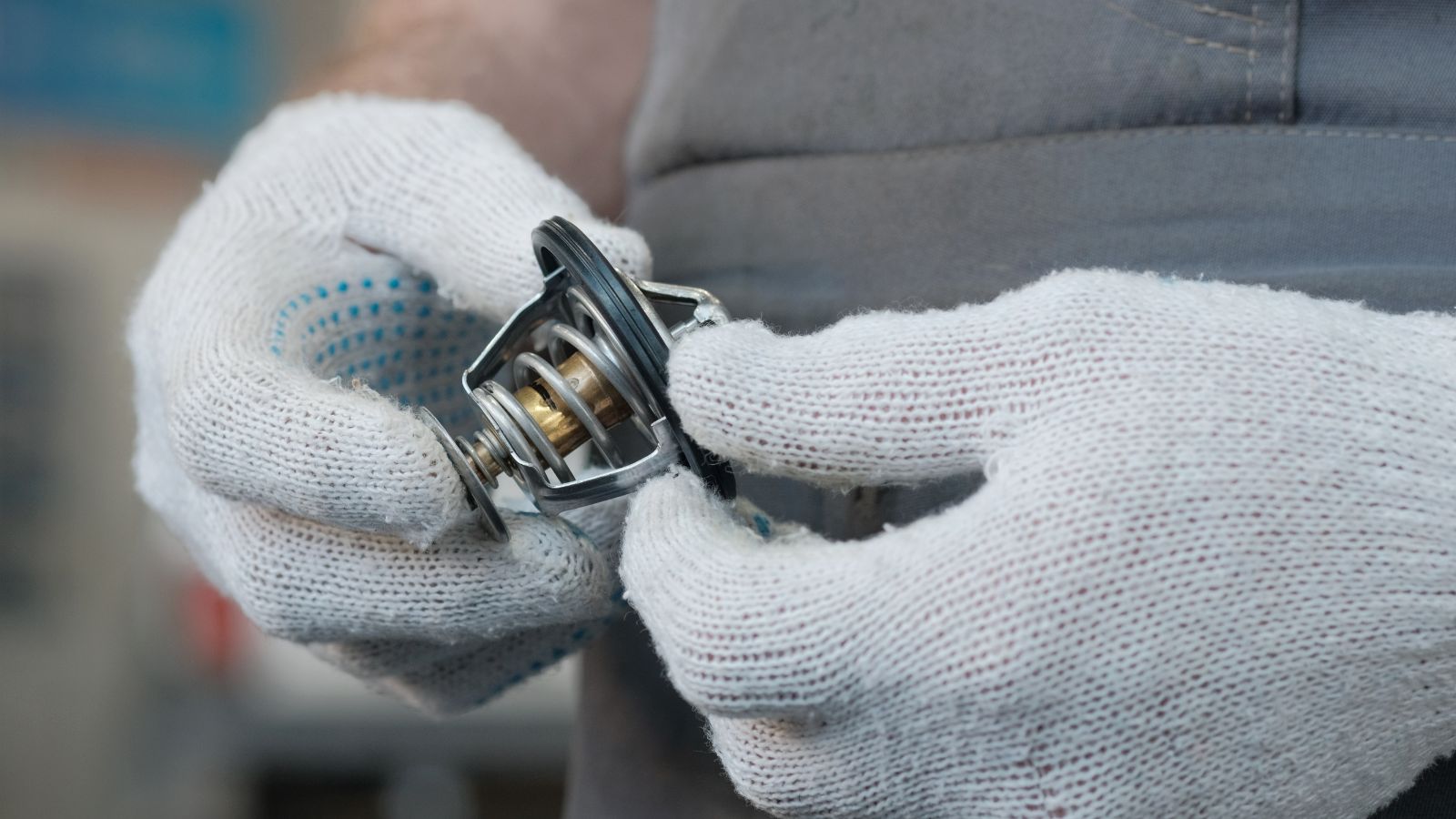
The engine thermostat is a relatively small valve with an outsized role. It regulates coolant flow according to temperature, helping the engine warm efficiently before opening further as cooling demand rises. A thermostat that sticks or stops operating correctly can disturb that balance even though the rest of the cooling system remains functional.
The dangerous failure mode is a thermostat that prevents adequate coolant circulation. Engine temperature can then climb rapidly, and continued driving while overheated can damage gaskets, warp components, or create other serious engine problems. A thermostat replacement is generally much less complicated than repairing damage caused by a major overheating episode. Warning signs vary: the temperature gauge may behave abnormally, cabin heat can change, or the engine may begin running hotter than expected. Since several other faults can create similar symptoms, diagnosis is still important. The key is not to normalize an abnormal temperature reading simply because the car has not yet produced steam. Cooling-system problems are usually cheaper before the gauge reaches the red zone.
A Cracked Radiator or Heater Hose
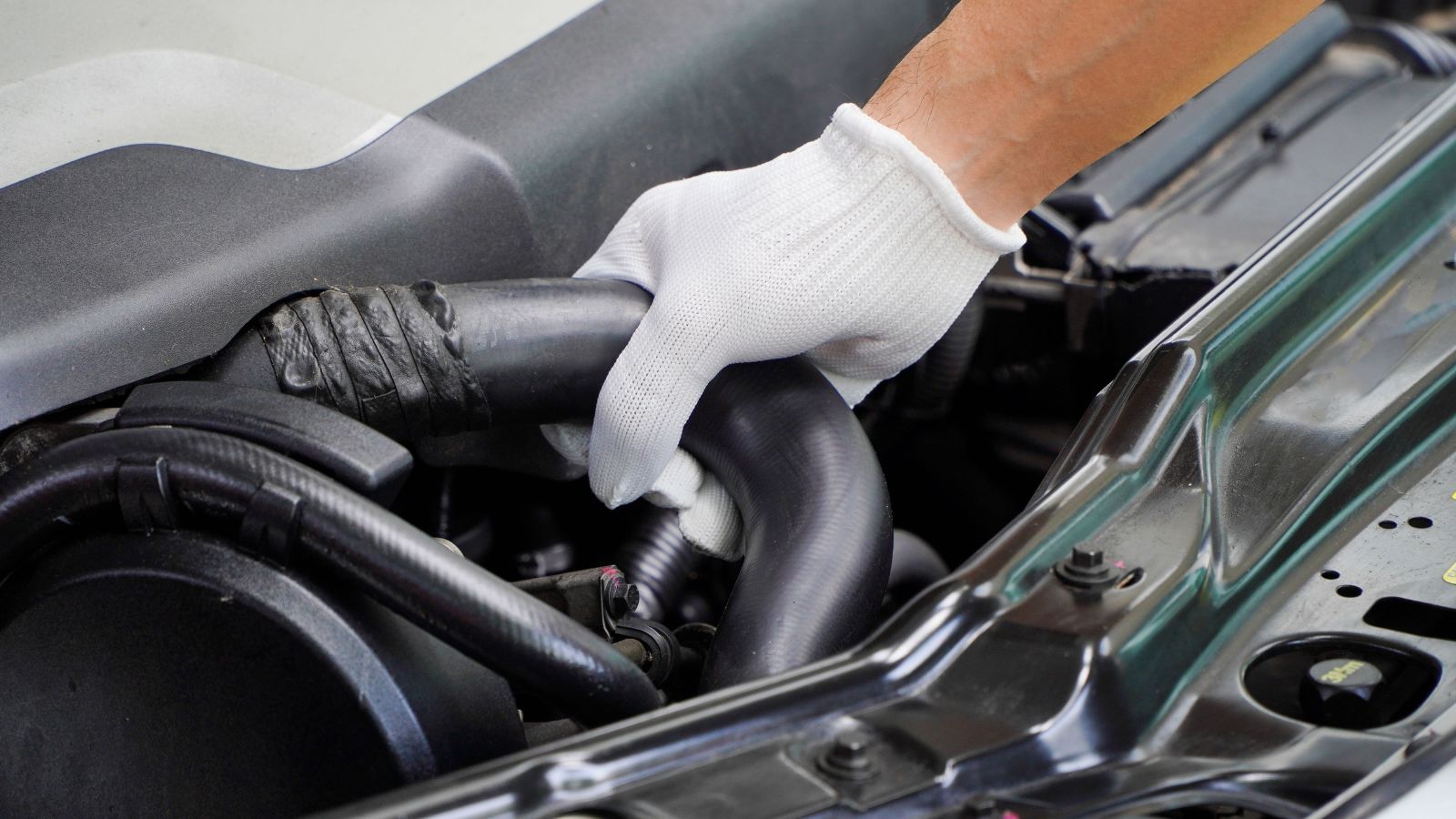
Cooling-system hoses spend their lives dealing with heat, pressure, vibration, and chemical exposure. Over time, rubber can become hard, swollen, cracked, or otherwise weakened. A hose may initially seep only enough coolant to create a faint smell or a small damp patch around a connection, allowing the vehicle to continue operating normally.
A weakened hose can eventually split or rupture, releasing coolant far faster than the original seep. The engine can then overheat rapidly because there is no longer enough fluid circulating through the system. AAA specifically advises inspecting belts and hoses for cracking, bulges, leaks, stiffness, and other deterioration because even small defects can escalate. That makes hose replacement a classic example of preventive spending. The part itself may be straightforward compared with the cost of engine work after severe overheating. Any hose replacement should also use the correct part and clamps for the particular vehicle, because cooling systems operate under pressure and improvising with unsuitable materials can simply move the failure to another day.
A Noisy Wheel Bearing
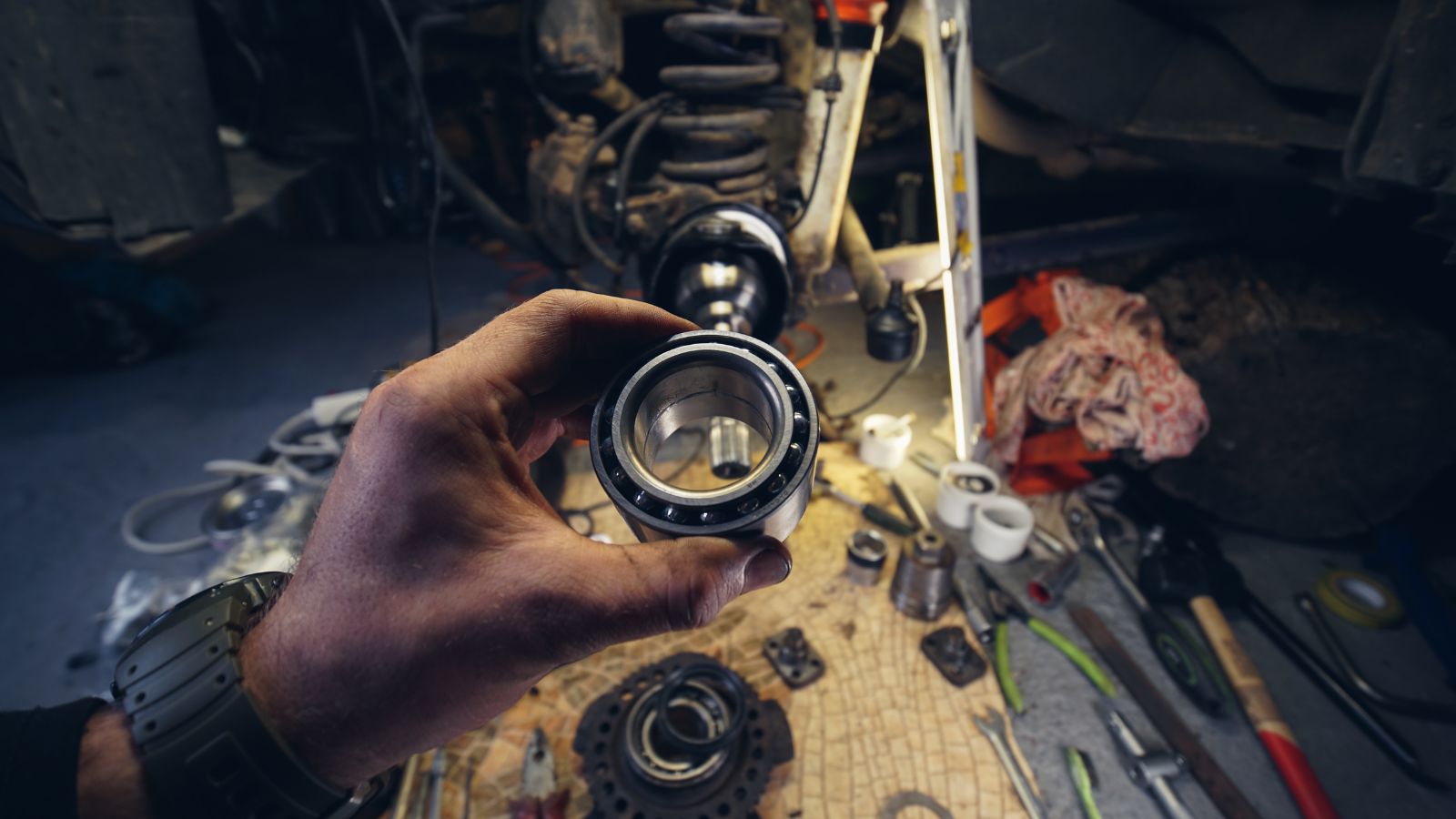
Wheel-bearing problems often announce themselves gradually. A faint hum can become a growl that rises with vehicle speed or changes when the steering wheel is turned. Because tire noise can sound similar, drivers sometimes postpone diagnosis until the sound becomes unmistakable. By then, the bearing may have substantially more play or internal damage.
Severe bearing looseness can affect more than ride comfort. It can contribute to wheel vibration and, in some cases, excessive brake-rotor runout that produces abnormal pad or rotor wear. Many modern hub assemblies also incorporate wheel-speed sensors used by anti-lock braking and traction-control systems, so hub deterioration can potentially produce warning lights or additional diagnostic work. Advanced failure can become a genuine safety problem as the wheel becomes less securely supported. A minor hum should not automatically be blamed on a bearing, since tires and suspension can create similar noises. But identifying the source while the symptom is still subtle can prevent a failing wheel-end component from involving brakes, sensors, or additional hardware.
A Loose Ball Joint
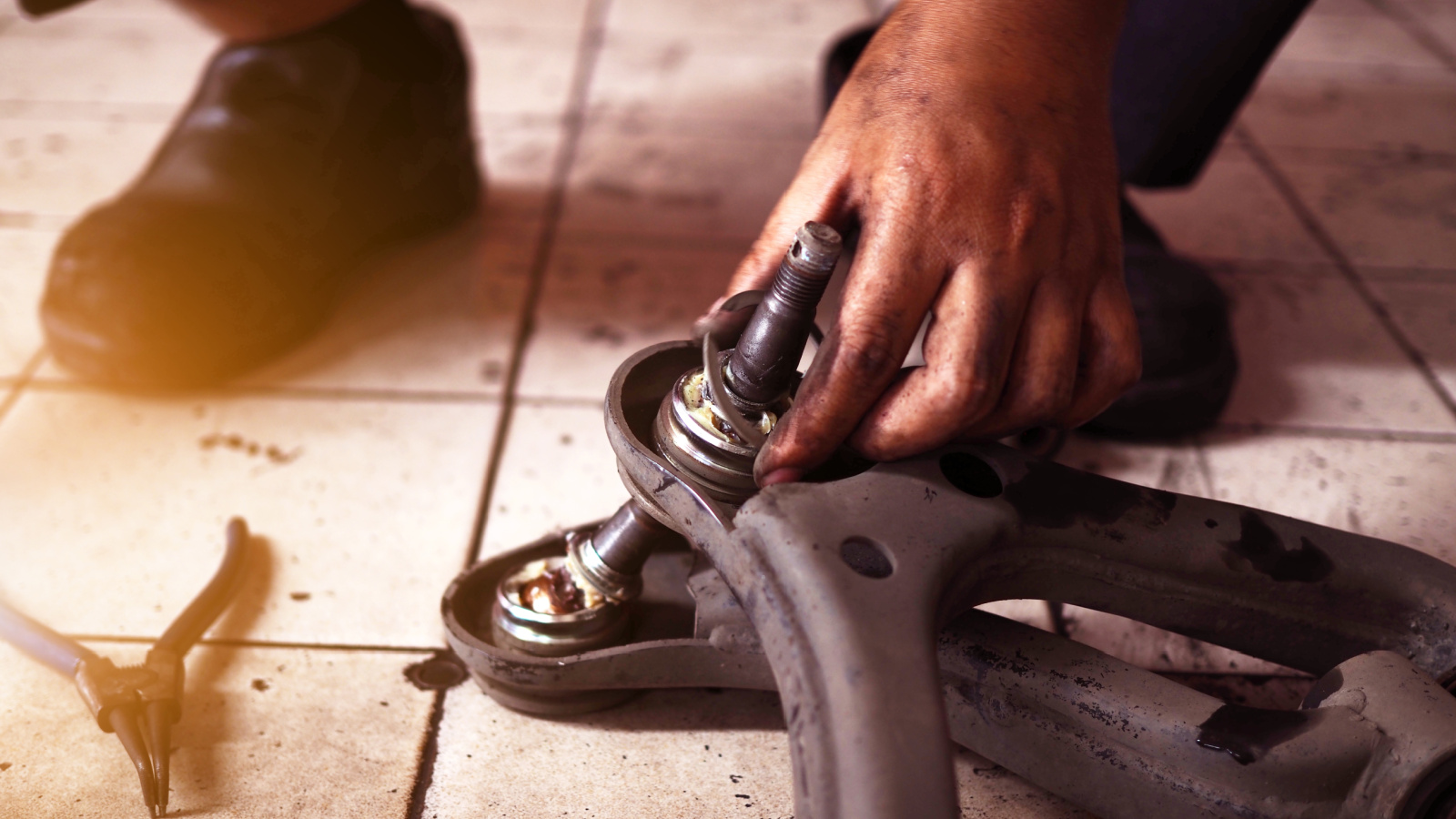
Ball joints allow steering and suspension components to pivot while holding the wheel assembly in the correct relationship to the vehicle. As the joint wears, small amounts of looseness can develop. Early symptoms may be modest: a clunk over bumps, slightly vague steering, abnormal vibration, or unusual tire wear.
The expense grows because a loose joint no longer holds alignment as precisely as intended. Tires can begin wearing unevenly, meaning the owner may need both suspension work and tires by the time the original joint is finally replaced. Severe ball-joint wear raises a much larger concern. If the stud separates from its housing, control of the affected wheel can be lost. Protective boots matter here too; once a boot fails, water and road debris can enter while lubricant escapes, accelerating wear. The important point is that suspension looseness is progressive. A technician who catches excess play during an inspection can replace the failing joint before it damages expensive tires or reaches the stage where separation becomes a safety risk.
A Worn Tie-Rod End
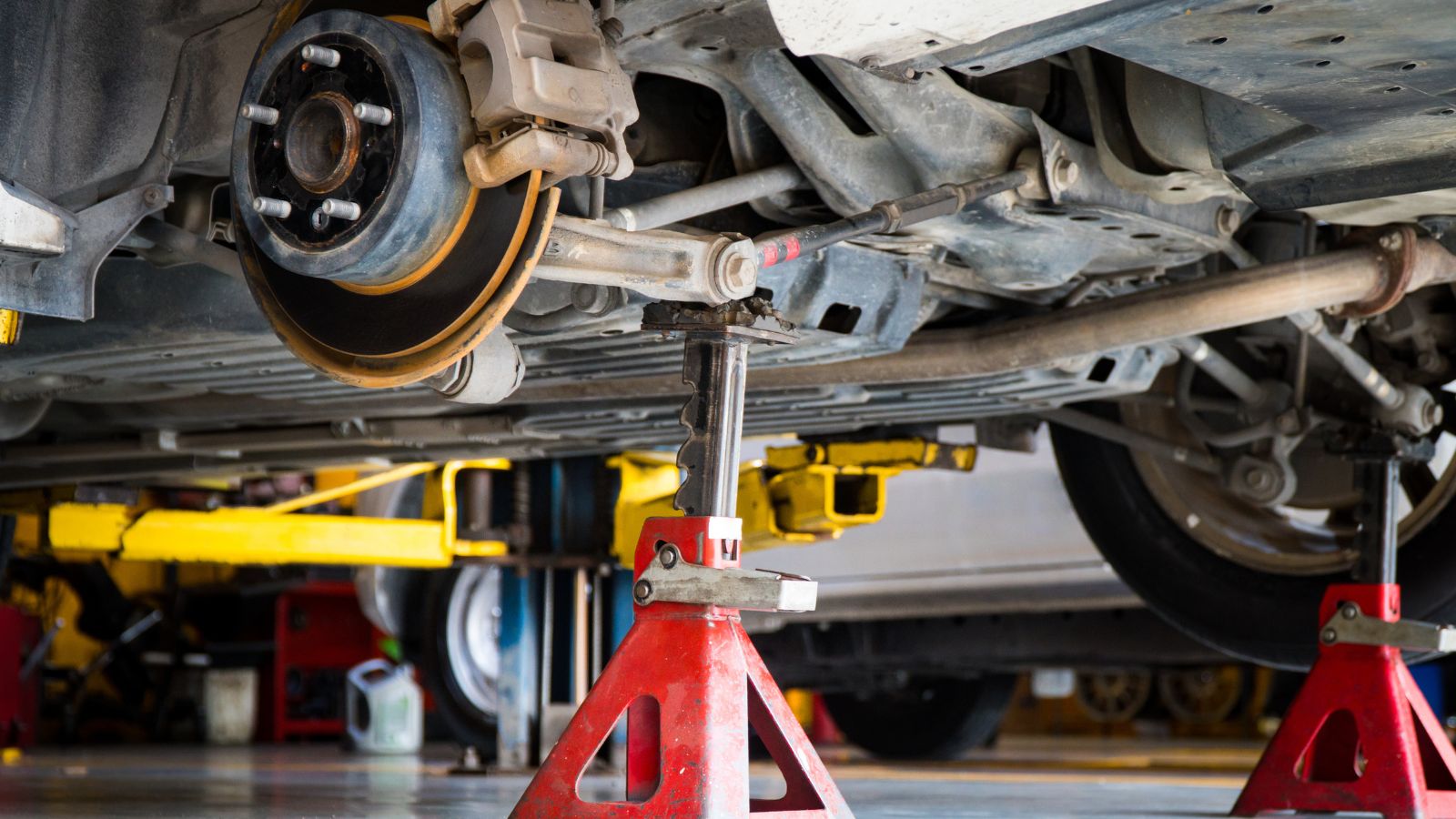
Tie rods connect steering movement to the wheels, which means even modest wear can show up in places a driver might not immediately associate with steering hardware. The vehicle may wander, the steering wheel may feel loose, the front end may fall out of alignment, or one side of a tire may begin disappearing faster than the other.
Ignoring those clues creates two bills instead of one. The worn tie-rod end still has to be replaced, but prolonged misalignment may also consume tires that otherwise had thousands of kilometres of usable tread remaining. After replacement, alignment is commonly necessary because changing steering-linkage components affects wheel position. More importantly, tie rods are safety-critical. Industry technical guidance notes that the consequences of failure can range from premature tire wear to loss of vehicle control. A faint knock while turning or a steering wheel that suddenly seems less precise should therefore earn an inspection. Discovering the cause before tires are ruined and steering integrity deteriorates is considerably preferable to waiting for unmistakable failure.
Leaking Shocks or Struts
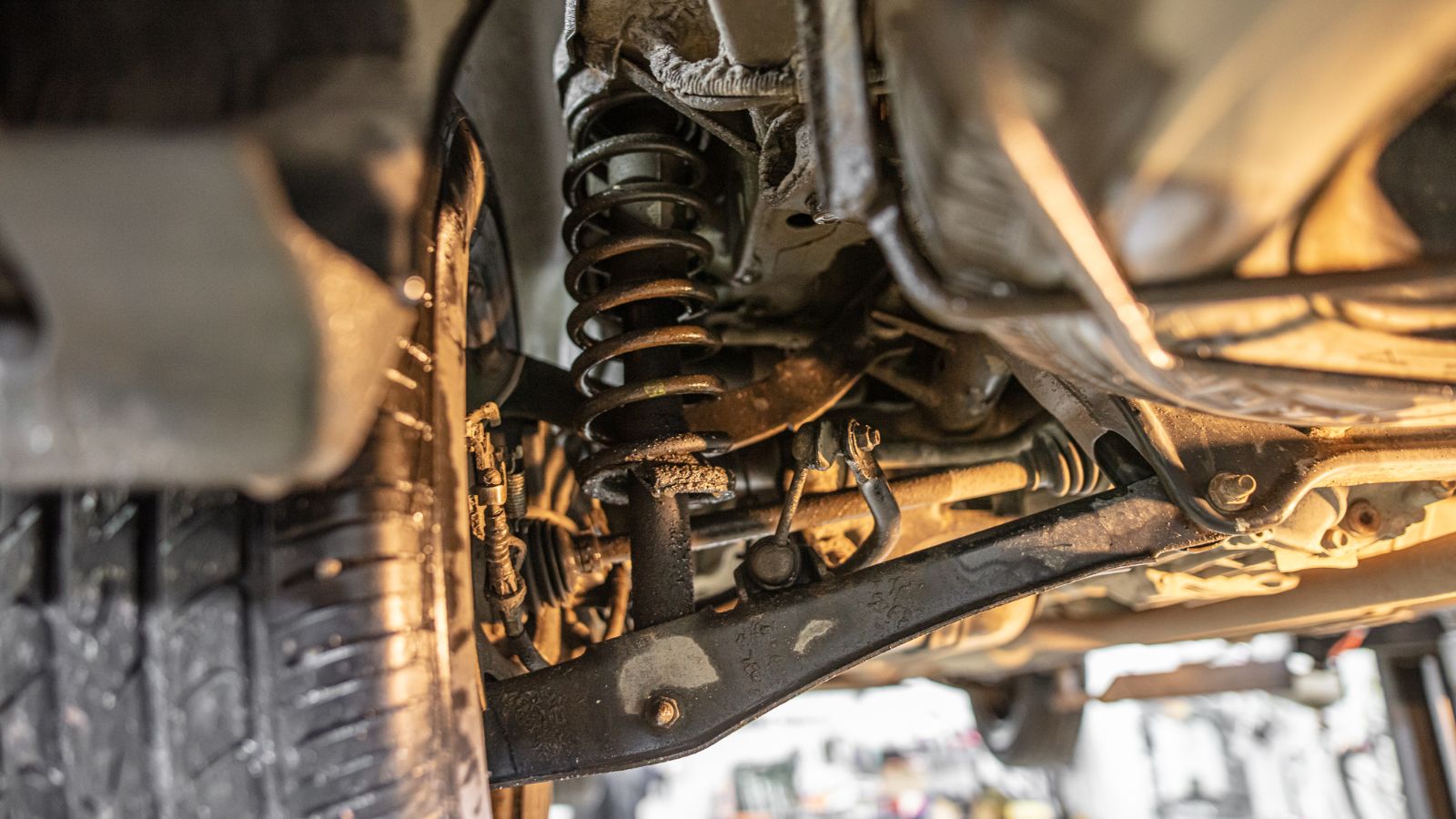
Shocks and struts do more than make a car comfortable. They help control wheel movement so the tires remain in consistent contact with the road. When these components wear, the change can be gradual enough that an owner adapts to the softer, bouncier ride without realizing how much control has been lost.
One expensive clue appears in the tires. Worn dampers can allow a wheel to bounce repeatedly instead of remaining firmly controlled, producing scalloped or cupped wear around the tread. Once a tire develops serious irregular wear, replacing the shock or strut does not restore the missing rubber; the tire may also need replacement. Excessive bouncing, unusual vibration, poor body control, fluid leakage from the damper, or rapidly developing tire cupping should therefore be investigated together. Suspension repairs can already involve meaningful labour, but waiting until a set of otherwise serviceable tires has been damaged makes the visit considerably harder on the budget. It also means the vehicle has spent additional time with compromised handling.
A Faulty Radiator Cap
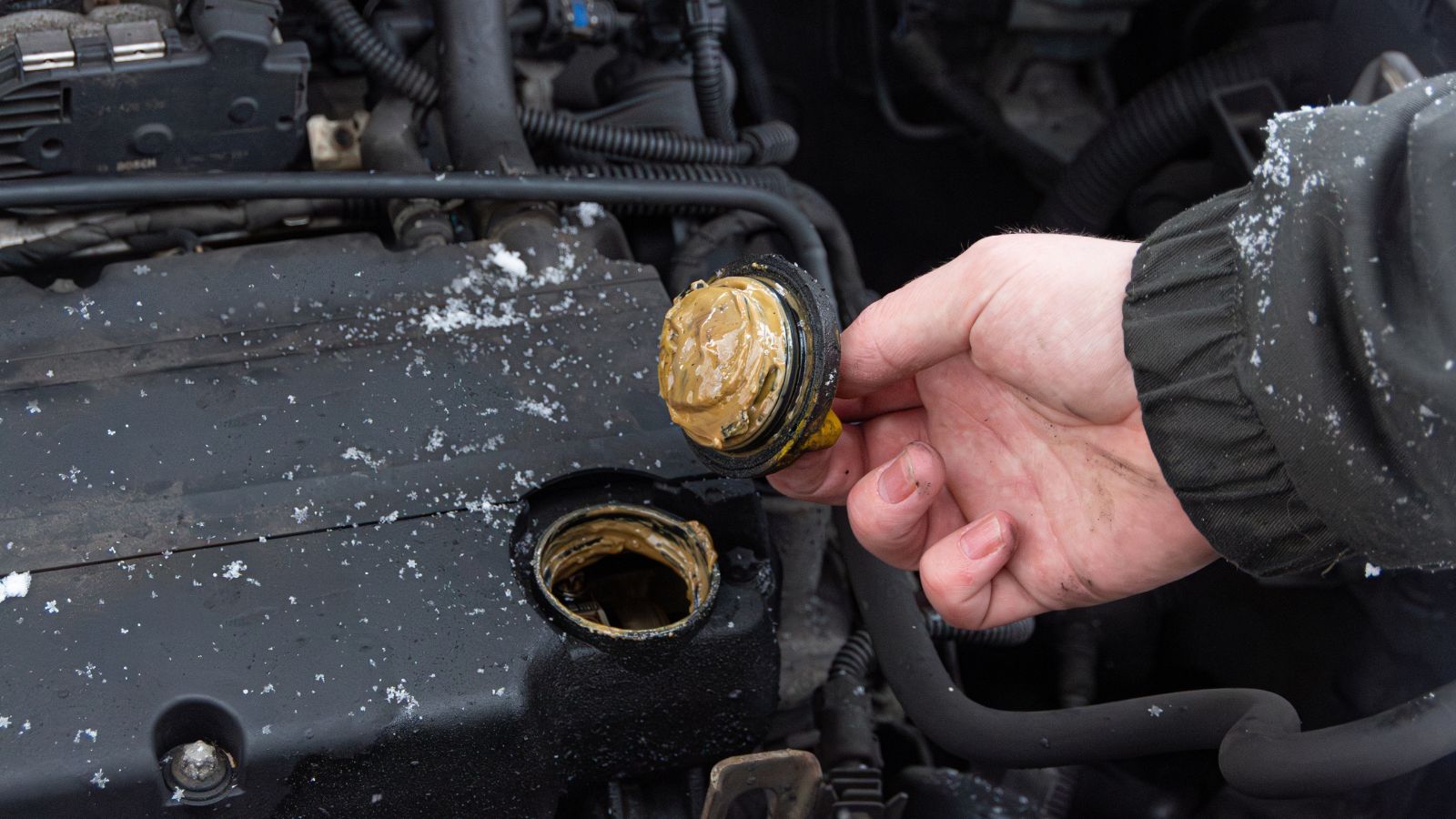
A radiator or cooling-system pressure cap is small enough to fit in one hand, making it easy to underestimate. Its job is more sophisticated than merely covering an opening. On vehicles that use one, the cap is part of the pressurized cooling system and helps control coolant movement between the radiator and recovery reservoir.
A faulty cap can contribute to coolant loss or abnormal cooling-system operation. AAA maintenance guidance notes that when the radiator itself is low while coolant remains in the recovery reservoir, a defective cap is one possible cause worth testing. AAA also identifies cracked caps among problems that can contribute to engine overheating. That makes the cap an unusually clear example of an inexpensive component protecting very expensive machinery. It should never be removed while the cooling system is hot, because pressurized coolant can cause severe burns. If coolant levels behave strangely, the reservoir repeatedly overflows, or unexplained overheating appears, testing the cap can be far cheaper than assuming the problem is harmless until the engine overheats severely.
Corroded Battery Terminals
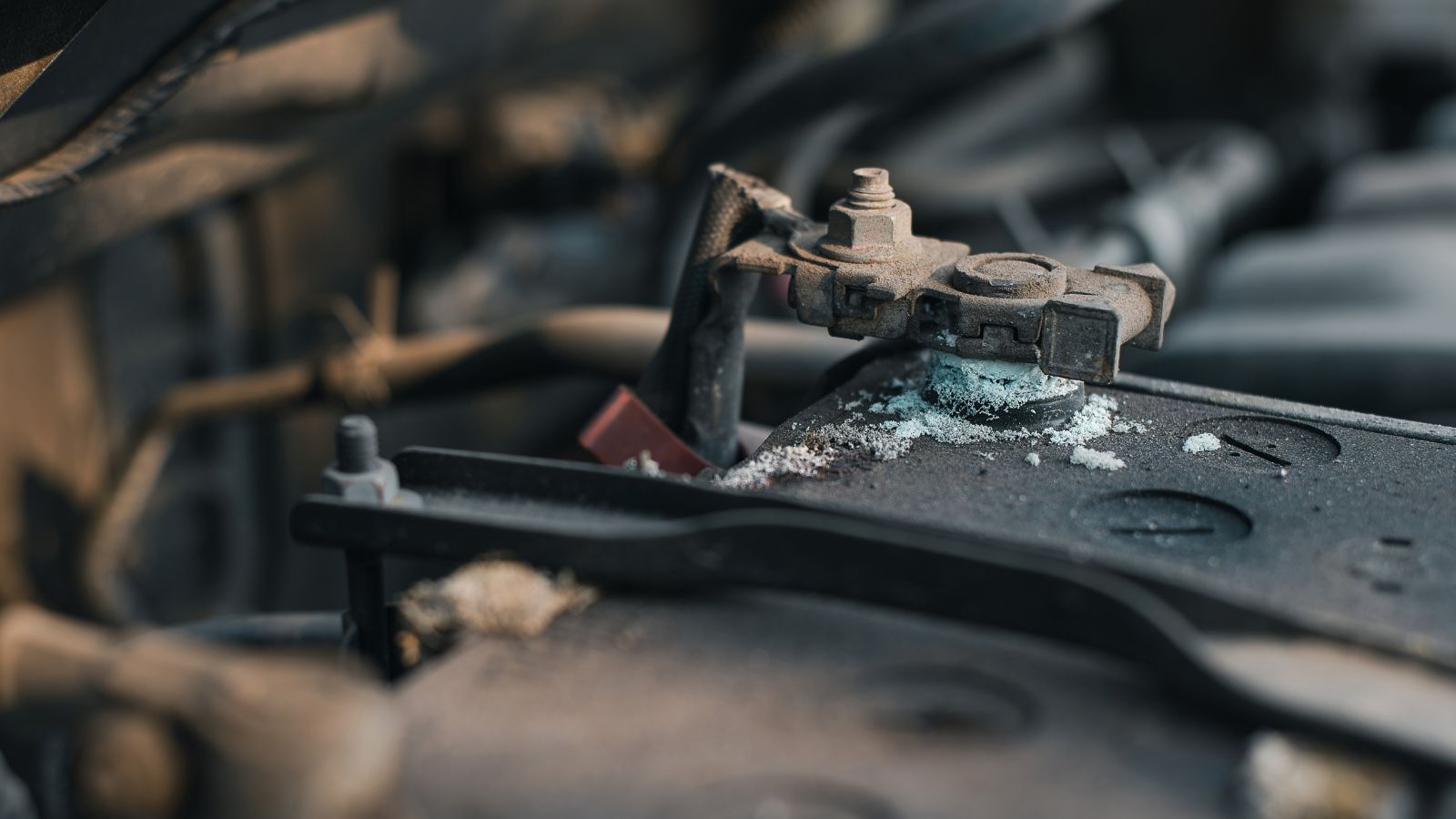
Powdery corrosion around a battery terminal can look like a cosmetic problem, yet the electrical connection at those terminals must carry substantial current when the starter operates. Corrosion, dirt, or a loose clamp can add electrical resistance and contribute to slow cranking or a complete no-start condition.
The inexpensive response may be as simple as properly cleaning and securing the terminals after confirming that the battery and charging system are otherwise healthy. The expensive response comes when diagnosis is skipped. A driver can end up stranded, require roadside assistance, or begin replacing batteries and other starting-system components without addressing the poor connection that triggered the symptoms. AAA recommends inspecting battery connections and notes that corroded terminals can create excessive resistance. Battery problems also become more likely with age; AAA guidance commonly recommends more frequent testing once a conventional 12-volt battery reaches roughly its third year. When starting becomes sluggish, checking the simple electrical connections first can prevent both inconvenience and unnecessary parts replacement.
A Brake-Fluid Leak
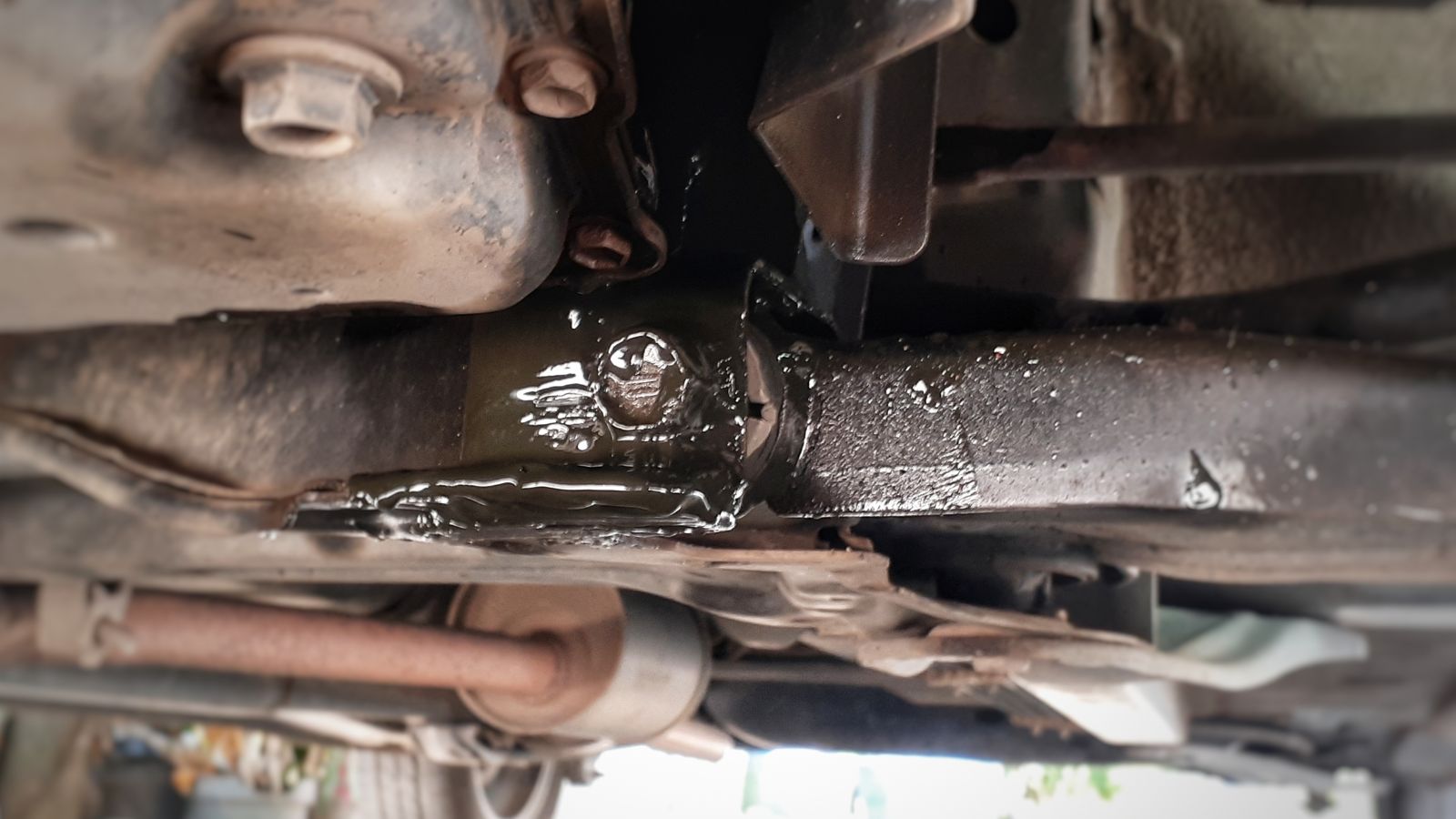
A damp brake hose, small hydraulic seep, or unexplained drop in the brake-fluid reservoir should never be treated like an ordinary fluid leak. Hydraulic pressure is what allows force at the brake pedal to operate calipers or wheel cylinders at the wheels. Losing fluid can reduce that pressure and weaken braking performance.
A leak may begin at a hose, line, caliper, wheel cylinder, or another connection, but continued driving can allow the system to lose enough fluid for the pedal to become soft or travel abnormally far. At that point the concern is no longer merely the price of a seal or hose. The vehicle may need a tow, additional hydraulic work, bleeding, and inspection of other brake components, while continued driving introduces an obvious crash risk. Low brake fluid can also indicate a different serious brake-system problem, so simply filling the reservoir is not an adequate repair. A small hydraulic leak is one of those cases where the earliest repair may also be the cheapest and safest opportunity available.
A Small A/C Refrigerant Leak
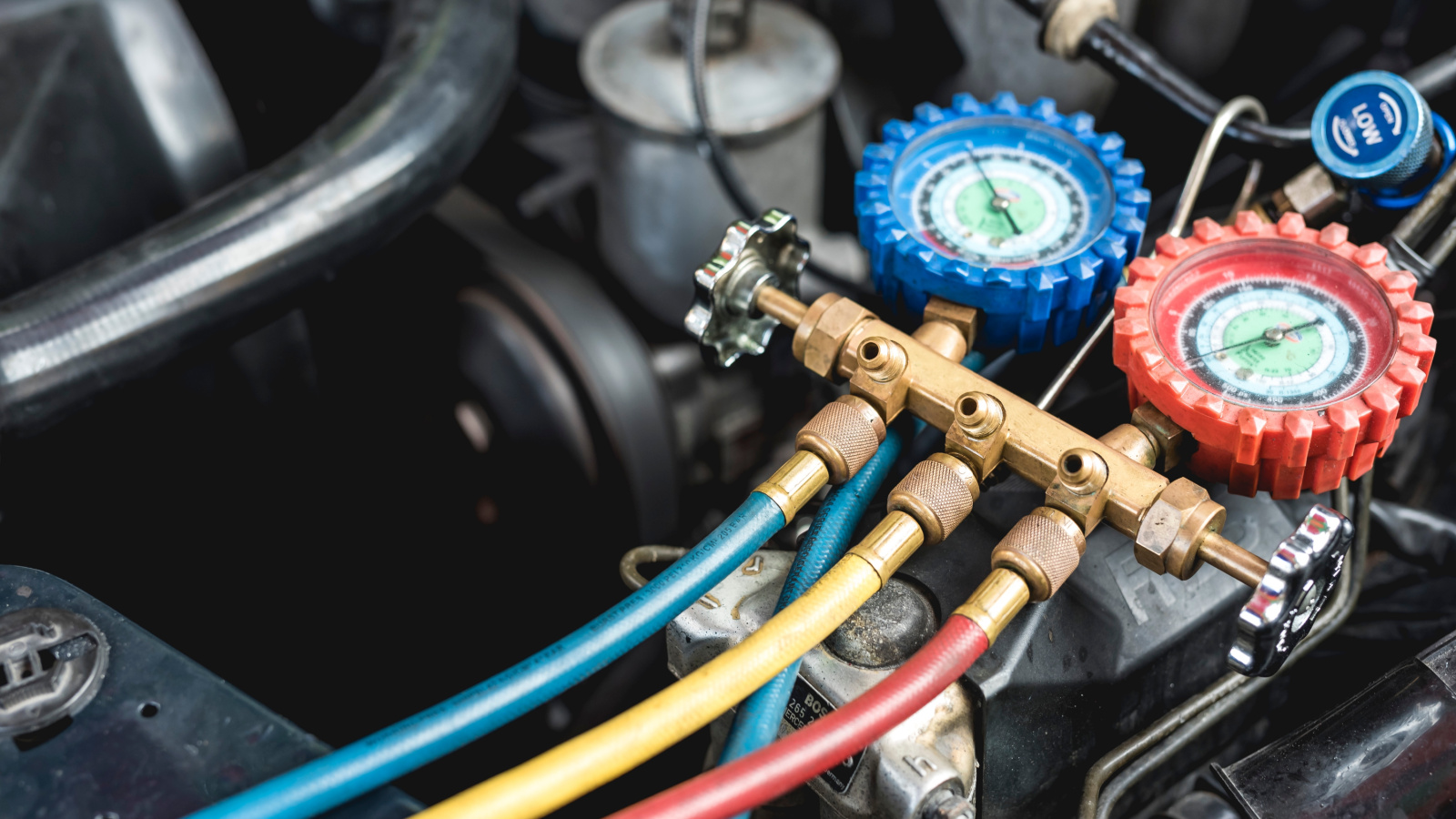
Air conditioning that is only slightly less cold than last summer may seem like a comfort issue that can wait. Yet automotive A/C systems are closed systems, and a vehicle that repeatedly needs refrigerant can have a leak at a hose, seal, O-ring, condenser, or service port. Simply recharging the system without finding the cause can turn maintenance into a recurring expense.
Low refrigerant can do more than reduce cabin cooling. Refrigerant movement also helps circulate compressor oil, and reduced oil circulation can increase wear inside the system. AAA has warned that allowing an A/C problem to continue can make the eventual repair more expensive. The risk is especially relevant because compressor replacement is far more involved than repairing some minor leaks. Overcharging is not a good shortcut either; excessive system pressure can also damage the compressor and other components. Weak cooling, unusual compressor noise, or a system that loses its charge soon after service therefore deserves leak diagnosis rather than another can of refrigerant and another season of hoping the problem stays small.
19 Used Cars Canadians Should Avoid in 2026 (Based on Owner Complaints)

Buying a used car in Canada can feel safe until repair bills start stacking up. Owner complaints tell a different story than glossy listings. Transmission failures, electrical problems, and weak winter reliability show up again and again in consumer reports. Many of these issues appear after warranties expire, when owners least expect them. Some vehicles look affordable upfront, but become expensive to keep on the road. Others struggle in cold weather, urban driving, or long highway commutes. Here are 19 used cars Canadians should avoid in 2026 (based on owner complaints).
19 Used Cars Canadians Should Avoid in 2026 (Based on Owner Complaints)