
























The legal battle over who gets to shape America’s vehicle emissions rules is moving back to an appeals court. The Trump administration has appealed a federal judge’s decision blocking the Environmental Protection Agency from treating several long-standing California Clean Air Act waivers as federal “rules” that could be sent to Congress for fast-track repeal.
The dispute reaches well beyond one court filing. Washington has spent much of the past two years dismantling or reconsidering federal vehicle requirements, while California continues defending its unusually broad authority to impose tougher standards of its own. For automakers, regulators and drivers, the result is another period in which the rules governing the same vehicles can depend heavily on which legal battle is ultimately decided first.
The Administration Is Challenging a September Court Loss
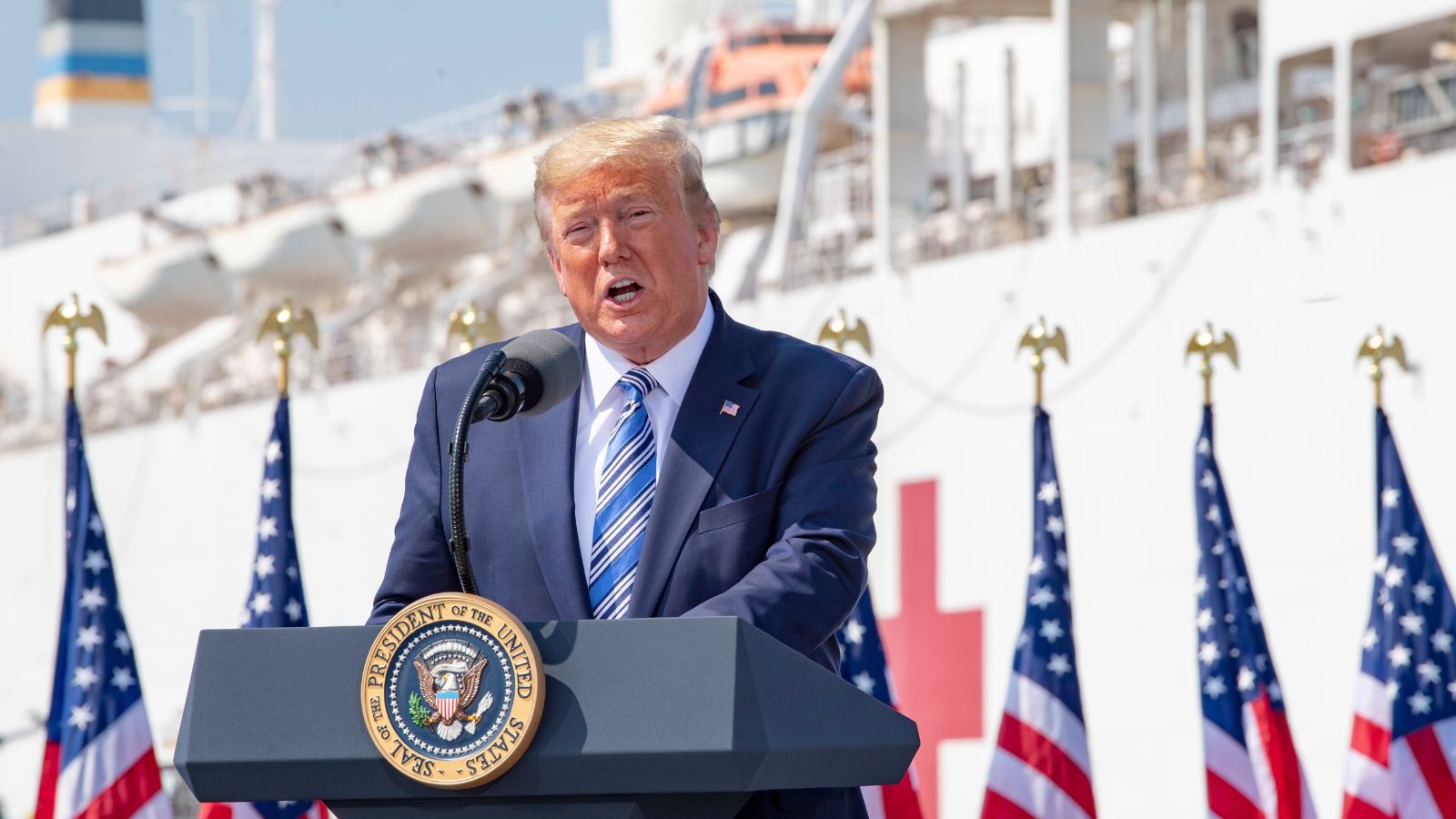
President Donald Trump’s administration filed its appeal on September 15, challenging a preliminary injunction issued by U.S. District Judge Beryl Howell less than two weeks earlier. Howell had blocked EPA from continuing to treat four California Clean Air Act waivers as rules subject to the Congressional Review Act, or CRA. Her September 2 order also required the agency to take steps within its control to restore conditions that existed before EPA announced the reclassification in June.
EPA had transmitted the four waiver decisions to Congress on June 12, saying previous administrations should have treated them as rules requiring congressional review. California sued ten days later. The state argued that a waiver is an adjudicatory decision granting California permission to enforce its own standards, not a federal regulation that Congress can erase through the CRA. Howell concluded California was likely to succeed on its claim that EPA’s abrupt reclassification was unlawful and inadequately explained. The appeal now puts that conclusion before a higher court.
California’s Special Authority Dates Back Decades
California occupies a position in U.S. vehicle regulation that no other state has. The Clean Air Act generally prevents individual states from establishing their own emissions standards for new motor vehicles. California, however, may request a federal waiver because it had vehicle-emissions controls in place before the federal system was established. EPA must grant such a waiver unless one of several statutory conditions for denial is met.
That framework has allowed two regulatory systems to coexist for decades: the federal standards and, when supported by an EPA waiver, California’s tougher requirements. The significance extends beyond California itself. Section 177 of the Clean Air Act allows other qualifying states to adopt standards identical to California’s once a waiver has been granted. EPA says those states do not need separate federal approval to make that choice. That means a decision involving one California waiver can influence vehicle planning across a much larger part of the American market, which helps explain why manufacturers and national policymakers pay such close attention to cases that can appear highly technical.
The Fight Turns on What Counts as a “Rule”
The central legal argument sounds narrow but carries major consequences. The Congressional Review Act gives Congress a streamlined process for overturning federal agency rules. EPA’s current position is that California waiver decisions qualify as rules and therefore should be transmitted to Congress. Once transmitted, lawmakers can potentially use the CRA’s expedited procedures to disapprove them without going through the longer process normally associated with rewriting environmental law.
California points to a different interpretation, one previously embraced by the Government Accountability Office. GAO concluded in 2023 that a California Clean Air Act waiver decision was an adjudicatory order rather than a rule. In March 2025, GAO said the same reasoning applied to three additional California waiver decisions that EPA had submitted to Congress. GAO noted that EPA itself had previously described some of those actions as outside the CRA. Howell relied heavily on that history when finding that EPA had not adequately justified its 2026 change in classification. The appeals court will now confront that statutory and administrative-law dispute.
The Four Waivers Reach Back Well Before the Latest EV Fight
The four waivers involved in the September 2 injunction should not be confused with California’s newer Advanced Clean Cars II program. EPA’s June 2026 action reached into an older layer of California emissions policy. The agency identified California’s greenhouse-gas standards for 2009 and later vehicles, the Advanced Clean Cars I program, the Biden administration’s 2022 reinstatement of parts of an earlier waiver, and amendments covering small off-road engines.
Those decisions span several presidential administrations and illustrate how durable California’s waiver structure has historically been. Advanced Clean Cars I combined requirements involving greenhouse gases, conventional pollutants and zero-emission vehicles, while the separate small-engine provisions affect equipment such as lawn and garden machinery. EPA argues that these waiver decisions can have broader effects because California standards may also be adopted by other states. California counters that this wider impact does not transform the waiver itself into a federal rule. That difference—permission granted to one state versus regulation imposed by a federal agency—is at the heart of the case.
A Second Injunction Has Already Expanded the Dispute
The litigation continued moving even before the federal government filed its appeal. After EPA reclassified two more California waivers in July—this time involving emissions requirements for ocean-going vessels and commercial harbor craft—California amended its case and returned to Howell seeking additional relief. On September 12, the judge ordered EPA to reverse those reclassifications as well and barred the agency from giving them legal effect.
One of the marine waivers concerns California requirements for ships calling at ports and terminals to use approved emissions-control strategies. The other involves commercial harbor craft, including certain reporting and emissions provisions for smaller vessels. Their inclusion shows that the controversy is broader than passenger cars or EV policy. It is increasingly about the basic process through which California’s Clean Air Act waivers can be challenged. If EPA ultimately establishes that such waivers are CRA-covered rules, the precedent could affect a wider universe of previously granted California permissions. If California prevails, congressional repeal through that route would become considerably harder.
The 2035 Vehicle Mandate Is a Separate Legal Battle
California’s best-known clean-vehicle policy—the Advanced Clean Cars II program that would have required steadily increasing zero-emission vehicle sales through 2035—belongs to a separate but closely connected dispute. EPA under President Joe Biden granted California a waiver for the program in December 2024. The Trump EPA later sent that waiver and two others to Congress, and Congress approved resolutions disapproving them in 2025. Trump signed the resolutions in June of that year.
California and other states sued, arguing that Congress could not legally use the CRA against Clean Air Act waiver decisions. That litigation remains separate from the case now being appealed. The auto industry, meanwhile, strongly supported congressional action against Advanced Clean Cars II. The Alliance for Automotive Innovation argued that the required EV sales trajectory was ahead of market demand and charging infrastructure and could force manufacturers to change the mix of vehicles delivered to dealerships. California has defended its program as an important tool for reducing vehicle pollution. The unresolved cases therefore involve both legal authority and very different regulatory strategies.
Washington and California Are Moving in Opposite Directions
The legal uncertainty comes as federal vehicle policy has already shifted sharply. In February 2026, EPA finalized the rescission of the 2009 greenhouse-gas endangerment finding as it applies to motor vehicles and repealed subsequent federal greenhouse-gas standards for highway vehicles and engines. EPA said the Clean Air Act does not provide the authority it previously relied on to regulate vehicle greenhouse gases for climate purposes. The decision did not eliminate federal controls on conventional pollutants such as nitrogen oxides or particulate-forming emissions.
NHTSA has also proposed significantly slower increases in federal Corporate Average Fuel Economy standards. Its SAFE Vehicles Rule III proposal would revise standards through model year 2031 and projects a fleetwide light-duty average of roughly 34.5 miles per gallon in 2031, compared with about 50.4 mpg projected under the 2024 rule it seeks to replace. EPA has separately proposed postponing implementation of some light- and medium-duty Tier 4 criteria-pollutant requirements from model year 2027 to 2029. California, meanwhile, continues defending authority for standards that can exceed the federal baseline.
Automakers Face More Than a Courtroom Question
For vehicle manufacturers, regulatory fragmentation can turn into a production-planning problem. Automakers design vehicles years before they reach dealerships, and emissions requirements influence engines, batteries, exhaust systems, software, certification work and decisions about which models are shipped into particular markets. The industry has repeatedly argued that a consistent national framework would make that process easier. Its trade association supported the 2025 repeal of California’s Advanced Clean Cars II waiver while also saying the broader question of California’s statutory authority ultimately belongs to policymakers and the courts.
The complications are especially visible when state rules change while litigation is still underway. Washington state, for example, adjusted its regulations in 2026 to account for uncertainty surrounding the congressional resolutions against California’s waivers, specifying alternative compliance approaches unless courts restore the underlying federal approvals. Similar uncertainty can force manufacturers and state regulators to prepare for more than one legal outcome at once. The current appeal therefore matters even to companies that are not parties to the case: it could help determine whether U.S. vehicle regulation becomes more nationally uniform or remains divided between federal and California-led systems.
The Appeals Court Could Shape Future Waiver Battles
The immediate appeal concerns a preliminary injunction rather than a final judgment on every issue in the case. That distinction matters. Howell determined that California had shown enough likelihood of success and potential harm to justify preserving the status quo while litigation proceeds. The federal government can now ask the appellate court to overturn or narrow that relief while continuing to defend EPA’s interpretation of the CRA.
The stakes extend beyond these particular emissions programs. California says it has received scores of Clean Air Act waivers over more than half a century, and EPA’s own waiver database documents a long history of individual approvals and authorizations. If appellate courts accept EPA’s newer theory that waiver actions are rules open to CRA treatment, administrations and Congresses could gain a new mechanism for revisiting older decisions. If the courts instead treat waivers as adjudicatory orders, the federal government would need to rely on other statutory and administrative avenues. Either result could define how durable California’s special emissions authority remains when political control in Washington changes.
The U.S. Auto Rulebook Is Once Again in Transition
For the moment, no single ruling has settled the larger conflict. The Trump administration has dismantled federal greenhouse-gas vehicle regulations, proposed weaker fuel-economy requirements and challenged California’s waiver structure through several legal avenues. California has responded with lawsuits defending both older emissions permissions and newer clean-vehicle programs. Separate litigation over the congressional repeal of Advanced Clean Cars II remains unresolved, while the newest appeal begins another round of review in the federal courts.
That leaves the American auto market operating through a period of unusually fluid regulation. A manufacturer planning a vehicle for the end of the decade must consider federal fuel-economy standards that may change, conventional-pollutant rules that are being reconsidered, California requirements that depend on waiver litigation and state rules that may rise or fall with those cases. The September appeal will not resolve every one of those questions. It could, however, decide whether one of Washington’s most powerful tools for undoing California emissions authority—the Congressional Review Act—can be used against decades-old waiver decisions at all.