


























A headline like this lands with extra force because it cuts against the simple narrative that every new auto investment must be electric. GM’s C$691 million commitment to its St. Catharines Propulsion Plant shows how much weight the company still puts behind the engines that power its biggest trucks and SUVs. It also says something larger about Ontario, where the auto story is no longer a straight line from gasoline to batteries, but a more complicated overlap of old strengths and new ambitions. These 10 sections break down what the announcement means for St. Catharines, for GM’s broader North American strategy, and for a province still deeply tied to the business of building vehicles and the parts that keep them moving.
A Big Bet on One Ontario Plant
This announcement is centered on St. Catharines, not abstract corporate strategy. GM said the C$691 million investment will go into its St. Catharines Propulsion Plant to support production of the sixth generation of its V-8 engine. That matters because the plant is not a side operation or a legacy site being kept alive out of sentiment. It is one of GM’s core propulsion facilities, and the company’s language made clear that it expects the site to stay important for years to come. In practical terms, that gives Ontario a fresh anchor inside one of GM’s most profitable vehicle families.
There is also a local dimension that makes the news feel heavier than a normal capital-spending headline. St. Catharines has been building GM powertrains since 1952, and the company has described the facility as a two-million-square-foot site with a long history of shipping engines and transmissions to assembly plants beyond Ontario. When a plant like that wins new work, it is not just a factory update. It is a statement that decades of skill, tooling, and supplier relationships still carry real strategic value in 2026.
Why the V-8 Still Matters
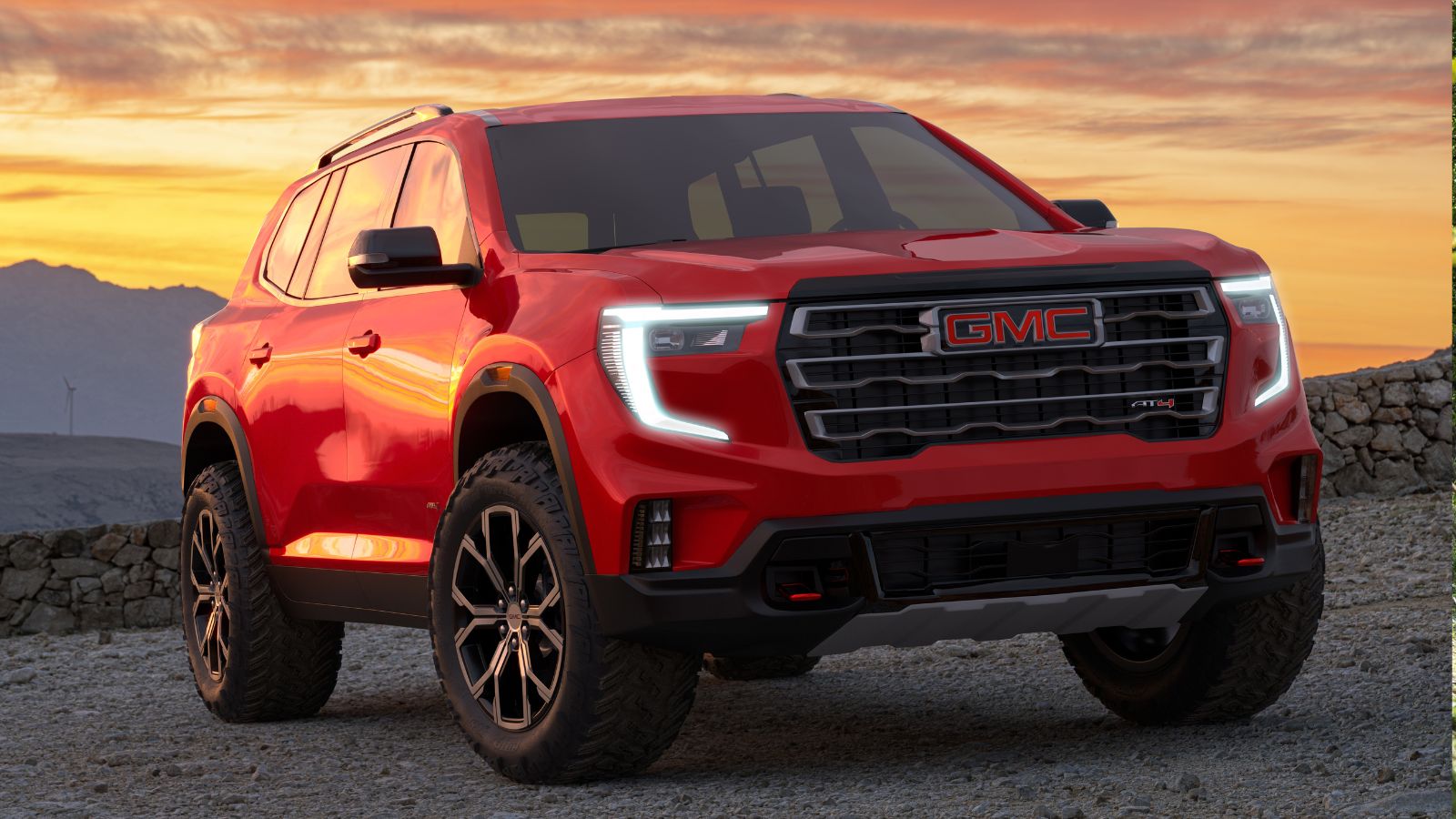
The investment is aimed at GM’s sixth-generation V-8, which the company says will power its full-size trucks and SUVs. That detail is important because it shows this is not a stopgap measure to squeeze a little more life out of an aging program. GM is preparing a new generation of engine production, not merely extending the current one. The company has said the new engine is expected to deliver stronger performance than today’s versions, with updated combustion and thermal-management innovations intended to help it do that.
That is a revealing mix of old and new. The architecture is still a V-8, a format many people associate with tradition, towing, and big North American utility vehicles. But the engineering language around it is modern: performance gains, efficiency-minded thermal controls, and manufacturing upgrades rather than simple carryover production. In other words, GM is not treating combustion power as frozen technology. It is still developing it because for certain vehicles, especially large pickups and SUVs, the company clearly believes there is money and market share left to protect.
Trucks and SUVs Are Still the Profit Engine
The simplest explanation for this move is demand. GM’s own announcement described the trucks and SUVs tied to this engine family as “high-demand,” and Reuters has reported repeatedly in 2026 that strong pickup and SUV sales helped lift GM’s profit outlook. That is not a small footnote. In January, Reuters said GM expected higher profits in 2026 largely because of a strong North American market for pickups and SUVs. In late April, Reuters again tied GM’s improved outlook to resilient truck sales. Those are the vehicles that keep the balance sheet healthy.
That helps explain why an engine plant in Ontario could still command such a large cheque. Full-size pickups and large SUVs remain some of GM’s most lucrative products, and companies tend to invest most aggressively where margins are strongest and demand is most durable. A plant building engines for those nameplates is not feeding a niche. It is supporting the center of the business. For Ontario readers, that makes the investment feel less like a surprising detour from the EV era and more like a blunt reminder that big gas-powered vehicles still generate the cash many automakers use to fund everything else.
Ontario’s Auto Industry Is Still Too Important to Ignore
The provincial backdrop matters almost as much as the plant itself. Canada’s Job Bank says Ontario employed about 148,300 people in motor vehicle, body, trailer, and parts manufacturing in 2024, and that the province accounted for roughly 84.6% of national employment in the sector. It also said the industry contributed 16.5% of Ontario’s manufacturing GDP and 1.7% of total provincial GDP. Those numbers help explain why every major automotive investment still carries political and economic weight well beyond the plant gates.
This also means decisions like GM’s are rarely just corporate housekeeping. They land in a province where the auto industry remains one of the foundational pieces of the manufacturing economy, even during a period of retooling, uncertainty, and mixed signals about future demand. Job Bank’s own outlook noted that the shift toward electric and hybrid vehicles is creating economic uncertainty, with both investments and layoffs occurring as plants adjust. GM’s St. Catharines announcement fits that exact picture: Ontario is not leaving the combustion era overnight, and companies are still willing to spend heavily where conventional powertrain capacity remains commercially essential.
St. Catharines Fits Into a Bigger North American Chain
GM said St. Catharines will become the third propulsion plant making this new engine generation, alongside Tonawanda in Buffalo and Flint Engine Operations in Michigan. That turns the Ontario investment into something larger than a local story. It places St. Catharines inside an integrated cross-border manufacturing network built around one of GM’s key product lines. In a business where supply resilience and plant coordination matter as much as branding, that kind of footprint usually reflects a program with serious volume expectations.
There is also a quiet strategic message in that three-plant setup. GM is not isolating this engine program to one site and hoping for the best. It is spreading production capacity across multiple facilities in Canada and the United States, which can help with scale, redundancy, and regional sourcing. For Ontario, being part of that network is far more valuable than holding a symbolic program no other plant depends on. It suggests St. Catharines is being treated as a durable piece of the company’s future production map, not a temporary beneficiary of short-term politics or a one-cycle reprieve.
This Money Is Going Into Real Factory Work
One reason this announcement stands out is that GM spelled out where the money is headed. The company said the investment will fund new machinery, equipment, and tooling, along with major facility renovations. That may sound dry, but it is usually the difference between a headline and a genuine manufacturing commitment. Spending of this kind tends to mean a plant is being physically prepared for years of production, not simply preserved until the next strategic review. The equipment has already begun arriving on site, which gives the announcement more weight than a vague future promise.
That detail also helps separate this investment from the kind of corporate language that can feel padded or speculative. New machinery changes how work is done. Tooling determines what can be built, how quickly it can be built, and whether the plant stays competitive against other facilities inside the same company. Renovations matter too, because propulsion plants are not easy to repurpose casually. When hundreds of millions are tied to equipment and facility upgrades, it usually reflects a real industrial decision. For workers and suppliers, that kind of specificity is often more reassuring than any executive quote.
Gas and Electric Are Now Running Side by Side
One of the most interesting parts of the St. Catharines story is that GM had already chosen the same plant in 2023 for future electric drive-unit production. At the time, the company said that project was expected to support around 500 jobs and enable production of more than 400,000 EV drive units a year, subject to support agreements with the federal and Ontario governments. That earlier announcement framed St. Catharines as part of GM’s EV future. Today’s V-8 investment frames it as part of GM’s combustion present and near-term future as well.
Rather than canceling one narrative and replacing it with another, the combined picture is messier and more realistic. GM is still an EV player, but it is also still heavily reliant on internal-combustion trucks and SUVs. Reuters reported in January that Mary Barra said EVs remain “the end game,” even as the company adjusted to weaker EV demand and leaned on profitable gasoline vehicles. For Ontario, that means the industrial future is not neatly electric or gasoline. At least for now, it is both. Plants, workers, and communities are being asked to live in that overlap.
The Timing Matters After a Rough Stretch
The political and emotional timing of the announcement is hard to miss. In January, Reuters reported that GM would eliminate roughly 500 jobs in Canada when Oshawa returned from three shifts to two, while Unifor warned that as many as 1,200 workers across the supply chain could be affected. Before that, GM’s CAMI operation in Ingersoll had already gone through a painful BrightDrop slowdown and temporary halt tied to weak demand in the electric commercial van market. Against that backdrop, a large new Ontario investment carries extra symbolic force.
That does not erase the pain elsewhere, and it should not be presented that way. One plant winning future work does not fully offset layoffs or uncertainty at another. But it does show that GM is still willing to commit substantial manufacturing capital in Ontario even while reshaping its footprint. That nuance matters. The province’s auto story lately has often felt dominated by shutdowns, pauses, tariff worries, and uneasy transition language. A C$691 million engine investment does not solve all of that, but it does complicate the gloom by showing that Ontario still has assets GM considers worth backing in a serious way.
The Ripple Effects Go Beyond GM
A propulsion investment of this size rarely stops at the plant fence. Ontario’s automotive economy depends on a broad supplier base, and Job Bank notes that parts manufacturing accounts for 66% of employment in the province’s motor vehicle, body, trailer, and parts manufacturing sector. The same source shows the Hamilton–Niagara Peninsula as a meaningful regional employment cluster within Ontario’s auto ecosystem. That means the St. Catharines decision has implications not only for GM workers, but also for toolmakers, logistics firms, maintenance contractors, and specialized parts suppliers connected to the site.
The wider business ecosystem matters because major auto programs create layers of activity that never show up in the headline number. A plant upgrade can generate work for smaller firms that machine components, service equipment, move materials, or adapt production lines. A separate CFIB report also argues that Ontario’s auto supply chain relies on a vast SME network, with more than 43,000 Ontario businesses involved directly or indirectly in the industry. That does not mean every small company in the region will benefit. It does mean big factory investments often matter most in the quieter places that do not get named in the press release.
What This Says About Ontario’s Auto Future
The clearest takeaway is that Ontario’s auto future is going to be mixed for longer than many simple forecasts once suggested. GM is investing in EV programs, software, and battery-related supply chains, but it is also putting serious money into a next-generation V-8 for the vehicles that still drive profits. That is not a contradiction so much as a market reality. Reuters has shown that GM’s earnings in 2026 continued to lean on strong truck and SUV demand, while official labour-market analysis in Ontario has pointed to a transition marked by both new investments and new dislocation.
For the province, that means success may depend less on choosing one side of the powertrain debate and more on staying valuable across several technologies at once. St. Catharines fits that model unusually well: a historic propulsion site, part of a cross-border engine network, and already linked to prior EV plans. GM’s C$691 million decision is not just about gas engines. It is about Ontario proving it can still win real industrial mandates in a period when automakers are under pressure to be flexible, profitable, and less ideological than the public conversation sometimes assumes.