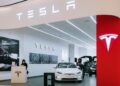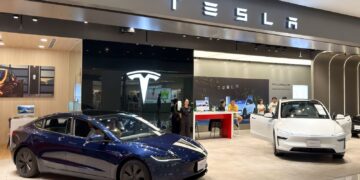



















Manitoba’s battle with Tesla has taken another turn, shifting from electric vehicle incentives to questions about government transparency and political accountability.
In a November 23, 2026, court filing, the province’s top bureaucrat confirmed that Premier Wab Kinew’s cabinet made the decision to exclude Tesla vehicles from Manitoba’s electric vehicle rebate program, which offers up to $4,000 toward eligible new EV purchases. However, the government maintains that further details about the decision are protected by cabinet confidentiality.
The disclosure follows a court order requiring Manitoba to identify who authorized the exclusion and provide a complete record of the decision-making process. With Tesla Canada challenging the policy, the dispute now extends beyond vehicle rebates to a larger legal question: how much information must governments disclose when changing the rules of publicly funded programs?
Cabinet Finally Confirms Who Made the Tesla Decision
For months, one of the central questions in Tesla Canada’s legal challenge was surprisingly straightforward: who actually decided that Tesla vehicles should no longer qualify for Manitoba’s electric vehicle rebates? The provincial government’s earlier court filings had not identified the decision-maker, even as officials defended the exclusion as a legitimate government spending policy.
That changed on November 23, when Sarah Thiele, Manitoba’s clerk of the executive council, submitted a sworn affidavit identifying cabinet as the responsible authority. Thiele explained that the executive council had amended the rebate program’s eligibility criteria as part of its responsibility for managing public funds.
The admission provides an important piece of information that had been missing from the legal proceedings. Rather than attributing the exclusion to Manitoba Public Insurance or an individual department, the province has now identified cabinet collectively. However, Thiele also maintained that the documents already submitted to the court represented the complete record. The filing identifies who was responsible without fully explaining how the decision was reached or what considerations shaped it.
Manitoba Invokes Cabinet Confidentiality to Limit Further Disclosure
Identifying cabinet as the decision-maker did not settle the dispute over transparency. In the same affidavit, Thiele argued that information presented to cabinet and discussions among ministers are protected by cabinet confidentiality, a principle intended to preserve private deliberations within government.
Thiele stated that her office did not possess documents concerning Tesla’s exclusion that had been placed before cabinet. She also maintained that any such materials, if they existed, would be subject to confidentiality protections. That distinction matters because saying her office has no records is not necessarily the same as establishing that no relevant records exist elsewhere.
The legal tension is significant. Governments routinely rely on cabinet confidentiality when discussing sensitive policy choices, but courts must also have sufficient evidence to evaluate legal challenges. Justice Elissa Neville’s earlier ruling specifically acknowledged that Manitoba could claim cabinet privilege over certain materials and that contested claims could be assessed through established legal principles. The affidavit therefore introduces another issue for the proceedings: whether the government’s confidentiality position provides an adequate response to the court’s disclosure order.
How Manitoba’s $4,000 Electric Vehicle Rebate Works
The dispute concerns a provincial incentive intended to make electric vehicles more affordable. Manitoba launched its EV rebate program in July 2024, initially allocating $25 million in funding through March 31, 2026. Eligible purchases dating back to August 1, 2023, could qualify under the program’s original rules.
For qualifying vehicles, the province offers $4,000 toward a new electric vehicle or plug-in hybrid and $2,500 toward a pre-owned one. Leasing incentives vary according to the contract’s duration, with qualifying new-vehicle leases receiving between $1,000 and $4,000.
The financial difference can be meaningful for households comparing vehicles with similar prices. A $4,000 rebate represents a substantial contribution toward the purchase cost, particularly when financing expenses are already a concern. However, eligibility comes with conditions. New vehicles must have a manufacturer’s suggested retail price below $70,000, purchases must be made through authorized Manitoba dealerships, and vehicles must generally remain registered in the province for at least 12 months. Manitoba Public Insurance administers the applications, while the provincial government establishes the program’s rules.
Tesla’s Exclusion Began With Manitoba’s 2025 Budget
Tesla vehicles were originally eligible for Manitoba’s rebate program when it launched in 2024. Buyers meeting the program’s price, registration and other requirements could receive the same provincial incentive available to customers purchasing qualifying electric vehicles from competing manufacturers.
That changed when Finance Minister Adrien Sala presented Manitoba’s 2025 budget on March 20. The province announced that Tesla vehicles and electric vehicles manufactured in China would no longer qualify. Although the announcement came on March 20, the revised criteria applied to vehicles purchased after March 19, 2025.
The change was subsequently communicated to Manitoba Public Insurance through letters dated March 27 and April 28, 2025, from the deputy minister of Environment and Climate Change. Those documents formally instructed the program administrator about the revised eligibility requirements.
The distinction is important because Manitoba did not eliminate EV incentives altogether. Instead, it continued subsidizing qualifying electric vehicles while excluding specified manufacturers or vehicles. That selective approach became central to Tesla’s argument that the government had changed the program for reasons unrelated to its original environmental and affordability objectives.
Trump’s Tariffs and Elon Musk Became Central to the Dispute
The political background helps explain why the decision attracted national attention. When Manitoba announced Tesla’s exclusion in March 2025, Canada was responding to trade tensions and tariffs imposed by U.S. President Donald Trump. Tesla chief executive Elon Musk had also become closely associated with Trump’s administration.
Manitoba’s government portrayed the exclusion as part of its response to American economic pressure. In his March 2025 budget speech, Finance Minister Sala announced that the rebate would continue, but without Tesla vehicles or electric vehicles manufactured in China.
Premier Wab Kinew later made the political connection explicit. Speaking in the Manitoba legislature on May 28, 2026, he challenged Musk to persuade Trump to end the tariffs before the province would reconsider Tesla’s rebate eligibility.
Kinew also defended the policy in a November 2026 radio interview by questioning whether someone as wealthy as Musk should benefit from provincial taxpayer funds.
Those statements provide context for the government’s position. They also sharpen the legal question surrounding the exclusion: whether a political response to international trade disputes provides a lawful basis for restricting participation in a program designed to encourage electric vehicle adoption.
Tesla Previously Received More Than 20% of Approved Rebates
The financial stakes are not merely theoretical. Before the exclusion took effect, Tesla was one of the largest beneficiaries of Manitoba’s electric vehicle incentive program, according to government records obtained by The Canadian Press through freedom-of-information legislation.
Between August 2024 and February 2025, Tesla vehicles accounted for 337 approved rebates, representing more than 20% of all approved rebates during that period. Those purchases generated nearly $1.3 million in provincial incentives. Ford ranked second, with 226 vehicles receiving approximately $864,500.
The figures demonstrate that Tesla was an established participant in the program before the government changed its eligibility rules. They also help explain why the automaker considered the exclusion financially significant.
Tesla Canada has argued that the decision deprived consumers of approximately $560,000 in rebates. That amount is the company’s claim, rather than a court-established finding of damages or money owed. Nevertheless, the figures illustrate the practical consequences of the policy: buyers who might otherwise have qualified for provincial assistance became ineligible because of the vehicle brand they selected.
Tesla Canada Challenges the Decision as Procedurally Unfair
Tesla’s Canadian subsidiary eventually turned to the courts after Manitoba maintained the exclusion when extending the rebate program in 2026. Its lawyers notified the provincial government in May that the company intended to challenge the policy, arguing that the exclusion was procedurally unfair and had been implemented for an improper purpose.
The company maintains that the government’s decision was inconsistent with the rebate program’s stated goals. Its position is that a program designed to promote electric vehicle adoption should not arbitrarily exclude a manufacturer without a defensible legal justification. Tesla Canada has also argued that its Canadian operations are distinct from the U.S. administration and that the subsidiary played no role in American government policy.
The legal challenge addresses both the original March 2025 exclusion and its continuation in 2026. Tesla wants the court to review and set aside the government’s decisions.
However, the allegations remain contested. Manitoba has defended the policy as an exercise of government spending authority, and no court has yet determined that the province acted unlawfully in excluding Tesla from the rebates.
Judge Says Manitoba’s Previous Court Records Were Insufficient
The November 23 affidavit followed a pointed ruling from Justice Elissa Neville on November 13. After examining the material Manitoba had submitted, Neville concluded that the existing record was insufficient for the court to evaluate Tesla’s challenge or the government’s request to dismiss it.
The provincial government had previously produced six documents, including budget materials, the original rebate program agreement, an amended agreement and correspondence with Manitoba Public Insurance. However, those documents did not establish who made the exclusion decision or what information had been considered.
Neville described the government’s approach as displaying “a baffling coyness” and found that the court needed more information before proceeding.
She ordered Manitoba to submit a complete decision-making record supported by an affidavit from someone knowledgeable about the process. The affidavit was required to identify the decision-maker, describe relevant information considered and specify any confidentiality claims.
Importantly, the judge did not order Tesla’s immediate reinstatement. Her ruling addressed the information necessary to assess the case, not whether the rebate exclusion was lawful.
Manitoba Argues Government Spending Decisions Should Not Face Judicial Review
A central argument in Manitoba’s defence concerns the limits of judicial oversight. The province maintains that excluding Tesla was a government spending decision reflected in its budget, rather than an administrative decision that courts can review.
Under that interpretation, elected governments have broad authority to establish spending priorities, including deciding which purchases deserve taxpayer-supported incentives. Governments can change programs when their policy objectives, political circumstances or financial priorities change.
Tesla’s challenge raises a different issue: whether a government can selectively remove an otherwise eligible manufacturer from an existing program without following an appropriate decision-making process.
Justice Neville highlighted the distinction in her November ruling. Ending funding for an entire program is not necessarily the same as changing eligibility criteria while keeping that program operating.
The court has not yet determined whether Manitoba’s specific decision is legally reviewable. Identifying cabinet as the responsible authority clarifies one part of that question, but it does not automatically resolve the government’s jurisdictional argument or Tesla’s allegations of improper purpose.
Tesla Won a Similar Rebate Dispute Against Ontario in 2018
Manitoba is not the first Canadian province to face a legal challenge from Tesla over electric vehicle incentives. In 2018, Tesla successfully challenged Ontario’s treatment of its customers after the provincial government cancelled an electric vehicle rebate program.
Ontario had introduced temporary arrangements allowing certain previously ordered vehicles to remain eligible. However, the province restricted those transitional rebates to vehicles sold through franchised dealerships, effectively excluding Tesla’s direct-sales model.
Ontario Superior Court Justice Frederick Myers ruled that the exclusion was arbitrary and unrelated to the government’s stated objectives. The court set aside the unlawful implementation of the transitional program, and Ontario subsequently expanded eligibility during the program’s wind-down.
Tesla Canada’s lawyers have referenced the Ontario case in their Manitoba dispute. The earlier decision demonstrates that courts can examine how governments implement incentive programs, even when broader spending decisions involve political discretion.
However, the cases are not identical. Ontario’s dispute concerned transitional arrangements after a program’s cancellation, while Manitoba’s concerns selective eligibility restrictions within a continuing program. The Ontario outcome therefore provides relevant legal context, not a guarantee that Tesla will prevail in Manitoba.
Manitoba’s Rebate Continues as a December Court Hearing Approaches
Despite the legal dispute, Manitoba’s electric vehicle rebate program remains active. Budget 2026 extended the incentive through March 31, 2027, while maintaining the exclusion of Tesla vehicles and other affected vehicles.
The province has reported that more than 5,000 rebates were issued after the program launched in July 2024. Its 2026 budget estimated that the supported vehicle purchases would reduce greenhouse gas emissions by more than 22,000 tonnes annually. Those figures underline the government’s position that the program continues to support affordability and environmental objectives, even without Tesla participation.
The next major legal milestone is scheduled for December 22, 2026. According to the Manitoba court registry, Justice Neville is expected to consider the government’s effort to have Tesla’s application dismissed alongside the company’s judicial review challenge.
For now, Tesla vehicles remain excluded under the published rebate rules. The November affidavit answers the question of who made the decision, but leaves the underlying legal dispute unresolved.
The eventual outcome could help clarify how governments balance cabinet confidentiality, spending discretion and legal accountability when changing eligibility for public incentives. For Manitoba EV buyers, the immediate consequence is simpler: a vehicle’s manufacturer continues to determine whether thousands of dollars in provincial assistance are available.