

















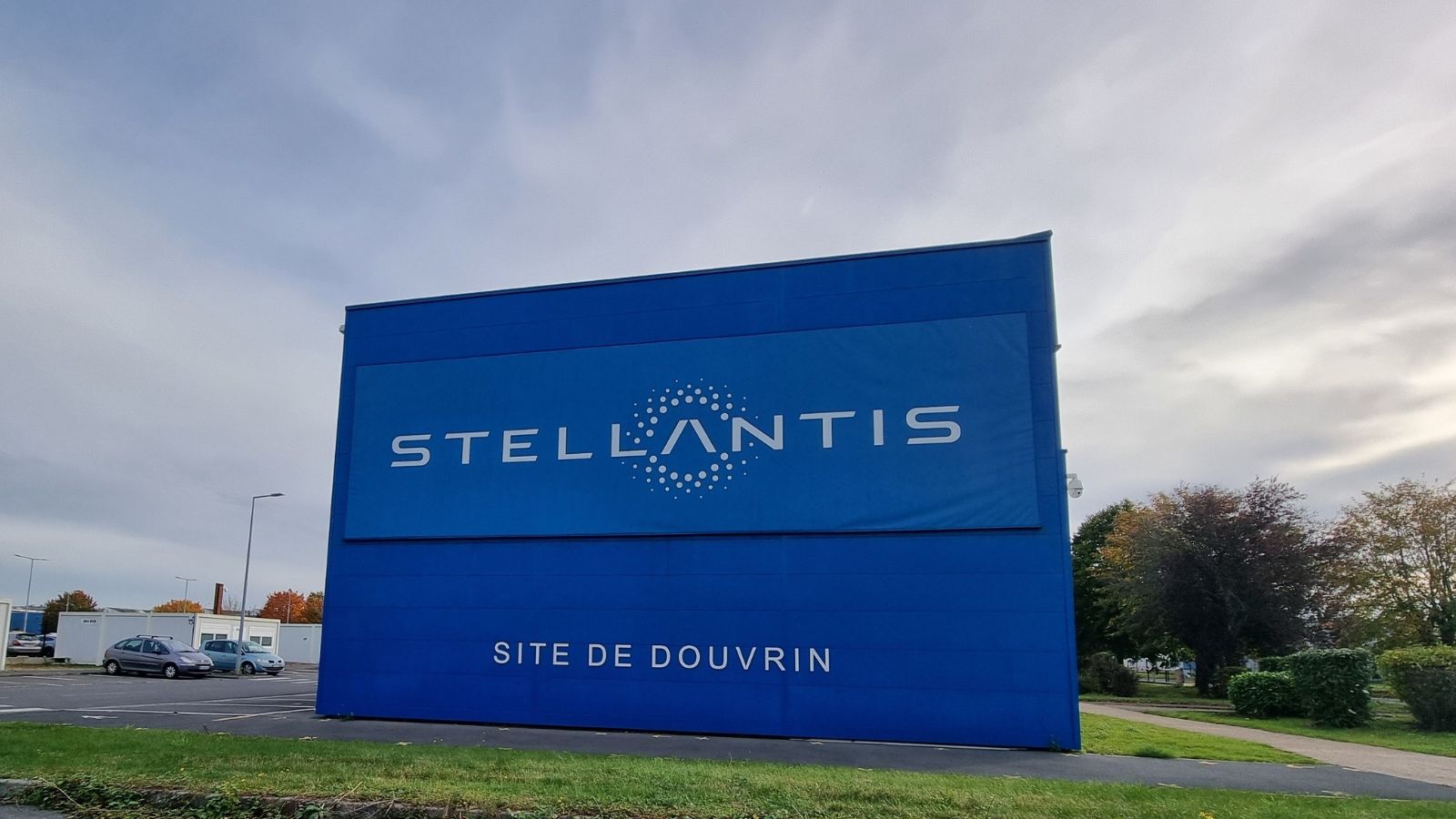
Chinese electric-vehicle manufacturer Leapmotor is facing fresh scrutiny after its shares plunged approximately 13% on November 23, 2026, despite reporting record vehicle deliveries and a substantial increase in revenue. The automaker, backed by global automotive giant Stellantis, has become one of China’s fastest-growing electric-vehicle producers, but its latest financial results reveal a troubling gap between sales growth and profitability.
Leapmotor delivered more than 310,000 vehicles during the third quarter, while revenue climbed 63% compared with the previous year. However, rising production costs, shrinking profit margins and increased competition pushed quarterly net profit sharply lower.
The disappointing results have raised questions about whether aggressive expansion and affordable vehicle pricing can deliver sustainable earnings in an increasingly competitive global EV market.
Record Vehicle Sales Could Not Prevent a 13% Stock Collapse
Leapmotor shares fell approximately 13% on November 23, 2026, reaching their lowest level in more than two years as investors reacted to unexpectedly weak third-quarter profitability. During early trading in Hong Kong, the company’s stock dropped roughly 14% to HK$26.18, significantly underperforming the broader Hang Seng Index, which was down approximately 0.5% at the time.
The selloff came despite an impressive operational performance. Leapmotor reported record deliveries of 310,052 vehicles between July and September, representing a 78.3% increase from the same period in 2025. Ordinarily, growth of that magnitude would be encouraging for an automotive manufacturer seeking to expand its global footprint.
Instead, investors focused on the widening disconnect between higher vehicle volumes and weaker earnings. The market reaction reflected concerns that Leapmotor was generating insufficient profit from its rapidly expanding sales. Its decline also weighed on other Chinese automotive stocks, highlighting broader investor anxiety about competition and profitability across the industry.
Revenue Surged 63%, but Net Profit Collapsed More Than 73%
Leapmotor generated revenue of 31.7 billion yuan, approximately US$4.75 billion, during the third quarter of 2026. That represented a 63% increase from the previous year and a 16.2% improvement over the second quarter. The numbers demonstrated that consumer demand remained strong, supported by new vehicle introductions and expanding overseas operations.
However, the company’s bottom line told a dramatically different story. Net profit attributable to shareholders declined to just 40 million yuan, approximately US$6 million, compared with 150 million yuan a year earlier. That represents a 73.3% annual decline. The contrast was even more striking against the second quarter of 2026, when Leapmotor earned 600 million yuan, meaning quarterly profit fell approximately 93.3%.
The company also recorded an operating loss of 30 million yuan after reporting an operating profit of 540 million yuan in the preceding quarter. These results suggest that increasing production and delivering more vehicles did not translate into stronger financial performance.
Profit Margins Shrink as Production Costs Keep Rising
One of the clearest explanations for Leapmotor’s disappointing earnings lies in its shrinking gross profit margin. The company reported a third-quarter gross margin of 10.9%, down from 14.5% a year earlier and 12.6% in the second quarter. That means Leapmotor retained substantially less gross profit from each yuan of revenue despite increasing deliveries.
Company disclosures identified rising raw material costs and changes in the types of vehicles sold as major contributors to the deterioration. Higher ocean freight expenses also affected quarterly profitability. These pressures are especially challenging for manufacturers competing in the affordable EV segment, where customers are particularly sensitive to price increases.
The financial consequences become clearer when examining the company’s gross profit. Despite revenue rising 16.2% from the previous quarter, gross profit remained relatively flat at approximately 3.46 billion yuan. For an automaker investing heavily in expansion, this creates a difficult situation: production, marketing and distribution requirements continue growing, while the financial benefit of additional sales becomes increasingly limited.
Lower-Priced Electric Vehicles Are Changing Leapmotor’s Profitability
Leapmotor’s strategy relies heavily on delivering electric vehicles at competitive prices, making advanced technology accessible to customers who might otherwise choose conventional gasoline-powered cars. That approach has helped expand its customer base, particularly in China’s highly competitive automotive market.
However, the increasing popularity of its less expensive A-series vehicles has created an unexpected financial challenge. According to reporting on the company’s third-quarter performance, lower-priced A-series models represented a growing share of sales, reducing the contribution from more profitable B-, C- and D-series vehicles. Combined sales of the A10 and A05 exceeded 200,000 units following their introductions in 2026, illustrating the strength of demand for affordable models.
The difficulty is that attracting additional customers does not automatically produce stronger earnings. Less expensive vehicles generally leave manufacturers with less room to absorb rising component prices and transportation expenses. Leapmotor must therefore balance its ambition to increase market share with the need to improve the profitability of individual vehicles.
Global Exports Triple as Stellantis Helps Drive Expansion
International sales have become one of Leapmotor’s strongest growth opportunities. During the third quarter, the company exported 63,278 vehicles, representing a 263.7% increase compared with the same period in 2025. Exports accounted for approximately 20.4% of total quarterly deliveries, demonstrating how important overseas markets have become to the business.
Leapmotor’s relationship with Stellantis plays a central role in that expansion. The companies operate Leapmotor International, a joint venture established in 2024 in which Stellantis holds a 51% interest and Leapmotor owns the remaining 49%. The partnership gives the Chinese manufacturer access to established international distribution networks and automotive infrastructure.
By September 30, Leapmotor International had established more than 1,200 sales and service outlets across over 50 international markets, including more than 1,000 locations in Europe. Although these developments strengthen the company’s global presence, higher shipping expenses demonstrate that international expansion brings additional costs. Turning overseas growth into reliable profits remains a significant challenge.
Stellantis Partnership Opens the Door to a €100 Million Opel Deal
Despite the disappointing financial results, Leapmotor secured another important opportunity through its partnership with Stellantis. On November 20, 2026, the Chinese automaker announced a €100 million engineering and development agreement with Opel, the German automotive brand owned by Stellantis.
Under the agreement, Leapmotor will provide engineering and development services for a new Opel compact SUV. The vehicle is expected to enter production at Stellantis’ Zaragoza facility in Spain in September 2028. This arrangement represents an important development because Leapmotor’s relationship with Stellantis is expanding beyond simply selling Chinese-designed vehicles in foreign markets.
The agreement creates an opportunity for Leapmotor to generate revenue through technology and engineering services rather than relying exclusively on vehicle sales. It could also lead to additional component supply arrangements, although those would require separate agreements. For a manufacturer facing pressure on vehicle margins, diversifying revenue through development partnerships could become increasingly valuable over the longer term.
Manufacturing in Europe Could Help Reduce Tariff Exposure
Leapmotor has also been strengthening its international manufacturing presence, partly to reduce the costs and risks associated with exporting vehicles directly from China. On October 16, 2026, the company began mass production of its B10 electric SUV and associated batteries at the Zaragoza manufacturing complex in Spain.
This development represents a significant step toward creating a more localized European supply chain. Manufacturing closer to customers can reduce some transportation expenses and help automakers manage trade-related costs. However, producing vehicles in Europe can also involve higher labour, component and manufacturing expenses than production in China, meaning localization does not automatically guarantee stronger profit margins.
The company’s expansion plans extend beyond Europe. Leapmotor has identified a Stellantis facility in Brazil for future B10 and C10 production, with manufacturing expected to begin in the second half of 2027. It has also developed production operations across parts of Southeast Asia. These investments could improve the company’s global competitiveness, but their financial benefits will depend on production efficiency, demand and the ability to control costs.
Cash Flow Weakens Even as Leapmotor Maintains Substantial Financial Reserves
Leapmotor’s profitability problems were accompanied by a noticeable deterioration in cash generation. The company reported third-quarter operating cash flow of 1.62 billion yuan, down from 4.88 billion yuan during the same period in 2025 and 8.78 billion yuan in the preceding quarter.
Free cash flow also declined sharply, falling to 550 million yuan from 7.54 billion yuan in the second quarter. The company attributed the annual decline in operating cash generation primarily to higher procurement spending associated with strategic inventory purchases, while the quarterly decrease reflected the timing of payments coming due. These figures matter because automotive manufacturers require substantial cash to support new vehicle development, manufacturing operations and international expansion.
However, the financial position was not entirely negative. As of September 30, Leapmotor reported approximately 39.14 billion yuan in cash, deposits and other specified liquid financial assets. That provides an important financial cushion, giving the company resources to continue pursuing its strategy despite the recent earnings setback.
China’s Intensifying EV Competition Raises Questions About Future Profits
Leapmotor’s disappointing earnings illustrate a broader challenge confronting China’s electric-vehicle industry. Manufacturers continue competing aggressively for market share, while consumers have access to an expanding selection of battery-electric and plug-in hybrid vehicles. The resulting pressure can make it difficult for automakers to increase prices sufficiently to offset rising costs.
Although Leapmotor has been gaining customers, its latest results demonstrate why volume growth alone is no longer enough to satisfy investors. The company reported that its share of China’s new-energy passenger vehicle market reached 7.2% at the end of September, reflecting its increasing competitive position. Yet its gross margin moved in the opposite direction, showing that commercial success and financial performance can diverge.
Looking ahead, investors will likely focus on whether Leapmotor can improve its vehicle mix, stabilize material costs and generate stronger returns from international operations. Its partnership with Stellantis provides access to manufacturing resources, distribution networks and engineering opportunities, but the central question remains whether those advantages can translate record sales into sustainable profitability.