























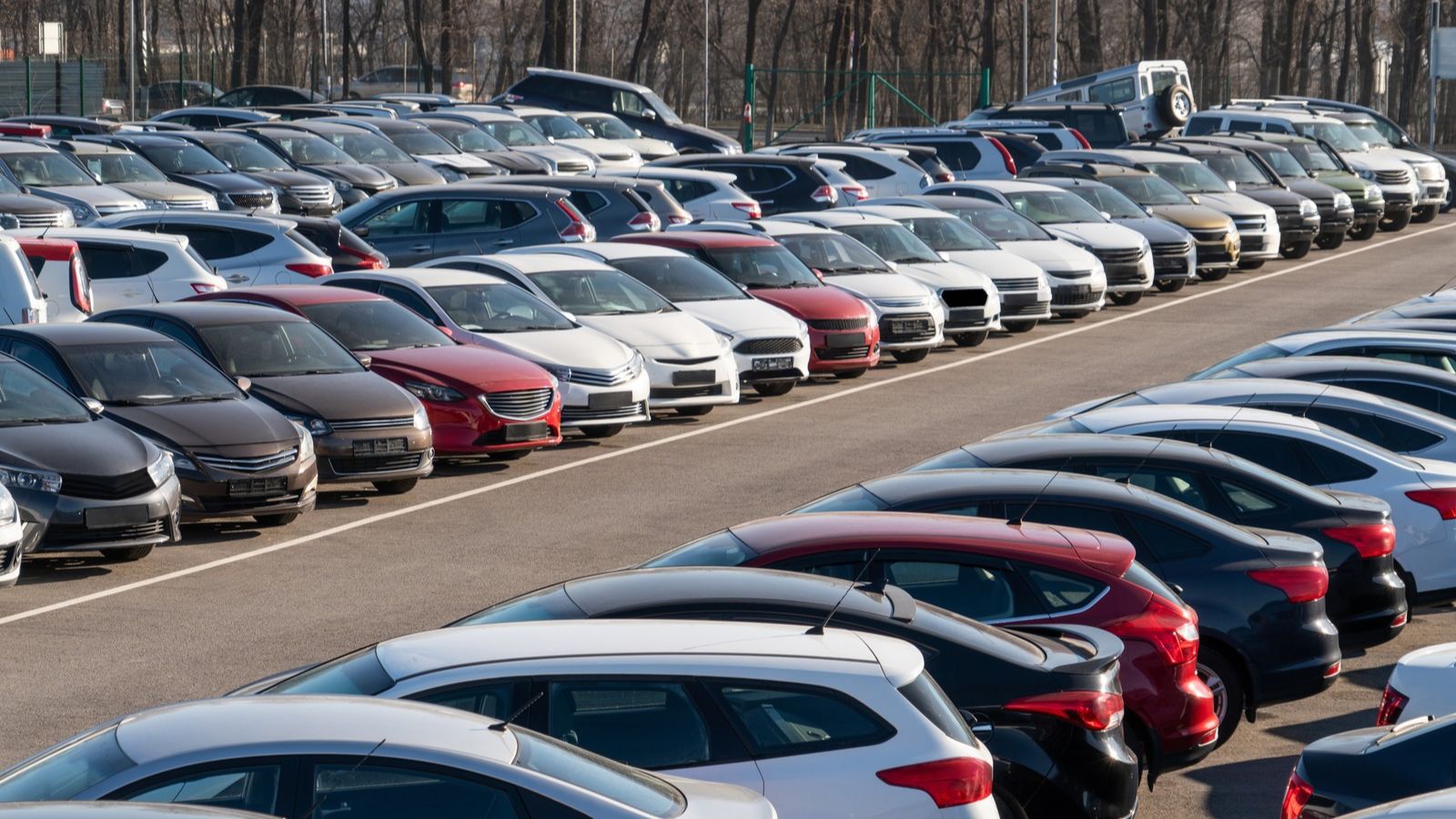
The gap between Canada’s and America’s used-vehicle markets is becoming increasingly difficult to ignore. While American dealers are moving more vehicles through wholesale auctions, Canadian dealerships are facing a different reality, with softer transaction volumes and declining vehicle values creating fresh challenges.
OPENLANE’s third-quarter 2026 financial results highlight that divide. The company’s Canadian dealer auction gross merchandise value fell 17% year over year, while its U.S. dealer business recorded a 30% increase. Despite the contrasting performances, OPENLANE reported strong overall growth, supported by expanding American operations and higher commercial auction activity.
For Canadian dealerships already navigating affordability concerns and changing used-vehicle demand, the numbers offer an important look at how quickly market conditions can shift.
The 17%–30% Divide Is About Auction Value, Not Retail Prices
OPENLANE’s comparison covers the three months ended September 30, 2026, against the same quarter in 2025. The key measurement is gross merchandise value, or GMV, which represents the combined selling value of vehicles transacted through its marketplaces. It is not a measure of dealer profit, OPENLANE’s revenue, or the average retail price paid by Canadian drivers. The Canadian decline applies specifically to dealer-to-dealer auctions, where dealerships buy and sell inventory among themselves.
That distinction matters because an auction’s total value changes for several reasons. A platform selling fewer vehicles at lower average prices will report a steeper GMV decline than either factor would produce individually. A dealership could also sell the same number of vehicles but shift toward less expensive models, reducing its average transaction value. OPENLANE’s results capture these movements within its own marketplace, rather than every used-vehicle transaction across Canada or the United States.
Lower Average Vehicle Values Did Most of the Damage in Canada
OPENLANE Chief Financial Officer Brad Herring explained that approximately two-thirds of the 17% decline in Canadian dealer GMV came from lower average vehicle values, while the remaining third was attributable to fewer vehicles being sold. Average values in the Canadian dealer business declined 13% year over year. For dealerships that regularly purchase and dispose of used inventory, that creates additional uncertainty around trade-in valuations, resale expectations, and potential profit margins.
Consider a dealership holding several older SUVs that it plans to wholesale rather than sell directly to consumers. If auction bids come in below expectations, the dealer may have less room to offer generous trade-in allowances without hurting profitability. However, the figures do not establish that every used vehicle in Canada lost 13% of its value. They show that the average value of vehicles transacted through OPENLANE’s Canadian dealer channel was substantially lower than a year earlier, reflecting the particular inventory passing through its auctions.
U.S. Dealers Delivered Both More Vehicles and Higher Auction Values
OPENLANE’s American dealer business produced a markedly different result. U.S. dealer GMV increased 30%, supported by a 22% rise in vehicles sold and a 7% increase in average vehicle values compared with the same period in 2025. Chief Executive Officer Peter Kelly said U.S. dealer volumes reached a new single-quarter record, marking six consecutive quarters of double-digit growth. Management also reported that its performance substantially exceeded an industry dealer-volume environment it characterized as flat to negative.
The American performance does not necessarily mean vehicle prices continued rising throughout the quarter. Kelly acknowledged that wholesale values began declining faster than normal, creating pressure on auction conversion rates, which measure how frequently vehicles offered for sale actually find buyers. Despite that challenge, OPENLANE continued moving substantially more dealer inventory. Its U.S. growth therefore reflects both stronger transaction activity and higher average values compared with a year earlier, rather than uninterrupted price increases.
National Valuation Data Tell a More Complicated Story
OPENLANE’s Canadian auction results appear particularly weak when compared with broader vehicle valuation data. Canadian Black Book’s Used Vehicle Retention Index stood at 127.5 points in September 2026, unchanged from August and 7.6% below its level a year earlier. The index measures wholesale value retention among vehicles aged two to six years, adjusting for factors such as age, mileage, seasonality, and condition. That provides a different perspective from OPENLANE’s 13% decline in the average value of Canadian dealer-auction vehicles.
The difference highlights why individual marketplace results should not be interpreted as evidence of a uniform national price collapse. A low-mileage compact car can follow a very different depreciation pattern from an older pickup truck or luxury SUV. OPENLANE’s average transaction values depend on the vehicles actually passing through its auctions, including their age, condition, and market appeal. Canadian Black Book’s index is designed to measure broader value retention. Both indicators can move differently without contradicting each other.
Canadian Used-Car Demand Is Showing Signs of Fatigue
Independent market data suggest Canadian used-vehicle buyers are becoming more cautious. CARFAX Canada’s October 2026 market update reported 258,202 used-vehicle transactions in August, representing a 6.6% decline from the previous year. Meanwhile, available used-vehicle listings increased 18.9% from July to 228,788. Average advertised prices remained relatively stable at $30,776, declining only 0.3% month over month. The numbers suggest that inventory availability was improving even as fewer transactions were being completed.
For dealerships, these conditions create difficult decisions about purchasing additional inventory. A vehicle bought at auction must eventually generate enough revenue to cover acquisition costs, transportation, reconditioning, financing, and other expenses. When customer demand slows, a car that initially appears attractively priced can become less profitable after spending additional weeks on the lot. CARFAX’s retail-market figures measure different activity from OPENLANE’s wholesale auctions, but both point toward an increasingly selective Canadian market where having more vehicles available does not automatically produce stronger sales.
Off-Lease and Commercial Auctions Are Telling a Different Story
OPENLANE’s Canadian weakness was concentrated in its dealer-to-dealer business rather than every Canadian auction category. The company’s Canadian commercial auction GMV actually increased 5%, largely because of higher average vehicle values. Across OPENLANE’s broader operations, commercial GMV climbed 55% to approximately US$7.5 billion. American commercial GMV increased 76%, supported by the addition of a new automaker customer earlier in 2026 and growing volumes of vehicles reaching the ends of their leases.
Commercial auctions operate differently from transactions between individual dealerships. Automakers, financing companies, fleet operators, and rental businesses may all send vehicles into remarketing channels. For example, a financing company handling thousands of lease returns may continue releasing vehicles even when individual dealerships are hesitant to purchase additional stock. OPENLANE reported that commercial vehicle volumes increased 46% overall, or 17% after adjusting for its newest major private-label customer. This distinction helps explain how commercial activity could expand substantially while Canadian dealer auctions weakened.
OPENLANE’s Wider Marketplace Remained Busy
OPENLANE’s consolidated marketplace results demonstrate how dramatically regional conditions can differ within the same business. The company sold approximately 475,000 vehicles during the third quarter, compared with 372,000 a year earlier, representing growth of roughly 28%. Dealer consignment transactions increased to 205,000 vehicles from 187,000, while commercial vehicle sales jumped to 270,000 from 185,000. Combined marketplace GMV reached approximately US$10 billion, an increase of 38%, despite the difficulties facing its Canadian dealer operations.
The company’s overall dealer GMV increased a more modest 5% to approximately US$2.6 billion. Commercial transactions, representing about US$7.5 billion in GMV, were the principal driver of expansion. However, these consolidated figures combine multiple countries and different categories of vehicle sellers, meaning they should not be interpreted as evidence that Canadian dealerships experienced similar growth. Instead, the results demonstrate how a diversified wholesale marketplace can continue expanding when certain regions or customer groups face significant challenges.
Auction Fees Show How Different Transaction Mixes Affect Revenue
Another important part of OPENLANE’s quarterly performance involves the fees generated from vehicle transactions. The company’s overall dealer auction yield, calculated by dividing auction and related fees by dealer GMV, increased 45 basis points to 6.10%. Canadian dealer yield climbed 66 basis points to 4.86%, despite falling average vehicle values. American dealer yield was higher at 6.79%, although it declined nine basis points year over year. These figures reveal that the financial return generated per dollar of auction activity can change independently of vehicle prices.
Higher auction yields do not necessarily mean the company earns more revenue from each vehicle. Differences in transaction fees, vehicle values, and business mix can influence the percentage. OPENLANE reported that Canadian dealer revenue per unit increased only 1%, helping explain the distinction. Across its broader marketplace, auction and related fees climbed 18% to US$253.2 million. However, the overall marketplace auction yield decreased from 2.9% to 2.5%, partly because lower-yield commercial transactions represented a larger share of the business.
Revenue Climbed, but Net Income Moved Lower
Despite its weaker Canadian dealer performance, OPENLANE delivered higher consolidated revenue and operating earnings. Third-quarter revenue increased 13% to US$561.2 million, while operating profit climbed to US$70.4 million from US$55 million a year earlier. Adjusted earnings before interest, taxes, depreciation, and amortization reached approximately US$106.8 million, up 23%. Cash generated from operating activities also improved significantly, increasing 34% to US$97.1 million. These results demonstrate the contribution of the company’s expanding marketplace and finance operations.
However, stronger revenue did not translate into higher net income. OPENLANE reported quarterly net income of US$44.7 million, down from US$47.9 million a year earlier. Interest expense increased to US$10 million from US$1.1 million, primarily because of term-loan borrowings undertaken in late 2025. Adjusted EBITDA is also a supplemental financial measure rather than a substitute for reported net profit. For Canadian dealers, the contrasting results underline an important reality: a successful multinational auction operator can still experience considerably weaker business conditions within individual markets.
Dealer Financing Adds Another Layer to the Market Picture
OPENLANE’s financing division, Automotive Finance Corporation (AFC), provides another perspective on dealership conditions. The business reported average managed receivables of approximately US$2.70 billion during the third quarter, an increase of 13% year over year. Loan transactions grew 7%, while the annualized provision for credit losses declined to approximately 1.14%, down 48 basis points from a year earlier. AFC also generated approximately US$49 million in adjusted EBITDA, representing growth of 13%, demonstrating continued strength in this part of OPENLANE’s operations.
Inventory financing is especially important for smaller independent dealerships that need to purchase vehicles before receiving proceeds from retail sales. However, borrowing against inventory creates additional exposure when vehicles take longer to sell or wholesale values decline unexpectedly. OPENLANE’s regulatory filings identify used-vehicle demand, wholesale pricing volatility, and access to financing as important risks for independent dealers. While AFC’s lower credit-loss rate is encouraging, it does not eliminate the financial pressures that individual dealerships may face when market conditions weaken.
Digital Tools May Matter More When Dealership Margins Tighten
OPENLANE continues investing in its Canadian operations despite the decline in dealer auction values. Management reported that more than 900 Canadian dealerships had enrolled in MyLot, its subscription-based software product. The company also continued modernizing its Canadian auction management infrastructure, transitioning major operational hubs during the third quarter. Completion of that technology project is targeted for the end of 2026. Other improvements included expanded vehicle condition disclosures, enhanced electric-vehicle battery health information, better transportation tracking, and a redesigned checkout experience.
These improvements address practical concerns that become increasingly important when dealership margins are under pressure. A used electric vehicle with uncertain battery condition, for example, can present significant financial risks for a buyer. Similarly, unexpected transportation delays can increase the time and expense involved in preparing inventory for resale. Better vehicle information and more efficient transactions may help dealerships manage those risks. However, technology improvements cannot independently overcome weak consumer demand or falling vehicle values. OPENLANE must demonstrate that its digital investments can translate into sustained dealer activity despite Canada’s challenging wholesale environment.
The Next Test Will Come as Vehicle Prices and Supply Adjust
OPENLANE’s management expects additional challenges as 2026 draws to a close. Kelly acknowledged that weaker used-vehicle values were putting pressure on dealer auction conversion rates, with the trend expected to continue through the fourth quarter before potentially improving in early 2027. The company also anticipates further increases in off-lease vehicle supply, creating additional remarketing opportunities. Despite near-term uncertainty, OPENLANE raised the lower end of its full-year adjusted EBITDA guidance to US$390 million, maintaining the upper end at US$400 million.
For Canadian dealerships, the coming months will help determine whether lower auction values create opportunities to purchase more affordable inventory or simply reflect continuing weakness in consumer demand. Financing expenses, available vehicle supply, and the willingness of buyers to make major purchases will remain important considerations. The third-quarter figures do not establish that Canada’s used-vehicle market will permanently underperform America’s. They do, however, highlight how differently two closely connected automotive markets can behave, even while operating under many of the same industry pressures.