























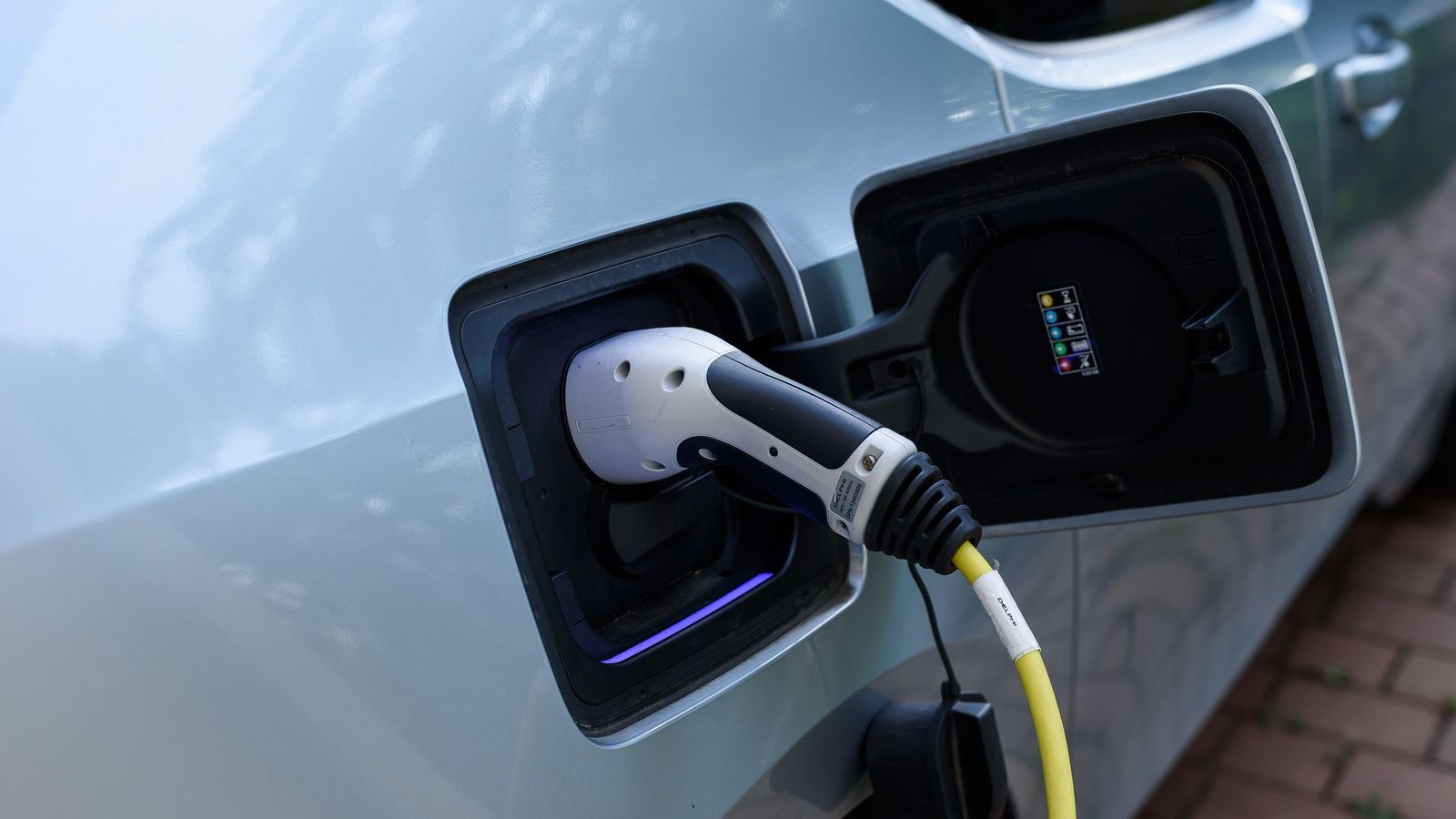
Ontario’s electricity pricing system has introduced a striking difference between the cheapest and most expensive hours to charge an electric vehicle. Under rates effective November 1, 2026, households choosing the Ultra-Low Overnight plan can pay just 3.7 cents per kilowatt-hour during overnight hours, compared with 37.7 cents during weekday peak periods.
That represents a price difference of more than tenfold, making charging schedules increasingly important for EV owners looking to control household expenses.
The changes arrive alongside new winter electricity pricing periods, adjusted residential consumption thresholds, and modifications to Ontario’s electricity rebate. For drivers accustomed to plugging in immediately after returning home, the distinction between daytime and overnight charging could have a meaningful impact on monthly electricity costs.
The 10-to-1 Electricity Price Gap Is Real
Ontario’s new Ultra-Low Overnight electricity rates create a dramatic difference between the cheapest and most expensive periods of the day. According to the Ontario Energy Board, electricity costs 3.7 cents per kilowatt-hour between 11 p.m. and 7 a.m., compared with 37.7 cents during weekday peak hours from 4 p.m. to 9 p.m. Dividing the higher price by the lower one produces a ratio of approximately 10.2 to one. This makes the widely discussed tenfold price difference accurate, although it applies specifically to electricity consumption charges under the Ultra-Low Overnight plan rather than the entire household electricity bill.
The pricing structure also includes intermediate rates of 14.6 cents per kilowatt-hour during designated weekday periods and 9.1 cents during weekend and holiday off-peak hours. For an EV owner arriving home at 6 p.m., charging immediately could mean purchasing electricity at the day’s highest regulated price. Waiting until 11 p.m. could substantially reduce that expense. However, the savings depend on how much charging can occur overnight and whether the household’s other electricity consumption offsets those benefits.
The Eight-Hour Overnight Window Changes Charging Habits
The biggest advantage of Ultra-Low Overnight pricing is that it allows drivers to take advantage of lower electricity costs while their vehicles are parked. The discounted period runs from 11 p.m. until 7 a.m. every day, providing an eight-hour charging window. Natural Resources Canada estimates that Level 2 chargers can charge many electric vehicles in approximately four to ten hours, depending on the vehicle and battery. That makes overnight charging practical for many households, particularly those using their vehicles for regular commuting rather than long-distance travel.
For example, a driver returning home at 6 p.m. could connect the vehicle immediately but schedule charging to begin at 11 p.m. Many EVs and home charging systems support programmed charging schedules, allowing owners to manage electricity consumption without staying awake. However, an eight-hour window will not accommodate every charging situation. Standard 120-volt Level 1 charging is considerably slower, and replenishing a nearly depleted battery can take longer than a single night. The key advantage is that most daily charging involves replacing energy consumed during routine driving, not necessarily charging an empty battery to full capacity.
The Expensive Evening Hours Could Cancel Out Savings
While Ontario’s overnight electricity rate is attractive, the Ultra-Low Overnight plan comes with a significant trade-off. Weekday electricity consumption between 4 p.m. and 9 p.m. costs 37.7 cents per kilowatt-hour, making this the most expensive period under the plan. The higher rate applies to household electricity consumption generally, not just electric vehicle charging. Cooking dinner, operating a clothes dryer, running appliances, and heating or cooling the home can all contribute to electricity usage during these hours. A household consuming 10 kilowatt-hours during that peak period would face $3.77 in electricity consumption charges, before other bill components.
That same amount of electricity consumed during the ultra-low overnight period would cost only 37 cents at the regulated energy rate, a difference of $3.40. Although the example illustrates the importance of timing, many household activities cannot realistically be postponed until midnight. Families with children, people working from home, and households relying heavily on electric heating may have substantial unavoidable demand during expensive hours. Consequently, the best option is not necessarily the plan offering the cheapest EV charging rate. It is the one producing the lowest overall household electricity bill after accounting for both vehicle charging and everyday consumption.
Time-of-Use Pricing Offers a Less Extreme Alternative
Ontario’s traditional Time-of-Use electricity plan provides a more balanced alternative for EV owners who cannot consistently charge overnight. Effective November 1, 2026, the winter off-peak rate is 9.1 cents per kilowatt-hour, applying on weekdays between 7 p.m. and 7 a.m., as well as throughout weekends and designated holidays. Mid-peak electricity costs 14.6 cents, while on-peak consumption costs 18.9 cents per kilowatt-hour. Although the lowest Time-of-Use rate is considerably higher than the Ultra-Low Overnight rate, its most expensive period is also substantially cheaper, reducing the financial risk associated with daytime electricity consumption.
Winter Time-of-Use pricing places peak periods between 7 a.m. and 11 a.m. and again between 5 p.m. and 7 p.m. on weekdays. This differs from summer, when the highest rates apply during the afternoon. An EV owner arriving home at 7 p.m. can begin charging immediately at the off-peak rate without waiting until 11 p.m. Households with unpredictable schedules may find that flexibility valuable. By comparison, Ultra-Low Overnight customers face elevated electricity prices throughout the weekday early evening, regardless of the season. The most economical choice depends on whether the additional overnight savings outweigh the higher costs during other hours.
Tiered Pricing May Benefit Households With Busy Evenings
Ontario’s Tiered electricity plan offers another option for households that prioritize predictable electricity prices over charging schedules. Under the November 2026 rates, residential customers pay 11.2 cents per kilowatt-hour for their first 1,000 kilowatt-hours of monthly electricity consumption during the winter. Electricity used beyond that threshold costs 13.2 cents per kilowatt-hour. The winter threshold represents an increase of 400 kilowatt-hours from the summer allowance of 600 kilowatt-hours. This adjustment recognizes that households often require additional electricity during colder months, particularly when electric heating contributes to overall consumption.
Unlike Time-of-Use or Ultra-Low Overnight pricing, Tiered rates do not change according to the hour. An EV owner can charge at 5 p.m., midnight, or noon without encountering a different price because of the charging schedule. For example, 10 kilowatt-hours of consumption costs $1.12 at the lower tier or $1.32 at the higher tier, excluding other bill charges. Those prices apply according to the household’s total monthly consumption rather than separately to its vehicle. A household using 1,100 kilowatt-hours in a winter month would pay $125.20 in regulated electricity consumption charges. Tiered pricing may be attractive for families whose schedules make shifting electricity use difficult, even when overnight EV charging is available.
A Month of EV Charging Shows How Quickly the Costs Add Up
The financial difference becomes clearer when electricity rates are applied to a realistic charging scenario. Consider an EV owner purchasing 200 kilowatt-hours of electricity for home charging over one month. This is an illustrative amount rather than a provincial average. If all 200 kilowatt-hours are consumed during the Ultra-Low Overnight period, the regulated electricity charge would be just $7.40. Purchasing the same amount during weekday peak hours under that plan would cost $75.40. That represents a $68 difference before delivery charges, taxes, and rebates. Under standard Time-of-Use pricing, purchasing those 200 kilowatt-hours entirely during off-peak hours would cost $18.20.
These figures demonstrate why charging schedules can matter so much, but they should not be confused with complete electricity bills. The examples assume the same amount of electricity is measured at the household meter, while actual vehicle charging requirements depend on driving distance, vehicle efficiency, temperature, and charging losses. The calculations also exclude electricity consumed by appliances and other household equipment. A driver who uses relatively little electricity for commuting may see modest monthly savings, while someone covering longer distances could benefit more. Importantly, switching to Ultra-Low Overnight pricing changes the cost of electricity for the entire household, so the full financial benefit must be calculated using all household consumption rather than vehicle charging alone.
November’s Prices Are Lower, but the Tenfold Gap Is Not New
One important detail in Ontario’s November announcement is that regulated electricity consumption prices have actually declined compared with the previous year. Under the Ultra-Low Overnight plan introduced in November 2025, the cheapest electricity cost 3.9 cents per kilowatt-hour, while the weekday peak rate reached 39.1 cents. As of November 1, 2026, those prices have decreased to 3.7 cents and 37.7 cents respectively. The same pattern appears under traditional Time-of-Use pricing, where the off-peak rate has declined from 9.8 cents to 9.1 cents. These reductions provide some relief at the electricity consumption level, although other changes influence the final bill.
The roughly tenfold pricing difference is also not an entirely new development. Ontario originally introduced Ultra-Low Overnight pricing in May 2023, offering electricity at 2.4 cents per kilowatt-hour overnight and 24 cents during weekday peaks. That was already a ten-to-one difference. The latest November rates continue this established structure rather than introducing a completely new penalty for evening electricity use. For EV owners, the more meaningful change is the updated price attached to each period, alongside changes to the provincial rebate. Understanding that distinction helps separate the dramatic headline from the actual year-over-year financial impact.
Ontario’s Smaller Electricity Rebate Changes the Financial Picture
Although regulated electricity consumption rates are lower than a year ago, Ontario has reduced the Ontario Electricity Rebate at the same time. Effective November 1, 2026, the rebate falls from 23.5% to 15.7%, a reduction of 7.8 percentage points confirmed in provincial regulation. The rebate generally applies to the pre-tax base of eligible electricity bills, including electricity, delivery, and regulatory charges, rather than only electricity used to charge a vehicle. The Ontario Energy Board estimates that a typical residential customer consuming 700 kilowatt-hours monthly receives approximately $23 in monthly relief under the updated rebate percentage.
That is why a rate table alone cannot predict whether a customer’s total electricity bill will fall. Declining electricity consumption prices can be partly offset by a smaller rebate, while local delivery charges, changing household consumption, and taxes also influence the final amount. A household shifting hundreds of kilowatt-hours to overnight charging could still benefit significantly, but those savings are different from simply applying the 3.7-cent rate to the entire bill. The first statement covering November may also reflect old and new rebate periods, depending on billing dates. For drivers watching operating costs closely, examining the detailed electricity statement provides a more useful picture than focusing exclusively on the lowest advertised rate.
Condo Residents and Public Charging Users Face Different Challenges
The freedom to choose Ultra-Low Overnight pricing is not available to every Ontario EV owner. The Ontario Energy Board explains that customers whose condominium or apartment electricity is billed by a unit sub-meter provider cannot individually elect Time-of-Use, Tiered, or Ultra-Low Overnight pricing. That decision rests with the building’s principal consumer, often a property manager, landlord, or condominium board. Customers with certain incompatible metering arrangements or electricity retailer contracts can face other restrictions. That makes the prospect of 3.7-cent charging less straightforward for an EV owner whose vehicle is parked in a shared garage.
Public charging introduces a different pricing model altogether. Natural Resources Canada explains that charging-station operators may charge by time, by session, by energy delivered, or through a combination of methods. Those fees are separate from a household’s regulated electricity price plan, so arriving at a public fast charger at midnight does not automatically provide access to the 3.7-cent residential rate. Access to a suitable home outlet, permission to install charging equipment, and a building’s billing arrangement can therefore matter as much as the vehicle itself. For renters and condominium residents, establishing who controls the electricity meter and how charging is billed is essential before comparing the available electricity plans.
Choosing the Right Electricity Plan Requires Looking Beyond the Lowest Rate
The most useful starting point for EV owners is several months of actual electricity bills, rather than a single advertised overnight rate. The Ontario Energy Board offers a bill calculator that compares Time-of-Use, Ultra-Low Overnight, and Tiered pricing using household electricity consumption patterns. Unlike a simple calculation of kilowatt-hours multiplied by an electricity rate, the tool also considers delivery and regulatory charges and the provincial electricity rebate. Households should estimate how much vehicle charging can reliably fit between 11 p.m. and 7 a.m., while accounting for substantial evening electricity requirements such as heating, cooking, and everyday appliance use.
For eligible customers who decide to switch, the process runs through their local electricity utility rather than the Ontario Energy Board. Customers must submit an election form, and an approved switch takes effect at the beginning of a billing period. If the utility receives the completed form at least ten business days before the next billing period begins, the change must start with that period. Later requests may require an additional billing cycle. Customers can switch back, and those satisfied with their existing plan need take no action. Ultimately, the objective is not simply to capture the cheapest individual charging hour, but to identify the most economical electricity plan for the household’s complete daily routine.