






















• About
  • Contact
AutoIgloo
  • News & Trends
    Debit Tap Processing Fees Rise 75% for Some Canadian Auto-Parts and Home-Supply Merchants

    Debit Tap Processing Fees Rise 75% for Some Canadian Auto-Parts and Home-Supply Merchants

    Top U.S. Senate Democrat Targets Trump’s Canada Tariffs, but Election Gains Offer No Guaranteed Relief for Auto Makers

    Top U.S. Senate Democrat Targets Trump’s Canada Tariffs, but Election Gains Offer No Guaranteed Relief for Auto Makers

    Ontario EV Owners Face a 10-to-1 Electricity Price Gap Under New November Rates

    Ontario EV Owners Face a 10-to-1 Electricity Price Gap Under New November Rates

    Nova Scotia CAA Auto Insurance Renewals Bring Credit-Score Discounts and a 30% Coverage Increase

    Nova Scotia CAA Auto Insurance Renewals Bring Credit-Score Discounts and a 30% Coverage Increase

    GM’s Chinese Joint-Venture Sales Collapse 51% as SAIC’s Own Brand Jumps 33%

    GM’s Chinese Joint-Venture Sales Collapse 51% as SAIC’s Own Brand Jumps 33%

    Toronto Battery Maker Lands $26-Million Deal to Convert Diesel Trucks to Electric Across Canada and U.S.

    Teamsters Say Some Canadian Trucking Firms Cut Driver Costs 20–30% by Misclassifying Workers

  • Car Reviews
    Mitsubishi Outlander Review: Is It Still the Underrated Family SUV?

    Mitsubishi Outlander Review: Is It Still the Underrated Family SUV?

    19 Cars With Windshields That Crack Constantly on Canadian Highways

    Subaru Forester vs Toyota RAV4: Which SUV Is Better for Canadian Winters?

    20 Cars Canadians Should Avoid If They Hate Expensive Windshield Replacements

    Hyundai Tucson vs Kia Sportage: Which Compact SUV Is the Better Everyday Buy?

    BYD, CATL and Xiaomi Are in the Mix for Xi’s Washington Trip as Canada and U.S. Split on Chinese EV Access

    Toyota RAV4 Plug-In Hybrid vs Regular Hybrid: Which One Should Canadians Buy?

    17 Vehicles That Are Quietly Getting Crushed by Insurance Costs in Canada

    Honda CR-V Hybrid Review: The Family SUV That Plays It Safe

    2026 Toyota RAV4 vs Honda CR-V: Which SUV Makes More Sense for Canadians?

    2026 Toyota RAV4 vs Honda CR-V: Which SUV Makes More Sense for Canadians?

  • Buying Guides
    Mitsubishi Outlander Review: Is It Still the Underrated Family SUV?

    Mitsubishi Outlander Review: Is It Still the Underrated Family SUV?

    16 Used SUVs That Suddenly Don’t Look Like Smart Buys in Canada

    Nissan Rogue vs Honda CR-V: Which SUV Feels Better After the Test Drive?

    19 Cars With Windshields That Crack Constantly on Canadian Highways

    Subaru Forester vs Toyota RAV4: Which SUV Is Better for Canadian Winters?

    Mazda CX-5 vs Mazda CX-50: Which One Feels More Premium for the Money?

    Mazda CX-5 vs Mazda CX-50: Which One Feels More Premium for the Money?

    17 Vehicles That Are Quietly Getting Crushed by Insurance Costs in Canada

    Honda CR-V Hybrid Review: The Family SUV That Plays It Safe

    18 Cars With Parts Prices So Wild They’re Becoming Hard to Own in Canada

    Is the New Toyota RAV4 Still the Safest Bet in Canada?

  • Comparisons
    19 Cars With Windshields That Crack Constantly on Canadian Highways

    Subaru Forester vs Toyota RAV4: Which SUV Is Better for Canadian Winters?

    21 Vehicles With the Best Real-World Fuel Economy in Canada (Not Just the Sticker)

    Toyota Corolla Cross vs Honda HR-V: Which Small SUV Is Less Compromised?

    20 Cars Canadians Should Avoid If They Hate Expensive Windshield Replacements

    Hyundai Tucson vs Kia Sportage: Which Compact SUV Is the Better Everyday Buy?

    BYD, CATL and Xiaomi Are in the Mix for Xi’s Washington Trip as Canada and U.S. Split on Chinese EV Access

    Toyota RAV4 Plug-In Hybrid vs Regular Hybrid: Which One Should Canadians Buy?

    Honda Asked Suppliers for 30% Parts Cost Cuts as $9.4-Billion Savings Drive Hits Global Supply Chain

    Why Some Buyers Are Choosing Older Hondas Over Newer SUVs

    25 EV Charging Mistakes Canadians Make in March (That Wreck Range)

    Why Some Canadians Are Choosing Hybrids Over Full EVs Again

  • EVs & Hybrids
    BYD, CATL and Xiaomi Are in the Mix for Xi’s Washington Trip as Canada and U.S. Split on Chinese EV Access

    Toyota RAV4 Plug-In Hybrid vs Regular Hybrid: Which One Should Canadians Buy?

    Geely Auto’s Core Profit Jumps 46% as Chinese EV Expansion Accelerates — With Canada Now Opening to Geely-Owned Lotus

    Geely Confirms Canadian Vehicle Sales for 2027 as Chinese Automakers Challenge Established Brands

    18 Cars That Will Feel Dated Fast as New Chinese EVs Arrive

    12 EVs Now Price Below $41,000 in Canada—Fiat 500e Falls Under $30,000 With Rebate

    The Used EV Question Canadians Should Ask Before Buying One

    The Used EV Question Canadians Should Ask Before Buying One

    Why Some EV Owners Are Getting Sticker Shock From Home Charging Setups

    Why Some EV Owners Are Getting Sticker Shock From Home Charging Setups

    20 Signs Your Car Battery Is About to Leave You Stranded

    Canadian Auto Jobs Become a Central Fault Line as Ottawa Reveals Why It Rejected U.S. Vehicle Terms

  • More
    • Pricing & Deals
    • Winter Driving
    • Ownership & Maintenance
No Result
View All Result
AutoIgloo
No Result
View All Result

Home » News & Trends

Volvo Cars Announces 2,500 Job Cuts After SEK 5.6-Billion Quarterly Loss as U.S. Tariffs Bite

Nate Brewer by Nate Brewer
October 23, 2026
Reading Time: 6 mins read
A A
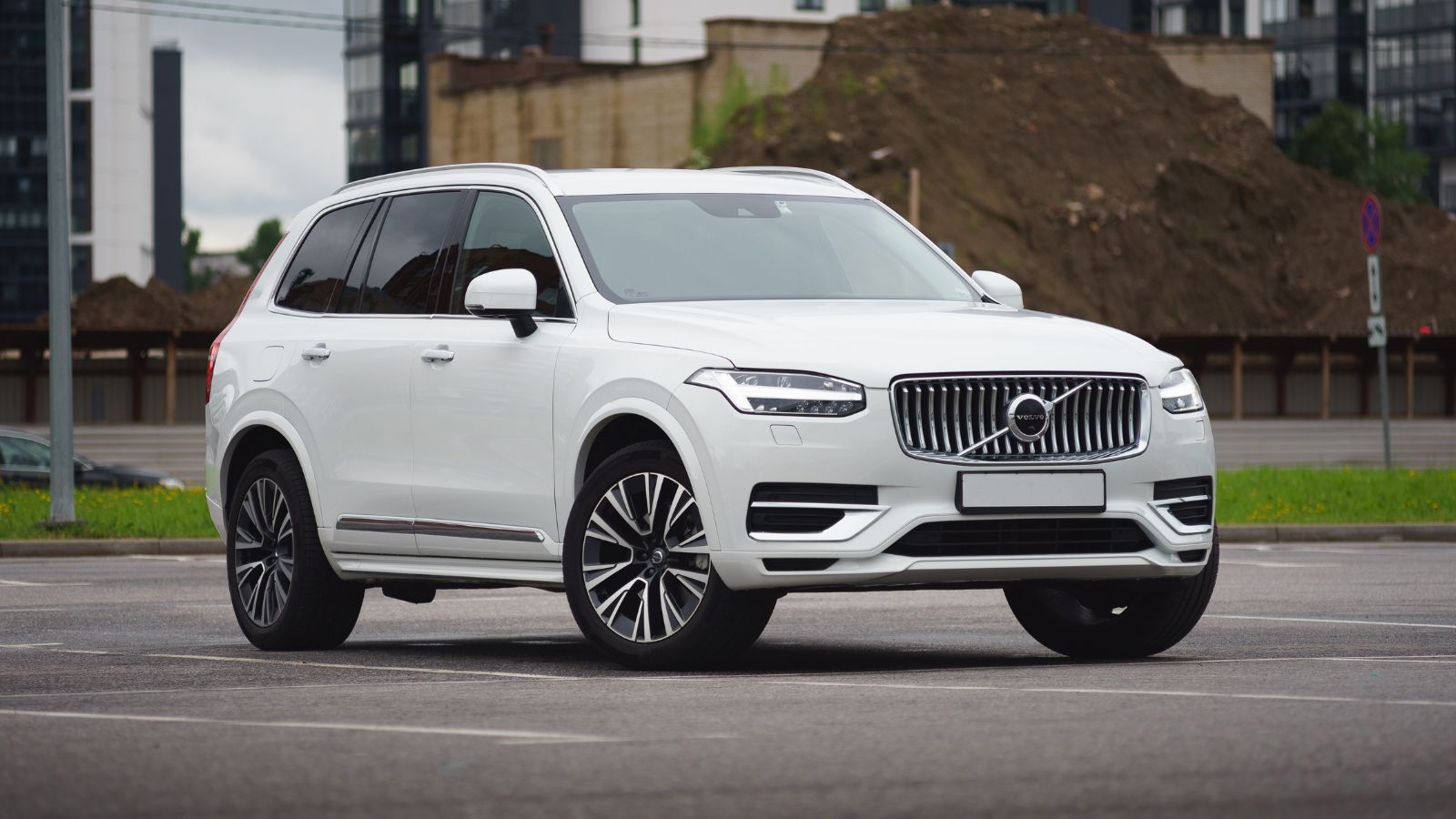
Photo Credit: Shutterstock

Photo Credit: Shutterstock

465
SHARES
1.5k
VIEWS
Share on FacebookShare on Twitter

Volvo Cars is pushing its turnaround into a more painful phase after a difficult third quarter exposed just how quickly conditions have deteriorated for the Swedish automaker. The company reported a SEK 5.6 billion operating loss for the third quarter of 2026 and announced plans to eliminate approximately 2,500 additional jobs globally, with most of the reductions falling in Sweden.

The results reflect several problems arriving at once. U.S. tariffs and weaker incentives for electrified vehicles are squeezing margins, China has become increasingly difficult for established premium brands, and the production ramp of the important EX60 electric SUV has moved more slowly than planned. Volvo is responding with another SEK 5 billion in cost reductions, deeper localization of production and a sweeping product overhaul designed to make the company less vulnerable to an increasingly fragmented global auto market.

A SEK 5.6-Billion Loss Shows How Quickly the Quarter Deteriorated

Volvo Cars’ third-quarter numbers represent a dramatic reversal from a year earlier. Revenue fell to SEK 66.9 billion from SEK 86.4 billion in the third quarter of 2025, a decline of roughly 23%. Total operating income swung from a SEK 6.4 billion profit to a SEK 5.6 billion loss. On Volvo’s measure excluding its share of income from joint ventures and associates and items affecting comparability, operating income went from a SEK 5.8 billion profit to a SEK 3.7 billion loss. The corresponding adjusted operating margin fell to negative 5.6%, while the reported group EBIT margin was negative 8.4%.

Cash generation also deteriorated. Free cash flow was negative SEK 8.9 billion during the quarter, more than double the SEK 4.3 billion outflow recorded a year earlier. Volvo’s basic earnings per share moved from SEK 1.75 to negative SEK 1.63. Its gross margin also fell sharply, to 14.7% from 20.4%. Importantly, the entire SEK 5.6 billion loss cannot be pinned on tariffs. Volvo recorded a SEK 1.1 billion negative revaluation of U.S. CAFE regulatory credits following legislative changes and recognized approximately SEK 900 million related to Polestar’s second-quarter losses, while raw-material costs, weak volumes and other operating pressures also hurt the result.

The 2,500 Job Cuts Deepen a Restructuring Already Under Way

The response will be felt most directly by Volvo’s workforce. The company plans a structural reduction of approximately 2,500 positions globally, including about 2,000 in Sweden. Volvo says the reductions will be achieved through a combination of ending consultant contracts, natural attrition and targeted exit packages for employees. The total represents roughly 6% of the company’s workforce. Management expects the latest employment measures to be substantially completed by the middle of 2027, with their full financial benefits feeding through by the end of that year.

These are not the first major cuts under Volvo’s turnaround. In May 2025, the automaker announced approximately 3,000 job reductions as part of an SEK 18 billion cost-and-cash program. That earlier restructuring was concentrated heavily in office-based positions and included roughly 1,200 employee positions in Sweden and around 1,000 consultant roles, most of them also in Sweden. Taken together, the two announcements amount to approximately 5,500 positions targeted for reduction. For a company whose headquarters, product-development operations and much of its administrative workforce are concentrated around Gothenburg, the repeated restructuring illustrates how rapidly Volvo has been forced to adjust its cost base to weaker global volumes.

U.S. Tariffs Have Turned Volvo’s Global Footprint Into a Cost Problem

Volvo has spent decades building cars for a global market, but the economics of moving vehicles between regions have changed sharply. The United States imposed a 25% Section 232 tariff on imported automobiles beginning in April 2025, creating a particular challenge for manufacturers that sell heavily in America but assemble much of their U.S. lineup elsewhere. Volvo acknowledged during its recent strategy discussions that a large portion of the vehicles it sells in the United States have historically been produced in Europe. In its third-quarter update, the company specifically identified tariffs and the removal of consumer incentives for electrified vehicles as pressures on U.S. margins.

Weak demand has compounded the problem. Volvo Car USA sold 23,766 vehicles during the third quarter of 2026, down 8.7% from a year earlier. Fully electric sales fell even more sharply, dropping 41.1% to 1,787 vehicles. Volvo is therefore accelerating localization rather than simply absorbing the additional trade costs. Production of the XC60 is scheduled to begin at the company’s Charleston, South Carolina, plant in the first quarter of 2027, and another new model with multiple powertrain choices is expected to be localized there before the end of the decade. The strategy is straightforward: building more U.S.-bound vehicles in the United States reduces tariff exposure while giving Volvo greater flexibility to tailor products to American demand.

China Has Become an Equally Serious Challenge

Tariffs explain only part of Volvo’s difficulties. China, once a major growth engine for Western premium automakers, has become an intense battleground where domestic manufacturers are competing aggressively on technology, electric drivetrains and price. Volvo described the market as one of severe pricing pressure and “hypercompetition.” Its Greater China deliveries fell 40.6% year over year in the third quarter to 20,284 vehicles, while the company said revenue generated in China declined by almost half compared with the same period of 2025.

The decline is especially significant because Volvo cannot easily compensate for weakness in China with stronger global volumes. Worldwide third-quarter retail sales fell 10.7% to 141,609 vehicles. Europe was considerably more resilient, but that strength was insufficient to overcome declines elsewhere. Volvo is now moving away from a one-size-fits-all global strategy. Six of the 13 new vehicles planned through 2030 are expected to be tailored specifically for China, with closer cooperation with majority owner Geely on technology and vehicle architecture. Volvo also intends to prioritize profitability over chasing market share through aggressive discounting. That approach could mean accepting lower near-term volumes while waiting for a more competitive, locally developed product portfolio to arrive.

The EX60 Is Both Volvo’s Biggest Opportunity and a Production Headache

Few vehicles matter more to Volvo’s recovery than the EX60. The fully electric midsize SUV sits in a much larger market segment than some of Volvo’s earlier EVs and is positioned as an electric counterpart to the highly successful XC60. Demand has not been the problem. Volvo says the EX60 has attracted more than 50,000 European orders, and initial demand earlier in the year was strong enough that the company considered expanding production beyond its original plans. The vehicle is also built in Sweden, making its success particularly important for Volvo’s home manufacturing base.

Turning those orders into revenue has proved harder. Volvo says new industrial technologies used on the EX60, including cell-to-body construction, have caused production to ramp more slowly than expected. Reuters reported that roughly 5,000 units had been built against an earlier plan of as many as 40,000 vehicles for 2026. That gap matters because Volvo expects the EX60 to become one of its more profitable models and a central contributor to its electric strategy. Management is therefore trying to solve a delicate problem: increase output quickly enough to satisfy customers and improve earnings without compromising production quality. Beyond the EX60, Volvo is preparing its largest product offensive to date, with 13 new vehicles planned between now and the end of 2030.

Another SEK 5 Billion in Savings Is Meant to Lower Volvo’s Break-Even Point

Management’s answer to weaker volumes is not simply to wait for sales to recover. Volvo now wants another SEK 5 billion of reductions in indirect spending and variable costs, on top of cost programs already implemented. By the end of 2027, the company expects its overall indirect spending to be almost 25% below its 2024 level. The new workforce reductions form one part of that program, but Volvo is also cutting corporate overhead, lowering research-and-development costs where possible and trying to make regional operations more autonomous.

Manufacturing and purchasing are also being reconsidered. Volvo intends to concentrate its manufacturing structure around five dedicated Volvo plants globally and is examining whether its Chengdu and Ghent facilities could support multi-brand assembly alongside other Geely brands. It also wants a larger common supplier base with Geely and greater use of shared hardware components. Those measures are important because Volvo has already spent heavily developing its newer vehicle architectures and software systems. Management says the company has passed the peak of that investment cycle, with investment levels now roughly 30% below 2024 levels. In effect, Volvo is trying to extract more vehicles, technology and purchasing power from infrastructure it has already paid to build.

Volvo Now Has to Prove Regionalization Can Restore Profitability

Investors have responded harshly to the worsening outlook. Volvo Cars shares fell almost 30% following the third-quarter results, reaching record lows as the scale of the loss and additional restructuring became clear. The warning signs had already appeared earlier in October, when Volvo withdrew its previous full-year 2026 outlook for sales volumes and cash flow. The company blamed worsening conditions in China and a slower-than-expected U.S. recovery and declined to replace the withdrawn projections with new short-term guidance.

That leaves Volvo entering a crucial transition period. Håkan Samuelsson, who returned as chief executive in 2025 to oversee the turnaround, is expected eventually to hand the company to former Škoda chief Klaus Zellmer, who has been appointed Volvo Cars’ next president and CEO and is scheduled to assume the position no later than October 1, 2027. Volvo continues to maintain a longer-term ambition of building a company capable of an EBIT margin above 8% and generating strong positive cash flow. Reaching that target will depend less on one dramatic recovery than on several operational improvements happening together: faster EX60 production, more competitive China-specific vehicles, greater U.S. manufacturing localization, tighter costs and a product lineup better suited to increasingly different regional markets. The latest job cuts show how much is riding on those changes working.


Recommended.

The Quiet Reason Chinese EVs Could Upend Canadian Leasing Deals in 2026

Chinese Automakers Use Canada as Their ‘Practice Run’ for U.S. Expansion

June 25, 2026
25 EV Charging Mistakes Canadians Make in March (That Wreck Range)

Why Some Canadians Are Choosing Hybrids Over Full EVs Again

August 19, 2026

Trending.

Canada’s Ballard Puts a 250,000-Mile Performance Guarantee Behind Hydrogen Buses

Canada’s Ballard Puts a 250,000-Mile Performance Guarantee Behind Hydrogen Buses

October 2, 2026
10 Reasons the Canadian Car Market Feels Different Heading Into Summer

Canadian Auto Sales Rise 3.4% for a Fourth Straight Month—but 2026 Still Trails Last Year

October 3, 2026
PBO Warns U.S. Tariff War Threatens Up to 185,000 Canadian Jobs, With Auto Manufacturing Among Hardest Hit

PBO Warns U.S. Tariff War Threatens Up to 185,000 Canadian Jobs, With Auto Manufacturing Among Hardest Hit

October 21, 2026
22 Ways Canadians Accidentally Void Their Vehicle Warranty

B.C. Drivers Vote Today on the Future of ICBC Insurance as Parties Clash Over Private Competition and No-Fault Coverage

October 24, 2026
15 Vehicles Canadians May Want to Avoid Before May Long Weekend

Tesla Buyers in Canada Are Reporting Fresh Model Y Delivery Delays as Some Orders Slip Into October and November 2.

September 27, 2026
  • About
  • Contact
  • Privacy Policy
  • Disclaimer
  • Editorial Policies
  • Terms and Conditions
A Revir Media Group Website

2026 Autoigloo - © All rights reserved

No Result
View All Result
  • News & Trends
  • Car Reviews
  • Buying Guides
  • Comparisons
  • EVs & Hybrids
  • More
    • Pricing & Deals
    • Winter Driving
    • Ownership & Maintenance

2026 Autoigloo - © All rights reserved

This website uses cookies. By continuing to use this website you are giving consent to cookies being used. Visit our Privacy and Cookie Policy.




