






















• About
  • Contact
AutoIgloo
  • News & Trends
    Debit Tap Processing Fees Rise 75% for Some Canadian Auto-Parts and Home-Supply Merchants

    Debit Tap Processing Fees Rise 75% for Some Canadian Auto-Parts and Home-Supply Merchants

    Top U.S. Senate Democrat Targets Trump’s Canada Tariffs, but Election Gains Offer No Guaranteed Relief for Auto Makers

    Top U.S. Senate Democrat Targets Trump’s Canada Tariffs, but Election Gains Offer No Guaranteed Relief for Auto Makers

    Ontario EV Owners Face a 10-to-1 Electricity Price Gap Under New November Rates

    Ontario EV Owners Face a 10-to-1 Electricity Price Gap Under New November Rates

    Nova Scotia CAA Auto Insurance Renewals Bring Credit-Score Discounts and a 30% Coverage Increase

    Nova Scotia CAA Auto Insurance Renewals Bring Credit-Score Discounts and a 30% Coverage Increase

    GM’s Chinese Joint-Venture Sales Collapse 51% as SAIC’s Own Brand Jumps 33%

    GM’s Chinese Joint-Venture Sales Collapse 51% as SAIC’s Own Brand Jumps 33%

    Toronto Battery Maker Lands $26-Million Deal to Convert Diesel Trucks to Electric Across Canada and U.S.

    Teamsters Say Some Canadian Trucking Firms Cut Driver Costs 20–30% by Misclassifying Workers

  • Car Reviews
    Mitsubishi Outlander Review: Is It Still the Underrated Family SUV?

    Mitsubishi Outlander Review: Is It Still the Underrated Family SUV?

    19 Cars With Windshields That Crack Constantly on Canadian Highways

    Subaru Forester vs Toyota RAV4: Which SUV Is Better for Canadian Winters?

    20 Cars Canadians Should Avoid If They Hate Expensive Windshield Replacements

    Hyundai Tucson vs Kia Sportage: Which Compact SUV Is the Better Everyday Buy?

    BYD, CATL and Xiaomi Are in the Mix for Xi’s Washington Trip as Canada and U.S. Split on Chinese EV Access

    Toyota RAV4 Plug-In Hybrid vs Regular Hybrid: Which One Should Canadians Buy?

    17 Vehicles That Are Quietly Getting Crushed by Insurance Costs in Canada

    Honda CR-V Hybrid Review: The Family SUV That Plays It Safe

    2026 Toyota RAV4 vs Honda CR-V: Which SUV Makes More Sense for Canadians?

    2026 Toyota RAV4 vs Honda CR-V: Which SUV Makes More Sense for Canadians?

  • Buying Guides
    Mitsubishi Outlander Review: Is It Still the Underrated Family SUV?

    Mitsubishi Outlander Review: Is It Still the Underrated Family SUV?

    16 Used SUVs That Suddenly Don’t Look Like Smart Buys in Canada

    Nissan Rogue vs Honda CR-V: Which SUV Feels Better After the Test Drive?

    19 Cars With Windshields That Crack Constantly on Canadian Highways

    Subaru Forester vs Toyota RAV4: Which SUV Is Better for Canadian Winters?

    Mazda CX-5 vs Mazda CX-50: Which One Feels More Premium for the Money?

    Mazda CX-5 vs Mazda CX-50: Which One Feels More Premium for the Money?

    17 Vehicles That Are Quietly Getting Crushed by Insurance Costs in Canada

    Honda CR-V Hybrid Review: The Family SUV That Plays It Safe

    18 Cars With Parts Prices So Wild They’re Becoming Hard to Own in Canada

    Is the New Toyota RAV4 Still the Safest Bet in Canada?

  • Comparisons
    19 Cars With Windshields That Crack Constantly on Canadian Highways

    Subaru Forester vs Toyota RAV4: Which SUV Is Better for Canadian Winters?

    21 Vehicles With the Best Real-World Fuel Economy in Canada (Not Just the Sticker)

    Toyota Corolla Cross vs Honda HR-V: Which Small SUV Is Less Compromised?

    20 Cars Canadians Should Avoid If They Hate Expensive Windshield Replacements

    Hyundai Tucson vs Kia Sportage: Which Compact SUV Is the Better Everyday Buy?

    BYD, CATL and Xiaomi Are in the Mix for Xi’s Washington Trip as Canada and U.S. Split on Chinese EV Access

    Toyota RAV4 Plug-In Hybrid vs Regular Hybrid: Which One Should Canadians Buy?

    Honda Asked Suppliers for 30% Parts Cost Cuts as $9.4-Billion Savings Drive Hits Global Supply Chain

    Why Some Buyers Are Choosing Older Hondas Over Newer SUVs

    25 EV Charging Mistakes Canadians Make in March (That Wreck Range)

    Why Some Canadians Are Choosing Hybrids Over Full EVs Again

  • EVs & Hybrids
    BYD, CATL and Xiaomi Are in the Mix for Xi’s Washington Trip as Canada and U.S. Split on Chinese EV Access

    Toyota RAV4 Plug-In Hybrid vs Regular Hybrid: Which One Should Canadians Buy?

    Geely Auto’s Core Profit Jumps 46% as Chinese EV Expansion Accelerates — With Canada Now Opening to Geely-Owned Lotus

    Geely Confirms Canadian Vehicle Sales for 2027 as Chinese Automakers Challenge Established Brands

    18 Cars That Will Feel Dated Fast as New Chinese EVs Arrive

    12 EVs Now Price Below $41,000 in Canada—Fiat 500e Falls Under $30,000 With Rebate

    The Used EV Question Canadians Should Ask Before Buying One

    The Used EV Question Canadians Should Ask Before Buying One

    Why Some EV Owners Are Getting Sticker Shock From Home Charging Setups

    Why Some EV Owners Are Getting Sticker Shock From Home Charging Setups

    20 Signs Your Car Battery Is About to Leave You Stranded

    Canadian Auto Jobs Become a Central Fault Line as Ottawa Reveals Why It Rejected U.S. Vehicle Terms

  • More
    • Pricing & Deals
    • Winter Driving
    • Ownership & Maintenance
No Result
View All Result
AutoIgloo
No Result
View All Result

Home » News & Trends

Trump’s 50% Canada Tariffs Face New U.S. Lawsuit Over Trade Rules That Include American-Made Cars

Nate Brewer by Nate Brewer
October 21, 2026
Reading Time: 7 mins read
A A
Photo Credit: Shutterstock

Photo Credit: Shutterstock

465
SHARES
1.5k
VIEWS
Share on FacebookShare on Twitter

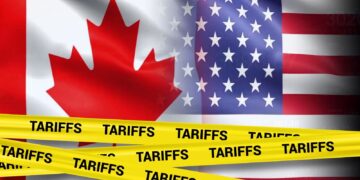
A dispute over how Canada treats American-made cars has reached an unexpected place: the import bill for Canadian cheese. On October 20, 2026, U.S. food importer Gellert Global Group filed a lawsuit in the U.S. Court of International Trade challenging President Donald Trump’s 50% tariffs on selected Canadian goods. The company argues that the administration exceeded its authority under a trade law dating to 1930.

The case connects Canadian rules affecting U.S. vehicles, alcohol and dairy with a broader question about presidential power. Washington defends the duties as a response to discriminatory treatment of American commerce. Gellert wants the tariffs stopped and money already collected refunded. For businesses moving products across the border, the immediate stakes are practical: higher costs, strained supplier relationships and uncertainty over which rules will survive in court.

A Family Food Business Brings the Challenge

Headquartered in Elizabeth, New Jersey, Gellert describes itself as a third-generation family business with combined revenues exceeding US$1.7 billion. Its network sources more than 4,000 food items from over 60 countries for retailers, foodservice businesses and manufacturers. Those figures put the case in perspective: a company built around moving food internationally is now asking a court to intervene in the rules governing one of its established supply routes.

In its complaint, Gellert says it paid at least US$520,538 in Section 338 duties on 22 Canadian-cheese import entries between September 16 and October 11. The figures represent the company’s account of costs already incurred. They also explain why the case is being brought by an American importer: Gellert identifies itself as the business responsible for paying these duties at the U.S. border. A policy presented as pressure on Canada therefore creates an immediate cash requirement for a company operating on the American side.

How American-Made Cars Became Part of a Cheese Dispute

One of the challenged measures is Proclamation 11048, issued on July 20. It identifies Canada’s treatment of U.S. motor vehicles as discrimination against American commerce. The White House points to Canada’s 25% vehicle counter-tariff and a system allowing eligible manufacturers to import specified quantities without that charge. Washington objects to relief being tied to Canadian production and investment. Those policies, it argues, disadvantage U.S. exports compared with vehicles arriving from other countries.

The connection to Gellert becomes concrete in the company’s court filing: some of its Canadian goat cheese, brie and camembert are assessed under the motor-vehicle-related proclamation as amended in September. The title of the order describes the grievance motivating it; the attached product list determines which imports face duties. That distinction explains the unusual pairing in this case. An American car’s access to the Canadian market can become part of Washington’s justification for charging an American food importer more to bring cheese across the border.

Canada’s Vehicle Rules Depend on Origin and Content

Canada’s auto counter-tariff took effect on April 9, 2025, in response to U.S. duties on Canadian vehicles and parts. The Canada Border Services Agency says covered U.S.-origin vehicles face a 25% surtax. Vehicles qualifying under CUSMA, the Canadian name for USMCA, receive an exclusion for Canadian and Mexican production inputs. The default allowance removes 15% of customs value from the calculation; importers can claim a larger exclusion if they document qualifying content.

For a hypothetical covered, qualifying vehicle with a C$50,000 customs value, the default calculation applies 25% to C$42,500, producing C$10,625 in surtax before any separate remission. Customs value is distinct from the showroom price. Ottawa also introduced a production-linked remission framework to provide additional relief for eligible manufacturers, reflecting its stated aim of preserving Canadian manufacturing and investment. These details matter because the courtroom dispute concerns the design of Canada’s rules and Washington’s response to them. Simply comparing the Canadian 25% rate with the American 50% rate misses the different products, calculations and directions of trade involved.

The Tariff Lists Changed Before the Lawsuit Arrived

The challenged 50% duties apply to specified Canadian products. Trump issued the original orders on July 20, and collection began August 22 after a three-day suspension of the planned start. Further proclamations on September 8 changed the product lists, with those changes taking effect September 15. The White House said it removed items such as rock salt and cement while adding products including more dairy goods and all-terrain vehicles. An account based only on the original lists would therefore miss consequential changes.

The September rules also say covered goods remain subject to these duties even when they qualify under USMCA. Where applicable, Section 338 charges can be added to separate Section 232 duties. For an importer, the product classification and the relevant order determine the bill. A hypothetical US$10,000 shipment subject to the 50% additional tariff would incur US$5,000 from that charge alone, before other applicable duties or costs. The legal dispute consequently affects both the size of import bills and how businesses calculate them.

A 1930 Law Gives the President Power With Conditions

Section 338 forms part of the Smoot-Hawley Tariff Act of 1930. Its text permits additional duties of up to 50% when specified findings establish discriminatory or unequal foreign treatment of American commerce. The duties must be intended to offset the resulting burden or disadvantage. The provision also describes circumstances allowing import exclusions. These conditions make the legal question more precise than whether a president can impose any tariff: the court must consider whether this particular authority supports these particular measures.

The White House told the Associated Press that it would vigorously defend the actions and regards Section 338 as an appropriate response to Canadian discrimination. Gellert disputes that characterization, arguing that Canadian vehicle and liquor restrictions arose in response to earlier U.S. tariffs, while the dairy policies involve terms negotiated under USMCA. Whether those distinctions defeat the administration’s statutory findings remains contested. A court will have to assess the legal requirements and the challenged actions, while businesses continue dealing with the costs.

The Lawsuit Says Later Trade Laws Changed the Rules

Gellert’s lawyers at the Liberty Justice Center argue that Congress substantially changed the legal framework after 1930. Their central example is Section 301 of the Trade Act of 1974, which established procedures for responding to unfair foreign trade practices. They contend that this later system superseded Section 338 or, at minimum, controls its use in this dispute. The proposed consequence is significant: the administration could not avoid newer procedural requirements simply by choosing the older statute.

In an analysis supporting the lawsuit, law professor Ilya Somin identifies additional questions about discrimination, the relationship between the duties and the alleged harm, and constitutional limits on presidential power. His discussion identifies several possible routes to relief. A court could examine the interaction between the statutes, the conditions attached to Section 338, or the breadth of the authority claimed. None of those arguments has yet become a ruling in Gellert’s favour. The legal contest concerns how Congress’s trade laws fit together and how much discretion they leave the president.

Seven Days Versus a Statutory 30-Day Wait

One part of the challenge turns on a short calendar interval. Section 338 provides for collection 30 days after the relevant proclamation. The September 8 orders added products to the tariff lists but directed collection to begin September 15, seven days later. Gellert’s lawyers argue that newly listed goods were entitled to their own waiting period, even though the original July proclamations had been issued much earlier. That makes the date each product entered the tariff schedule legally consequential.

The statute also allows presidents to amend proclamations, creating a question about how that power interacts with the waiting requirement. Gellert says amendment authority cannot erase the 30-day protection for newly added goods. This argument offers a potentially narrower route to refunds for a particular collection period, separate from the effort to overturn the tariffs more broadly. For companies arranging shipments and financing inventory, a few weeks can represent substantial payments. The outcome will depend on the court’s interpretation of the law’s timing provisions.

The Costs Reach Back to American Dairy Farms

The supply chain described by Gellert’s lawyers begins with milk from upstate New York farms. An Ontario supplier processes that milk into brie, then sends the finished cheese back to customers in the United States. A Canadian import can therefore contain an American farm’s output and support businesses on both sides of the border. If demand for the finished cheese weakens, the effects could travel back through that chain to the supplier buying the milk.

Gellert estimates its annual cost from these tariffs at US$40 million. It says it is absorbing the charges through the end of 2026, with consequences for hiring, investment, working capital and profit margins. Those are the company’s financial claims, and its annual estimate describes an expected burden rather than money already paid. The example shows why a tariff does not translate mechanically into an identical retail-price increase. Businesses may initially absorb costs, renegotiate terms or alter purchasing plans; customers could feel the effects later through prices, selection or availability.

The Earlier Supreme Court Victory Does Not Decide This Case

On February 20, 2026, the U.S. Supreme Court held that the International Emergency Economic Powers Act did not authorize presidential tariffs. That decision supplies important background to the latest challenge because it rejected an earlier legal basis for Trump’s import duties. Gellert’s case, however, concerns Section 338, a different statute that expressly discusses additional duties and a 50% ceiling. The new litigation therefore requires its own analysis of the text, limits and continued operation of that authority.

The distinction also matters to the auto industry. Separate U.S. vehicle tariffs were imposed under Section 232 of the Trade Expansion Act of 1962, a national-security provision. Gellert’s challenge to Section 338 does not automatically dispose of those duties or Canada’s countermeasures. For manufacturers and dealers trying to plan around border costs, the practical question is which particular charges a future ruling would affect. A successful challenge could change one substantial part of the tariff system while leaving other measures to separate negotiations or litigation.

Refunds and a Halt to Collection Remain Requests

As of October 21, the Liberty Justice Center’s case page listed the lawsuit as pending. The requested remedies are to declare the Section 338 tariffs unlawful, stop their collection and return improperly collected duties with applicable interest. Counsel also reports seeking a preliminary injunction and summary judgment. Those applications ask the court for early intervention and a decision on the claims; filing them does not itself suspend the charges. Gellert is also seeking to represent a proposed class of affected importers.

The reach of any relief would depend on what the court orders and which claims succeed. A ruling on the waiting period could have different consequences from a decision rejecting the administration’s broader use of Section 338. For Canadian suppliers, American importers and businesses connected to vehicle manufacturing, that distinction will shape what changes in practice. A key court development to watch is a decision on the requested relief. Until then, the case places Washington’s tariff authority under scrutiny while the companies affected still have shipments, customers and bills to manage.


Recommended.

18 Red Flags a Used Vehicle May Be a Money Pit

CanadaOne’s 42 Canadian Dealerships Add A$1 Billion to Eagers Revenue in Just Two Months

August 27, 2026
18 Red Flags a Used Vehicle May Be a Money Pit

18 Red Flags a Used Vehicle May Be a Money Pit

April 20, 2026

Trending.

Canada’s Ballard Puts a 250,000-Mile Performance Guarantee Behind Hydrogen Buses

Canada’s Ballard Puts a 250,000-Mile Performance Guarantee Behind Hydrogen Buses

October 2, 2026
10 Reasons the Canadian Car Market Feels Different Heading Into Summer

Canadian Auto Sales Rise 3.4% for a Fourth Straight Month—but 2026 Still Trails Last Year

October 3, 2026
PBO Warns U.S. Tariff War Threatens Up to 185,000 Canadian Jobs, With Auto Manufacturing Among Hardest Hit

PBO Warns U.S. Tariff War Threatens Up to 185,000 Canadian Jobs, With Auto Manufacturing Among Hardest Hit

October 21, 2026
22 Ways Canadians Accidentally Void Their Vehicle Warranty

B.C. Drivers Vote Today on the Future of ICBC Insurance as Parties Clash Over Private Competition and No-Fault Coverage

October 24, 2026
15 Vehicles Canadians May Want to Avoid Before May Long Weekend

Tesla Buyers in Canada Are Reporting Fresh Model Y Delivery Delays as Some Orders Slip Into October and November 2.

September 27, 2026
  • About
  • Contact
  • Privacy Policy
  • Disclaimer
  • Editorial Policies
  • Terms and Conditions
A Revir Media Group Website

2026 Autoigloo - © All rights reserved

No Result
View All Result
  • News & Trends
  • Car Reviews
  • Buying Guides
  • Comparisons
  • EVs & Hybrids
  • More
    • Pricing & Deals
    • Winter Driving
    • Ownership & Maintenance

2026 Autoigloo - © All rights reserved

This website uses cookies. By continuing to use this website you are giving consent to cookies being used. Visit our Privacy and Cookie Policy.




