





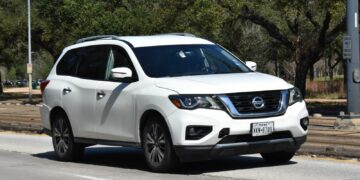
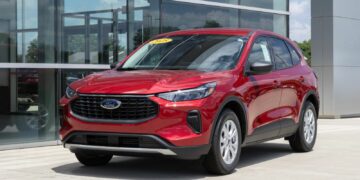













For generations, the basic economics of a car dealership have been easy to picture: rows of vehicles, millions of dollars tied up in metal, and a constant race to sell each unit before financing costs and depreciation eat into the margin. Vancouver-based OCAL Financial is trying to turn that formula inside out. The TSX Venture-listed company says it can give customers access to more than 3,000 vehicles through OPENLANE and dealer partners while keeping no standing vehicle inventory of its own.
The distinction matters. OCAL is not claiming to own a 3,000-car fleet hidden somewhere off-site. It is describing a “digital inventory” that can be sourced after a customer receives financing approval. That approach could reduce one of the traditional dealership model’s biggest balance-sheet burdens, but it also shifts the hard work elsewhere: credit matching, auction sourcing, inspections, logistics and regulatory execution.
The 3,000-Car Lot Exists Online
The most eye-catching part of OCAL’s pitch is the apparent contradiction at its centre: more than 3,000 vehicles available, yet none sitting on an OCAL-owned lot. In a September 29 disclosure, the company said most of that accessible supply comes from OPENLANE, with additional dealer and wholesaler partners filling specialty or regional gaps. OCAL says it has representatives at key auction locations who can review vehicles, bid and negotiate once a customer has an approved financing structure and a specific set of requirements. In practical terms, the company is treating access to wholesale supply as its showroom.
That distinction between access and ownership is important for consumers and investors. A conventional dealer can immediately sell the cars it physically owns, but its choice is limited to what is in stock. OCAL’s model potentially widens the search without requiring it to buy hundreds of vehicles in advance. OPENLANE Canada says its marketplace makes about 60,000 vehicles available each month and had 15,500 unique buyers and sellers in 2022, which shows the scale of the pool OCAL is tapping. However, OPENLANE does not independently confirm OCAL’s specific 3,000-plus figure; that number remains a company disclosure, and available units can change as auctions and listings turn over.
Approval Comes Before the Car
OCAL’s process starts with financing rather than a vehicle. The company says an applicant begins online, receives a soft credit check, and has a specialist and internal credit-routing system prepare the file for a third-party lender. Only after a lender provides an approved budget, payment structure and terms does the search for a vehicle begin. OCAL then looks for a model that fits the approval, arranges inspection and any required reconditioning, completes contracts electronically and organizes delivery. Its current customer-facing material says most applicants receive a decision the same business day, while the path from application to a signed contract typically takes roughly a week.
That reversal changes the emotional sequence of car buying. Instead of choosing a specific SUV or pickup first and discovering later that the payment does not work, the customer is supposed to know the financing boundaries before becoming attached to a particular vehicle. It is especially relevant for borrowers with thinner or less conventional credit files, although approval is never guaranteed. OCAL also stresses that it is not the lender: credit decisions, rates and terms come from third-party financial institutions. The company says a hard credit inquiry occurs only with consent after the customer proceeds with a specific approval and vehicle. That makes OCAL a dealer and financing arranger, not a bank carrying the loan on its own balance sheet.
OPENLANE Is the Engine Behind the Model
The model would be much harder to operate without a wholesale network large enough to function like a constantly changing warehouse. OPENLANE provides that infrastructure. In its 2025 annual filing with the U.S. Securities and Exchange Commission, OPENLANE said its marketplaces across the United States, Canada and Europe facilitated about 1.5 million vehicle transactions with gross merchandise value of $28.8 billion. Its Canadian operation describes itself as the country’s largest digital wholesale marketplace and runs physical logistics and auction locations across the country, including Toronto, Vancouver and Calgary.
Those facilities matter because an online purchase still involves a very physical machine. OPENLANE’s Toronto location lists pre- and post-sale inspections, mechanical work, body repair, detailing, storage and transportation among its services. Vancouver has inspection, reconditioning, mechanical and transport capabilities, while Calgary advertises condition reports, inspections, mechanical work and transportation. OCAL says it uses its own representatives at major locations and works with partners to recondition vehicles before delivery. That does not eliminate the risks of buying used vehicles, but it helps explain how a “virtual” dealership can operate without a traditional retail lot. The website, credit engine and auction access may be digital; the inspection bays, transport trucks and reconditioning work remain firmly in the real world.
Zero Standing Inventory Removes a Major Dealer Risk
Owning no standing inventory matters most when used-vehicle prices are moving down. Canadian Black Book’s Used Vehicle Retention Index fell to 127.5 points in August 2026 from 127.9 in July. It was down 7.6% from a year earlier and roughly 4.5% from the start of 2026. For a dealership holding dozens or hundreds of used vehicles, a softer market can turn time into a cost: a car that sits for weeks is aging while its market value can be falling. If that inventory was bought with borrowed money, interest and other holding costs continue in the background.
Floorplan financing exists precisely because stocking a dealership requires substantial working capital. OPENLANE itself promotes floorplan and inventory financing through Automotive Finance Canada, describing it as a revolving credit structure that lets dealers acquire vehicles while preserving cash for operations. OCAL’s strategy is to avoid needing that kind of financing for a large pool of unsold stock by purchasing a vehicle only after an approved buyer is waiting. It is not cost-free—the company still faces auction fees, transport, inspection, reconditioning and transaction costs—but it reduces the period during which capital is tied up in a car with no identified retail customer. In a depreciating market, that timing difference can become meaningful.
The Company Still Has to Make Money Somewhere
“Zero inventory” can sound as though the company barely touches the economics of selling cars, but OCAL’s public disclosures show a more conventional revenue base underneath the technology language. The company says retail and wholesale vehicle sales represent the majority of revenue. It also earns money from warranty and protection products, documentation and licensing fees, dealer administration fees and service fees. OCAL says it does not hold the customer’s loan or assume credit-default risk, so the lender carries the long-term credit exposure. The company’s margin, however, still depends on successfully sourcing and completing vehicle transactions and selling related products.
Its financial history also shows why execution matters. A July 2026 transaction update reported revenue of about $6.48 million for the year ended August 31, 2025, up from about $5.45 million a year earlier. The same disclosure reported a net loss of $322,090, total assets of $931,244 and total liabilities of roughly $2.95 million at the 2025 year-end. Those figures predate the company’s summer 2026 public listing and financing, so they are not a snapshot of today’s balance sheet. They do, however, provide useful scale: OCAL is an operating business with millions in historical revenue, but it is still small enough that better conversion, sourcing discipline and cost control can materially change its results.
Virtual Does Not Mean Unregulated
A dealership does not escape provincial rules simply because the showroom is a website. OCAL currently says it is licensed to sell and arrange transactions in British Columbia and Alberta, with offices in Vancouver and Edmonton. The Vehicle Sales Authority of British Columbia independently lists OCAL Financial as an issued motor dealer licence, D50207, with no restrictions on its licence status. OCAL identifies its Alberta authorization as AMVIC licence B2036050 and states that financing is arranged through third-party lenders rather than provided by OCAL itself.
That regulatory footprint also puts a practical boundary around the “national” feel of a digital inventory. A vehicle may be discoverable through a countrywide wholesale network, but OCAL says its consumer financing service is currently offered to residents of British Columbia and Alberta. Its current materials identify Manitoba and Ontario as the next planned provinces. Expansion is therefore not just a matter of switching on online advertising in another market. The company itself acknowledges that moving into new jurisdictions depends on licensing, lender coverage and capital. For customers, the broader point is simple: the 3,000-plus number describes potential sourcing access, not an unrestricted promise that anyone in Canada can immediately buy any listed vehicle through OCAL.
Credit Is the Other Half of the Business
The financing side may ultimately be as important to OCAL as the vehicle-sourcing side. The company says its credit-intelligence system compares an applicant’s file with the criteria of lenders in its network and routes the application toward institutions that are more likely to accept that profile. OCAL has highlighted first-time buyers, newcomers, self-employed workers, gig workers and people rebuilding credit as important customer groups. It says the system looks at more than a bureau score, while human review remains part of the process. The lender, not OCAL, still makes the final credit decision.
That focus arrives at a time when vehicle affordability and household credit remain major concerns. TransUnion reported that Canadian consumer debt reached a record $2.64 trillion in the second quarter of 2026, with auto-loan balances up 7.9% year over year and average non-mortgage debt at $28,118. Equifax, meanwhile, reported a 90-plus-day auto-loan delinquency rate of 1.10% in the second quarter, down slightly from 1.11% in the previous quarter. Those national statistics are not measures of OCAL’s customers or loan performance, but they explain the environment in which an approval-first dealership is operating. Matching a buyer to a sustainable payment is not simply a user-experience feature when vehicles and credit are expensive; it is central to whether the deal closes and remains affordable.
The Biggest Test Is Whether the Model Works at Scale
OCAL’s larger bet is that a dealership can expand by adding digital reach, lender relationships and auction access rather than continuously adding buildings and parked vehicles. The company completed its qualifying transaction and began trading on the TSX Venture Exchange under the symbol OCAL in July 2026. A concurrent private placement brought in about $1.51 million in gross proceeds, and the company had 36.7 million common shares outstanding when the transaction closed. Its current investor material says Manitoba and Ontario are the next Canadian provinces planned, while selected U.S. markets have been identified for later consideration.
That makes the 3,000-plus inventory claim less a story about the size of one virtual showroom than a test of whether access can substitute for ownership at scale. The September 29 release does not provide several metrics that would help measure that test, including the percentage of approved customers who ultimately receive a matched vehicle, average sourcing time, per-deal gross margin or cancellation rates. Those are the kinds of operating numbers that would show how well the concept works beyond the headline. What is already clear is that OCAL has separated two things traditional dealerships usually bundle together: owning inventory and selling vehicles. If it can keep the first one close to zero while reliably executing the second, the model could look very different from the dealership most Canadians grew up with.