


























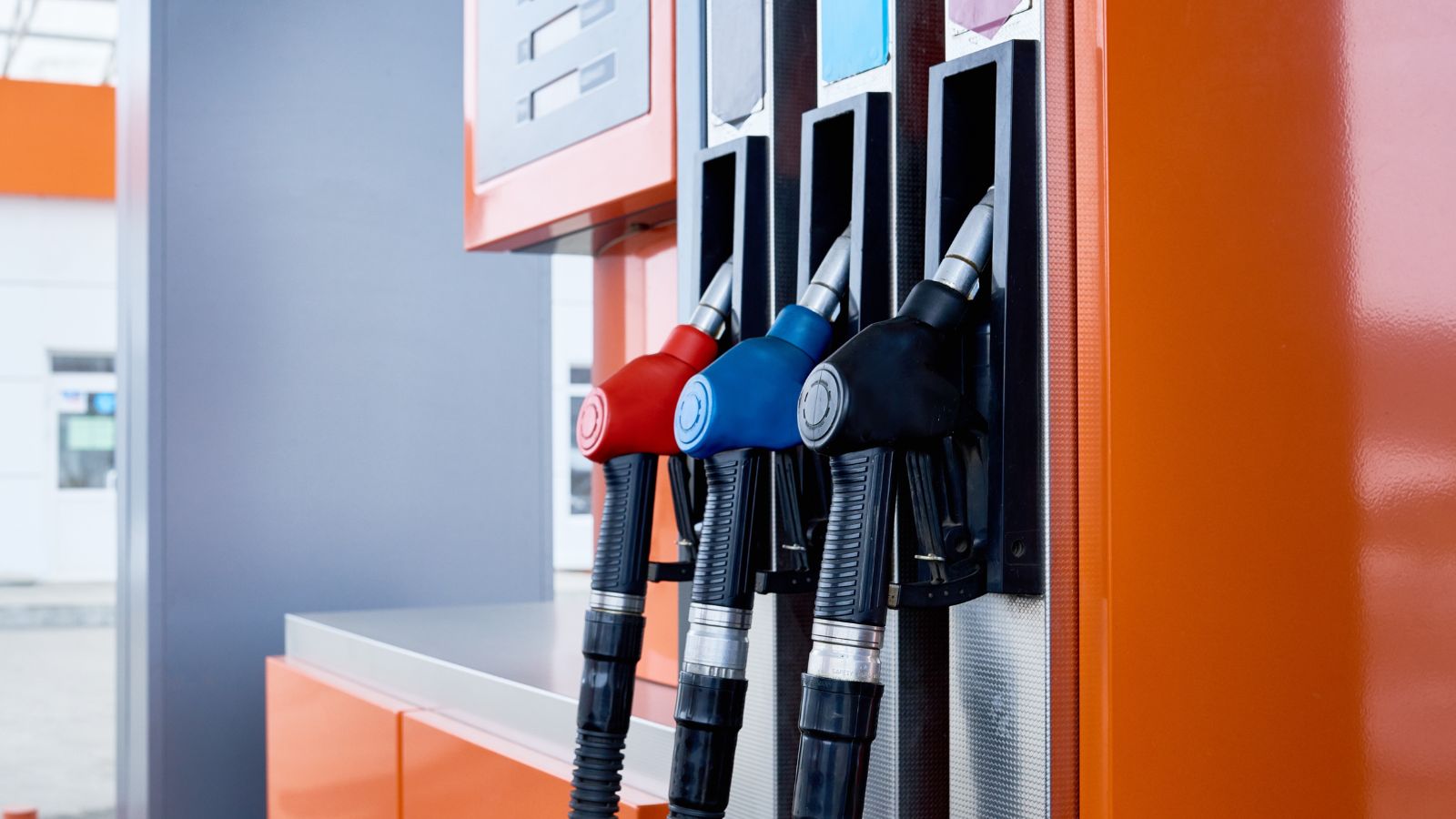
Toronto drivers looking at fuel-price boards this weekend are seeing an unusually wide range depending on where they stop. Late on September 27, one Toronto fuel-price tracker put the average reported regular gasoline price at 178.2 cents per litre, based on 279 stations with recent observations. Yet the cheapest report was dramatically lower, at 160.9 cents per litre.
That gap matters at a time when gasoline remains one of the more volatile parts of the household budget. Toronto prices have moved sharply throughout September as crude oil markets, wholesale costs, seasonal fuel changes and government tax measures interact. The result is a market where the headline average tells only part of the story — and where location can make a surprisingly large difference to the final bill.
The 178.2-Cent Average Hides a Much Wider Price Range
The 178.2-cent Toronto figure was calculated from 279 regular-gasoline reports collected within a 36-hour window late on September 27. That makes it useful as a snapshot of what drivers were encountering across the city, but it is not an official government statistical average. The information comes from community-reported fuel-price feeds that are collected and refreshed regularly, meaning individual observations can be newer or older than others.
The striking number is at the bottom of the range. The lowest recent report was 160.9 cents per litre, putting it 17.3 cents below the citywide reported average. That is a substantial spread for stations operating in the same metropolitan market. It also helps explain why two Toronto drivers filling up on the same evening can come away with very different impressions of what gasoline “costs.” One may encounter a sign comfortably below 165 cents, while another sees prices closer to 180 cents or higher only a few neighbourhoods away.
Some of the Cheapest Reports Were Concentrated in Toronto’s East End
The lowest reported price in the late-September snapshot came from an Esso at 3075 Danforth Avenue, where regular gasoline was listed at 160.9 cents per litre. Two other particularly inexpensive reports were close behind: a Shell at 577 Birchmount Road and an Ultramar at 3220 Kingston Road were both listed at 161.9 cents per litre. Several other lower-priced stations also appeared around Toronto’s eastern and Scarborough corridors.
That geographic clustering is important because fuel prices are not distributed evenly across Toronto. Stations operate in different competitive environments and face different traffic volumes, property costs and nearby rivals. A retailer surrounded by several competing stations may react quickly when one business lowers its price. In a neighbourhood with fewer convenient alternatives, there may be less immediate pressure. The cheapest station in the city therefore does not necessarily represent what someone will find near downtown, North York or Etobicoke at the same moment.
A 17.3-Cent Difference Can Be Worth More Than $8 on a Fill
At 178.2 cents per litre, buying 50 litres of regular gasoline costs approximately $89.10. The same 50 litres at the lowest reported price of 160.9 cents would cost about $80.45. That is a difference of $8.65 on a single fill. On a 60-litre purchase, the difference grows to roughly $10.38, assuming those pump prices remain unchanged when the vehicle arrives.
Those calculations help put what looks like a small difference on a roadside sign into household-budget terms. However, the savings depend heavily on location. Driving well out of the way to find cheaper gasoline consumes fuel, time and vehicle mileage, potentially erasing part of the benefit. The more practical opportunity comes when a significantly cheaper station is already close to a regular commuting, shopping or school route. With Toronto’s latest reported spread exceeding 17 cents between the average and cheapest observation, checking nearby options can matter much more than when stations are separated by only two or three cents.
September Has Already Produced Several Sharp Price Swings
Toronto’s September gasoline market has been anything but stable. CityNews’ historical GTA price series showed a benchmark of 189.9 cents per litre on September 17, followed by 180.9 cents on September 18. Prices later climbed again, reaching 188.9 cents on September 26 before En-Pro forecast a seven-cent decline to 181.9 cents for September 27. That benchmark is calculated differently from the 178.2-cent live reported-station average, but both illustrate the speed with which conditions have been changing.
The pattern is a reminder that a gasoline price observed on Friday may provide little guidance about what appears on station signs several days later. Toronto has experienced similarly wide monthly ranges during 2026. CityNews data put August’s GTA high at 182.9 cents and its low at 162.9 cents, while July ranged between 163.9 and 183.9 cents. For drivers accustomed to relatively predictable weekly expenses, swings of that size can quickly alter monthly transportation costs.
The Seasonal Fuel Change Has Helped Move Prices
Part of September’s movement has a familiar seasonal explanation. Earlier in the month, petroleum analyst Roger McKnight told CityNews that an expected eight-cent GTA decline — from 187.9 to 179.9 cents per litre — was tied directly to the industry’s annual transition from summer to winter gasoline. Winter-grade fuel can generally be produced at a lower cost, allowing seasonal changes in wholesale prices to work their way through to retail stations.
That does not mean every September decline can be attributed to the fuel-blend switch. Crude oil costs, refinery conditions, inventories, currency movements and local competition continue changing simultaneously. The seasonal transition simply removes one source of upward pressure that is more pronounced during warmer months, when gasoline specifications are designed differently. Toronto’s recent experience illustrates how several forces can overlap: seasonal production costs may be easing at the same time that international oil markets remain volatile, producing sudden drops followed by renewed increases rather than a smooth downward trend.
The Tax Picture at the Pump Has Changed Significantly
The taxes embedded in Ontario gasoline prices look different from only a few years ago. Ontario permanently reduced its gasoline tax to nine cents per litre beginning July 1, 2025. The federal consumer fuel charge was also eliminated effective April 1, 2025, meaning the former consumer-facing federal carbon charge no longer applies to gasoline purchases. Ontario gasoline remains subject to the province’s 13% Harmonized Sales Tax.
Federal excise taxation is currently more complicated. Ottawa legally suspended the normal 10-cent-per-litre federal gasoline excise tax between April 20 and September 7, 2026. The government subsequently introduced Bill C-38, the Canadian Fuel Affordability Act, proposing to extend the zero rate retroactively from September 8 through January 31, 2027. The proposal would then apply half the normal rate in February and March before restoring the regular rate in April 2027. Because that extension is legislative, its parliamentary status matters when describing the current tax framework.
Global Oil Prices Still Matter Even When Local Prices Fall
Toronto’s pump prices may be local, but one of their biggest inputs trades internationally. Natural Resources Canada identifies crude oil, refining, distribution, marketing and taxes as core components of gasoline prices. Ontario also notes that Toronto wholesale gasoline is strongly influenced by North American markets, including the New York Harbor benchmark. A change thousands of kilometres away can therefore eventually appear on a Toronto station’s roadside sign.
September demonstrated that connection particularly clearly. U.S. Energy Information Administration data showed West Texas Intermediate crude at more than US$107 per barrel on September 15 before falling to US$96.41 on September 22. Oil markets have been reacting to Middle East supply concerns, changing expectations around available exports and other geopolitical developments. Falling crude can provide relief to gasoline markets, but the effect is neither automatic nor perfectly synchronized. Refining margins, wholesale inventories and retailer pricing decisions determine how quickly an upstream change reaches consumers.
Local Competition Helps Explain Why Stations Can Be So Far Apart
Competition can create surprisingly large price differences inside one city. Canada’s Competition Bureau says gasoline markets are affected by crude and refining costs, distribution, taxes and local retail conditions. Stations with high sales volumes can spread their fixed expenses across more litres, while businesses attached to convenience stores or large retailers may have additional revenue sources that allow them to compete more aggressively on gasoline itself.
Location also changes the equation. Nearby stations watch one another’s roadside prices because fuel customers can easily compare competing signs while driving. One retailer lowering its price can trigger responses from others, sometimes producing localized price competition that is not happening elsewhere in Toronto. The Competition Bureau highlighted the sensitivity of the sector again in September when it reached an agreement with fuel-data provider Kalibrate over concerns involving the sharing of detailed station-level information. That case underscored just how valuable information about competitors’ sales and pricing conditions can be in Canada’s retail gasoline market.
Expensive Gas Is Still Showing Up in Canada’s Inflation Numbers
Toronto’s late-September decline does not erase the broader increase Canadians have experienced over the past year. Statistics Canada’s August Consumer Price Index showed gasoline prices 22.8% higher than in August 2025. Transportation prices overall were up 7.5% year over year, while the all-items CPI increased 3.0%. Gasoline remained elevated even though its year-over-year increase slowed compared with July.
That difference matters because fuel is both a direct household expense and an input into wider economic activity. A commuter notices the increase immediately while filling a tank, but businesses also purchase fuel to move construction materials, food and other goods. Not every change at the pump translates directly into the price of another product, yet sustained fuel increases can add pressure to transportation-intensive activities. For Toronto households, a citywide average close to $1.78 a litre is therefore more than a roadside statistic — it is another recurring expense competing with food, housing, insurance and other monthly costs.
Live Price Reports Are Useful, but Timing Matters
The lowest-price reports should be treated as snapshots rather than guarantees. CheapGasToronto says its system checks fuel-price feeds hourly, but that does not mean every station receives a new observation every hour. Individual reports can remain in the current-price rankings for up to 36 hours, and the operator warns that prices can change between updates. Its methodology also focuses primarily on regular 87-octane gasoline, so premium and diesel drivers may see very different numbers.
That is especially important when prices are moving quickly. A station reported at 160.9 cents in the evening could change its sign before another driver arrives the next morning. Comparing the timestamp of the report is therefore almost as important as comparing the price itself. Toronto’s late-September numbers still reveal something meaningful: there was a sizable gap between the city’s reported average and its cheapest stations. But the most useful bargain is generally not the lowest number anywhere in Toronto — it is a recently verified low price that fits naturally into an existing route.