


























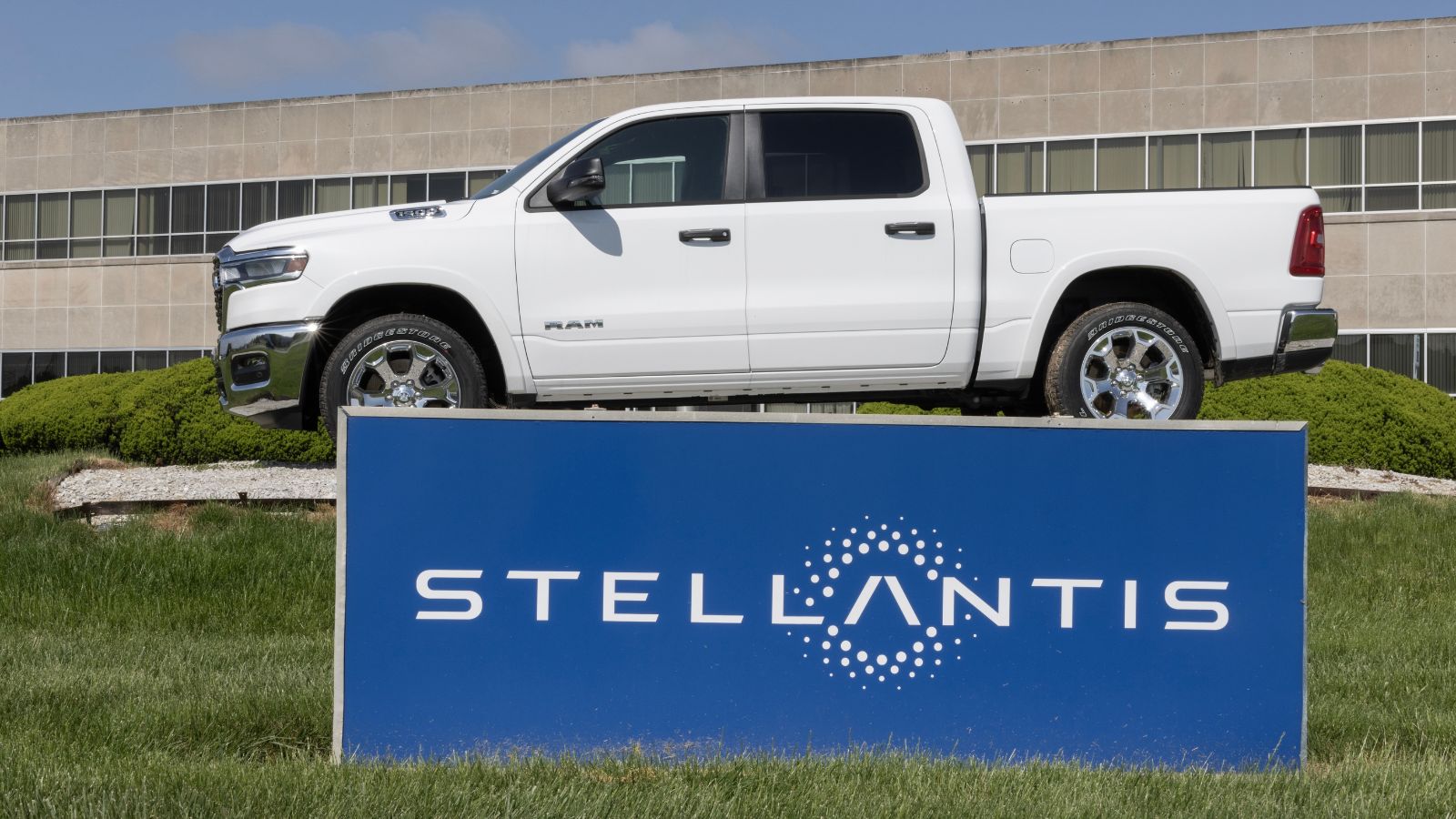
Ottawa’s fight with Stellantis over the future of its Brampton, Ontario, assembly plant has moved well beyond an argument about one idle factory. The federal government is now signalling that hundreds of millions of dollars in public support could be at risk if automotive production does not return to the site.
Industry Minister Mélanie Joly’s warning comes as Stellantis explores selling the plant to Canadian armoured-vehicle manufacturer Roshel, while thousands of workers face continued uncertainty. At stake are jobs, government subsidies, a major piece of Ontario’s auto-manufacturing base and the credibility of public agreements designed to keep vehicle production in Canada. What began as an ambitious electric-vehicle retooling project has become a test of how much leverage Ottawa actually has when an automaker changes its North American production strategy.
Ottawa Is Turning Public Funding Into Leverage
The federal government’s message to Stellantis has become increasingly direct: public money provided to support Canadian automotive production came with obligations. Joly said Stellantis could be required to repay hundreds of millions of dollars if vehicle manufacturing does not resume at Brampton. That warning represents a significant escalation from Ottawa’s earlier efforts to persuade the automaker to provide a new production plan for the facility.
The government has already taken concrete steps. After Stellantis announced in October 2025 that Jeep Compass production originally intended for Brampton would instead be placed at its Belvidere, Illinois, operation, Innovation, Science and Economic Development Canada launched a formal dispute-resolution process under its contribution agreement with the company. Future payments connected with that agreement were subsequently paused. The precise repayment provisions remain commercially confidential, so the eventual amount Stellantis could owe cannot yet be stated with certainty. Still, Ottawa’s position makes clear that keeping Brampton idle indefinitely could carry a substantial financial cost.
The Federal Commitment Was Worth Up to $529 Million
The numbers help explain why the dispute has attracted so much attention. In May 2022, Ottawa announced up to $529 million through its Strategic Response Fund to support a broader $3.6-billion Stellantis investment covering its Brampton and Windsor operations. Ontario separately committed support of up to $513 million. The goal was to help transform the facilities for an increasingly electrified North American vehicle market while securing Canadian manufacturing employment.
Federal records show that this was not merely money promised on paper. By March 31, 2025, approximately $222.4 million had already been disbursed under the federal contribution agreement. Payments were based on eligible costs incurred by the company, and Ottawa subsequently froze additional payments after the Jeep production decision. That distinction matters. The government is not simply threatening to withdraw funding Stellantis never received; depending on the contractual remedies ultimately invoked, Ottawa could potentially seek the recovery of money that has already gone out the door. The confidential agreement will determine exactly how far that authority extends.
Brampton Was Supposed to Get a New Automotive Future
The original plan offered Brampton workers something increasingly valuable in the auto industry: a product mandate beyond the life of the plant’s long-running muscle cars. Vehicle production at the facility ended in December 2023 after the final generation of the Chrysler 300, Dodge Charger and Dodge Challenger finished their runs. Stellantis then began preparing the plant for its next chapter, with Jeep Compass production expected to start after retooling.
That transition never reached the production line. Retooling work was paused in early 2025, and in October of that year Stellantis announced that the Compass would instead be produced in Belvidere, Illinois. Federal briefing documents confirm the Jeep was originally expected to begin production in Brampton in 2026. The shift left the Ontario plant without a confirmed replacement vehicle. For workers who had accepted a lengthy shutdown believing it would lead to another manufacturing program, the change transformed what was supposed to be temporary downtime into an open-ended question about whether passenger vehicles would ever be assembled there again.
The Proposed Roshel Sale Has Changed the Stakes
Stellantis has now identified another possible future for the sprawling Brampton property. In September 2026, the automaker confirmed that it had signed a memorandum of understanding with Roshel, a Canadian manufacturer of armoured vehicles, outlining a potential sale of the facility. Roshel has said it wants to establish a defence-manufacturing centre at the site and has discussed giving laid-off Unifor members priority consideration for employment.
Stellantis argues that the proposal offers a realistic route to restoring productive activity rather than leaving the factory dormant. Company officials have said they examined multiple options and believe Roshel could help maintain Brampton’s role in advanced manufacturing. Ottawa and Unifor, however, are confronting a different question: whether defence manufacturing is an acceptable substitute for the automotive production that government funding and previous labour commitments were intended to support. Joly has also said the federal government did not participate in negotiating or endorsing the Stellantis-Roshel arrangement. A factory operating again would solve the problem of an empty building, but it would not necessarily satisfy the conditions attached to automotive investment support.
More Than 2,000 Brampton Workers Remain in Limbo
Behind the financing dispute are workers who have already spent years waiting for production to return. Unifor says approximately 2,200 members from its Brampton operation have been on indefinite layoff after vehicle assembly stopped. The union originally expected those employees to return as the plant was retooled for the Jeep program. Instead, the timetable stretched from a planned manufacturing transition into prolonged uncertainty.
The impact extends beyond whether a worker receives another call to the assembly line. Large automotive plants support networks of parts companies, transportation providers and other businesses whose activity depends on production volumes. Unifor has argued that thousands of additional supplier jobs are connected to the plant and that replacing mass automotive assembly with a smaller industrial operation would not necessarily recreate the same economic footprint. Stellantis and Unifor have at least agreed to temporarily extend income-security provisions for affected Brampton employees while bargaining continues, providing some protection as the larger dispute unfolds. For families connected to the plant, however, income support is not the same as a confirmed product and a return-to-work date.
The Plant Dispute Is Now Entangled With National Labour Talks
Brampton has also become the central obstacle in Stellantis’ 2026 negotiations with Unifor. Bargaining began September 1 for more than 9,000 unionized Stellantis employees across Canada. After 10 days of talks, Unifor declared that negotiations had reached an impasse, saying the proposed closure and sale of Brampton was preventing the parties from reaching a broader settlement.
The situation is particularly significant because Unifor uses pattern bargaining with the Detroit Three automakers. Agreements had already been negotiated with Ford and General Motors before discussions opened with Stellantis, giving workers expectations around the economic framework of a new contract. The union says Stellantis tied acceptance of parts of that pattern to conditions related to Brampton’s closure. Unifor has said strike action remains possible, although the expiry of the existing contract on September 20 did not automatically place workers in a legal strike position. Ontario’s mandatory conciliation process still had to be completed. Ottawa has publicly encouraged Stellantis and the union to resume negotiations while separately maintaining pressure over the plant’s future.
The Fight Reflects the Importance of Canada’s Auto Industry
Brampton is one plant, but governments see the dispute through the much larger lens of Canadian automotive manufacturing. Federal figures show the auto sector contributed approximately $16.8 billion to Canadian GDP in 2024. It directly employed more than 125,000 people while supporting more than 427,000 indirect jobs. That economic footprint is one reason Ottawa, Ontario and other provincial governments have committed substantial public resources to vehicle and battery investments.
The Brampton disagreement therefore creates an uncomfortable precedent question. Governments have increasingly offered subsidies and other incentives to secure long-term manufacturing commitments as Canada competes with the United States, Mexico and other jurisdictions for new investment. If an automaker can receive public funding for a production transition and later redirect the promised product elsewhere, governments need mechanisms to protect taxpayers and maintain confidence in future agreements. At the same time, manufacturers operate in a rapidly changing market shaped by tariffs, electrification strategies, consumer demand and corporate restructuring. Brampton demonstrates what happens when government industrial policy and corporate production planning suddenly move in different directions.
U.S. Trade Policy Helped Reshape Stellantis’ Calculation
The Brampton decision did not occur in isolation from the broader Canada-U.S. trade environment. Stellantis shifted the planned Jeep Compass program to Illinois as automakers adjusted their North American strategies amid U.S. tariffs and changing market conditions. Recent reporting has tied the company’s Brampton reversal partly to the increased cost and uncertainty facing vehicles assembled in Canada and shipped into the United States.
For Canada, that creates a difficult policy challenge. Automotive production has been deeply integrated across the border for decades, with vehicles and components moving repeatedly between Canada and the United States during manufacturing. Government incentives can make a Canadian plant attractive, but they cannot completely offset major changes in tariff policy or U.S. incentives that encourage production to move south. The Brampton conflict consequently has implications well beyond Stellantis. Ottawa is attempting to demonstrate that Canadian subsidies cannot simply become part of the sunk cost of moving production elsewhere. How firmly that principle is enforced could influence future negotiations with every automaker considering government-supported investment in Canada.
What Happens Next Could Define Brampton for Decades
Several issues now have to be resolved at roughly the same time. Stellantis and Unifor need a new collective agreement. Stellantis must determine whether it will proceed with the Roshel transaction. Ottawa must decide how aggressively to enforce the remedies contained in its funding agreement. Most importantly for Brampton, someone still needs to determine whether large-scale automotive manufacturing has a viable future at the site.
There is no confirmed outcome yet. Stellantis maintains that the Roshel proposal offers a path back to sustainable industrial activity, while Unifor continues to push for automotive production and Ottawa is signalling that public funding was tied to more than keeping the property occupied. The federal government’s willingness to contemplate recovering hundreds of millions of dollars gives it considerable leverage, but money alone cannot create a new vehicle program. The ultimate resolution will show whether Canada can hold multinational automakers to investment commitments when economic conditions change—and whether one of Ontario’s best-known assembly plants remains part of the country’s automotive future or enters an entirely different industrial era.