



















• About
  • Contact
AutoIgloo
  • News & Trends
    Subaru Canada Sales Surge 69.6% to Record 9,198 Vehicles in October

    Subaru Canada Sales Surge 69.6% to Record 9,198 Vehicles in October

    Ontario Driver Quoted $10,800 for EV Battery Repair Just Five Months After Warranty Expired

    Ontario Driver Quoted $10,800 for EV Battery Repair Just Five Months After Warranty Expired

    Mazda Sales Surge 25% in the U.S. but Fall 5.4% in Canada as Cross-Border Gap Widens

    Mazda Sales Surge 25% in the U.S. but Fall 5.4% in Canada as Cross-Border Gap Widens

    Trump’s 50% Canada Tariffs Face New U.S. Lawsuit Over Trade Rules That Include American-Made Cars

    Nearly 7 in 10 Toyota and Lexus Vehicles Sold in Canada Are Now Electrified as RAV4 Hybrid Sets Record

    Carney Says Washington Is Asking Less in Renewed Trade Talks, but Canadian Auto Tariff Relief Remains Unannounced

    Carney Says Washington Is Asking Less in Renewed Trade Talks, but Canadian Auto Tariff Relief Remains Unannounced

    24 Vehicles That Look Cheap… Until You Try to Finance Them in Canada

    Mazda Raises Mazda3 Starting Price by $500 in Canada — Base Sedan Now Costs $27,845 With Freight

  • Car Reviews
    Mitsubishi Outlander Review: Is It Still the Underrated Family SUV?

    Mitsubishi Outlander Review: Is It Still the Underrated Family SUV?

    19 Cars With Windshields That Crack Constantly on Canadian Highways

    Subaru Forester vs Toyota RAV4: Which SUV Is Better for Canadian Winters?

    20 Cars Canadians Should Avoid If They Hate Expensive Windshield Replacements

    Hyundai Tucson vs Kia Sportage: Which Compact SUV Is the Better Everyday Buy?

    BYD, CATL and Xiaomi Are in the Mix for Xi’s Washington Trip as Canada and U.S. Split on Chinese EV Access

    Toyota RAV4 Plug-In Hybrid vs Regular Hybrid: Which One Should Canadians Buy?

    17 Vehicles That Are Quietly Getting Crushed by Insurance Costs in Canada

    Honda CR-V Hybrid Review: The Family SUV That Plays It Safe

    2026 Toyota RAV4 vs Honda CR-V: Which SUV Makes More Sense for Canadians?

    2026 Toyota RAV4 vs Honda CR-V: Which SUV Makes More Sense for Canadians?

  • Buying Guides
    Mitsubishi Outlander Review: Is It Still the Underrated Family SUV?

    Mitsubishi Outlander Review: Is It Still the Underrated Family SUV?

    16 Used SUVs That Suddenly Don’t Look Like Smart Buys in Canada

    Nissan Rogue vs Honda CR-V: Which SUV Feels Better After the Test Drive?

    19 Cars With Windshields That Crack Constantly on Canadian Highways

    Subaru Forester vs Toyota RAV4: Which SUV Is Better for Canadian Winters?

    Mazda CX-5 vs Mazda CX-50: Which One Feels More Premium for the Money?

    Mazda CX-5 vs Mazda CX-50: Which One Feels More Premium for the Money?

    17 Vehicles That Are Quietly Getting Crushed by Insurance Costs in Canada

    Honda CR-V Hybrid Review: The Family SUV That Plays It Safe

    18 Cars With Parts Prices So Wild They’re Becoming Hard to Own in Canada

    Is the New Toyota RAV4 Still the Safest Bet in Canada?

  • Comparisons
    19 Cars With Windshields That Crack Constantly on Canadian Highways

    Subaru Forester vs Toyota RAV4: Which SUV Is Better for Canadian Winters?

    21 Vehicles With the Best Real-World Fuel Economy in Canada (Not Just the Sticker)

    Toyota Corolla Cross vs Honda HR-V: Which Small SUV Is Less Compromised?

    20 Cars Canadians Should Avoid If They Hate Expensive Windshield Replacements

    Hyundai Tucson vs Kia Sportage: Which Compact SUV Is the Better Everyday Buy?

    BYD, CATL and Xiaomi Are in the Mix for Xi’s Washington Trip as Canada and U.S. Split on Chinese EV Access

    Toyota RAV4 Plug-In Hybrid vs Regular Hybrid: Which One Should Canadians Buy?

    Honda Asked Suppliers for 30% Parts Cost Cuts as $9.4-Billion Savings Drive Hits Global Supply Chain

    Why Some Buyers Are Choosing Older Hondas Over Newer SUVs

    25 EV Charging Mistakes Canadians Make in March (That Wreck Range)

    Why Some Canadians Are Choosing Hybrids Over Full EVs Again

  • EVs & Hybrids
    BYD, CATL and Xiaomi Are in the Mix for Xi’s Washington Trip as Canada and U.S. Split on Chinese EV Access

    Toyota RAV4 Plug-In Hybrid vs Regular Hybrid: Which One Should Canadians Buy?

    Geely Auto’s Core Profit Jumps 46% as Chinese EV Expansion Accelerates — With Canada Now Opening to Geely-Owned Lotus

    Geely Confirms Canadian Vehicle Sales for 2027 as Chinese Automakers Challenge Established Brands

    18 Cars That Will Feel Dated Fast as New Chinese EVs Arrive

    12 EVs Now Price Below $41,000 in Canada—Fiat 500e Falls Under $30,000 With Rebate

    The Used EV Question Canadians Should Ask Before Buying One

    The Used EV Question Canadians Should Ask Before Buying One

    Why Some EV Owners Are Getting Sticker Shock From Home Charging Setups

    Why Some EV Owners Are Getting Sticker Shock From Home Charging Setups

    20 Signs Your Car Battery Is About to Leave You Stranded

    Canadian Auto Jobs Become a Central Fault Line as Ottawa Reveals Why It Rejected U.S. Vehicle Terms

  • More
    • Pricing & Deals
    • Winter Driving
    • Ownership & Maintenance
No Result
View All Result
AutoIgloo
No Result
View All Result

Home » News & Trends

Nissan Puts $229M Into Kicks Hybrid Production as Automaker Pulls Back Elsewhere

Nate Brewer by Nate Brewer
September 16, 2026
Reading Time: 6 mins read
A A
Photo Credit: Shutterstock

Photo Credit: Shutterstock

466
SHARES
1.5k
VIEWS
Share on FacebookShare on Twitter

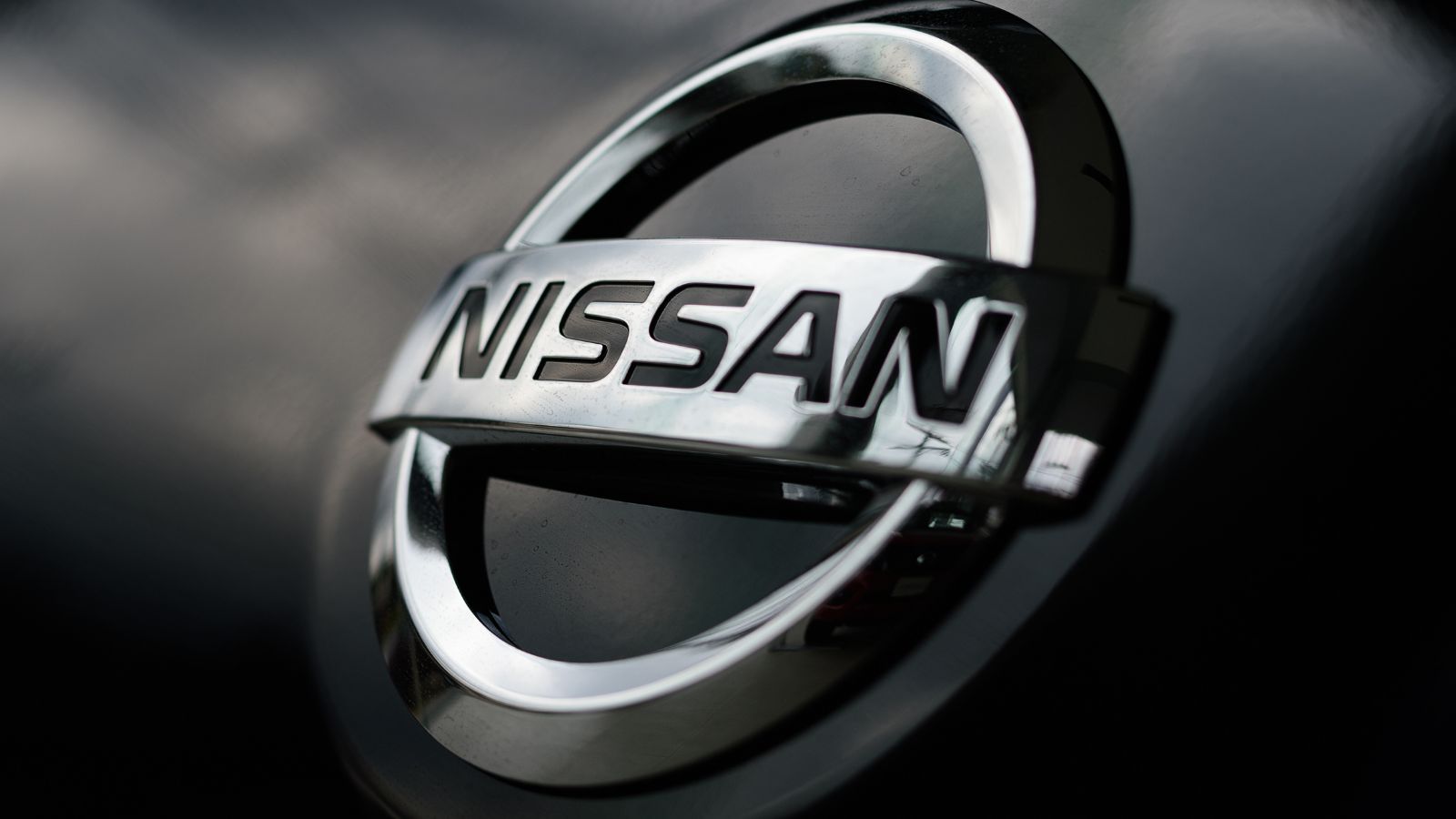
Nissan is cutting factories, trimming its model lineup and pursuing one of the most aggressive restructuring programs in its recent history. Yet in Sunderland, England, the automaker is putting fresh money on the table.

The Japanese company plans to invest £170 million, or roughly US$229 million, to manufacture the Kicks e-POWER hybrid at its British plant, bringing the compact crossover to Europe for the first time. The decision gives Sunderland another model at a moment when questions have been hanging over how fully Nissan intends to use the sprawling factory. It also captures the balancing act now shaping the company: spend where a vehicle, technology and factory appear strategically useful, while pulling capital, capacity and jobs out of weaker parts of the global business.

A $229 Million Bet on Sunderland

The £170 million investment puts Sunderland firmly inside the part of Nissan that management still wants to strengthen. The Kicks e-POWER will be manufactured alongside the Qashqai, Juke and LEAF, becoming the tenth Nissan model allocated to the British factory since production began with the Bluebird in 1986. Nissan has not yet announced when Kicks production will begin, leaving an important piece of the rollout timetable unresolved.

The factory nevertheless carries enormous strategic weight. Nissan says Sunderland has now produced 12 million vehicles over four decades, equivalent on average to one vehicle every one minute and 45 seconds. Roughly £5 billion has been invested at the site over its lifetime. Around 6,000 people work there directly, while Nissan estimates that another 30,000 supply-chain jobs are supported by the operation. Vehicles made in Sunderland have been shipped to more than 100 markets. Against that history, the Kicks allocation is more than another product announcement: it gives one of Nissan’s largest manufacturing assets another reason to stay busy during a period of global contraction.

Kicks Gives Nissan a Proven Model Instead of a Fresh Gamble

Nissan is not betting £170 million on an unknown nameplate. The Kicks has accumulated more than 1.8 million sales across more than 70 countries since the crossover was introduced in 2016. The second-generation model is already manufactured in Japan, Mexico and Brazil, giving Nissan an established production and customer base before it attempts to build the vehicle for Europe.

What changes in Sunderland is the market and powertrain combination. The British-built Kicks will mark the model’s European debut and will be offered with Nissan’s e-POWER hybrid system. Production is intended to supply customers in the UK, continental Europe and Turkey. That gives Nissan another compact electrified crossover without requiring it to develop an entirely new European vehicle from scratch. It also fills an important space in the company’s lineup as the next-generation Juke moves toward fully electric propulsion. In practical terms, Kicks lets Nissan reuse a successful global product while tailoring its drivetrain and production footprint to a European market where consumers are still buying a mixture of combustion, hybrid and battery-electric vehicles.

e-POWER Gives Nissan a Middle Ground Between Petrol and Full EVs

The technology underneath the European Kicks helps explain why Nissan sees the model as useful. e-POWER is technically a hybrid, but its mechanical layout differs from many conventional hybrids. The petrol engine does not directly drive the wheels. Instead, it generates electricity for a battery, while an electric motor provides the propulsion. That means acceleration and wheel torque come from an electric motor without the vehicle needing to be plugged into an external charger.

Nissan has been developing the system since launching the first e-POWER model in Japan in 2016. More than 1.9 million e-POWER vehicles have since been sold globally, according to the company, and Sunderland already has substantial experience with the technology. The factory has built about 200,000 Qashqai e-POWER models. The Kicks is expected to use Nissan’s third-generation e-POWER system, introduced in 2025 and redesigned around improved efficiency, emissions and refinement. For Nissan, that provides a relatively low-risk route to expanding hybrid volume: the drivetrain is established, the plant already knows how to build it, and customers do not have to depend on public charging infrastructure.

Sunderland Needs More Volume, Not Just Another Badge

The Kicks allocation is positive news for Sunderland, but it also highlights the factory’s underused capacity. Earlier in 2026, reports put the plant at roughly 50% utilisation. Nissan subsequently said it would consolidate its own manufacturing operations onto one of Sunderland’s two production lines as part of the broader Re restructuring program. The objective was straightforward: reduce the cost of carrying manufacturing capacity that was not producing enough vehicles.

That context makes the new investment easier to understand. Kicks is intended to put more Nissan volume through the factory, but the announcement should not be mistaken for a return to the company’s former expansion mindset. The Guardian reported that the investment is expected to help maintain employment rather than trigger a major hiring wave. Nissan has also not disclosed annual Kicks production targets or a start-of-production date. Sunderland therefore gains an important new model while remaining under pressure to justify its size. The distinction matters for workers and suppliers: a new vehicle allocation improves the plant’s outlook, but factory economics ultimately depend on how many vehicles customers buy and how intensively Nissan can use the equipment already installed.

The Investment Sits Inside a Much Bigger Nissan Retreat

While money flows into Kicks production, Nissan is shrinking elsewhere. Its Re recovery plan targets a reduction of 20,000 jobs between fiscal 2024 and fiscal 2027 and calls for the number of vehicle production plants to fall from 17 to 10. The company originally set out to capture ¥500 billion in fixed and variable cost savings compared with fiscal 2024. Nissan is also reducing its global product portfolio from 56 models to 45 as management tries to concentrate engineering and investment on vehicles with stronger prospects.

Some of the decisions are considerably more painful than adding a new hybrid in Britain. Nissan plans to end vehicle production at its historic Oppama plant in Japan by the end of fiscal 2027 and shift assembly to Nissan Motor Kyushu. Nissan has said its broader manufacturing overhaul is designed to reduce non-China production capacity from roughly 3.5 million vehicles to 2.5 million while lifting utilisation. Reuters also reported in June that Nissan had stopped development of a battery-electric Qashqai, while a planned Sunderland EV-powertrain project involving subsidiary JATCO was dropped. Kicks therefore represents selective reinvestment within a company still cutting aggressively.

Nissan’s Finances Are Improving, but the Recovery Is Not Finished

The strategy is beginning to show results on Nissan’s income statement. For the fiscal year ended March 2026, the company generated ¥58 billion in operating profit on roughly ¥12 trillion in revenue. That was still a thin operating margin, and Nissan recorded a ¥533.1 billion net loss for the year. Automotive free cash flow also remained negative, underscoring why management continues to scrutinise factories, development programs and capital spending.

The first quarter of fiscal 2026 looked materially better. Nissan reported consolidated operating profit of ¥77.9 billion for the three months ended June, compared with a ¥79.1 billion operating loss in the same quarter a year earlier. Revenue rose to ¥2.96 trillion. Even so, Nissan’s automotive operation by itself remained slightly in the red at the operating level, at negative ¥8.3 billion, while automotive free cash flow was negative ¥323.9 billion. Nissan kept its full-year operating-profit forecast at ¥200 billion. Those numbers help explain the selective nature of the Kicks decision: management has more breathing room than it did a year earlier, but not enough to fund every previous ambition.

Chery Talks Show How Nissan Is Trying to Use Every Inch of Sunderland

Nissan’s discussions with China’s Chery provide another window into the Sunderland problem. In June, Nissan and Chery International UK signed a non-binding memorandum of understanding to study contract manufacturing at the British factory. The arrangement could eventually see Nissan employees build Chery vehicles on Sunderland’s Line One beginning in fiscal 2027, while Nissan retains full ownership of the facility.

That is an unusual but increasingly logical response to unused manufacturing capacity. Nissan has been consolidating its own production onto Line Two, so bringing in another automaker could help keep equipment and employees productive without requiring Nissan itself to generate all of the necessary vehicle volume. The agreement remains under discussion, meaning Chery production is not guaranteed. Still, the combination of a new Nissan Kicks, a possible contract-manufacturing customer and Sunderland’s existing Qashqai, Juke and LEAF programs illustrates how Nissan is trying to rebuild the factory’s economics from several directions. Instead of simply closing excess capacity, the company is looking for outside volume while directing its own investment toward models it believes have a clearer path to customers.

Kicks Shows What the New Nissan May Look Like

The most important part of the Kicks decision may be what it says about Nissan’s emerging operating philosophy. This is not a company abandoning electrification or manufacturing investment. Sunderland is also scheduled to build a new electric Juke, and Nissan continues developing battery-electric products. But management is becoming far less willing to support every factory, model and technology project simply because it once appeared in a long-term plan.

Kicks fits the new approach unusually well. It is already a proven global nameplate. Its hybrid technology is established. Sunderland already builds e-POWER vehicles. The investment adds potential volume to an underused plant, while the same plant could eventually manufacture vehicles for another automaker. At the same time, Nissan is eliminating jobs, consolidating factories, cutting product complexity and shelving projects elsewhere. That apparent contradiction is really the heart of Re:Nissan: the company is attempting to spend more selectively rather than merely spend less. The £170 million commitment will ultimately be judged by Kicks sales, plant utilisation and profitability, but it offers a clear picture of where Nissan believes fresh capital can still earn its place.

Recommended.

15 “Hidden Fees” Canadians Keep Paying at Dealerships in 2026

17 Car Expenses Canadians Keep Hoping Will Disappear — But Never Do

May 14, 2026
Hundreds of Cars Take Over 14 Saskatoon Blocks as One of Western Canada’s Largest Auto Shows Opens

Mexico Pushes for Lower Auto Tariffs as Canada Risks Losing Ground in North American Factory Fight

October 1, 2026

Trending.

PBO Warns U.S. Tariff War Threatens Up to 185,000 Canadian Jobs, With Auto Manufacturing Among Hardest Hit

PBO Warns U.S. Tariff War Threatens Up to 185,000 Canadian Jobs, With Auto Manufacturing Among Hardest Hit

October 21, 2026
10 Reasons the Canadian Car Market Feels Different Heading Into Summer

Canadian Auto Sales Rise 3.4% for a Fourth Straight Month—but 2026 Still Trails Last Year

October 3, 2026
22 Ways Canadians Accidentally Void Their Vehicle Warranty

B.C. Drivers Vote Today on the Future of ICBC Insurance as Parties Clash Over Private Competition and No-Fault Coverage

October 24, 2026
Canada’s Ballard Puts a 250,000-Mile Performance Guarantee Behind Hydrogen Buses

Canada’s Ballard Puts a 250,000-Mile Performance Guarantee Behind Hydrogen Buses

October 2, 2026
GM Keeps Cylinder Deactivation in New Silverado and Sierra V8s Despite Moving to Bigger Engines

GM Keeps Cylinder Deactivation in New Silverado and Sierra V8s Despite Moving to Bigger Engines

September 20, 2026
  • About
  • Contact
  • Privacy Policy
  • Disclaimer
  • Editorial Policies
  • Terms and Conditions
A Revir Media Group Website

2026 Autoigloo - © All rights reserved

No Result
View All Result
  • News & Trends
  • Car Reviews
  • Buying Guides
  • Comparisons
  • EVs & Hybrids
  • More
    • Pricing & Deals
    • Winter Driving
    • Ownership & Maintenance

2026 Autoigloo - © All rights reserved

This website uses cookies. By continuing to use this website you are giving consent to cookies being used. Visit our Privacy and Cookie Policy.