























Mercedes-Benz is preparing to bring its heavily updated 2027 S-Class to Canada, and the biggest change is not a dramatic new body shape but the amount of intelligence packed beneath it. Mercedes-Benz Canada now lists the model for the Canadian market, while its live model pages show the S 500 4MATIC and S 580 4MATIC as the core long-wheelbase offerings. The refresh arrives as Mercedes marks 140 years since Carl Benz’s 1886 automobile, but this flagship is pointed firmly toward a software-defined future. A new operating system, standard multi-screen interface, generative-AI assistant, cloud-connected suspension, upgraded lighting and expanded driver-assistance technology make the 2027 S-Class feel less like a traditional mid-cycle update and more like a major digital reset for the company’s best-known luxury sedan.
Canada Is Firmly Included in the 2027 S-Class Rollout
Mercedes-Benz Canada has confirmed the 2027 S-Class for this market, describing its dealership arrival as coming soon. At the same time, the company’s Canadian model pages already show build and inventory functions for the S 500 4MATIC LWB and S 580 4MATIC LWB, suggesting the rollout is moving beyond the early preview stage. What Mercedes has not done is pin the Canadian launch to one public nationwide date. That distinction matters because vehicle availability can vary by dealer, region and specification, especially with a flagship that offers a long list of factory options and digital features. The safest reading is that Canada is firmly included in the 2027 launch plan, with customer-facing configuration already active even as the broader future-vehicle page still uses “soon” language.
The scale of the update is unusually large for a car that remains within the same generation. Mercedes says more than half of the S-Class has been newly developed, updated or refined, amounting to roughly 2,700 components. That does not mean the sheet metal has been replaced wholesale. Instead, the company has concentrated much of the investment in electronics, lighting, powertrains, cabin hardware, software and comfort systems. That approach makes sense for the S-Class, which has historically been used to introduce technology that later spreads through the Mercedes lineup. For Canadian buyers, the result is a familiar full-size luxury sedan that has changed most dramatically in the areas occupants interact with every day: screens, voice controls, assistance features, ride systems and connected services.
The New Look Becomes Much More Obvious After Dark
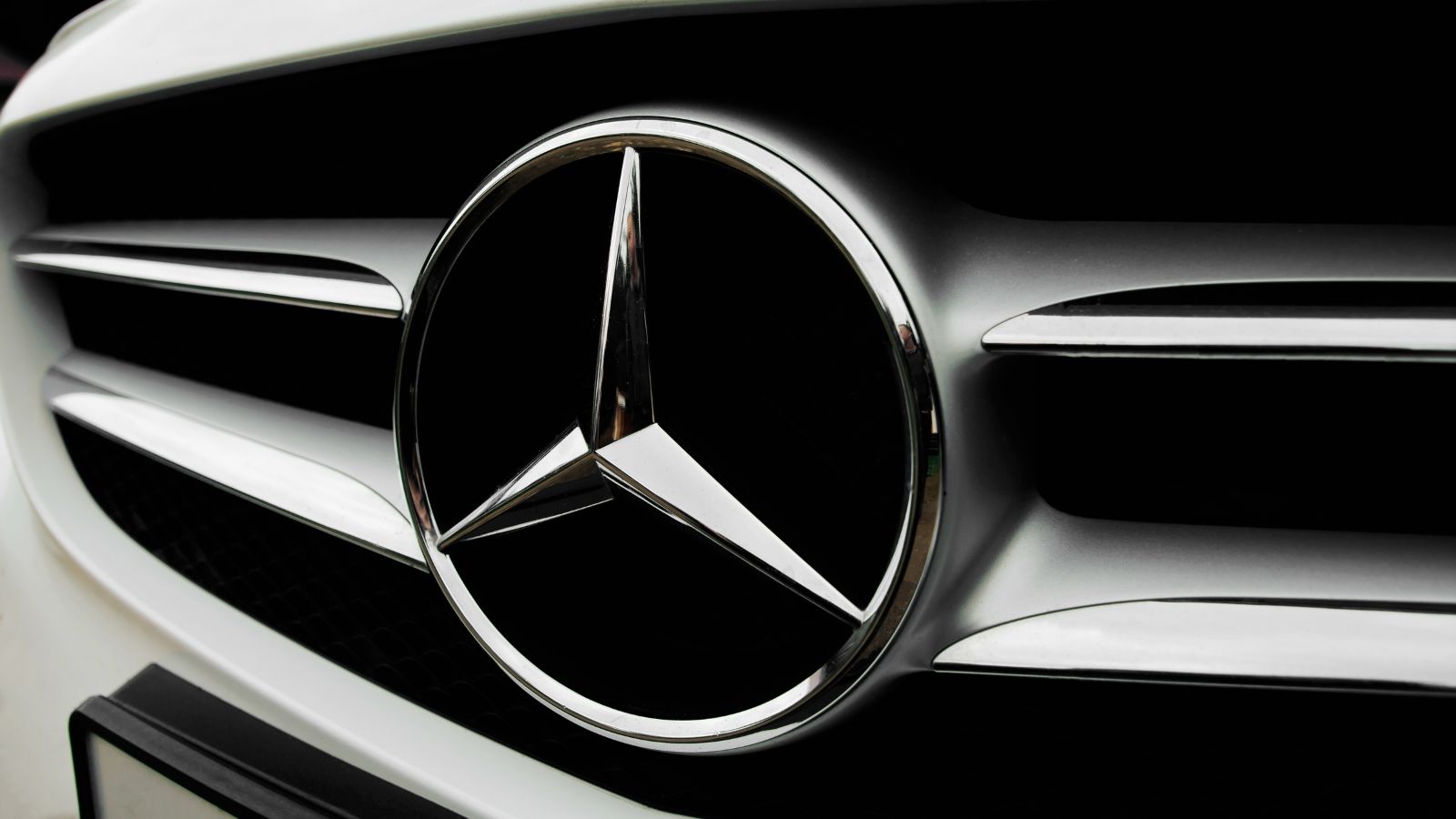
The most obvious visual changes arrive after dark. Mercedes has enlarged the S-Class grille by about 20 per cent and surrounded it with illumination, while the standing hood star can also be illuminated for the first time on the model. The new headlamps use a twin-star motif and next-generation DIGITAL LIGHT technology built around micro-LED hardware. Mercedes says the new system expands the high-resolution lighting field by roughly 40 per cent compared with the predecessor setup. On the Canadian site, DIGITAL LIGHT with Adaptive High Beam Assist+ is listed as standard equipment, while the illuminated grille is also standard. The effect is deliberately theatrical, but it also gives the S-Class a stronger identity at a time when luxury cars increasingly rely on lighting signatures as a recognizable design element.
There is more engineering behind those lights than the styling suggests. Mercedes says its ULTRA RANGE high beam can reach up to 600 metres under suitable conditions, while camera and map information help the system adapt illumination to road layouts. The Canadian S-Class pages also note that DIGITAL LIGHT can individually control 25,000 pixels in each headlamp, allowing the high beams to react to traffic ahead. That combination of high-resolution lighting, mapping and software illustrates the broader direction of the refresh: hardware is increasingly being coordinated by software rather than working as a collection of isolated systems. For a Canadian owner dealing with long winter nights, poorly lit rural roads or variable weather, the practical appeal is obvious, even if real-world performance will still depend on conditions and local regulations.
MB.OS Turns the Dashboard Into a Connected Computing Platform
The centrepiece of the cabin is Mercedes-Benz Operating System, or MB.OS, which the company describes as the computing foundation for infotainment, driver assistance and other vehicle functions. In the 2027 S-Class, it supports the fourth generation of MBUX and the standard MBUX Superscreen. The setup pairs a 14.4-inch central display with a 12.3-inch front-passenger display under a continuous glass surface, while a separate 12.3-inch digital instrument cluster sits ahead of the driver. The passenger screen can run entertainment and apps, with camera-based safeguards designed to reduce distraction for the driver. This is one reason the new S-Class feels significantly more technology-heavy than before: screens are no longer simply displays, but front ends for a much larger connected software architecture.
The new MBUX Virtual Assistant pushes that idea further. Mercedes says the system combines generative-AI services including ChatGPT 4o, Microsoft Bing and Google Gemini, allowing multi-turn conversations and short-term memory rather than relying only on rigid command phrases. Navigation is based on Google Maps, and the interface includes an enhanced Zero Layer that surfaces recently used functions and customizable folders. Mercedes also says more than 40 apps can be installed across entertainment, productivity and media categories. That sounds closer to a smartphone or laptop ecosystem than a conventional car menu. The advantage is flexibility and faster feature development; the trade-off is that owners will increasingly depend on software support, connectivity and account-based services for functions that once lived entirely inside the vehicle.
The Rear Seat Is Being Recast as a Mobile Office
Mercedes has also expanded the rear cabin from a place to be chauffeured into something closer to a mobile office. The available MBUX High-End Rear Seat Entertainment system uses two 13.1-inch displays, and Mercedes says detachable rear remotes can control functions such as climate settings, window shades and entertainment. Integrated cameras allow video conferencing through services including Microsoft Teams, Zoom and Webex where supported. That capability gives the “business sedan” description more substance than a marketing phrase. An executive travelling between meetings could review documents, join a call and manage cabin functions without reaching toward a fixed screen. For families, the same hardware can serve as a large entertainment platform, turning the rear seat into a more flexible digital space rather than a passive luxury lounge.
Not every cabin upgrade involves a screen. Heated front seat belts are part of the Canadian equipment story, and Mercedes says the system can warm the belt to about 44 C when used with the seat heating function. Digital Vent Control can automatically adjust airflow direction based on saved preferences, while ENERGIZING AIR CONTROL uses a multistage filtration system to reduce fine particles in the cabin. Wireless charging, 100-watt USB-C power and upgraded Burmester audio options add to the sense that the S-Class is being designed around long periods of connected travel. These features may sound small beside generative AI and cloud computing, but they are exactly the sort of details occupants notice on a cold Toronto morning or during a long highway trip between major Canadian cities.
Canada Gets Six-Cylinder and V8 Power With Standard 4MATIC
For Canada, Mercedes-Benz currently lists two regular S-Class powertrains. The S 500 4MATIC LWB uses a 3.0-litre turbocharged inline-six with mild-hybrid assistance, rated on the live Canadian model page at 442 horsepower and 413 lb-ft of torque. Mercedes quotes a 0-100 km/h time of 4.5 seconds. The S 580 4MATIC LWB steps up to a 4.0-litre biturbo V8 with mild-hybrid technology, producing 530 horsepower and 553 lb-ft, with a claimed 0-100 km/h time of 4.0 seconds. Both use a nine-speed automatic transmission and 4MATIC all-wheel drive. Those figures keep the S-Class comfortably in high-performance territory without turning the car into an overtly sporting sedan.
The V8 receives deeper engineering changes than its familiar displacement suggests. Mercedes’ global technical material identifies the updated engine as the M177 Evo and describes revisions to the injection system, intake and exhaust flow, turbocharger hardware and crankshaft design. The aim is not simply peak power, but quicker response, efficiency and refinement. The six-cylinder engine has also been revised globally with a more powerful electric auxiliary compressor and other breathing changes. For Canadian buyers, the important point is that electrification remains integrated into conventional gasoline powertrains rather than replacing them in the core S 500 and S 580 lineup. The S-Class therefore continues to offer the long-distance convenience expected of a flagship sedan while using mild-hybrid systems to improve response and recuperate energy.
Even the Suspension Now Relies on Connected Data
The most interesting technology may be the part passengers barely notice. AIRMATIC air suspension with intelligent damping is standard on the Canadian S-Class, and Mercedes says it can use Car-to-X information from other connected Mercedes vehicles to anticipate certain road irregularities. In simple terms, a vehicle travelling ahead can contribute road-condition data to the cloud, allowing another S-Class to prepare its dampers before reaching the same section of pavement. MotorTrend reported that the system can distinguish between short, sharp events such as potholes and longer surface changes that create body movement. That is a meaningful shift in how ride comfort is engineered: instead of relying only on sensors aboard one car, the suspension can benefit from information collected by an entire connected fleet.
Rear-axle steering is also standard in Canada with a 4.5-degree steering angle. On the long-wheelbase S 500 and S 580, Mercedes-Benz Canada lists an 11.9-metre turning circle, which helps make a 5.3-metre-long sedan less intimidating in parking garages and tight urban spaces. Globally, Mercedes also offers a system capable of up to 10 degrees of rear steering in some configurations, though Canadian equipment should be judged by the local specification rather than the global catalogue. The bigger idea is that the S-Class is using software, connected data and active chassis hardware to protect the traditional qualities that made the model famous: isolation, calm and low-effort progress. The technology is sophisticated, but its best work is meant to disappear into the background.
Driver Assistance Is Becoming Part of the Software Business
Driver assistance is another area where Mercedes is moving toward a software-defined model. Mercedes-Benz Canada lists MB.DRIVE and MB.DRIVE ASSIST among the S-Class’s standard assistance systems, along with MB.DRIVE PARKING ASSIST 360. The company says MB.DRIVE ASSIST uses sensors, lane information, map data and the vehicle ahead to support steering and lane-change functions. Some features are treated as Digital Extras, which means activation can depend on a Mercedes me account, terms of use and continued service availability. That structure matters because the ownership experience is no longer determined only by what hardware leaves the factory. Increasingly, the useful life of advanced functions may also depend on software updates, subscriptions, network coverage and regional availability.
Mercedes is careful not to present every advanced capability as universally available. Its global S-Class material says MB.DRIVE ASSIST PRO can support point-to-point assisted driving in dense urban traffic, but the rollout begins in China, is planned for the United States later and will expand to additional markets only where regulations permit. Mercedes-Benz Canada does not currently make the same broad promise for the Canadian S-Class page. That distinction is important and keeps the Canadian story grounded: this car is more automated and connected, but it is not being presented as a self-driving vehicle. The 2027 S-Class instead shows how luxury is changing. Horsepower, leather and ride quality still matter, but software capability, updateability and computing power are becoming just as central to the definition of a flagship.