




















• About
  • Contact
AutoIgloo
  • News & Trends
    Bosch Workers Demand ‘Made in EU’ Rules as Supplier Plans 13,000 Auto Job Cuts

    Bosch Workers Demand ‘Made in EU’ Rules as Supplier Plans 13,000 Auto Job Cuts

    Buick Is Refreshing Its Electra E7 Just Five Months After Launch as China’s EV Cycle Speeds Up

    Buick Is Refreshing Its Electra E7 Just Five Months After Launch as China’s EV Cycle Speeds Up

    Leapmotor Unveils Next-Generation EV Platform and Promises a Second Brand in 2027

    Leapmotor Unveils Next-Generation EV Platform and Promises a Second Brand in 2027

    18 Vehicles That Could Trigger Buyer’s Remorse Faster Than Expected in Canada

    Maserati Reportedly Turns to Huawei and JAC for Two New EVs as Luxury Brand Fights Sales Slump

    The EV Charging Habit That Can Annoy Everyone Around You

    Leapmotor and FAW Team Up on Solid-State and Sodium-Ion Batteries as China’s EV Tech Race Accelerates

    Chinese EV Price Pressure Gets a New Benchmark as Voyah Opens $63,420 Luxury MPV Orders

    Europe’s EV Share Jumps to 30.5% as Electric-Car Sales Blow Past Forecasts

  • Car Reviews
    Honda Asked Suppliers for 30% Parts Cost Cuts as $9.4-Billion Savings Drive Hits Global Supply Chain

    Why Some Buyers Are Choosing Older Hondas Over Newer SUVs

    18 Things That Can Make a Car Unsafe for Winter Road Trips

    Why Some Drivers Are Avoiding Vehicles With Complex Infotainment Systems

    21 Cars Canadians Are Starting to Regret Buying

    Why Some Drivers Regret Buying Big Wheels and Low-Profile Tires

    17 Vehicles That Are Quietly Getting Crushed by Insurance Costs in Canada

    Why So Many Drivers Are Nervous About Chinese-Made EV Batteries

    20 Used SUVs Canadians Should Think Twice About Buying

    20 Used SUVs Canadians Should Think Twice About Buying

    15 Vehicles That Are Starting to Feel Like a Bad Deal Around May Long Weekend

    15 Vehicles That Are Starting to Feel Like a Bad Deal Around May Long Weekend

  • Buying Guides
    18 Things That Can Make a Car Harder to Park Than Expected

    Why Some Buyers Regret Choosing the Sport Package

    The Traffic Stop Mistake That Can Turn a Warning Into a Ticket

    20 Things Canadians Should Check Before Buying a Vehicle With a Loan Still Owing

    The Dealership Fee That Buyers Should Always Ask About

    The Dealership Fee That Buyers Should Always Ask About

    23 Features That Are Making New Cars Harder (and Pricier) to Repair in Canada

    Why Some Canadians Are Avoiding Cars With Expensive Windshields

    18 Red Flags a Used Vehicle May Be a Money Pit

    The Car Buying Mistake That Makes Negotiating Almost Impossible

    Why Some Canadians Are Regretting Buying Vehicles With No Spare Tire

    Why Some Canadians Are Regretting Buying Vehicles With No Spare Tire

  • Comparisons
    Honda Asked Suppliers for 30% Parts Cost Cuts as $9.4-Billion Savings Drive Hits Global Supply Chain

    Why Some Buyers Are Choosing Older Hondas Over Newer SUVs

    25 EV Charging Mistakes Canadians Make in March (That Wreck Range)

    Why Some Canadians Are Choosing Hybrids Over Full EVs Again

    21 Used Car Features That Can Become Expensive Problems Later

    Why Some Canadians Are Choosing Front-Wheel Drive Over All-Wheel Drive

    Canada’s Auto Fight Gets Uglier as BYD Threatens to Sue Trump Administration

    Tesla Vs. BYD: Are Chinese EV’s Actually Better for Canadians?

    17 Vehicles That Are Quietly Getting Crushed by Insurance Costs in Canada

    Why So Many Drivers Are Nervous About Chinese-Made EV Batteries

    20 Used SUVs Canadians Should Think Twice About Buying

    20 Used SUVs Canadians Should Think Twice About Buying

  • EVs & Hybrids
    The Used EV Question Canadians Should Ask Before Buying One

    The Used EV Question Canadians Should Ask Before Buying One

    Why Some EV Owners Are Getting Sticker Shock From Home Charging Setups

    Why Some EV Owners Are Getting Sticker Shock From Home Charging Setups

    20 Signs Your Car Battery Is About to Leave You Stranded

    Canadian Auto Jobs Become a Central Fault Line as Ottawa Reveals Why It Rejected U.S. Vehicle Terms

    25 EV Charging Mistakes Canadians Make in March (That Wreck Range)

    Why Some Canadians Are Choosing Hybrids Over Full EVs Again

    The EV Charging Habit That Can Annoy Everyone Around You

    Canada Is Missing an EV-Battery Export Opening as EU Lithium Demand Heads for a 9-to-12-Fold Jump: Report

    16 Used-EV Surprises Canadians Don’t See Coming Until After They Buy

    The EV Charging Habit That Can Annoy Everyone Around You

  • More
    • Pricing & Deals
    • Winter Driving
    • Ownership & Maintenance
No Result
View All Result
AutoIgloo
  • News & Trends
    Bosch Workers Demand ‘Made in EU’ Rules as Supplier Plans 13,000 Auto Job Cuts

    Bosch Workers Demand ‘Made in EU’ Rules as Supplier Plans 13,000 Auto Job Cuts

    Buick Is Refreshing Its Electra E7 Just Five Months After Launch as China’s EV Cycle Speeds Up

    Buick Is Refreshing Its Electra E7 Just Five Months After Launch as China’s EV Cycle Speeds Up

    Leapmotor Unveils Next-Generation EV Platform and Promises a Second Brand in 2027

    Leapmotor Unveils Next-Generation EV Platform and Promises a Second Brand in 2027

    18 Vehicles That Could Trigger Buyer’s Remorse Faster Than Expected in Canada

    Maserati Reportedly Turns to Huawei and JAC for Two New EVs as Luxury Brand Fights Sales Slump

    The EV Charging Habit That Can Annoy Everyone Around You

    Leapmotor and FAW Team Up on Solid-State and Sodium-Ion Batteries as China’s EV Tech Race Accelerates

    Chinese EV Price Pressure Gets a New Benchmark as Voyah Opens $63,420 Luxury MPV Orders

    Europe’s EV Share Jumps to 30.5% as Electric-Car Sales Blow Past Forecasts

  • Car Reviews
    Honda Asked Suppliers for 30% Parts Cost Cuts as $9.4-Billion Savings Drive Hits Global Supply Chain

    Why Some Buyers Are Choosing Older Hondas Over Newer SUVs

    18 Things That Can Make a Car Unsafe for Winter Road Trips

    Why Some Drivers Are Avoiding Vehicles With Complex Infotainment Systems

    21 Cars Canadians Are Starting to Regret Buying

    Why Some Drivers Regret Buying Big Wheels and Low-Profile Tires

    17 Vehicles That Are Quietly Getting Crushed by Insurance Costs in Canada

    Why So Many Drivers Are Nervous About Chinese-Made EV Batteries

    20 Used SUVs Canadians Should Think Twice About Buying

    20 Used SUVs Canadians Should Think Twice About Buying

    15 Vehicles That Are Starting to Feel Like a Bad Deal Around May Long Weekend

    15 Vehicles That Are Starting to Feel Like a Bad Deal Around May Long Weekend

  • Buying Guides
    18 Things That Can Make a Car Harder to Park Than Expected

    Why Some Buyers Regret Choosing the Sport Package

    The Traffic Stop Mistake That Can Turn a Warning Into a Ticket

    20 Things Canadians Should Check Before Buying a Vehicle With a Loan Still Owing

    The Dealership Fee That Buyers Should Always Ask About

    The Dealership Fee That Buyers Should Always Ask About

    23 Features That Are Making New Cars Harder (and Pricier) to Repair in Canada

    Why Some Canadians Are Avoiding Cars With Expensive Windshields

    18 Red Flags a Used Vehicle May Be a Money Pit

    The Car Buying Mistake That Makes Negotiating Almost Impossible

    Why Some Canadians Are Regretting Buying Vehicles With No Spare Tire

    Why Some Canadians Are Regretting Buying Vehicles With No Spare Tire

  • Comparisons
    Honda Asked Suppliers for 30% Parts Cost Cuts as $9.4-Billion Savings Drive Hits Global Supply Chain

    Why Some Buyers Are Choosing Older Hondas Over Newer SUVs

    25 EV Charging Mistakes Canadians Make in March (That Wreck Range)

    Why Some Canadians Are Choosing Hybrids Over Full EVs Again

    21 Used Car Features That Can Become Expensive Problems Later

    Why Some Canadians Are Choosing Front-Wheel Drive Over All-Wheel Drive

    Canada’s Auto Fight Gets Uglier as BYD Threatens to Sue Trump Administration

    Tesla Vs. BYD: Are Chinese EV’s Actually Better for Canadians?

    17 Vehicles That Are Quietly Getting Crushed by Insurance Costs in Canada

    Why So Many Drivers Are Nervous About Chinese-Made EV Batteries

    20 Used SUVs Canadians Should Think Twice About Buying

    20 Used SUVs Canadians Should Think Twice About Buying

  • EVs & Hybrids
    The Used EV Question Canadians Should Ask Before Buying One

    The Used EV Question Canadians Should Ask Before Buying One

    Why Some EV Owners Are Getting Sticker Shock From Home Charging Setups

    Why Some EV Owners Are Getting Sticker Shock From Home Charging Setups

    20 Signs Your Car Battery Is About to Leave You Stranded

    Canadian Auto Jobs Become a Central Fault Line as Ottawa Reveals Why It Rejected U.S. Vehicle Terms

    25 EV Charging Mistakes Canadians Make in March (That Wreck Range)

    Why Some Canadians Are Choosing Hybrids Over Full EVs Again

    The EV Charging Habit That Can Annoy Everyone Around You

    Canada Is Missing an EV-Battery Export Opening as EU Lithium Demand Heads for a 9-to-12-Fold Jump: Report

    16 Used-EV Surprises Canadians Don’t See Coming Until After They Buy

    The EV Charging Habit That Can Annoy Everyone Around You

  • More
    • Pricing & Deals
    • Winter Driving
    • Ownership & Maintenance
No Result
View All Result
AutoIgloo
No Result
View All Result

Home » News & Trends

Kia Unveils New PV7 Electric Van — Canada Is Missing From the First Launch List

Nate Brewer by Nate Brewer
September 14, 2026
Reading Time: 6 mins read
A A
Photo Credit: Shutterstock

Photo Credit: Shutterstock

468
SHARES
1.5k
VIEWS
Share on FacebookShare on Twitter

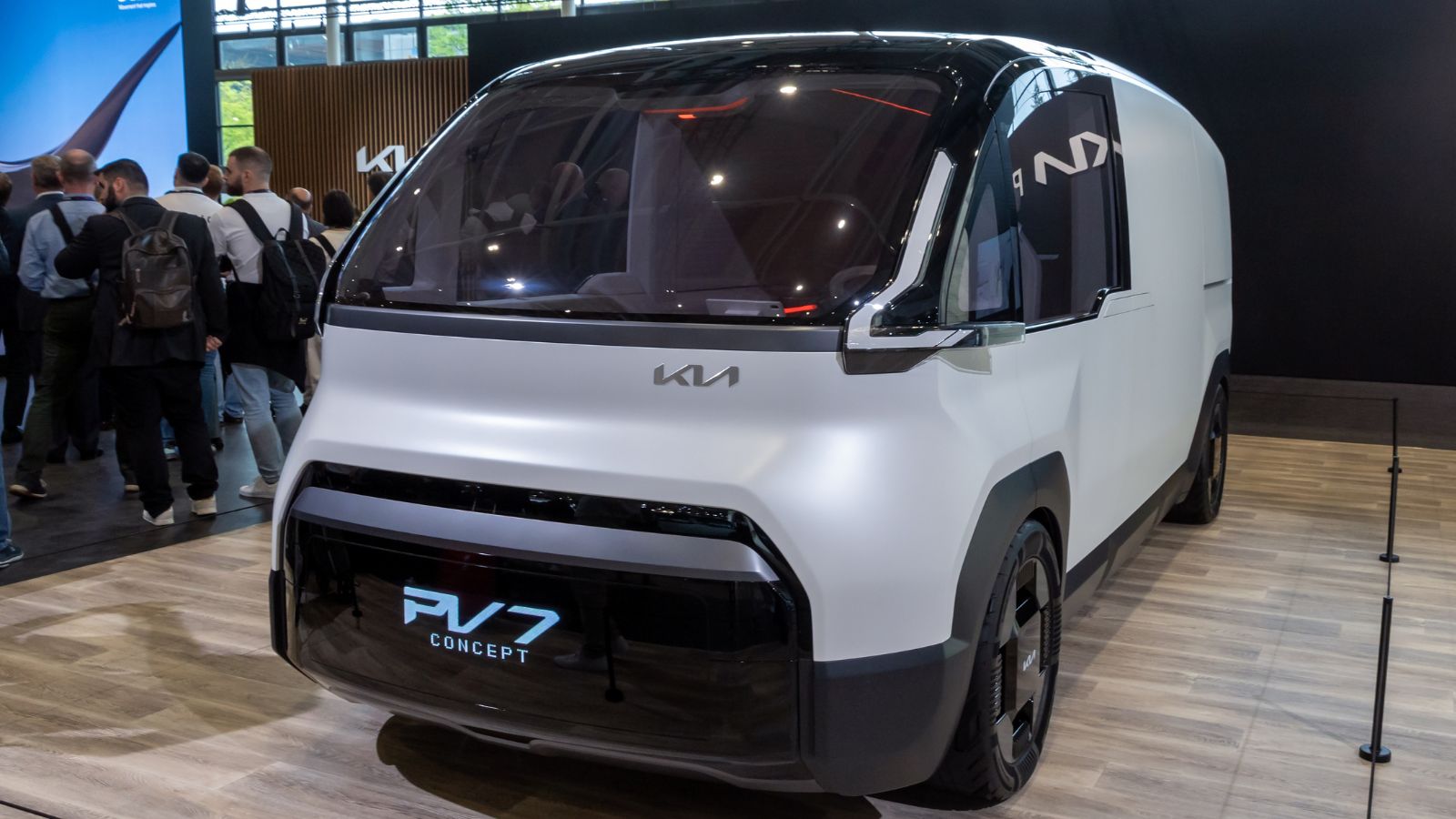
Kia has taken the wraps off the PV7, a larger all-electric van designed to push its Platform Beyond Vehicle strategy deeper into the commercial-vehicle market. Revealed at IAA Transportation in Hannover on September 14, 2026, the PV7 arrives as the bigger sibling to the PV5, with Cargo and Passenger versions aimed at fleets, shuttle operators, logistics companies and other businesses that need more space.

The reveal also comes with a notable Canadian omission. Kia says the PV7 will launch first in Korea and Europe in the second half of 2027, with additional markets to follow. Canada is not on that first list, even though Kia is already preparing to sell the smaller PV5 here. That makes the PV7 both a significant global product and a question mark for Canadian businesses watching the electric-van market.

Kia Built the PV7 Around Commercial Work From the Start

Kia did not design the PV7 as a conventional passenger vehicle with a cargo body added later. It sits on the company’s dedicated E-GMP.S architecture, a service-focused electric platform created for its Platform Beyond Vehicle family. The flat-floor layout is intended to make better use of the vehicle’s footprint, while the basic architecture can support commercial and passenger roles. Kia is initially presenting Cargo and Passenger versions, but the company intends to add substantially more derivatives as the product matures.

That flexibility matters because vans earn their keep in very different ways. A parcel carrier may care most about loading height and cubic metres, while a hotel shuttle may prioritize seating, climate control and easy passenger access. Kia says the PV7 range is ultimately planned to grow to as many as 23 variants spanning Cargo, Passenger, Chassis Cab and conversion models. The company is also building a conversion ecosystem around specialized facilities and regional partners, indicating that purpose-built work vehicles are central to the strategy rather than an afterthought.

Cargo Capacity Shows How Much Bigger the PV7’s Mission Is

The figures released at the debut make clear why Kia has positioned the PV7 above its existing PV5. The PV7 Cargo Long provides up to 6.1 cubic metres of cargo volume under the European VDA measurement standard, while a planned High Roof configuration raises that figure to as much as 8.0 cubic metres. Depending on the version, maximum payload can reach approximately 1,200 kilograms. Kia has also designed the cargo model around repeated loading work, including a comparatively low loading floor and different rear-door solutions.

The Passenger version gives the same basic vehicle a very different job. Kia plans seating configurations for up to nine occupants in most global markets and as many as 11 in Korea, with flexible seating intended for crew transportation, tourism, shuttle operations and other high-occupancy uses. That breadth could be one of the PV7’s strongest selling points. Instead of building one electric van and asking operators to compromise, Kia is trying to make a common electric platform adaptable enough for everything from deliveries to passenger movement.

A 96.2-kWh Battery and 800-Volt Charging Lead the Technical Story

Kia plans two nickel-cobalt-manganese battery capacities for the PV7: 71.5 kWh and 96.2 kWh. The larger pack is aimed at operators that need more distance between charging stops. Kia’s global presentation describes approximately 450 kilometres of range, while more detailed launch information puts the long-range Cargo model at more than 460 kilometres under preliminary European WLTP measurements, depending on specification. The electric powertrain can produce up to 200 kW and 420 Nm. Initial versions are front-wheel drive, with an all-wheel-drive derivative planned later.

Charging could be one of the van’s biggest operational advantages. The PV7 uses an 800-volt electrical architecture and is designed to support DC charging at rates of up to 350 kW. Kia says that under suitable conditions, the battery can move from 10 to 80 per cent charge in roughly the mid-20-minute range. Vehicle-to-load functionality is also included, allowing stored battery energy to power external equipment. For trades, service crews or mobile businesses, that effectively allows the van to double as a portable source of electricity.

Kia Wants the PV7 to Function Like a Fleet Tool, Not Just a Van

The PV7’s commercial pitch extends well beyond battery capacity. Kia is building fleet-management functions into the broader vehicle ecosystem so operators can monitor information such as vehicle location, battery status and driver behaviour across multiple vehicles. That sort of visibility can become important when a business is coordinating charging schedules, routes and vehicle availability across dozens of vans rather than managing one EV at a time. Physical details such as a flat floor and low loading height reflect the same philosophy of reducing small inefficiencies that occur repeatedly during a working day.

The digital side centres on Kia’s Pleos Connect platform. The Android Automotive-based system is designed to support connected navigation, applications and ongoing software updates. Kia is also integrating Gleo AI, its generative-AI voice assistant, which can perform functions such as destination searches and route setting through spoken commands. These features will ultimately be judged by how reliably they work in daily fleet service, but the direction is clear: Kia sees software, fleet data and vehicle uptime as part of the product itself rather than optional technology layered onto a conventional commercial van.

Canada Is Not Part of the Initial PV7 Launch

For Canadian businesses, the most important part of the announcement may be geographic rather than technical. Kia says PV7 sales will begin in Korea and Europe in the second half of 2027. Additional markets and derivatives are planned later, but Canada was not named among the initial launch destinations. That does not mean the PV7 has been ruled out for Canada. It means there is currently no confirmed Canadian launch date, price or ordering timetable.

The distinction is important because Kia has already identified Korea and Europe as the core markets for its PBV expansion. Starting the PV7 there is therefore consistent with the company’s broader commercial strategy. A later Canadian launch would also fit Kia’s stated intention to expand into additional markets, but it should not be treated as confirmed until Kia Canada makes an announcement. Canadian fleet operators can examine the global vehicle’s range, payload and charging capability today, but they cannot yet put a Canadian PV7 into a firm vehicle-replacement schedule.

The Smaller PV5 Is Already Giving Kia a Canadian Foothold

Canada is not being ignored by Kia’s new commercial-EV business altogether. Kia Canada has already announced the 2027 PV5 Cargo for the domestic market, with an expected arrival during the fourth quarter of 2026. Its Basic trim starts at C$46,995 MSRP, while the higher Plus trim has also been priced below C$50,000 before applicable charges. Kia has positioned the PV5 as its first dedicated commercial cargo vehicle for Canada rather than simply another passenger EV derivative.

That makes the PV5 an important test case for any eventual PV7 launch. Kia can use the smaller van to establish relationships with commercial customers, build dealer expertise and see how its purpose-built electric platform performs in Canadian fleet operations. The PV7 serves a different size and capability class, so success for one vehicle does not automatically guarantee the other. Still, the sequence creates an obvious pathway: establish the PBV business with the smaller PV5 and, if market conditions support it, eventually expand the range with the larger van. For now, the PV5 is the clearest evidence that Kia sees Canadian commercial EVs as a real opportunity.

A Canadian PV7 Would Face Ford and Mercedes, Not an Empty Market

If Kia eventually brings the PV7 to Canada, established electric commercial vans will already be waiting. Ford’s E-Transit is available in Canadian inventory with an 89-kWh high-voltage battery in current cargo-van configurations. Mercedes-Benz Vans Canada also markets the eSprinter, offering usable battery capacities of 81 kWh and 113 kWh along with different body sizes. Mercedes lists a range of up to 331 kilometres for the larger-battery eSprinter in Canada, illustrating that commercial buyers already have several specifications and operating models to evaluate.

The PV7’s challenge would therefore be converting its technology into a strong Canadian business case. Its 800-volt charging system, modular body program and payload capability of up to roughly 1,200 kilograms make it competitive on paper, but fleet managers would still need Canadian pricing, warranty details, service support and homologated specifications before making meaningful comparisons. Range figures also require care because test methods differ between markets. For a working van, purchase price is only one calculation. Charging downtime, payload, route suitability, repair access and upfitting options can be equally important over years of operation.

The PV7 Is a Major Piece of Kia’s Longer-Term Expansion

The PV7 matters to Kia far beyond one vehicle launch. At its 2026 CEO Investor Day, the automaker outlined a PBV family that starts with the PV5, adds the PV7 in 2027 and expands again with the larger PV9 in 2029. Kia is targeting 232,000 annual PBV sales by 2030 and says its full commercial program could eventually encompass more than 40 body types. Europe and Korea have been identified as the key markets around which the company plans to build that business.

Manufacturing is also being organized specifically around the strategy. Kia is using its Hwaseong EVO facilities in South Korea as a dedicated PBV production hub, supported by conversion operations and outside partners capable of producing more specialized vehicles. That commitment separates the PV7 from the many electric commercial concepts that appear at auto shows without a clear path to production. The PV7 already has a launch window, powertrain specifications, software platform and defined role in Kia’s long-term sales plan. The remaining Canadian question is not whether the van will exist, but when — or whether — Canada joins the markets allowed to buy it.


Recommended.

Canada Built 64,000 Fewer Vehicles as U.S. Plants Added 44,000 Under Trump Tariffs

Canada Built 64,000 Fewer Vehicles as U.S. Plants Added 44,000 Under Trump Tariffs

June 22, 2026
21 Driving Habits That Could Get Canadians Fined Without Realizing It

17 Things That Make a Car Look Stolen to Police

June 15, 2026

Trending.

⁠$28 Billion in Canadian Goods Face 50% Trump Tariffs at Midnight as Deal Still Isn’t Final

Canada-U.S. Trade Deal Fell Apart After Washington Left Ontario-Built Ford and GM Trucks Out of Auto Tariff Relief

August 23, 2026
Doug Ford Says U.S. ‘Wasn’t Budging’ on 25% Auto Tariffs as Ontario Puts ‘Every Single Tool’ on the Table

Doug Ford Says U.S. ‘Wasn’t Budging’ on 25% Auto Tariffs as Ontario Puts ‘Every Single Tool’ on the Table

August 23, 2026
Chinese EV Price Pressure Gets a New Benchmark as Voyah Opens $63,420 Luxury MPV Orders

Ottawa EV Owners Put Electric Cars on Display as Gas Prices Push Back Toward $2 a Litre

September 5, 2026
Mexico Pushes U.S. to Cut Auto Tariff From 25% to 5%–10% — and Give Canadian Parts More Room

Ottawa’s Chinese-EV Quota Opens Canada to 6.1% Tariffs Instead of the Former 100% Surtax

August 22, 2026
16 Cars That Could Lose Their Cool Factor Fast in Canada This Summer

Tesla Raises Canadian Prices by as Much as $30,000 as U.S. Auto Tariffs Hit Buyers

September 4, 2026
  • About
  • Contact
  • Privacy Policy
  • Disclaimer
  • Editorial Policies
  • Terms and Conditions
A Revir Media Group Website

2026 Autoigloo - © All rights reserved

No Result
View All Result
  • News & Trends
  • Car Reviews
  • Buying Guides
  • Comparisons
  • EVs & Hybrids
  • More
    • Pricing & Deals
    • Winter Driving
    • Ownership & Maintenance

2026 Autoigloo - © All rights reserved

This website uses cookies. By continuing to use this website you are giving consent to cookies being used. Visit our Privacy and Cookie Policy.