

























SUVs have become a winter default for many households, largely because their ground clearance, available all-wheel drive, and commanding driving position seem perfectly suited to snow. Yet those advantages do not automatically translate into better grip or a more reassuring feel behind the wheel. In some conditions, a well-prepared sedan can feel calmer, more predictable, and easier to control than a larger SUV.
The explanation goes far beyond whether four wheels are being driven. Tires, weight distribution, suspension design, vehicle height, electronic controls, and even the type of four-wheel-drive system can change winter behaviour dramatically. These 18 reasons help explain why an SUV that looks ready for a blizzard can occasionally feel more awkward on snow-covered pavement than a lower, simpler sedan.
Factory All-Season Tires Can Erase the AWD Advantage
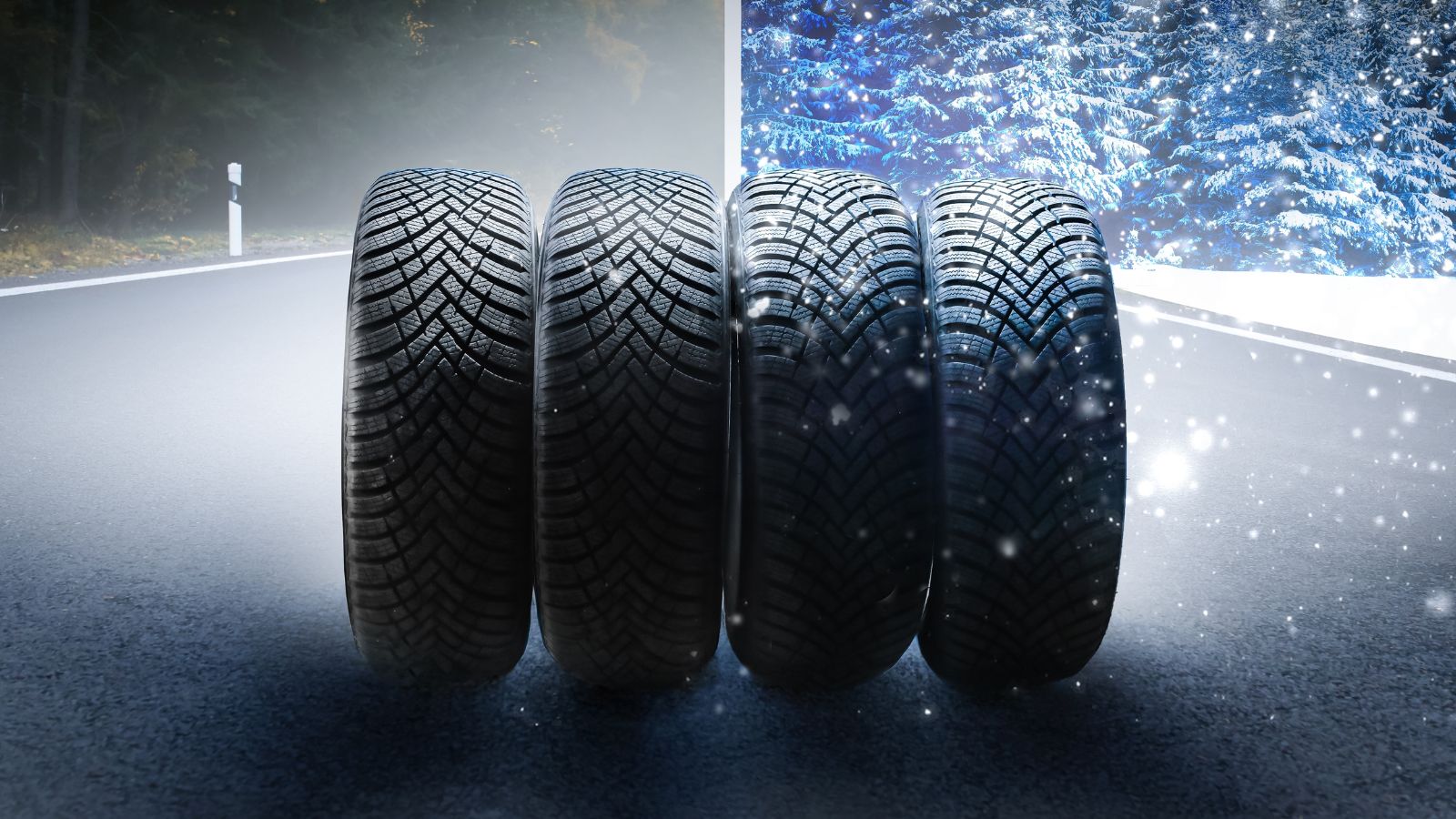
An SUV may leave the showroom with all-wheel drive, several inches of ground clearance, and a sophisticated traction-management system, yet still depend on tires designed primarily for year-round convenience. That can become the weak link as temperatures fall. Transport Canada notes that all-season and summer tires begin losing elasticity below about 7°C, while winter tires are engineered to remain flexible at substantially lower temperatures. That flexibility matters because every acceleration, braking, and steering command ultimately has to pass through four small tire contact patches.
The difference can be larger than the drivetrain badge suggests. Consumer Reports has repeatedly found that winter tires improve stopping, starting, and cornering on snowy or icy surfaces regardless of whether a vehicle uses front-, rear-, or all-wheel drive. An AWD SUV on mediocre all-seasons can therefore feel less secure than a front-drive sedan equipped with quality winter rubber. The SUV may pull away from a snowy intersection more easily, creating a strong first impression, only to reveal far less grip when the next corner or emergency stop arrives.
Wide Tire Packages Can Work Against Snow Grip
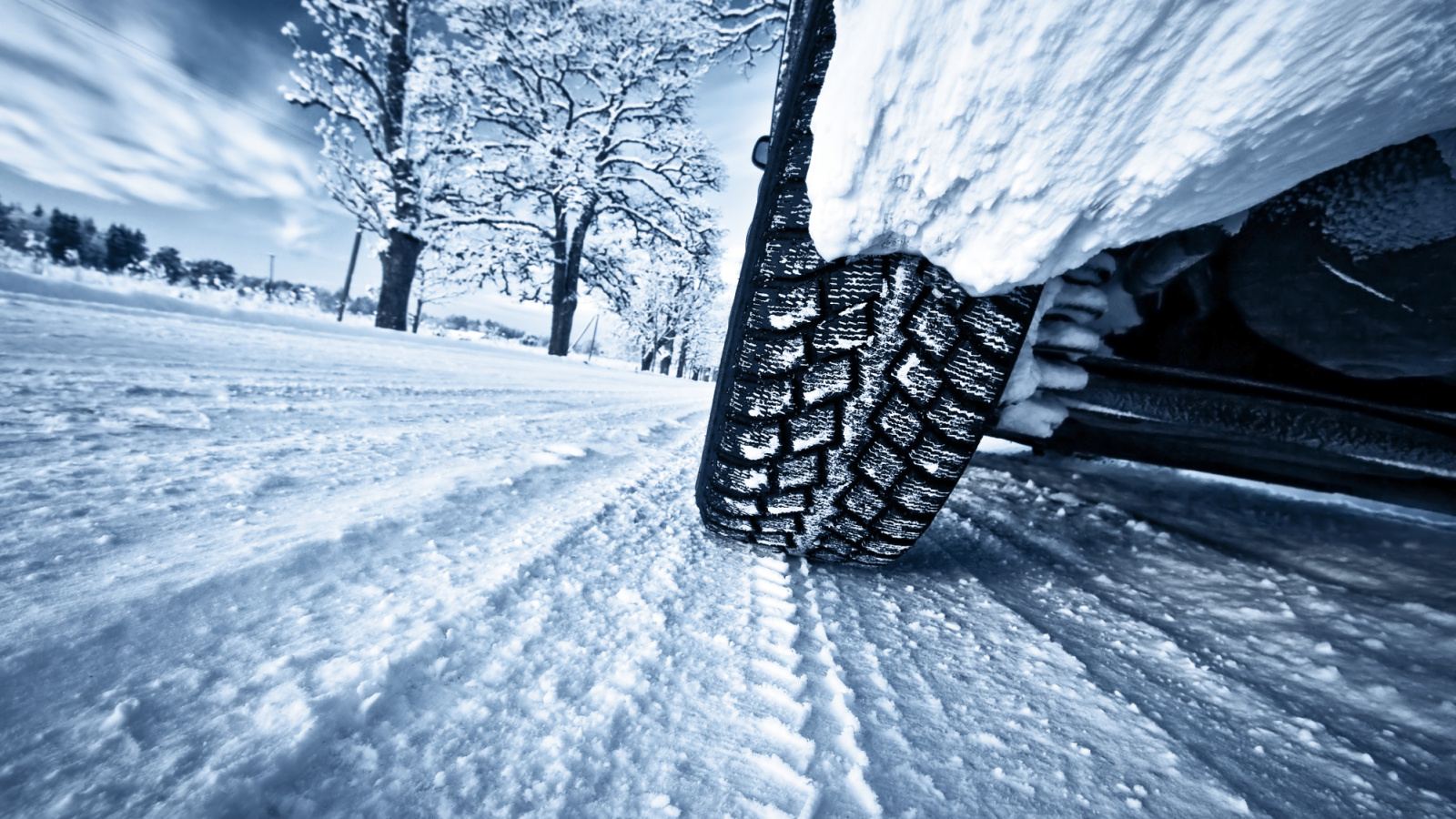
Modern SUVs increasingly wear broad tires, partly for appearance and partly to support dry-road handling. Those wide footprints look substantial, but bigger is not automatically better once the road is covered with snow or slush. Transport Canada specifically cautions that wide, high-performance tires not designed for winter conditions are unsuitable for snow-covered roads. A narrower winter setup can place more pressure on a smaller area and can sometimes cut through loose snow or slush more effectively.
Independent testing reinforces the point. Germany’s ADAC compared several winter-tire widths on the same vehicle and found advantages for narrower sizes in snow, slush, and aquaplaning-related conditions, although the differences between individual tire models remained important. That distinction matters for SUVs because upscale trims often receive the widest wheel-and-tire combinations in the range. A base sedan on narrower winter tires may consequently track through a snowy lane with less wandering, while a premium SUV wearing broad performance-oriented rubber can feel as though it is floating or searching for a clean path through the accumulation.
Tread That Looks Usable May Already Be Losing Snow Performance
Winter grip can deteriorate well before a tire appears completely worn out. Deep tread channels provide space for snow and slush to move away from the tire, while smaller grooves and biting edges help the tread interact with packed snow. As those features become shallower, the vehicle may begin spinning its tires sooner and requiring more distance to regain control, even though plenty of visible rubber remains.
Consumer Reports demonstrated how early that decline can occur by testing all-season tires at full and roughly half tread depth. Snow-acceleration performance declined by about 14 percent in its testing, while wet stopping distances increased by roughly 7 percent. Transport Canada advises against using tires worn close to 4 millimetres, or 5/32 of an inch, on snow-covered roads. This can catch SUV owners off guard because a large vehicle with AWD may continue pulling away reasonably well despite deteriorating tires. A lighter sedan with fresher winter tires can therefore feel noticeably more composed when braking, turning, or crossing a snow-covered intersection.
All-Terrain Does Not Automatically Mean Winter-Ready
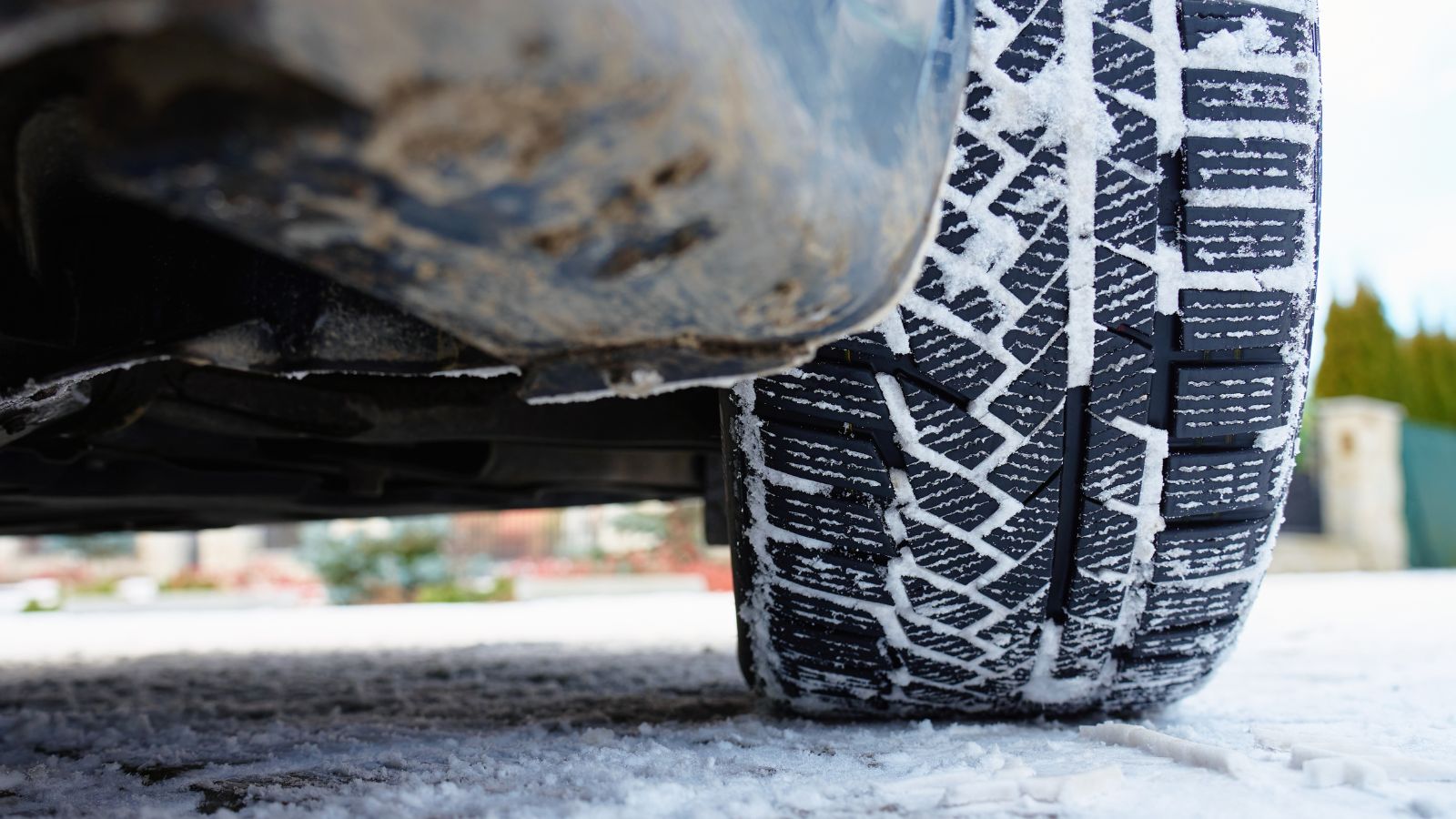
Chunky all-terrain tires look perfectly suited to a snowy driveway, but aggressive tread blocks do not necessarily provide the same cold-weather capability as dedicated winter tires. Some all-terrain models carry the three-peak mountain snowflake symbol and achieve recognized snow-traction standards, while others are primarily designed around dirt, gravel, durability, and year-round use. Ice performance can be especially dependent on tread compound and fine biting edges rather than simply having large grooves.
Consumer Reports illustrated the difference in truck-tire testing. Dedicated winter tires required an average of about 80.7 feet to accelerate from 5 to 20 mph on packed snow. Mountain-snowflake-rated all-terrain and all-weather tires averaged about 98.2 feet, while conventional all-terrain and all-season groups were around 118.5 and 119.2 feet respectively. The exact ranking varies by tire model and conditions, but the broader lesson is useful. A rugged SUV on ordinary all-terrain tires may look far more winter-capable than a sedan, yet a sedan equipped with purpose-built winter rubber can deliver more dependable snow traction.
AWD Helps the Launch More Than the Stop
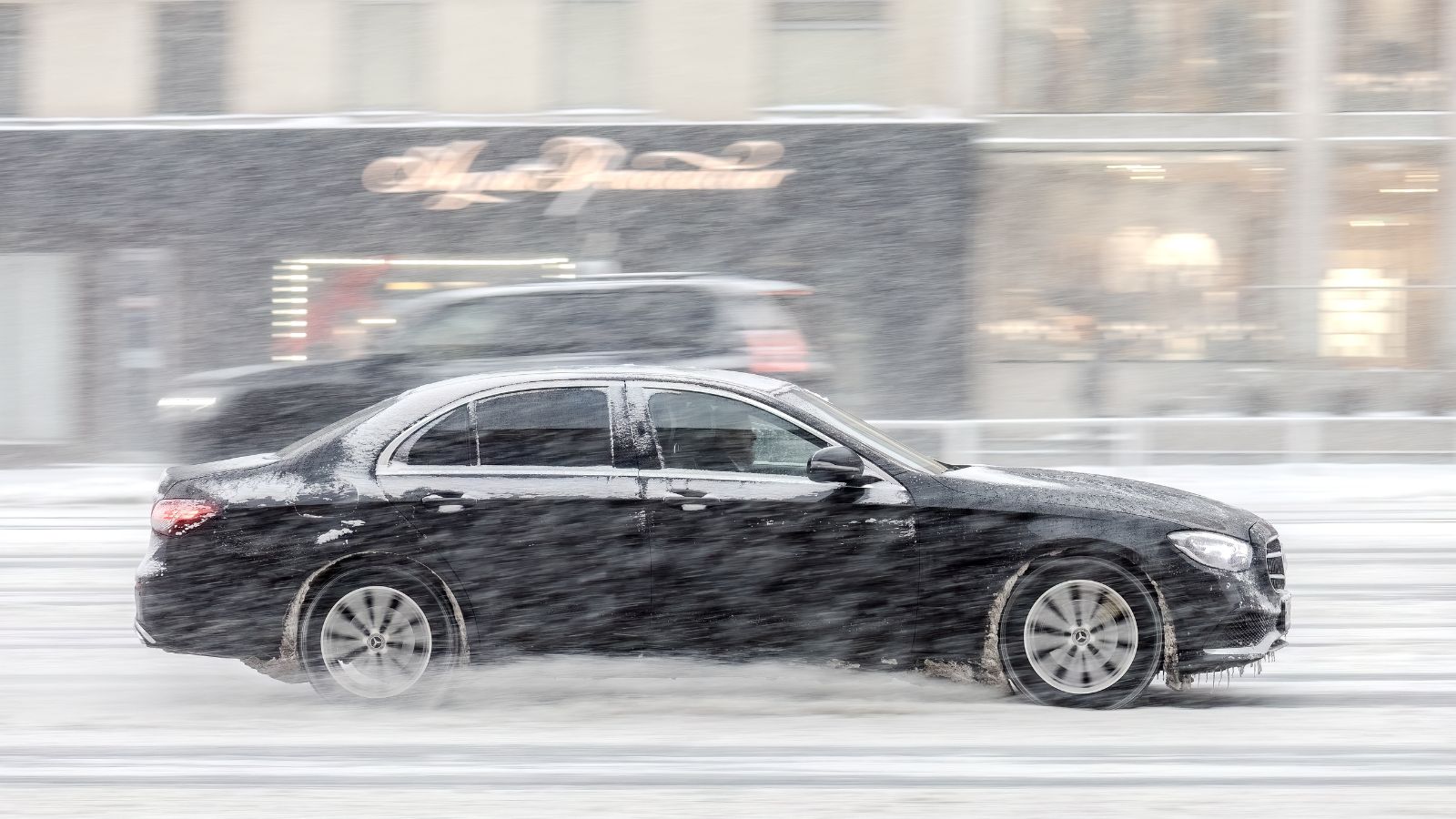
All-wheel drive has one enormous winter advantage: it can distribute engine power through more tires when the vehicle is trying to accelerate. That makes pulling away from a snowy curb, climbing an icy hill, or leaving an unplowed parking space easier. The problem is that drivers can interpret strong acceleration as evidence that similar reserves of grip will be available everywhere else. Braking does not work that way. All four vehicles tires already contribute to braking whether the drivetrain is AWD or not.
Consumer Reports demonstrated the distinction by comparing an AWD Honda CR-V and a front-wheel-drive Toyota Camry fitted with winter tires. In its snow test, both stopped from 60 mph in roughly 300 feet. The publication has also emphasized that AWD itself does not materially improve braking and may offer little assistance in certain cornering situations. That helps explain why a properly equipped sedan can sometimes feel surprisingly secure beside an SUV. The SUV may leap away confidently, but once the accelerator is released, tire grip becomes much more important than the number of driven wheels.
AWD Systems Do Not Behave Alike
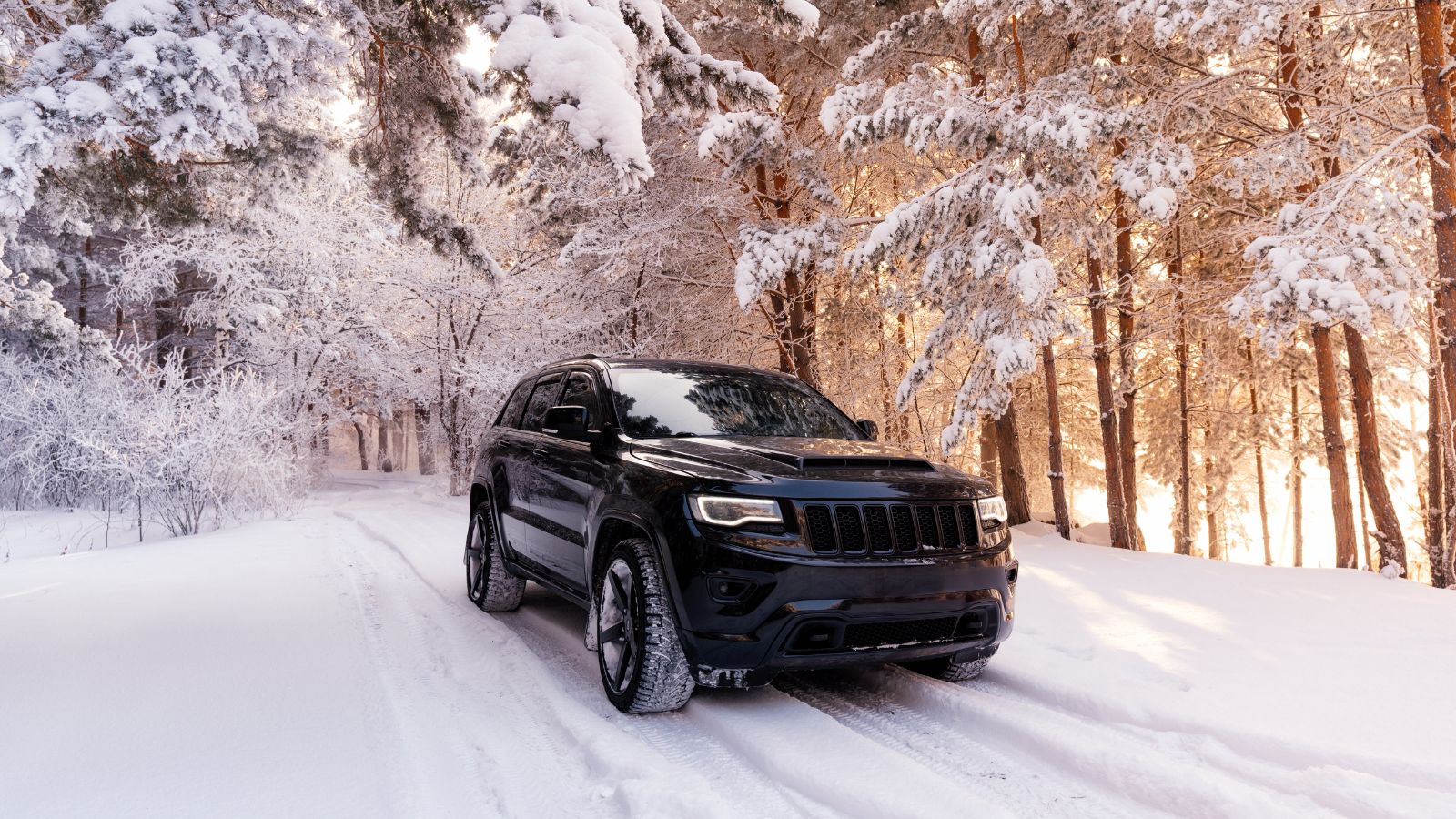
The letters “AWD” reveal surprisingly little about how a vehicle will behave when traction disappears. Manufacturers use different clutches, different torque-split strategies, different software, and different thresholds for allowing wheelspin. Some systems begin sending meaningful torque to multiple wheels almost immediately. Others remain strongly front-biased or wait for a noticeable speed difference before reacting. Those variations become much easier to detect on snow than on dry pavement.
Consumer Reports saw striking differences while testing several popular compact SUVs in snowy conditions. Its drivers found the Subaru Forester markedly stronger than the Honda CR-V and Toyota RAV4 in some acceleration, hill-climbing, and handling exercises. The Forester allowed enough controlled wheelspin to preserve momentum, while the other vehicles could feel less responsive. The test does not mean one brand will always outperform another in every kind of snow, but it demonstrates why two SUVs with apparently similar specifications can feel completely different. A predictable front-drive sedan can sometimes inspire more confidence than an AWD SUV whose torque distribution behaves unexpectedly.
On-Demand AWD Can Feel Like Front-Wheel Drive Until Grip Is Lost
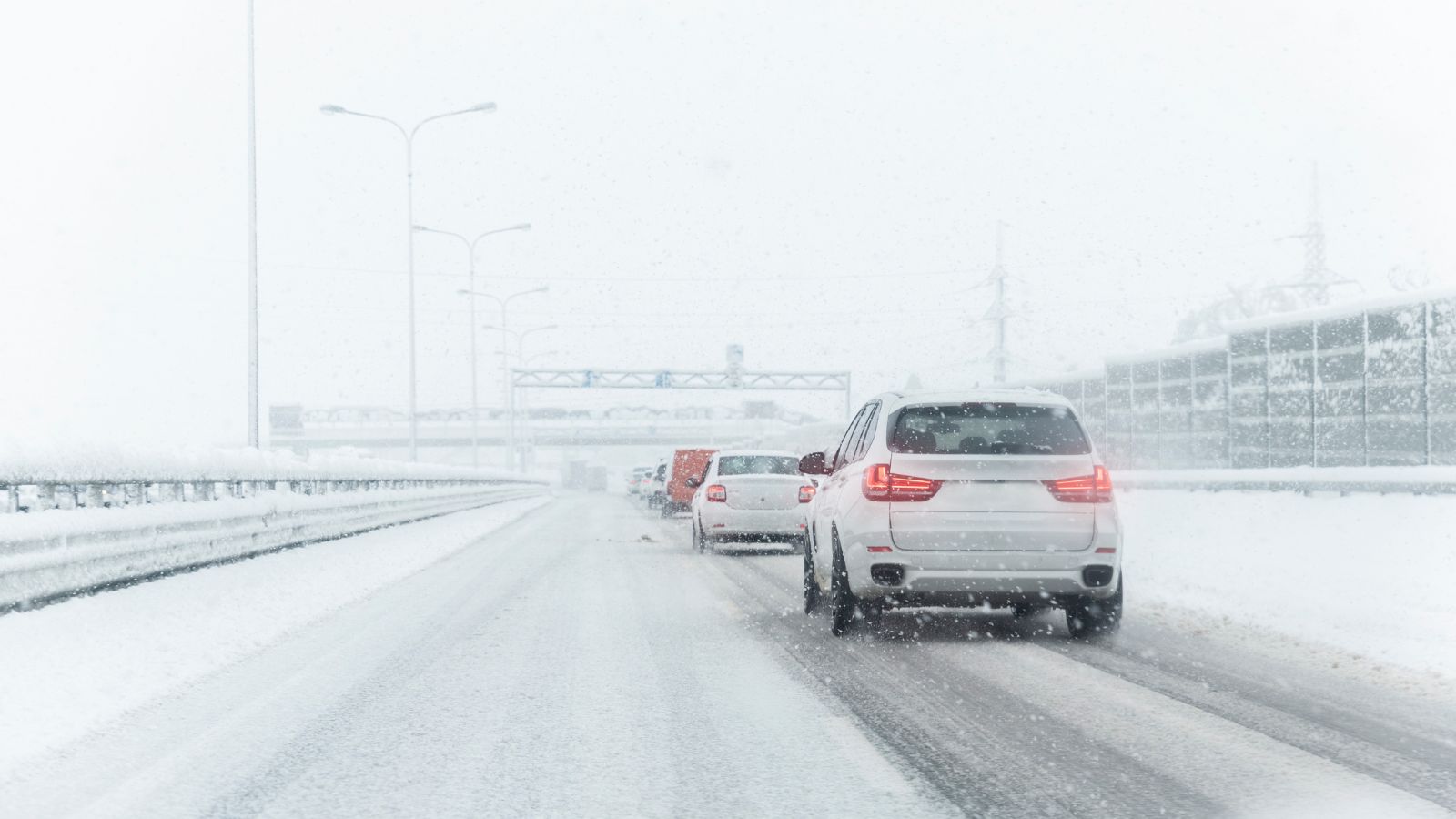
Many crossover SUVs are fundamentally front-wheel-drive vehicles with an additional system that can send torque rearward when necessary. During ordinary cruising, relatively little power may reach the rear wheels. When sensors detect wheelspin, heavy acceleration, steering input, or another trigger, an electronically controlled clutch can increase rear-axle participation. The approach improves efficiency, but the transition may be noticeable on slippery roads.
Consumer Reports notes that many FWD-based AWD systems send power to the rear only as needed. During its snow evaluation of compact SUVs, testers described the Honda CR-V as behaving largely like a front-wheel-drive vehicle in some situations. That does not make the system defective; it reflects how different AWD strategies are calibrated. On patchy snow, however, a driver may feel the front tires begin to push before the vehicle reorganizes its torque distribution. A conventional front-drive sedan has fewer expectations to violate: its behaviour is often straightforward, and the engine’s weight above the driven front wheels can provide useful traction on slippery surfaces.
Some Truck-Based SUVs Start From a Rear-Drive Layout
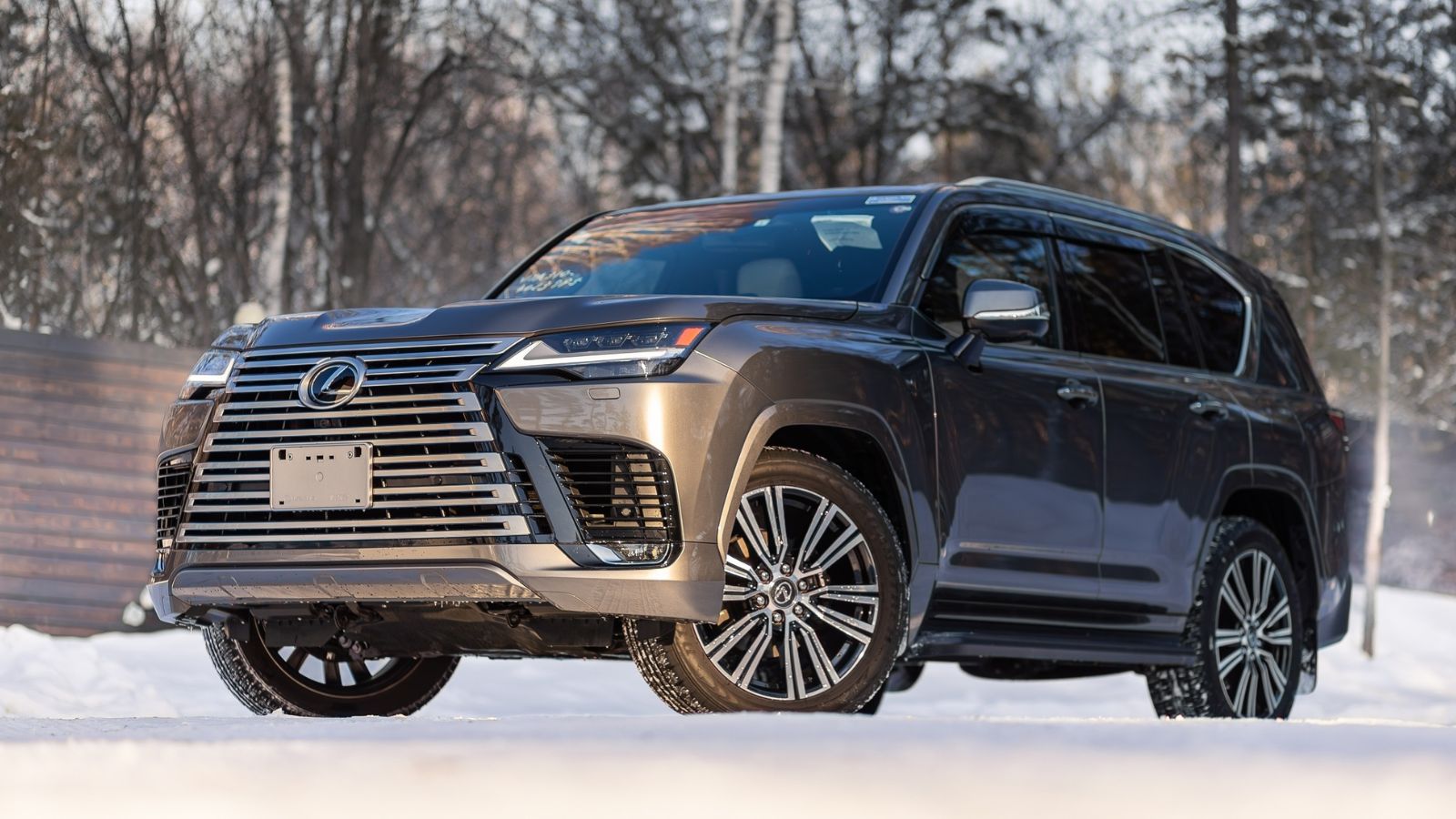
Not every SUV begins with a car-like front-wheel-drive architecture. Traditional body-on-frame models frequently use rear-wheel drive as their basic configuration, adding selectable or automatic four-wheel drive for slippery or off-road conditions. When operating in two-wheel-drive mode, that means the rear tires must provide propulsion while carrying less of the engine’s weight than the front axle. On snow, the difference can be immediately noticeable.
Front-wheel-drive sedans benefit from a simple winter-friendly characteristic: the engine and transmission place considerable mass over the wheels responsible for both pulling and steering the vehicle. Consumer Reports identifies that weight concentration as one reason FWD performs relatively well on hills and slippery surfaces. Rear-wheel-drive vehicles, by contrast, can be more prone to rear-tire spin in snow unless sufficient traction is available or 4WD is engaged. Modern traction control substantially reduces the drama, but a truck-based SUV left in the wrong drive mode can still feel surprisingly loose compared with an ordinary front-drive family sedan on equivalent tires.
A Higher Centre of Gravity Changes the Way the Body Moves
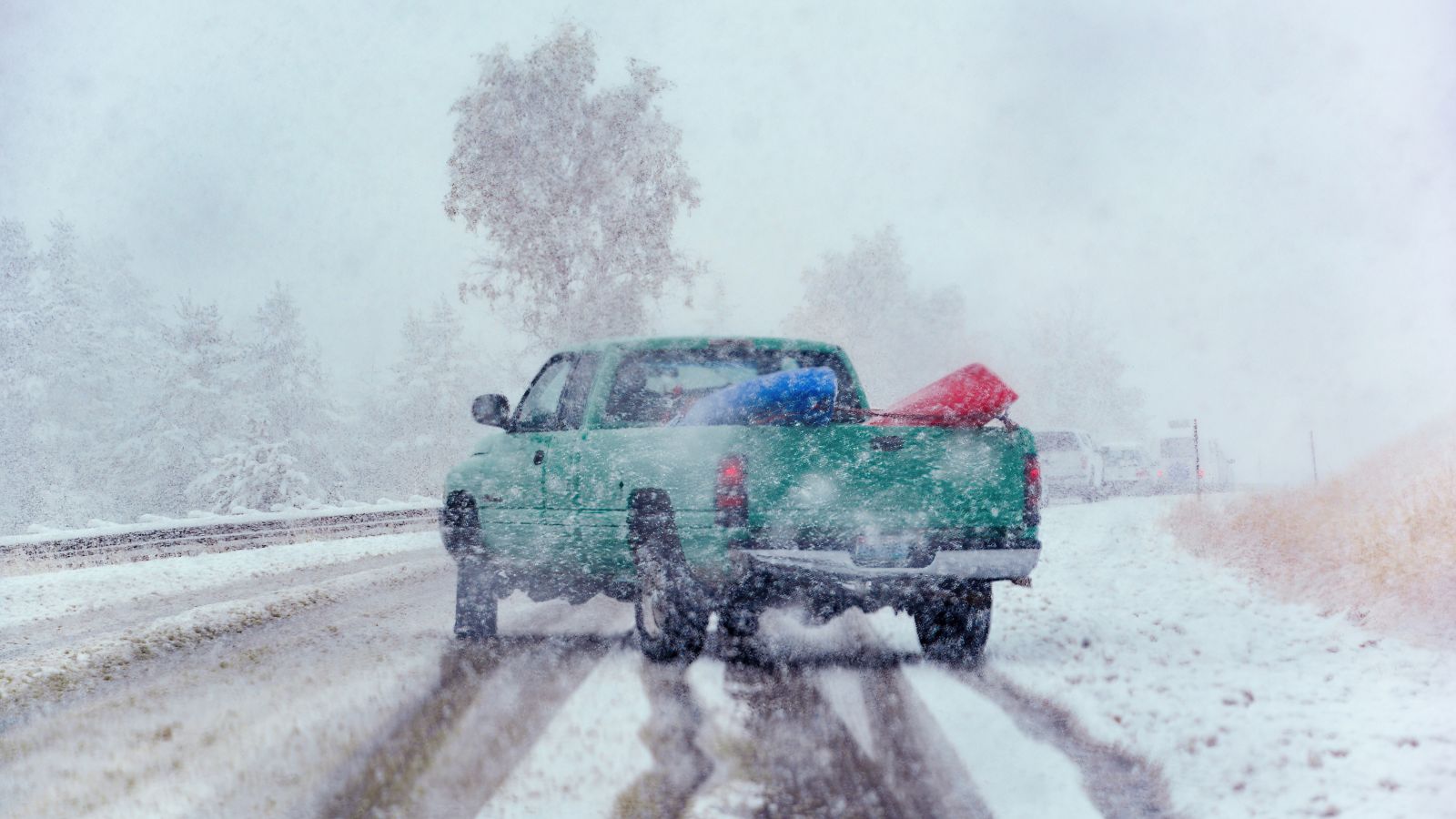
SUVs sit taller partly because buyers want more ground clearance and cabin space. Raising the body also raises the vehicle’s centre of gravity, changing how it responds when forces build during steering, acceleration, or braking. Engineers compensate with suspension tuning, anti-roll bars, stability systems, and wider tracks, and modern crossovers can handle remarkably well. Even so, vehicle dynamics do not disappear simply because electronic systems are sophisticated.
SAE research describes high-centre-of-gravity SUVs as requiring particular attention to roll stability and steering calibration, while NHTSA’s rollover work has long distinguished taller utility vehicles from lower passenger cars. On snow, the practical issue is often sensation rather than an imminent rollover. As grip changes from one wheel to another, a tall SUV can produce more noticeable body motion and weight transfer. A sedan’s lower seating position and lower centre of gravity can make identical low-grip manoeuvres feel flatter and more settled. That steadiness can make the sedan easier to read when the available traction is already difficult to judge.
Truck-Like Suspension Can Feel Busier on Rutted Winter Roads
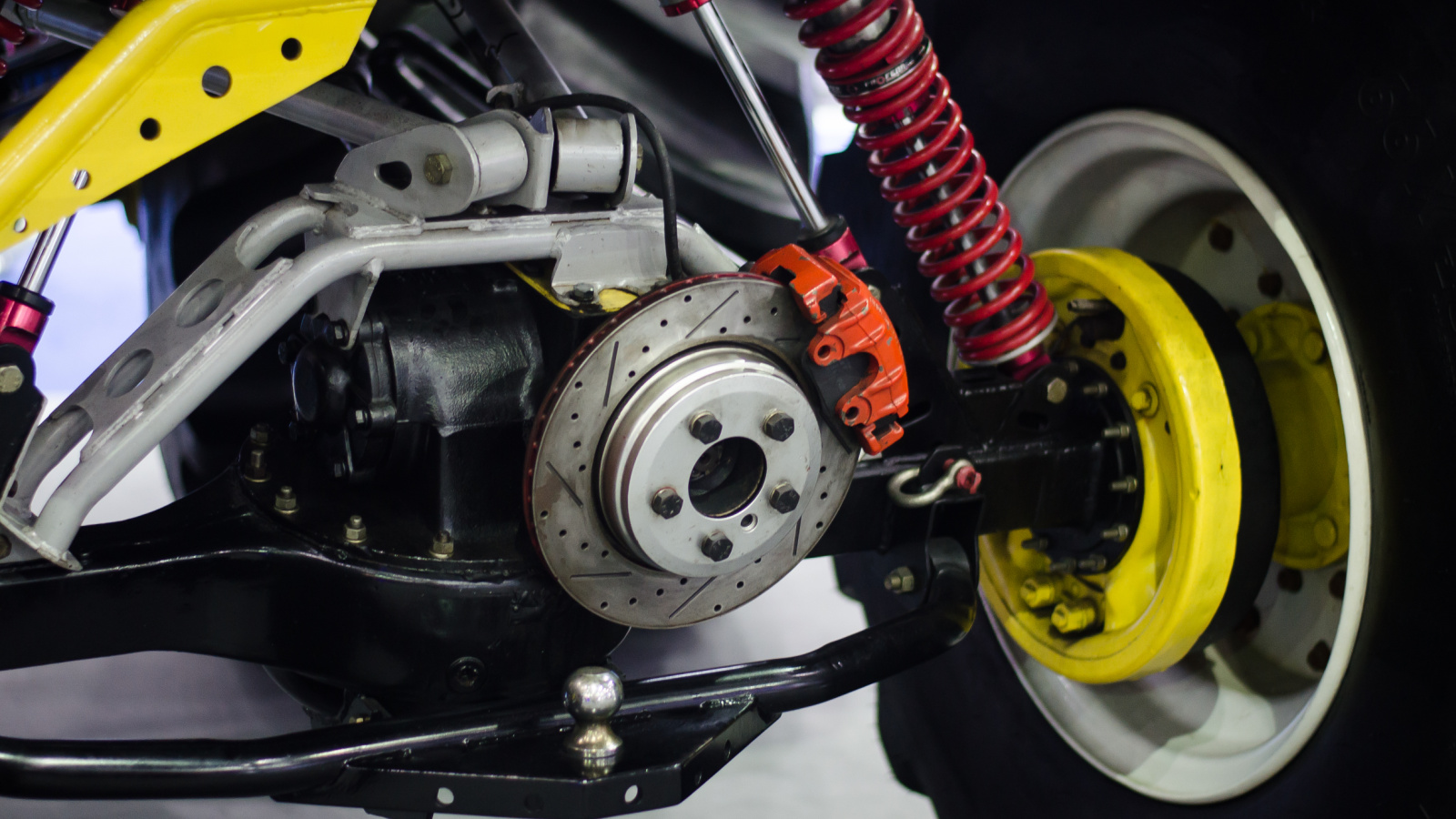
Many modern crossovers use car-like unibody platforms and fully independent suspension, but traditional SUVs may still rely on body-on-frame construction and, in some cases, a rigid rear axle. These designs bring real advantages for towing, durability, articulation, and rough-road capability. They also create different ride-and-handling engineering challenges from those found in a typical sedan, particularly when a road surface contains repeated bumps and uneven wheel inputs.
Recent SAE work examining body-on-frame SUVs describes the need to balance stability, comfort, roll behaviour, and the kinematics of rigid-axle suspension. Other engineering research has noted that body-on-frame vehicles can transmit additional noise, vibration, and harshness from uneven roads through their steering and suspension structures. A winter road full of frozen ruts, packed-snow ridges, and potholes can expose those characteristics. Rather than gliding cleanly across the surface, a truck-derived SUV may feel as if individual wheel disturbances are moving the body around. A lighter unibody sedan with well-controlled independent suspension can sometimes feel less busy, even though it has far less ground clearance.
Extra Mass Does Not Buy Proportional Snow Traction
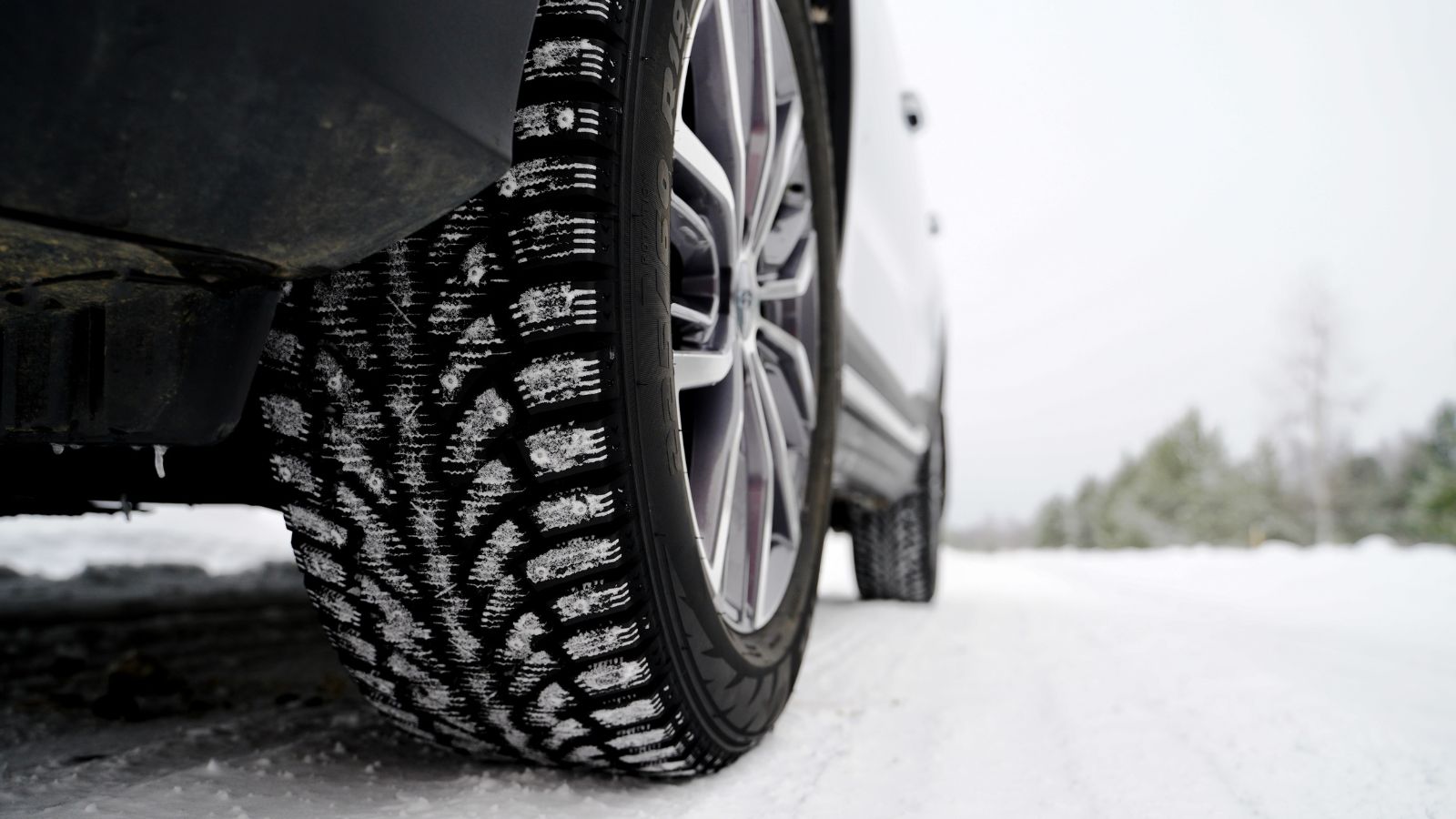
It is tempting to assume that a heavier SUV must press its tires harder into the snow and therefore grip better. Tire-snow interaction is more complicated. Increased vertical load increases the force on the tire, but research shows that usable traction does not necessarily rise in direct proportion. Snow deforms, tires sink, tread blocks shear the surface, and resistance builds as the tire pushes material out of its path.
A University of Alaska Fairbanks tire-snow model published through SAE found that normalized traction and motion resistance decreased as normal force increased under the conditions studied. In practical terms, doubling the load on a tire should not be interpreted as doubling the available snow grip. The heavier vehicle also carries more momentum once it is moving. Modern ABS and stability control manage that energy extremely effectively, but they cannot manufacture friction. This helps explain the counterintuitive experience of a heavy SUV feeling secure while travelling straight, then requiring surprisingly gentle steering and braking inputs when the road becomes polished or icy.
Roof Boxes and High Cargo Loads Can Make an SUV Less Settled
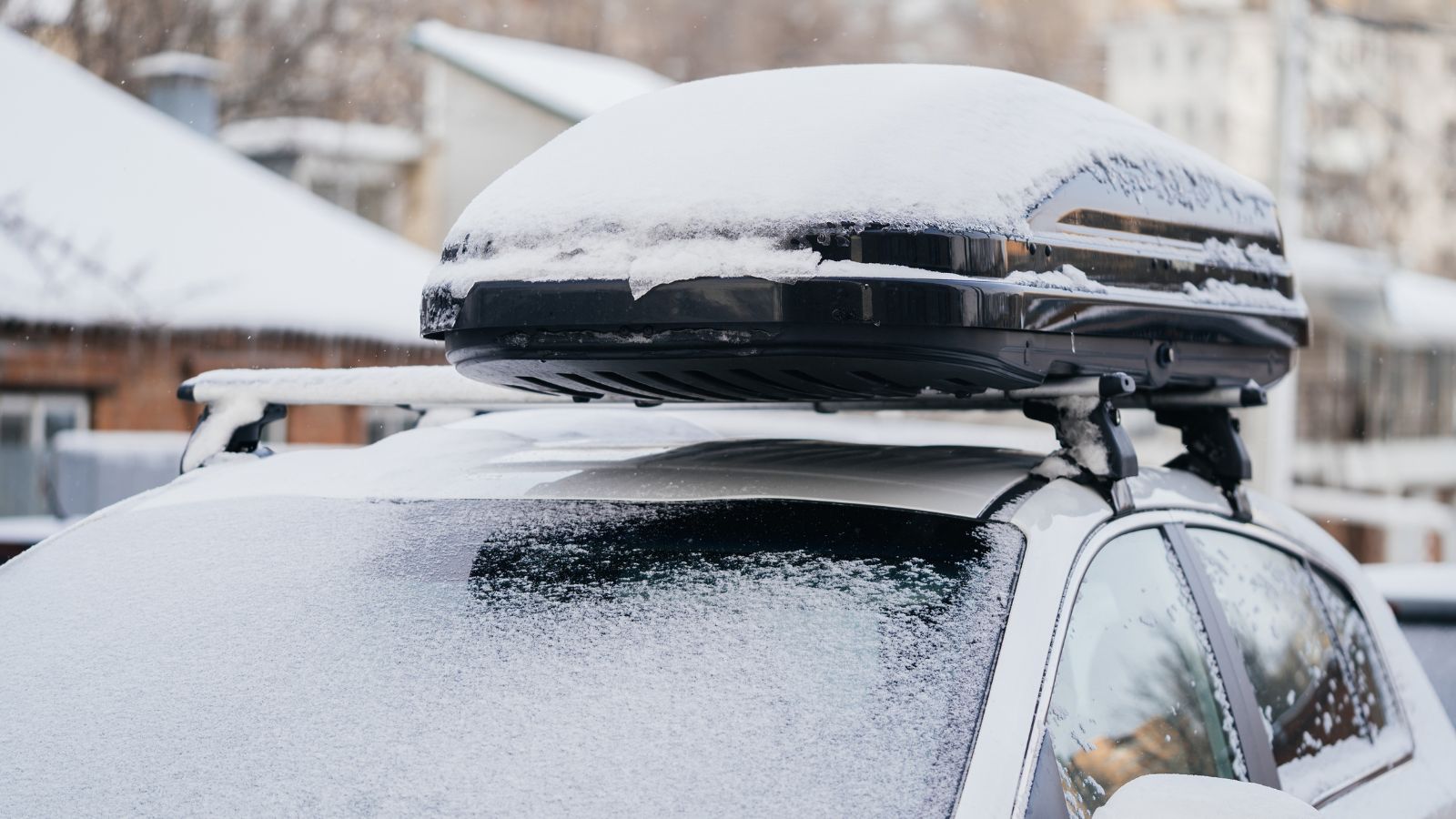
Winter trips often turn an SUV into a moving storage unit. Skis, snowboards, luggage, emergency equipment, passengers, and roof boxes can add substantial mass. Cargo carried low in the cabin usually changes handling less dramatically than the same weight placed above the roofline. Because SUVs already begin with relatively high bodies, roof-mounted cargo deserves particular attention.
Ford’s current roof-rack guidance explicitly recommends keeping the centre of gravity low and warns that loaded vehicles with higher centres of gravity can handle differently from unloaded ones. Transport Canada gives similar advice for tall passenger vehicles, recommending that cargo be carried inside rather than on the roof where possible because roof loads reduce stability. Snow amplifies the effect because the road provides less lateral grip just as the vehicle becomes more top-heavy. A family SUV that felt perfectly stable during an empty commute can therefore feel slower to settle during lane changes or sweeping curves once a packed roof box is installed. A lower sedan carrying luggage mainly in its trunk avoids much of that height penalty.
Cold Weather Tire-Pressure Loss Can Quietly Change the Feel
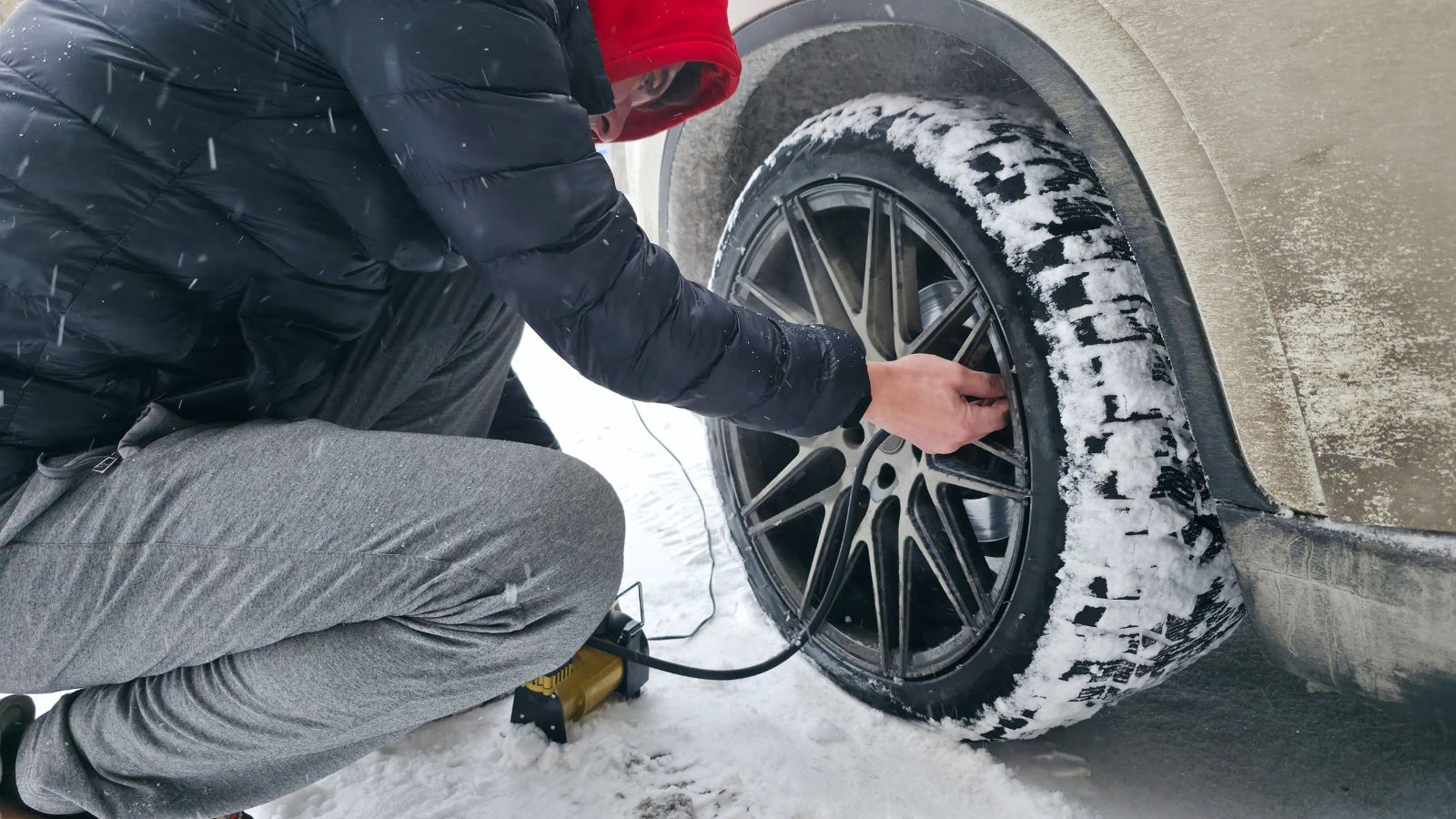
Tire pressure naturally falls as ambient temperature drops. NHTSA specifically reminds winter drivers to check inflation because a tire adjusted during mild autumn weather may be below the vehicle manufacturer’s specification once a cold spell arrives. Modern tire-pressure monitoring systems help, but NHTSA notes that they generally illuminate only after a tire becomes significantly underinflated, so they do not replace regular manual checks.
This matters because snow already reduces the margin between a normal steering input and a loss of grip. Incorrect inflation changes how a tire carries its load and how the tread contacts the road. On an SUV with large tires and substantial sidewalls, a modest pressure loss may not even look obvious from several steps away. The result can be vague steering, uneven response, or simply a vehicle that no longer behaves exactly as expected. Sedans are not immune, of course, but the lesson is particularly relevant to drivers who assume large SUV tires and AWD compensate for basic tire maintenance. They do not.
Traction Control Can Cut Power at the Moment the Driver Wants More
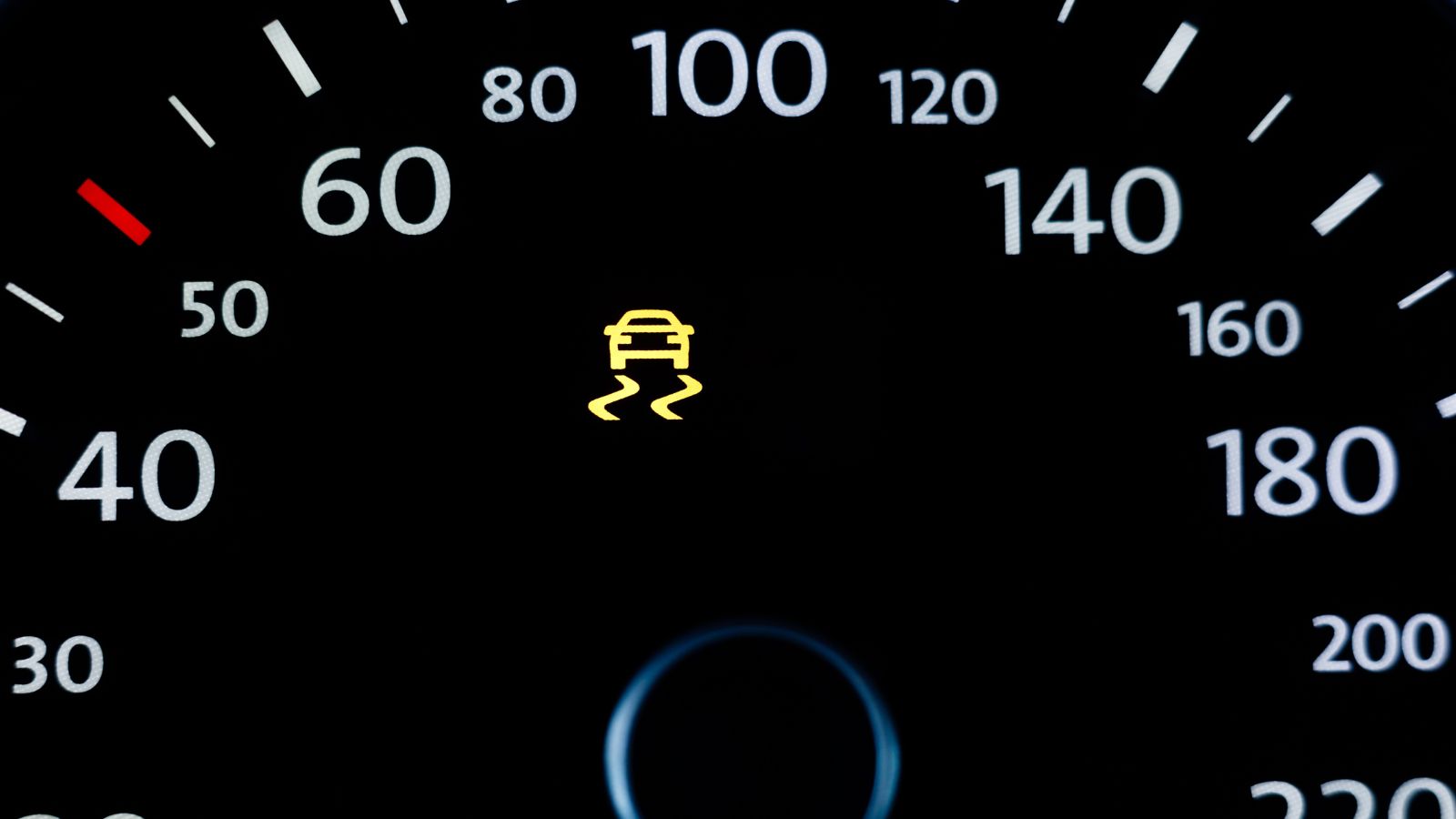
Traction-control systems are designed to prevent driven wheels from spinning uncontrollably. Using ABS wheel-speed sensors, the system can recognize a slipping tire and respond by reducing engine torque, applying a brake to the spinning wheel, or combining both strategies. On an icy road, that intervention can turn a potentially dramatic wheelspin event into a smooth departure. From the driver’s seat, however, it can also feel as though the accelerator has suddenly stopped responding.
Transport Canada explains that traction control can both brake wheels and reduce engine power on slippery surfaces. The exact calibration varies substantially among vehicles. That means one SUV may permit enough wheelspin to maintain momentum up a snowy grade, while another may cut power earlier and feel hesitant. Consumer Reports observed similar differences in its compact-SUV snow testing. A sedan with a lighter body, narrower tires, and predictable front-drive behaviour may require less intervention in the same situation. The SUV is not necessarily less safe; its electronics may simply make the struggle for traction more noticeable.
Deep Snow Sometimes Requires a Little Wheelspin
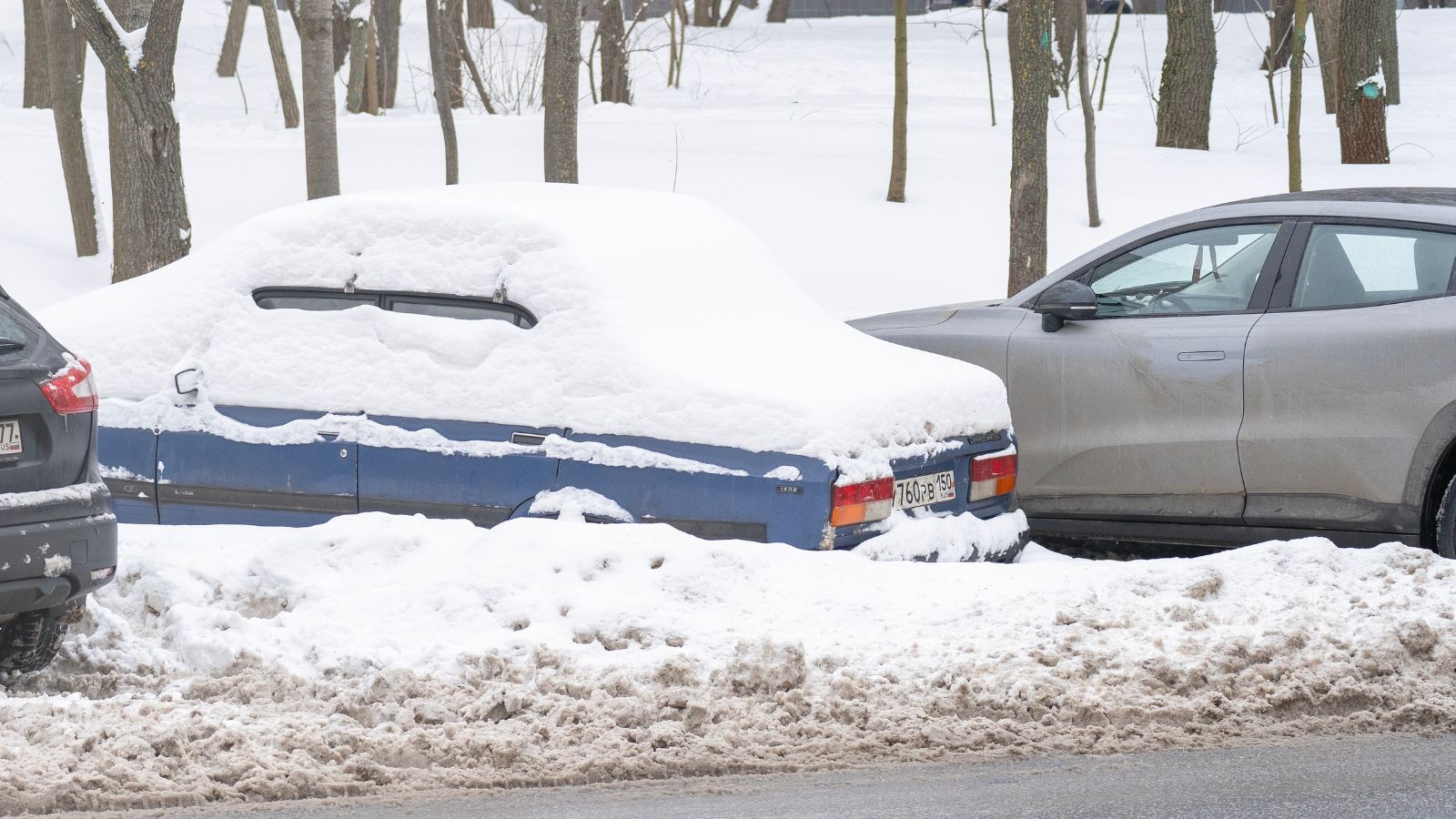
Traction control is extremely useful on packed snow and ice, but deep loose snow creates a different problem. Sometimes a vehicle needs limited wheelspin to clear tread blocks, build momentum, or work its way out of a soft accumulation. A system that suppresses every trace of slip can prevent that process, leaving the vehicle feeling strangely powerless even though the engine has plenty of output.
Transport Canada specifically notes that switching traction control off can be useful in circumstances where some wheelspin is required, including getting out of mud or deep snow. The advice does not mean the system should normally be disabled; once the vehicle is moving again, traction and stability aids usually provide important protection. The point is that snow mobility involves more than maximum electronic intervention. A heavy SUV can dig into soft snow and encounter substantial motion resistance, while its control system simultaneously tries to suppress wheelspin. The combination can feel clumsy. A lighter sedan with good winter tires may occasionally pass through shallower accumulation with less electronic drama.
Stability-Control Corrections Can Be Felt Through the Vehicle
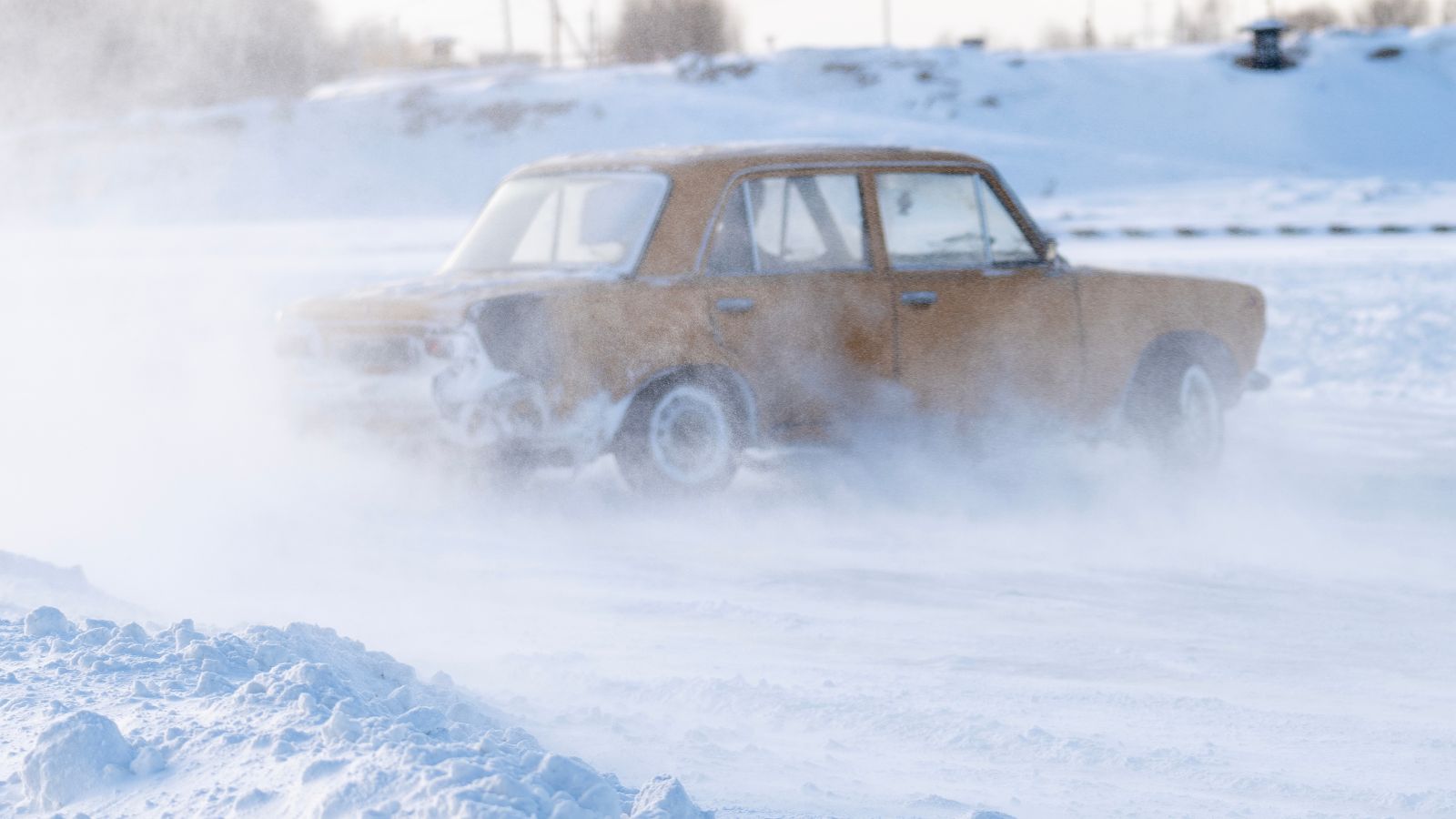
Electronic stability control watches far more than wheelspin. It compares steering input with the vehicle’s actual rotation and direction of travel. If the vehicle begins to understeer or oversteer, the system can apply braking force independently to individual wheels and may reduce engine torque. NHTSA describes that wheel-by-wheel braking capability as a central feature of ESC, and federal standards require systems to help limit both understeer and oversteer.
Those corrections are hugely valuable, especially on slippery roads, but they are not always invisible. A driver may feel a brief brake pulse, a reduction in acceleration, or a change in the vehicle’s path as the system tries to restore stability. Patchy winter roads can trigger repeated corrections because the available grip varies from tire to tire. In a tall, heavy SUV, the body movement accompanying those corrections may be more noticeable than in a low sedan. What feels like nervous behaviour may actually be the vehicle’s safety systems working correctly, but the subjective result can still be a less natural or less fluid winter-driving experience.
Roll-Stability Systems Have More Work to Do in High-Centre-of-Gravity Vehicles
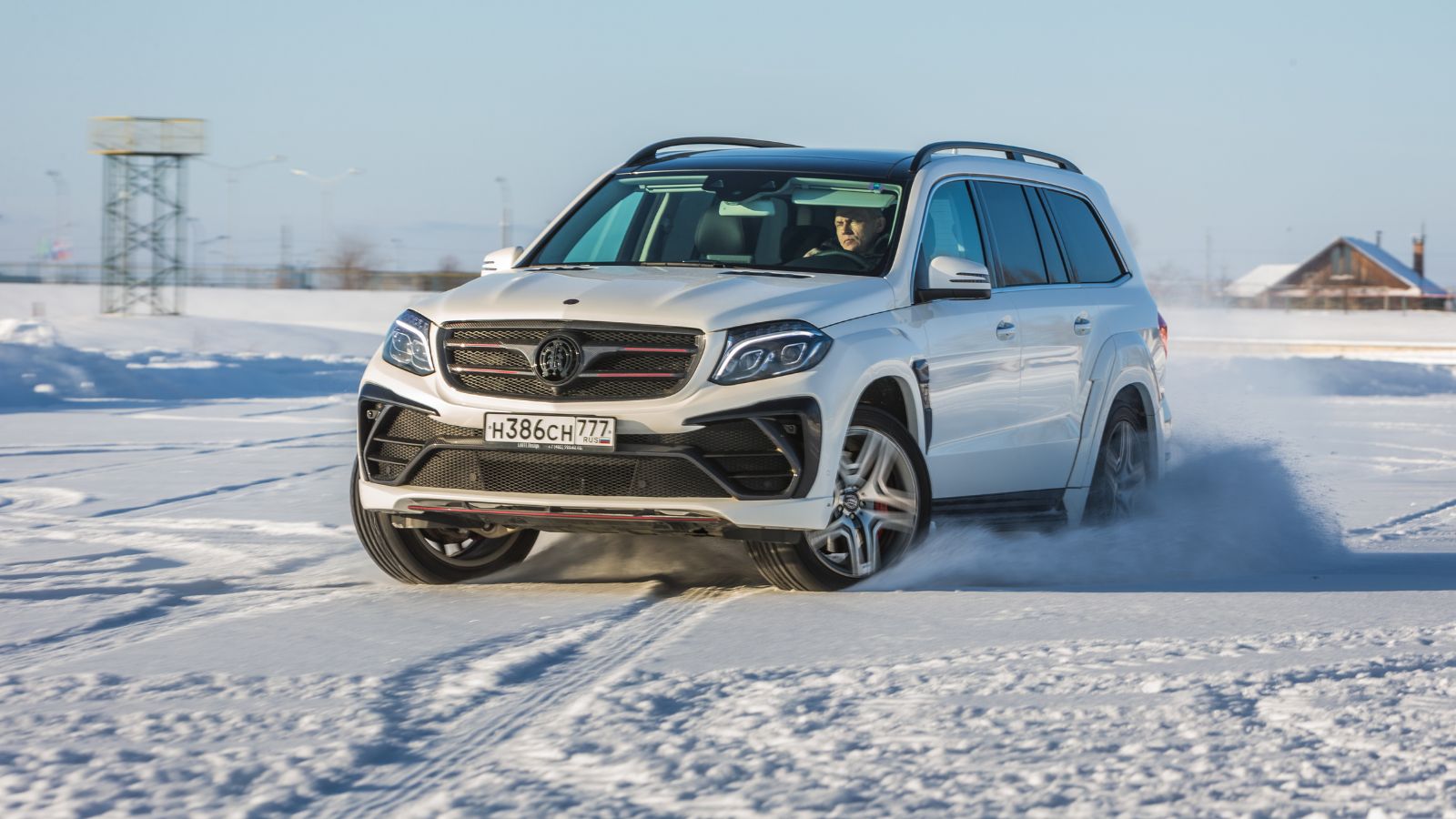
Some SUVs add roll-stability control to the basic functions of electronic stability control. These systems use information such as steering angle, lateral acceleration, wheel speed, and sometimes roll-rate sensors to determine when a tall vehicle is approaching an undesirable roll condition. NHTSA describes roll-stability control as a specific countermeasure for high-centre-of-gravity vehicles, capable of applying braking to reduce lateral acceleration before wheel lift becomes a concern.
That technology is primarily associated with extreme manoeuvres rather than ordinary snow driving, yet it highlights an important engineering reality: taller vehicles need more sophisticated management of lateral forces. NHTSA notes that a roll-control intervention may reduce the curvature of the vehicle’s path to lower lateral acceleration. On a slippery road, where stability and yaw systems are already managing limited grip, those protective layers can contribute to a driving experience that feels heavily supervised. A low sedan typically starts with a more favourable geometric relationship between centre-of-gravity height and track width, so equivalent manoeuvres may involve less body roll and fewer obvious corrective sensations.
Part-Time 4WD Can Feel Awkward on Patchy Winter Pavement
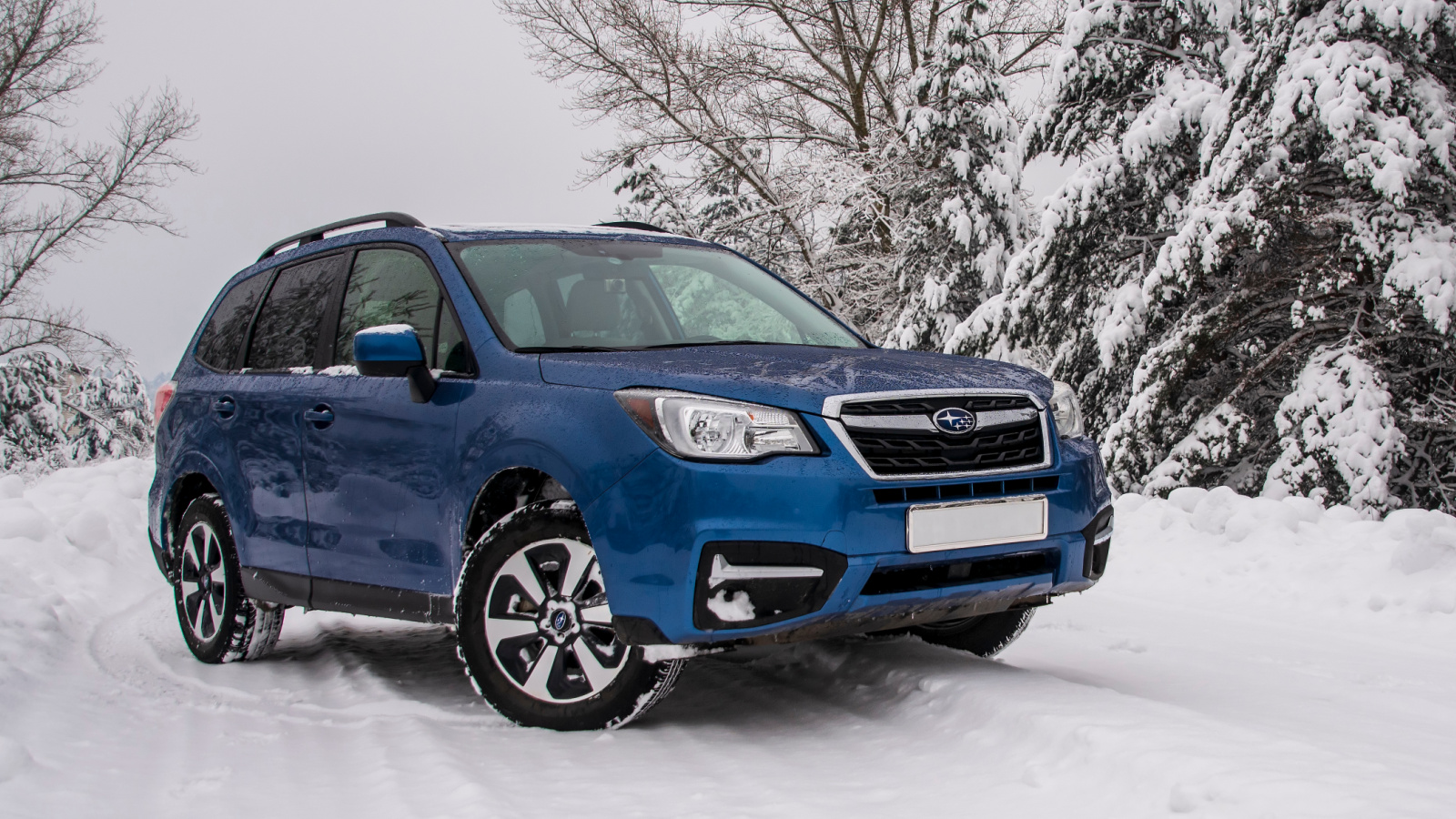
Traditional SUVs sometimes use part-time four-wheel drive rather than the automatic AWD systems common in crossovers. In part-time 4WD, the front and rear drivetrains can be mechanically locked together. That is highly effective on loose snow, gravel, mud, or other surfaces that allow the tires to slip slightly. Problems arise when the road alternates rapidly between snow-covered sections and dry, high-grip pavement.
Jeep’s technical guidance explains that part-time 4WD lacks a centre differential and locks the front and rear driveshafts together. On dry pavement, the wheels need to travel different distances while turning, so the locked driveline can produce binding, shuddering, or the phenomenon often called “crow hop.” That can make an SUV feel strangely resistant to turning precisely when the driver expected four-wheel drive to make everything easier. Full-time AWD avoids that particular issue by allowing speed differences between axles. A conventional sedan has no transfer case to manage at all, which can make its behaviour simpler and more consistent as winter pavement changes from snowy to bare and back again.
19 Used Cars Canadians Should Avoid in 2026 (Based on Owner Complaints)

Buying a used car in Canada can feel safe until repair bills start stacking up. Owner complaints tell a different story than glossy listings. Transmission failures, electrical problems, and weak winter reliability show up again and again in consumer reports. Many of these issues appear after warranties expire, when owners least expect them. Some vehicles look affordable upfront, but become expensive to keep on the road. Others struggle in cold weather, urban driving, or long highway commutes. Here are 19 used cars Canadians should avoid in 2026 (based on owner complaints).
19 Used Cars Canadians Should Avoid in 2026 (Based on Owner Complaints)