























Ontario drivers are heading into a stretch where the biggest surprises may not come from the road, but from the fine print. Since January 2024, one protection that used to sit quietly inside the standard policy can now be waived, and an even broader overhaul is set to arrive on July 1, 2026. Layer in theft losses, repair inflation, electric-vehicle complexity and sharper regional pricing, and the insurance landscape looks very different from the one many households think they still have.
These 16 shifts capture the rule changes, claims-process changes and market pressures that could catch Ontario motorists off guard. Some may lower premiums on paper. Others could create gaps that only become obvious after a collision, a theft claim or an ugly renewal notice.
Direct Compensation Is No Longer a Background Detail

For years, most Ontario drivers never had to think much about Direct Compensation–Property Damage, or DCPD, because it was simply part of the standard policy. That changed in January 2024. Ontario now allows drivers to elect not to claim DCPD through OPCF 49, which means a protection many people assumed was automatic has become a real coverage decision. That alone is a major mental shift, because “standard policy” no longer means quite what many motorists think it means.
The danger is how easy it is to miss. At renewal, a lower premium can sound like a harmless efficiency move rather than a structural coverage change. Picture a driver who only notices the difference after a not-at-fault collision in Hamilton or Markham. The paperwork may say they saved money, but the practical reality is that they gave up one of the most useful pieces of Ontario’s traditional claims system.
A Not-at-Fault Crash Can Now Become a Coverage Shock

DCPD was designed to make life simpler after a crash. If another insured Ontario driver was at fault, a policyholder would normally claim from their own insurer for damage to the vehicle, its contents, or its loss of use. That is what made the system feel straightforward: the driver dealt with one insurer, not a maze of finger-pointing. Once DCPD is removed, that smooth path disappears, and a collision that feels “not my fault” can still become financially painful.
The blindside comes from expectation. Many drivers still assume not-at-fault automatically means “covered.” But insurance does not work on assumptions; it works on the policy actually in force. Imagine a commuter rear-ended on the QEW who expects the normal repair process and instead learns a key protection was waived months earlier. The emotional shock is often worse because it hits at the exact moment someone believes the system should be working in their favour.
Leased and Financed Vehicles Add Another Trap

The DCPD change is even trickier for people who lease or finance their vehicles. In practice, the car may feel like theirs, but a lender or lessor still has a legal and financial interest in it. Industry guidance around Ontario’s DCPD opt-out has warned that drivers with financed or leased vehicles should consult the financing company or lessor before waiving coverage. That makes sense: the party with money tied to the vehicle may not welcome a move that increases exposure after a collision.
This matters because Ontario is full of drivers in exactly that situation, especially in newer SUVs and crossovers. A lower premium might look attractive on a crowded household budget, but the decision is not purely personal once a lender is involved. A Toronto driver in a leased compact SUV could think they are trimming waste, only to find the lease terms or lender expectations effectively make that “choice” far more complicated than it first appeared.
July 1, 2026 Ends the Old One-Size-Fits-All Benefits Model

The biggest Ontario auto-insurance shift still ahead is the accident-benefits overhaul taking effect on July 1, 2026. From that date, standard medical, rehabilitation and attendant-care benefits will remain mandatory, but all other accident benefits will become optional. That is a profound change in philosophy. Ontario is moving away from a broader built-in benefits package and toward a menu system where many protections have to be actively chosen and paid for.
Supporters will say that gives consumers flexibility. Critics will say it pushes more responsibility onto drivers who do not read policy language closely. Both views can be true. The practical issue is that auto insurance will start to behave more like a customized benefits plan and less like a familiar default package. For busy families renewing on autopilot, the risk is not that the change is hidden. It is that the change is public, important and still easy to underestimate.
Income Replacement Will No Longer Be a Given

Income replacement is one of the most important benefits in a serious collision, because it helps replace earnings lost when an injured person cannot work. Starting July 1, 2026, that protection will no longer be automatic in Ontario’s standard package. That is a big deal for salaried workers, hourly workers and especially self-employed people who may already live with income volatility. The loss of a paycheque after a crash is often what turns an injury from stressful to financially destabilizing.
The blindside here is psychological as much as financial. Many people think of car insurance mainly as something that fixes metal and pays liability claims. They forget that a collision can also interrupt a household’s cash flow. A contractor in London, Ontario or a dental hygienist in Oshawa may discover that the missing coverage is not just about rehab visits. It is about whether the mortgage, daycare bill or payroll obligations still look manageable during the weeks or months after a bad crash.
Students and Non-Earners Can Lose Important Backstops

Ontario’s coming reforms also make non-earner benefits and lost educational expense benefits optional. Those two protections are easy to overlook because they do not sound urgent until life changes in a single afternoon. Non-earner benefits matter for people who are unemployed or students and then find themselves unable to carry on a normal life after a crash. Lost educational expense benefits matter when an injury derails tuition, books, training or a program already underway.
That means the people most likely to underestimate the change may be the ones most exposed to it. A university student commuting in Waterloo, a recent graduate between jobs, or someone retraining for a new career may not view themselves as needing “income” protection. Then a crash interrupts schooling, co-op plans or daily functioning. The coverage gap is not flashy, but it can be expensive and emotionally draining because it hits a stage of life where people are already trying to build momentum.
Family-Care and Household Support May Need to Be Bought Separately

Caregiver benefits, housekeeping and home-maintenance benefits, and visitor-expense benefits are all moving into the optional column as of July 1, 2026. Those may sound secondary compared with hospital bills or vehicle repairs, but in real families they can be central. A collision does not just injure a body; it disrupts routines. Parents still need child care. Aging relatives still need help. Snow still has to be cleared. Meals still have to be made. Recovery can be expensive long before anyone sees a medical invoice.
That is why these changes could land hardest in households already carrying the most invisible labour. Think of a parent in Vaughan who handles school pickups and elder support, or a couple in Guelph where one partner quietly does most of the cooking, cleaning and household logistics. When those tasks suddenly stop, the cost of replacing them becomes very real. A benefit that once sat in the background may soon require an active, informed choice.
Death, Funeral and Personal-Item Protection Are No Longer Automatic
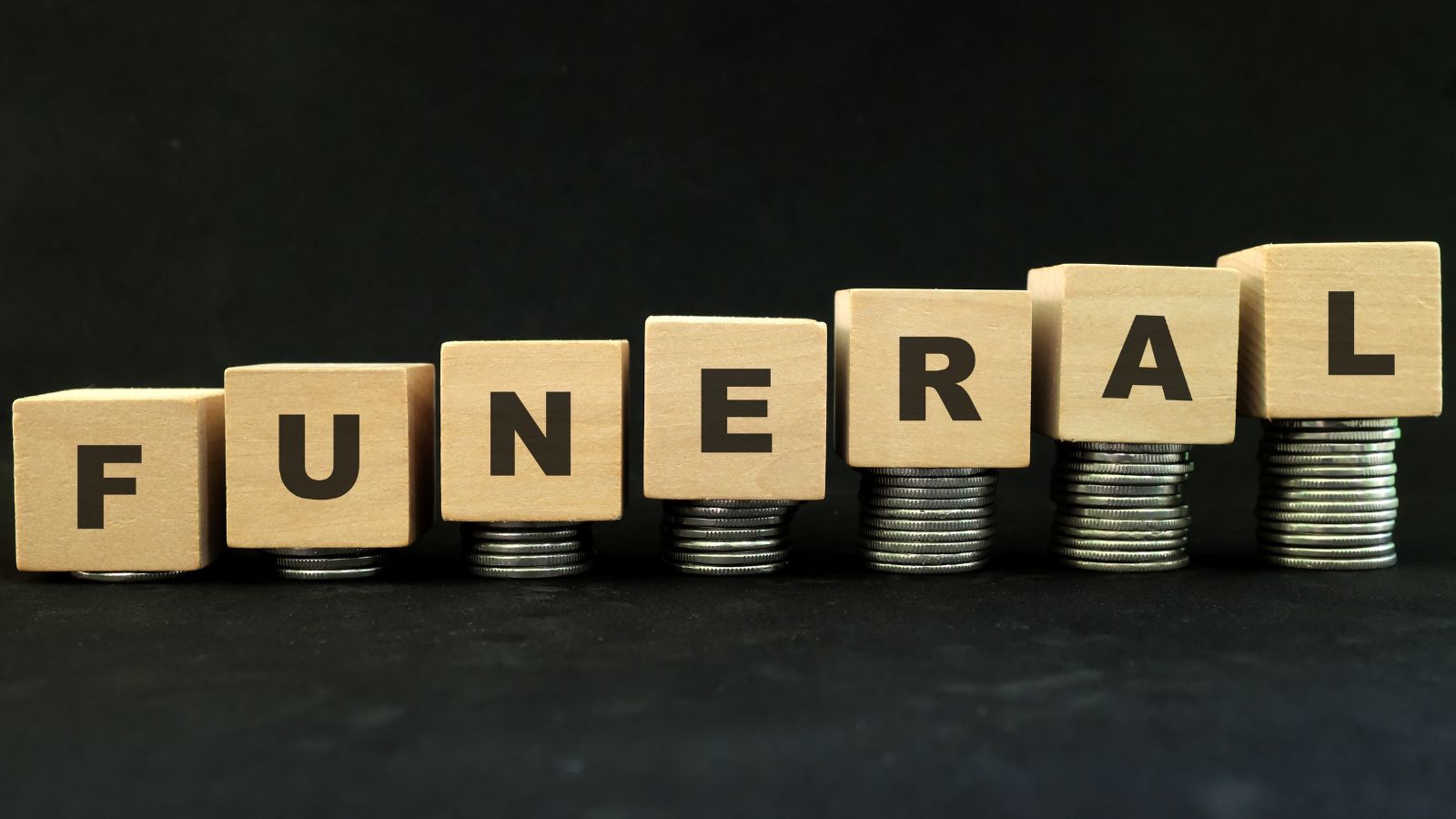
Ontario’s reform package also makes death benefits, funeral benefits and damage-to-personal-items coverage optional. These are exactly the kinds of protections people do not think about until the worst day imaginable arrives. The personal-items portion can apply to things like prescription eyewear, hearing aids or clothing damaged in a collision. The death- and funeral-related benefits are even more emotionally charged, because they sit at the intersection of grief and sudden expense.
The practical consequence is that future policies may look cheaper while quietly carrying less support around the edges of a catastrophic event. A family coping with loss does not need a second shock when it discovers a familiar benefit was no longer included. Even less severe crashes can expose the issue. Someone whose prescription glasses are ruined in a collision may assume that kind of damage is part of the normal insurance bundle. Starting July 2026, that assumption becomes much less safe.
Optional Benefits Won’t Follow Everyone in the Car

One of the least-discussed parts of the 2026 reform is who optional accident benefits will apply to. Ontario says those newly optional benefits will apply only to the named insured, the spouse, dependants and listed drivers. That means some people who may previously have expected broader protection, including certain passengers, pedestrians and cyclists, may no longer have access to those optional benefits unless they fall within one of those defined groups. Mandatory accident benefits still continue, but the upgraded layer narrows.
That can catch families off guard because real driving lives are messy. Carpools happen. Friends borrow rides. Teenagers date. Grandparents visit. A household may assume that adding optional benefits creates a broad safety net around the vehicle, when in fact the net may be much more selective. Picture a busy family van in Mississauga with cousins, neighbours or teammates aboard. After July 1, 2026, who is covered for what could depend less on who was injured and more on how the policy names them.
Medical and Rehab Claims Are Moving to Auto Insurance First

Another July 1, 2026 change is easy to miss but significant: auto insurance will become the first payer for medical and rehabilitation benefits after a crash, except for medication costs. In plain terms, that means a driver’s auto policy is expected to respond before a workplace or private health plan for those categories of treatment. The province and industry frame this as a way to preserve workplace benefits for other life events, but it still changes the choreography of a claim.
For injured people, claim order matters more than it sounds. It affects paperwork, timing and expectations about which insurer handles which bill. A family used to leaning on employment benefits may assume the old process still applies, only to find the sequence has changed. In a stressful recovery, small administrative surprises can feel enormous. The treatment itself may not change, but the route through the system does, and that is exactly the kind of technical adjustment that can confuse people when they are least equipped to sort it out.
Inflation Still Changes the Value of Certain Claims Every Year

Not every important insurance shift comes from a headline reform. Some arrive through indexation. FSRA is required to publish updated auto-insurance indexation amounts each year, tying certain thresholds, deductibles and benefit amounts to inflation. For 2026, the indexation rate is 2.4%. That sounds technical, but the effect is real: some claim-related dollar figures move upward annually, and that changes the math around compensation, deductibles and legal thresholds in motor-vehicle cases.
These adjustments rarely dominate consumer conversations, but they can shape outcomes in a meaningful way. Someone injured in a collision may focus on the obvious issues like pain, missed work and treatment, while the claim itself is being filtered through updated monetary thresholds behind the scenes. In 2026, for example, certain non-pecuniary tort thresholds and deductibles are higher than they were in 2025. It is not the sort of change most drivers discuss over coffee, but it can influence what a claim is ultimately worth.
The Towing Rules After a Crash Are Not the Same Anymore
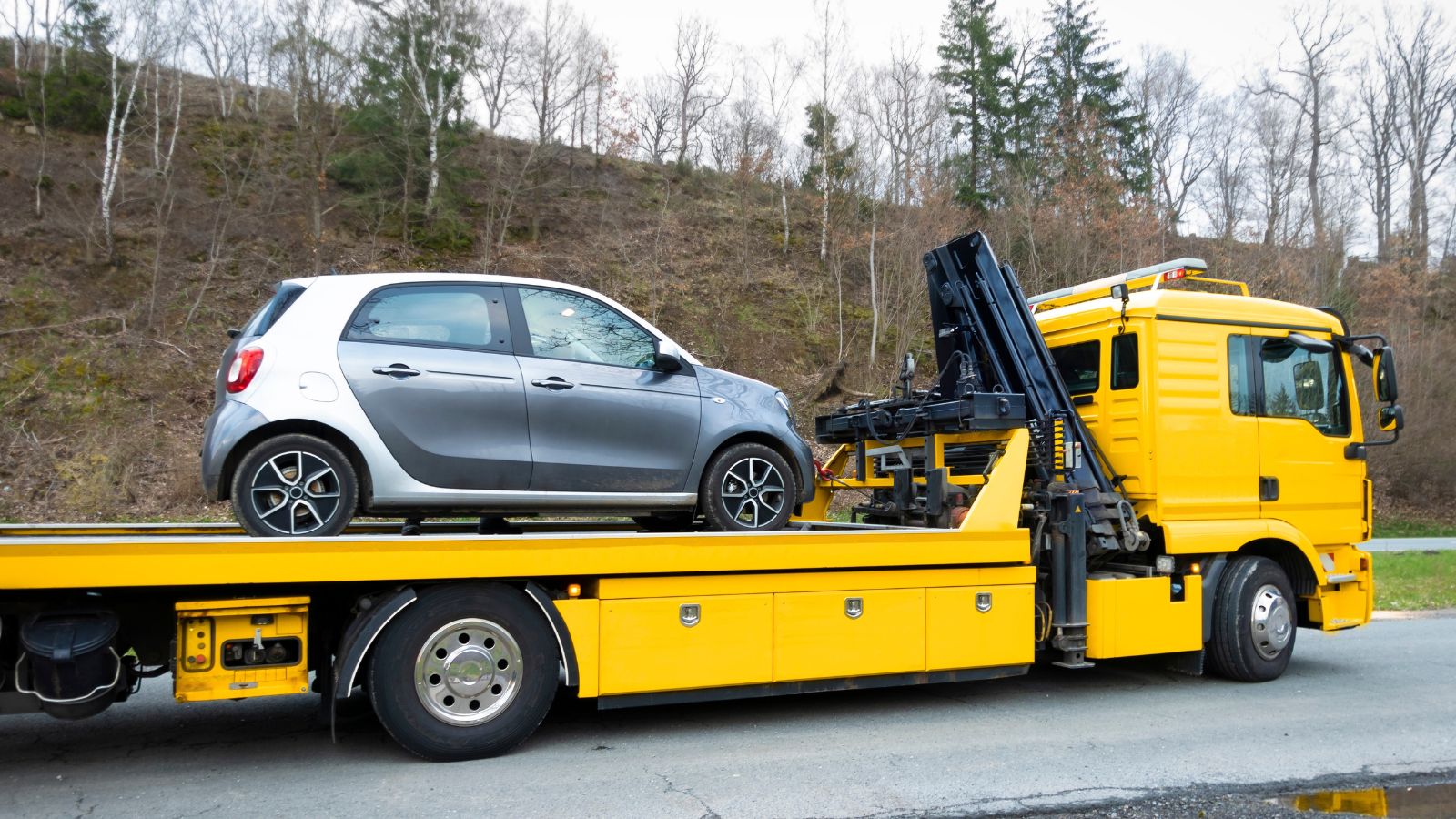
Ontario’s towing and vehicle-storage regime changed materially beginning January 1, 2024, and that matters for insurance because the towing stage often sets the tone for everything that follows. The province says consumers now have rights around providing consent to tow, choosing where the vehicle is towed, accessing the vehicle, vehicle storage, rates and payment. That is more than a transportation issue. It is part of the post-collision claims process, especially when a driver is rattled and vulnerable at the roadside.
Anyone who has ever seen tow trucks descend quickly at a crash scene knows how pressured those moments can feel. A motorist on Highway 401 may be shaken, trying to speak with police, calling family and figuring out whether the vehicle is drivable. In that state, bad choices happen fast. Ontario’s new framework is meant to reduce that pressure and make the system fairer. The blindside is that many drivers still do not know those rights exist until after the tow has already happened.
Tow Rates and Operator Credentials Are Now Easier to Check
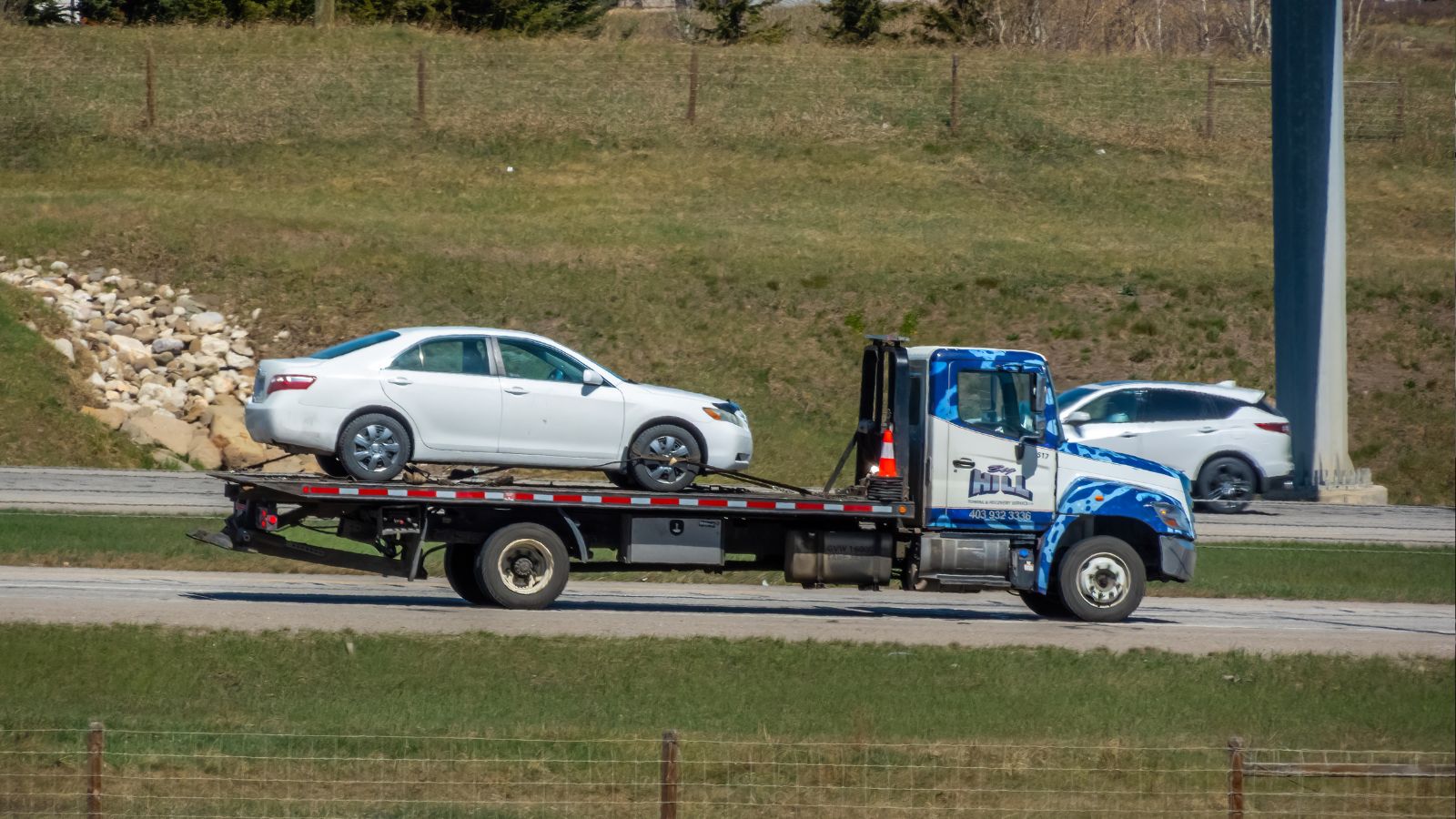
The towing changes did not stop at consumer rights language. Ontario rolled out a broader provincial oversight system requiring tow operators and vehicle-storage operators to hold certificates and submit their maximum rates to the Ministry of Transportation. A public service also allows people to view an operator’s certificate status and maximum rates for towing and storage. Through 2024, the regime layered in deadlines, compliance requirements and enforcement milestones that changed how post-collision towing is supposed to work.
That matters because inflated tow and storage charges can widen a claim before repairs even begin. The province’s shift toward certificate checks, published rates and a complaints pathway is designed to reduce bad-actor behaviour in a sector long criticized for pressure tactics and billing disputes. For Ontario drivers, the change is useful but only if they know to use it. In practical terms, a claims problem that once felt impossible to challenge is now more transparent—provided someone thinks to check credentials and rates before signing away control.
Auto Theft Is Still Reshaping Ontario Premiums

Even with some improvement in 2024, auto theft remains one of the strongest forces distorting Ontario insurance costs. Insurance Bureau of Canada data shows Ontario auto-theft claims rose from 7,693 in 2017 to 20,418 in 2024, while claim costs climbed from about $113.6 million to roughly $724.6 million over the same period. The 2024 totals were lower than the 2023 peak, but they still describe a crisis-sized problem that has not gone away, especially in and around the Greater Toronto Area.
That helps explain why some Ontario drivers feel singled out at renewal, particularly owners of theft-prone SUVs and high-demand models. The insurer is not just pricing a car; it is pricing a risk profile shaped by organized crime, export channels and regional theft patterns. A family in Brampton or Scarborough may be doing everything right and still feel punished by the broader environment. That sense of unfairness is real, but so is the data showing theft has become a major cost driver in Ontario’s market.
Repair Inflation Keeps Repricing Risk

Theft is not the only pressure point. Repair inflation continues to push premiums higher. FSRA has said Ontario saw an 8.1% increase in the cost of vehicle parts, maintenance and repairs, and Statistics Canada has reported that the combined index for passenger vehicle parts, maintenance and repairs was 22.3% higher in December 2024 than in 2019. Those numbers help explain why even ordinary fender-benders feel more expensive now than they did a few years ago.
Modern vehicles are also harder to fix cleanly and cheaply. More sensors, cameras, semiconductors and calibration work mean a relatively modest-looking impact can trigger a much more expensive repair process. Statistics Canada has also noted that total losses became more likely as of 2023 because of supply-chain issues, inflation, high rental-car costs and repair delays. For drivers, the blindside is simple: the collision may look familiar, but the cost structure behind it has changed dramatically.
Vehicle Choice, Postal Code and Insurer Pricing Gaps Matter More

Ontario pricing is becoming harder to treat as generic. FSRA says risk profiles are shaped by factors such as driving behaviour, experience, driving distance, location and vehicle. Statistics Canada has likewise noted that engine type, brand name and vehicle location all contribute to the premiums consumers pay. Add electric vehicles to the mix and the gap widens further: StatCan reported the average EV repair cost was $6,795 in 2023 versus $5,122 for internal-combustion vehicles.
That plays out clearly in the premium data. As of October 2025, FSRA put Ontario’s average annual premium at $2,164, the GTA average at $2,810 and the rural average at $1,740. On top of that, the regulator’s rate-approval database shows insurer-by-insurer changes can move at different times and by different amounts. In other words, renewal surprises are no longer just about driving record. The vehicle in the driveway, the postal code on file and the insurer on the policy can now make a much bigger difference than many drivers expect.
22 Things Canadians Do to Their Cars in Spring That Mechanics Hate

Spring brings relief to many Canadian drivers after months of snow, freezing temperatures, and icy roads that put serious strain on vehicles. As temperatures rise across the country, drivers begin washing cars, switching tires, and preparing vehicles for warmer weather and upcoming road trips. However, mechanics across Canada notice the same mistakes every spring when drivers attempt to recover from winter damage. Road salt, potholes, and harsh winter driving conditions often leave vehicles with hidden problems that drivers ignore. Some spring habits even create new mechanical issues that could have been avoided with proper maintenance. Here are 22 things Canadians do to their cars in spring that mechanics hate.