

























Luxury EVs are easy to admire in a showroom. A full month is what reveals whether one actually feels special in traffic, on errands, in bad weather, and on longer highway drives. The Cadillac Lyriq proves to be a very particular kind of electric SUV: less about showing off raw speed and more about quietness, comfort, space, and visual drama.
Across 12 key expectations, the clearest takeaway is that the Lyriq succeeds most when it is treated like a modern luxury cruiser rather than a performance machine. It looks expensive, rides with real calm, and makes daily driving feel relaxed. At the same time, charging speed, software history, and changing range in cold or fast driving conditions are all part of the real ownership picture.
The Design Still Turns Heads
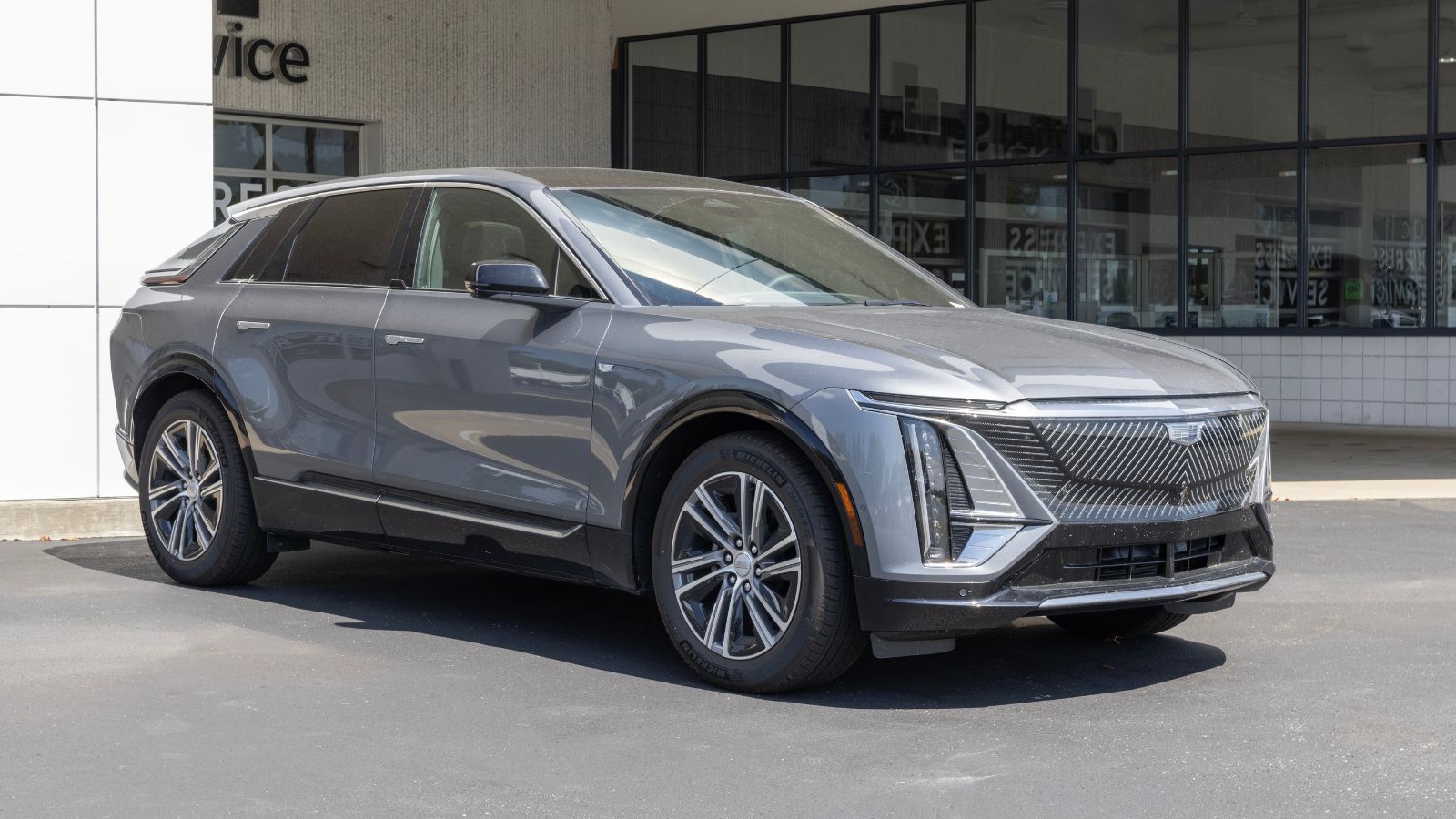
A month with the Lyriq is long enough for novelty to wear off, yet its styling still tends to draw a second look. Cadillac did not play this one safe. The shape is low, long, and clean in a way that makes many traditional SUVs look upright and conservative beside it. The signature lighting helps too. Even among EVs, the Lyriq manages to look distinctive rather than merely futuristic for the sake of it. That matters more than it sounds. In a segment where many luxury electric crossovers blur together after a week, the Cadillac keeps a sense of occasion every time it is parked, unlocked, or seen approaching at night.
What becomes clearer with time is that the design is not just about attention. The Lyriq’s proportions give it a planted, expensive look that supports the brand’s luxury ambitions. It measures 197 inches long with a 121.8-inch wheelbase, so it has real physical presence, not just decorative styling tricks. Over time, that size helps explain why it feels more substantial and upscale than some rivals that look sleek in photos but smaller in real life. The Lyriq’s design is one of the rare cases where the exterior promise mostly matches the cabin and driving experience.
The Cabin Feels More Premium Than the Badge Skeptics Expect
The first pleasant surprise for many drivers is the cabin. The Lyriq does not feel like a rushed attempt to electrify an existing SUV. It feels purpose-built, airy, and intentionally dramatic. The giant 33-inch display is the centerpiece, but the more important part is how the whole interior is arranged around openness and visual calm. The glass roof adds a sense of light, and the lack of a transmission tunnel helps the cabin feel wider and less cluttered than many gasoline luxury SUVs. After a month, that spaciousness becomes one of the Lyriq’s biggest strengths, especially on days when the vehicle is being used for much more than a quick commute.
The rear seat is also better than the sleek roofline might suggest. Cadillac lists 39.6 inches of rear legroom, which puts the Lyriq firmly in serious family-duty territory rather than style-first compromise territory. That matters in daily life because a luxury SUV is judged just as much by how easily adults fit in the back as by what the dashboard looks like from the driver’s seat. The cabin also avoids the sterile feel that can make some EV interiors seem more like consumer electronics than actual premium vehicles. The overall effect is modern, but not cold.
The Ride Is Built for Calm, Not Corner-Carving
A month behind the wheel makes the Lyriq’s priorities unmistakable. This is not an EV that seems desperate to prove itself with hyperactive steering or sports-sedan reflexes. Instead, it leans into the qualities Cadillac buyers have historically expected: composure, isolation, and a smooth sense of progress. That character suits the vehicle well. Around town, the Lyriq feels settled and easygoing. On the highway, it becomes even more convincing, because the softness and quietness that can seem ordinary in a short test drive start to feel genuinely luxurious when lived with for weeks. The result is an SUV that lowers fatigue rather than adding to it.
That quietness is not accidental. Cadillac and outside reviewers have highlighted how much work was done to keep wind and road noise under control, and that effort shows up in the real world. A month in the vehicle reveals that silence is one of the Lyriq’s most valuable features, particularly in stop-and-go traffic and on rough pavement where some EVs let too much tire noise into the cabin. Drivers expecting something athletic may find it a little too relaxed, but anyone who defines luxury as serenity will probably understand the mission almost immediately.
It Has Real Power, Even if It Is Not the Wildest EV in the Segment
One common mistake with the Lyriq is assuming that because it is comfort-focused, it must also feel slow. That is not the case. Even the rear-drive versions have enough shove to make merging and passing effortless, and the dual-motor all-wheel-drive models add a level of thrust that feels entirely appropriate for a luxury EV. The more important point is how the power arrives. The Lyriq does not punch with the exaggerated drama of some performance-oriented EVs, but it moves with smooth authority. Over a month, that ends up feeling like a smart calibration. The vehicle is quick when needed, yet rarely feels twitchy or overeager in normal use.
The all-wheel-drive Lyriq is rated at 515 horsepower and 450 lb-ft of torque, and reviewers have recorded sub-5-second 0-60 mph times in stronger versions. That is serious performance by any practical standard. Still, the Lyriq’s personality remains mature. It is more interested in making daily driving feel effortless than in constantly reminding the driver that instant torque exists. That distinction matters. Some EVs impress for ten minutes and become tiring later. The Lyriq tends to do the opposite: it feels more satisfying the longer it is used because the power serves refinement rather than dominating it.
The Screens Look Great, but the Learning Curve Is Real
The Lyriq’s tech presentation is one of its strongest selling points. That sweeping 33-inch display gives the cabin a flagship feel, and it helps the SUV feel expensive before the vehicle even moves. Yet a month of use reveals the difference between impressive and intuitive. The system is not a disaster, but it does ask for acclimation. Climate functions, menus, camera views, audio settings, charging information, and driver-assistance features all live in a very digital environment, which means there is less of the instant familiarity some buyers still want. The good news is that the interface is not entirely touch-dependent, because Cadillac also includes a control wheel on the center console to reduce the need for repeated screen poking.
That physical controller matters more over time than it might during a short dealership demo. In everyday driving, it helps make the system easier to live with, particularly when roads are rough or traffic is busy. The larger truth is that the Lyriq feels like a luxury EV from the current era, not from the old-school button-and-knob era. For buyers who want a dramatic, tech-forward interior, that is part of the appeal. For buyers who prefer instant simplicity, the first week may involve a little frustration before the system starts to feel natural.
Super Cruise Can Change How the Lyriq Feels on the Highway
If the Lyriq has one feature that can fully reshape the ownership experience, it is Super Cruise. On the right roads, it turns the SUV into a far more relaxing long-distance machine than a normal luxury crossover. A month is enough time to understand why this system gets so much praise. It is not magic, and it is not self-driving, but it can take a huge amount of mental strain out of long freeway stretches. Lane centering, adaptive cruise behavior, and lane changes all contribute to a smoother rhythm when traffic is flowing. The best part is not the novelty of letting go of the wheel. It is the way the vehicle reduces the constant small corrections that make highway driving tiring.
Cadillac says Super Cruise is available on the Lyriq and works on compatible roads, with lane-change capability and map-based support. Kelley Blue Book has described it as one of the best systems it has tested and says it operates across more than 400,000 miles of North American roads. That is the real takeaway after living with the vehicle: this is not just a checkbox feature for bragging rights. In the Lyriq, Super Cruise can be the difference between a nice commuter and a genuinely impressive road-trip companion, provided the buyer understands that attention still has to remain on the road.
The Range Is Strong Enough to Feel Normal Most of the Time
One of the Lyriq’s biggest everyday strengths is that it usually does not make range anxiety the center of the ownership story. That alone is a major win. For current versions, Cadillac advertises up to 326 miles of EPA-estimated range on rear-wheel-drive models, while all-wheel-drive trims can still sit in the low-300-mile range depending on configuration. In practical terms, that means the Lyriq has enough range to feel like a real luxury vehicle instead of a carefully managed gadget. A month with it tends to confirm that most daily driving does not require planning every errand around a charger, which is exactly how a premium EV should behave.
Independent testing supports that broad impression. Edmunds reported 319 miles in its own EV range test for a Lyriq rated by the EPA at 307 miles. That does not mean every driver will beat official numbers, but it does suggest the Lyriq’s range claims are not fantasy. More importantly, the vehicle’s comfort-focused nature pairs well with its range. A luxury EV that feels relaxing but constantly needs to be recharged would be frustrating. The Lyriq avoids that trap. In standard use, it generally has enough battery capacity to let drivers stop thinking about battery capacity for a while.
Cold Weather and Fast Highway Driving Change the Story
The part that matters most after the honeymoon phase is understanding what the brochure cannot fully capture. Range numbers are useful, but they are not fixed promises. They move with weather, speed, terrain, and driving style. That is true of every EV, and the Lyriq is no exception. The U.S. Department of Energy notes that extreme temperatures reduce EV range because energy has to be used to heat or cool the cabin, and highway driving also tends to be less efficient than city driving because of aerodynamic drag. After a month, that becomes more than theory. It becomes part of trip planning, especially for anyone driving long distances in winter or at sustained high speeds.
Real-world testing shows how that gap can open up. In an 80-mph highway test cited by InsideEVs, a Lyriq returned 245 miles, with the publication noting about a 26% penalty versus a slower-speed result. That does not make the SUV weak. It simply makes it normal by EV standards. Owners who go in expecting a straight-line relationship between the official rating and every real-world trip may be disappointed. Owners who understand that winter, speed, elevation, and climate control all chip away at range are far more likely to come away satisfied. The Lyriq rewards realistic expectations.
Home Charging Is What Makes the Lyriq Easy to Love
A month with almost any EV teaches the same lesson: home charging is what turns the experience from interesting to convenient. The Lyriq is no different. Cadillac says the vehicle comes with standard 11.5-kW Level 2 charging and offers available 19.2-kW Level 2 charging, with up to about 50 miles of range added per hour at the higher rate. In other words, this is an SUV that makes the most sense when it can quietly refill overnight and start the next day ready to go. That is when the appeal of the Lyriq becomes obvious. Instead of detouring for fuel, the vehicle can fit into a daily routine almost invisibly.
Edmunds makes a similar broader point in its EV guidance, arguing that electric-car ownership works best when charging at home with a 240-volt setup is available. The Lyriq especially benefits from that arrangement because its strong range and comfort-first personality make it ideal for predictable daily use. Drivers without home charging can still own one, but the emotional experience changes. The vehicle starts to depend more on outside infrastructure, and the calm luxury character that makes it so appealing can be undercut by logistics. With home charging, the Lyriq feels polished. Without it, ownership can feel more conditional.
Fast Charging Helps, but It Is Not the Lyriq’s Greatest Trick
Cadillac’s official charging numbers are respectable. The company quotes up to 190 kW of peak DC fast-charging capability and says the Lyriq can add up to 86 miles of range in about 10 minutes under ideal conditions. Those are useful numbers, and in the right scenario they can make road trips much easier. But a month of realistic thinking around the Lyriq means understanding that peak numbers are only part of the story. Charging speed is never perfectly linear. It depends on battery temperature, charger performance, state of charge, and the shape of the vehicle’s charging curve. A short, warm-session top-up can feel impressive. A road-trip stop from a higher state of charge may feel slower than the brochure suggests.
Independent testing backs up that nuance. Edmunds found the Lyriq’s real fast-charging performance less impressive than the headline figure, reporting that it added about 261 miles of range per hour in testing, or roughly 23 minutes to recover 100 miles. The publication went as far as calling it the slowest-charging luxury EV in its comparison set. That does not ruin the vehicle. It just clarifies its use case. The Lyriq is excellent when charging is mostly done at home and public fast charging is used as a supporting tool. Buyers expecting road-trip charging to be class-leading may need to reset expectations.
It Is More Practical Than the Styling Suggests
The Lyriq’s slinky shape can make it seem more style-led than family-friendly, but a month of real use tells a more balanced story. Cadillac lists 28 cubic feet of cargo space behind the rear seats and 60.8 cubic feet with those seats folded, which is enough room for airport runs, grocery loads, strollers, and the usual collection of daily-life clutter that determines whether an SUV is actually useful. Rear-seat space helps too. With nearly 40 inches of rear legroom, the Lyriq does not force passengers to accept a fashion penalty for the roofline. In daily life, it behaves more like a legitimate midsize luxury SUV than a dramatic design exercise.
There are still practical trade-offs. Unlike some EVs, the Lyriq does not offer a front trunk, and buyers cross-shopping the BMW iX will find more maximum cargo room there. Still, the Cadillac’s numbers compare well with several luxury EV rivals. Kelley Blue Book notes that the Lyriq stacks up competitively against the Mercedes-Benz EQE SUV and Audi Q8 e-tron for cargo space, even if it trails the roomiest entries in the class. The important part is that it feels usable without looking bulky, which is a harder balance to strike than many manufacturers make it seem.
The Price, Warranty, and Recall History Matter as Much as the Drive
One reason the Lyriq keeps showing up on shortlists is value. Cadillac currently lists the 2026 Lyriq from $59,200, while the 2025 model-year listing showed $58,595. In a luxury EV segment where pricing can climb quickly, that gives the Lyriq a meaningful advantage before incentives, options, or financing even enter the conversation. Reviewers at Edmunds and Kelley Blue Book have both argued that the Cadillac undercuts several rivals while still feeling like a true luxury product. That is an important part of the ownership case. The Lyriq is not cheap, but it often looks more rational than imported alternatives once comparable equipment is considered.
That said, a smart buyer should pair the value story with due diligence. Cadillac’s warranty coverage includes a 4-year/50,000-mile bumper-to-bumper warranty in the U.S., and GM’s EV warranty materials say the propulsion battery is covered for 8 years or 100,000 miles, with Canadian documents listing 8 years or 160,000 kilometers. At the same time, recall history deserves attention, especially for used examples. NHTSA documents show recalls affecting certain Lyriq model years for issues including a driver display that could go blank and improperly tightened stabilizer bar bracket bolts. None of that means the Lyriq should be avoided. It means a VIN check and software-update check are part of buying intelligently.